|
Forwarded this email? Sign up for free to have it sent directly to your inbox. |
|
|
|
Good morning,
Today, we’re looking at Utah’s evaporating Great Salt Lake, Harvard’s grade-inflation reform, California’s disastrous SOMAH program, and the real reason parolees wind up back in prison.
Write to us at editors@city-journal.org with questions or comments. |
|
|
|
Photo credit: Paulette Sinclair/Alamy Stock Photo |
Utah’s Great Salt Lake is in trouble. It has dropped by 22 feet since the 1980s, and in 2022, it reached its lowest recorded level ever.
The lake’s importance cannot be overstated, Shawn Regan writes. The moisture it produces boosts the nearby mountain snowpack that sources most of the basin’s water supply. The minerals pulled from the lake supply potassium sulfate fertilizer for crops around the world. The lake sustains the global seafood industry. It moderates regional temperature swings. The list goes on.
“The timing could hardly be worse,” Regan explains. “More than 2 million people now live downwind of the drying lake bed. And as Salt Lake City prepares to host the 2034 Winter Olympics, there is a real risk that visitors will arrive to find the city’s namesake lake gone and its mountains short on snow.”
Governor Spencer Cox promises to restore the lake before the Olympics, but that will be quite a challenge. “The question hanging over Utah’s effort,” Regan writes, “is whether a rapidly growing, politically conservative state committed to property rights and limited government can rescue a collapsing ecosystem without coercive mandates—and before it’s too late.”
Read more. |
|
|
Last week, Harvard University’s faculty agreed to limit A’s to just 20 percent of students in undergraduate courses. Intended to help with the school’s grade inflation problem, the cap will take effect in the 2027–2028 academic year.
While certainly a step in the right direction, Neetu Arnold writes, the move will have little impact. “That’s because it’s impossible for one university by itself to overcome the forces that encourage grade inflation,” she explains. “More coordinated action—including from actors outside the university environment—is necessary for substantial change.”
Read about the pressures and incentives schools face when it comes to inflating grades, and what more can be done to end the practice. |
|
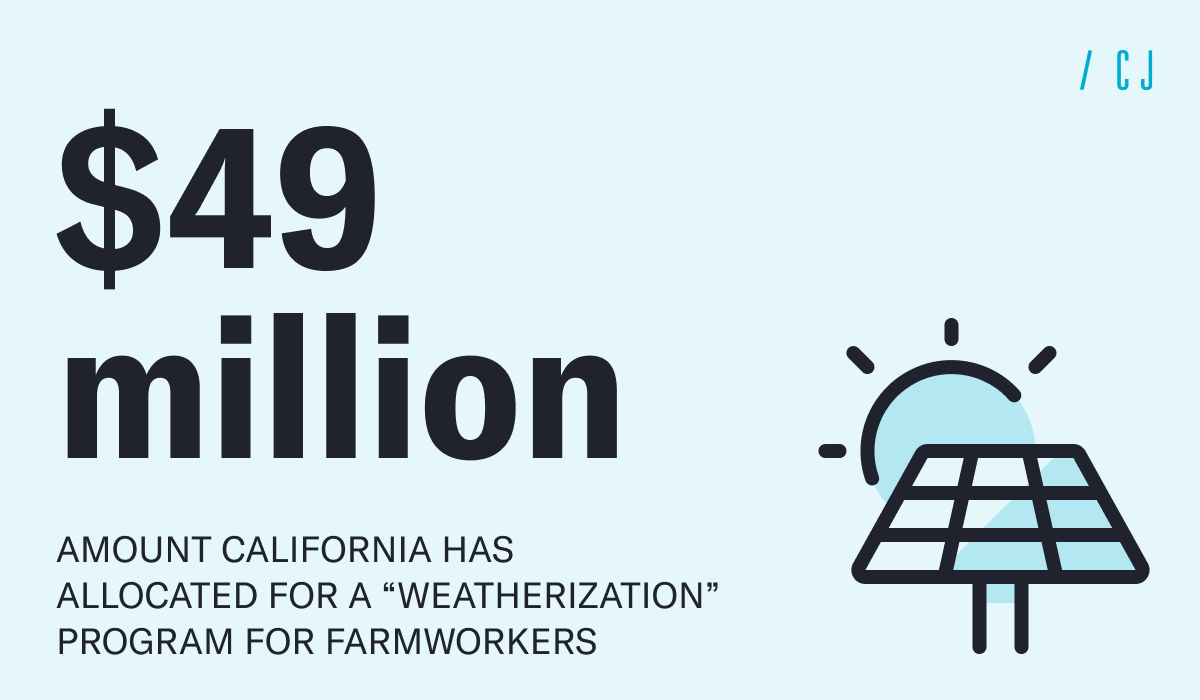
| California has devoted nearly $900 million to its Solar on Multifamily Affordable Housing (SOMAH) program, which installs solar panels on low-income housing units. The state hoped that the program would create 300 megawatts of power by 2030, while advocates envisioned it creating 1 million solar-using renters. But since 2015, the program has installed or reserved just 129 megawatts of solar power for about 65,600 residents.
Why the disastrous results? Blame incompetence, Christopher Rufo and Austen Hufford write. “From the beginning, the SOMAH program has been plagued by delays and cancellations,” they observe. “More than 400 applications have wound up cancelled or withdrawn, or about a third of the total. On average, projects take three and a half years to make it through the program’s gauntlet of paperwork and inspections.”
Read more about the failed program—and who profits from it anyway. |
|
|
Advocacy groups often claim that individuals on parole end up in jail over minor violations, like missing a treatment or violating a curfew. But a national survey of state prisoners from 1979 to 2016 found this to be the case just 12.5 percent of the time. Most inmates are incarcerated due to real crimes that precede these violations.
“Most violators receive written warnings, treatment, and all sorts of alternative, less serious sanctions before being recommitted for a technical violation,” Barry Latzer and Kristofer Bret Bucklen write. “Parolees rarely go back to prison on their first technical violation.”
Read more from their analysis of the data. |
|
|
“If someone believes that social justice for all the world is best served if the United States ceases to exist, then Descano’s policies would make a lot of sense.
Social chaos expands from many nodes of infection and it creates political opportunity. World socialism is poised and ready to take advantage.” |
|
|
|
A quarterly magazine of urban affairs, published by the Manhattan Institute, edited by Brian C. Anderson. |
|
|
|
Copyright © 2026 Manhattan Institute, All rights reserved. |
|
|
|
|