
Over the last three years, Manhattan Institute has conducted an analysis of an insurance-claims database to assess the prevalence of gender dysphoria diagnoses and of select gender-transition interventions (mastectomies) in adolescents and young adults. This project is inspired in large part by our belief that empirical gaps make it harder to obtain an accurate picture of gender-related diagnoses and practices—and thus harder to do what is best for young people.
In July, City Journal replicated a Research Connections study finding that in Oregon, about one in 65 teen girls and one in 200 teen boys received a transgender-related mental-health diagnosis between 2017 and 2023, a rate significantly higher than that of all other states except Vermont.
Finally, a reason to check your email.
Sign up for our free newsletter today.
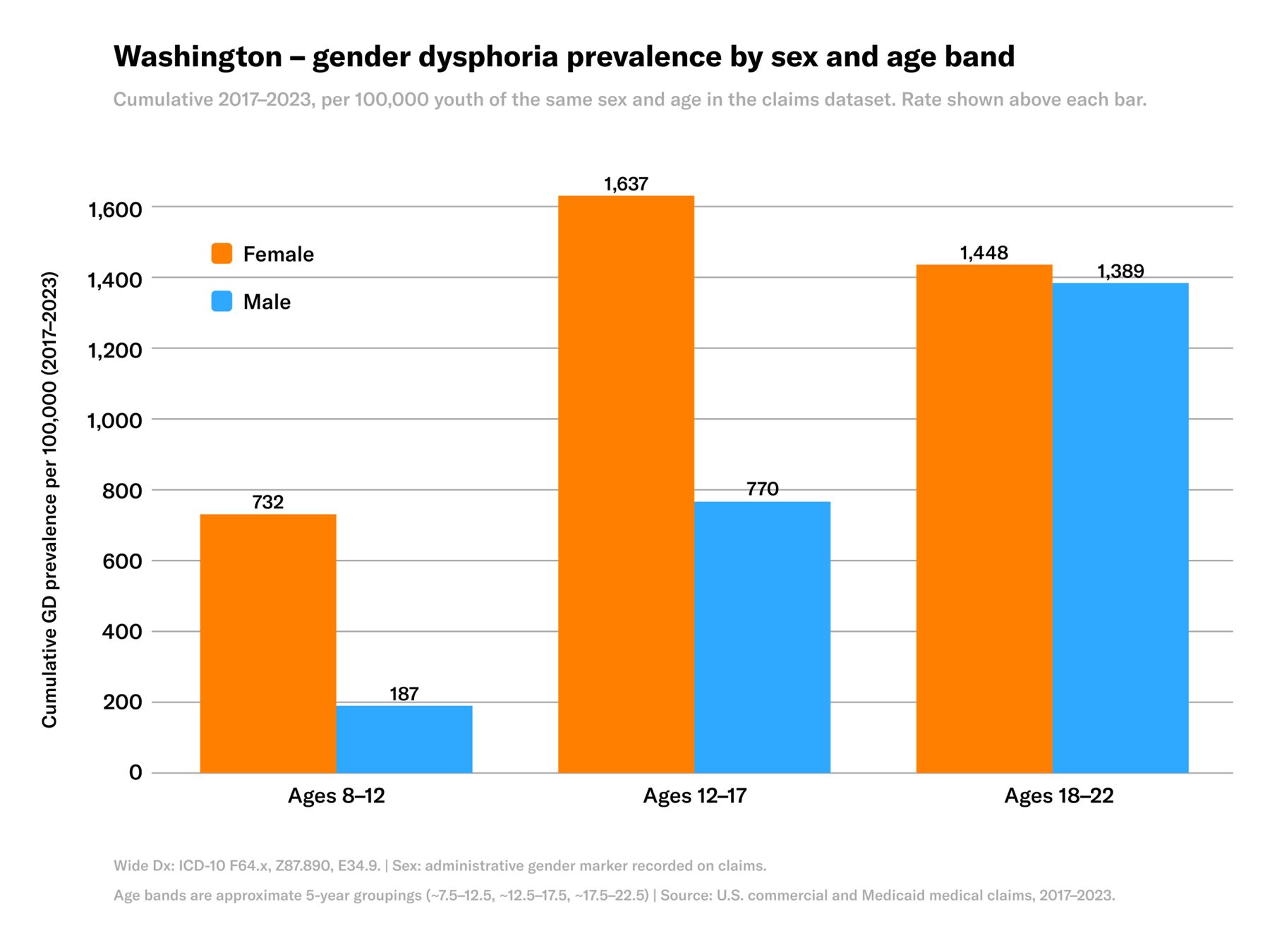
A new analysis of data from Washington, Oregon’s neighbor to the north, shows a similarly high prevalence of transgender-related diagnoses in minors.[1] A bare minimum of 15,437 minors in the state had a transgender-related diagnosis on their health insurance claims between 2017 and 2023. The true number is almost certainly higher, as the database we use doesn’t include all insurers, and claims for 2023 were incompletely reported. In 2022, 1.73 percent of Washingtonian teen girls (ages 12–17) and 0.8 percent of teen boys had a diagnosis in their insurance claims. Among younger children (ages 8–12), the rates were 0.71 percent for girls and 0.16 percent for boys.
To put this in perspective, the fifth edition of the Diagnostic and Statistical Manual of Mental Disorders (DSM-5), published in 2013, lists the rates of gender dysphoria in adult females as 0.002–0.003 percent and in adult males as 0.005–0.014 percent (noting that these were likely modest undercounts). Even measured against the DSM-5’s highest estimates, the 2022 rate among teen girls in Washington was nearly 600 times greater, and among teen boys nearly 60 times greater. In the 8–12 age group, it was roughly 240 times greater for girls and 11 times greater for boys.[2]
Another point for perspective: the percentage of Washington teens (male and female combined) with a transgender-related diagnosis in 2022 (1.29 percent) was about 19 times the prevalence of pediatric Type 2 diabetes (0.067 percent), a condition the American Diabetes Association’s journal Diabetes Care characterized in 2023 as “an awakening epidemic.”
Having better data on the prevalence of transgender-related diagnoses among youth is especially important because diagnosis opens the door to medical interventions—puberty blockers, cross-sex hormones, and surgeries—with potentially irreversible, lifelong consequences. Systematic reviews of evidence—the gold standard in evidence-based medicine—have found a lack of credible proof for benefits from puberty blockers, cross-sex hormones, and the most common surgery, mastectomy. Several European health systems, including those in Sweden, Finland, and the U.K., have moved to ban or otherwise restrict medical interventions, and now prioritize psychotherapy and social support. Meanwhile, the body of evidence for harm from medical interventions—including sterility, sexual dysfunction, cardiovascular disease, and poor bone health—is stronger. (For details and references to the medical literature, see the 2025 U.S. Department of Health and Human Services’ Treatment for Pediatric Gender Dysphoria: Review of Evidence and Best Practices, of which I was a coauthor.)
Washington has been a champion of the “gender-affirming” model of care for youth with gender-related issues, which prioritizes the treatment wishes of the child and includes puberty blockers, cross-sex hormones, and surgeries. In the “affirming” model as practiced in the United States, an adolescent’s sense of identity and desire for medical intervention is, to quote the author of the American Academy of Pediatrics’ position statement on caring for gender dysphoric youth, “the navigational beacon to sort of orient treatment around.”
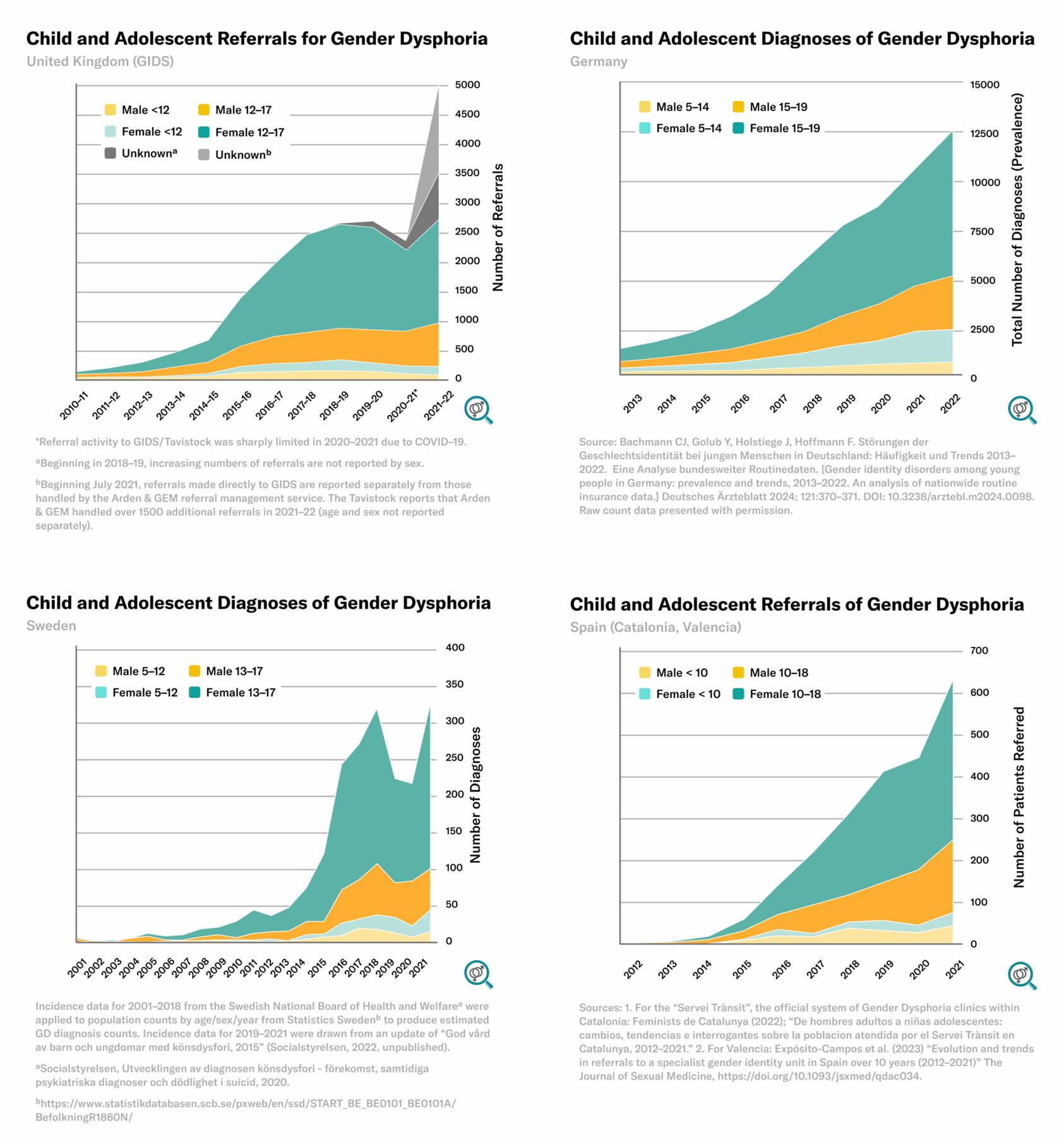
The Washington data are consistent with epidemiological trends found in other U.S. states and in other countries. For example, the sex ratio was heavily skewed toward female among children and teens, but not so among young adults.
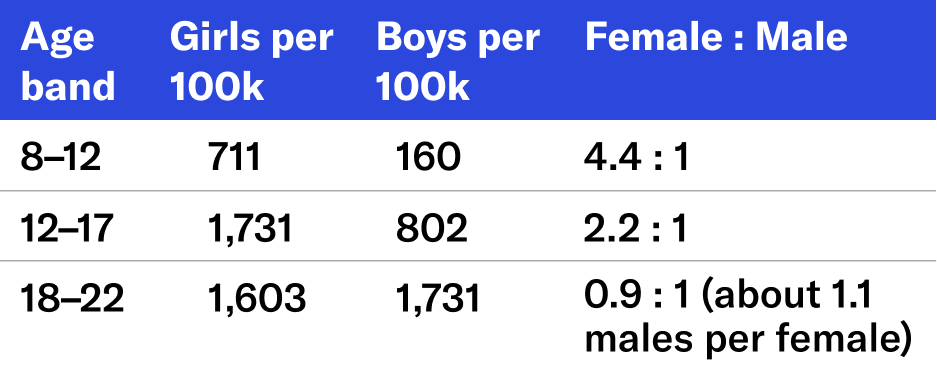
Since the mid-2010s, transgender identification and gender clinic referrals have soared, a trend led, research has shown, primarily by teen girls with no history of gender issues before puberty and high rates of co-occurring mental-health challenges.
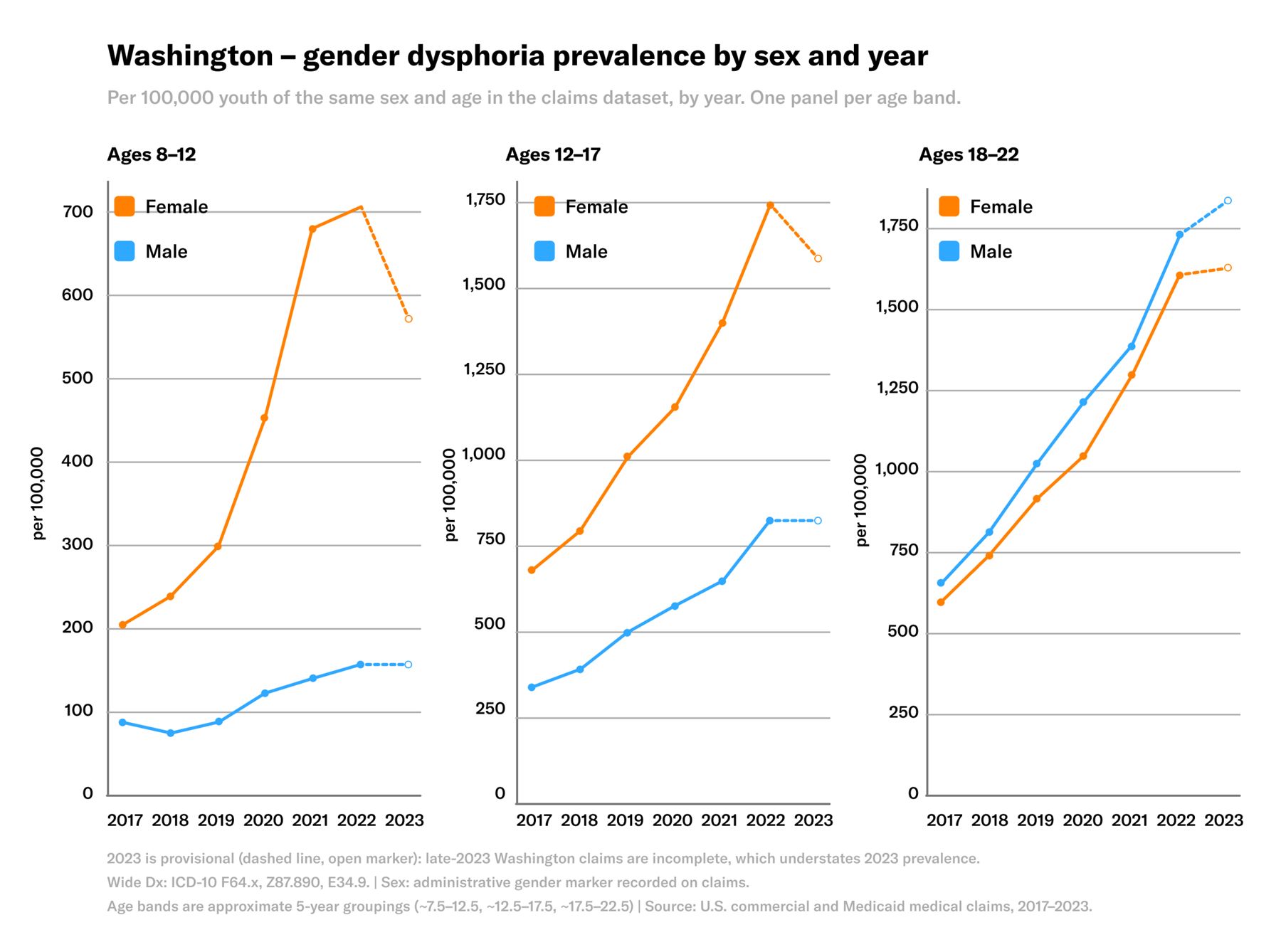
As the graph below illustrates, diagnostic prevalence among minors rose precipitously in Washington between 2017 and 2023, especially among girls. (Note: the apparent drop-off in 2023 may be due to incomplete data for that year.) Rates more than doubled for teen girls ages 12–17 and almost tripled for boys in that age group. For children and young teens in the 8–12 age group, rates grew 3.5 times for girls and almost doubled for boys. Among young adults, rates were slightly higher for men than for women, and both roughly tripled during these years.
Perhaps the most surprising finding in the data was where in the state the diagnostic rate was highest for girls, the demographic most likely to transmit and adopt behaviors through social dynamics.
It wasn’t Seattle, as one might expect.
According to our findings, the highest concentration of diagnoses was in the zip code that begins with “986,” which includes Washington’s southwest city of Vancouver. (Camas, a suburb of Vancouver in the same zip area, recently drew national attention when half the girls’ running team walked off the course in protest of a male athlete being allowed to compete on their team.) Over 2 percent of teen girls—more than one in 50—in the 986 zip area had a transgender-related clinical diagnosis compared with roughly 1.5 percent in Seattle. In second place was Olympia, with just under 2 percent. Rates for boys were much lower, but still far higher than historic trends in adults (as per the DSM-5).
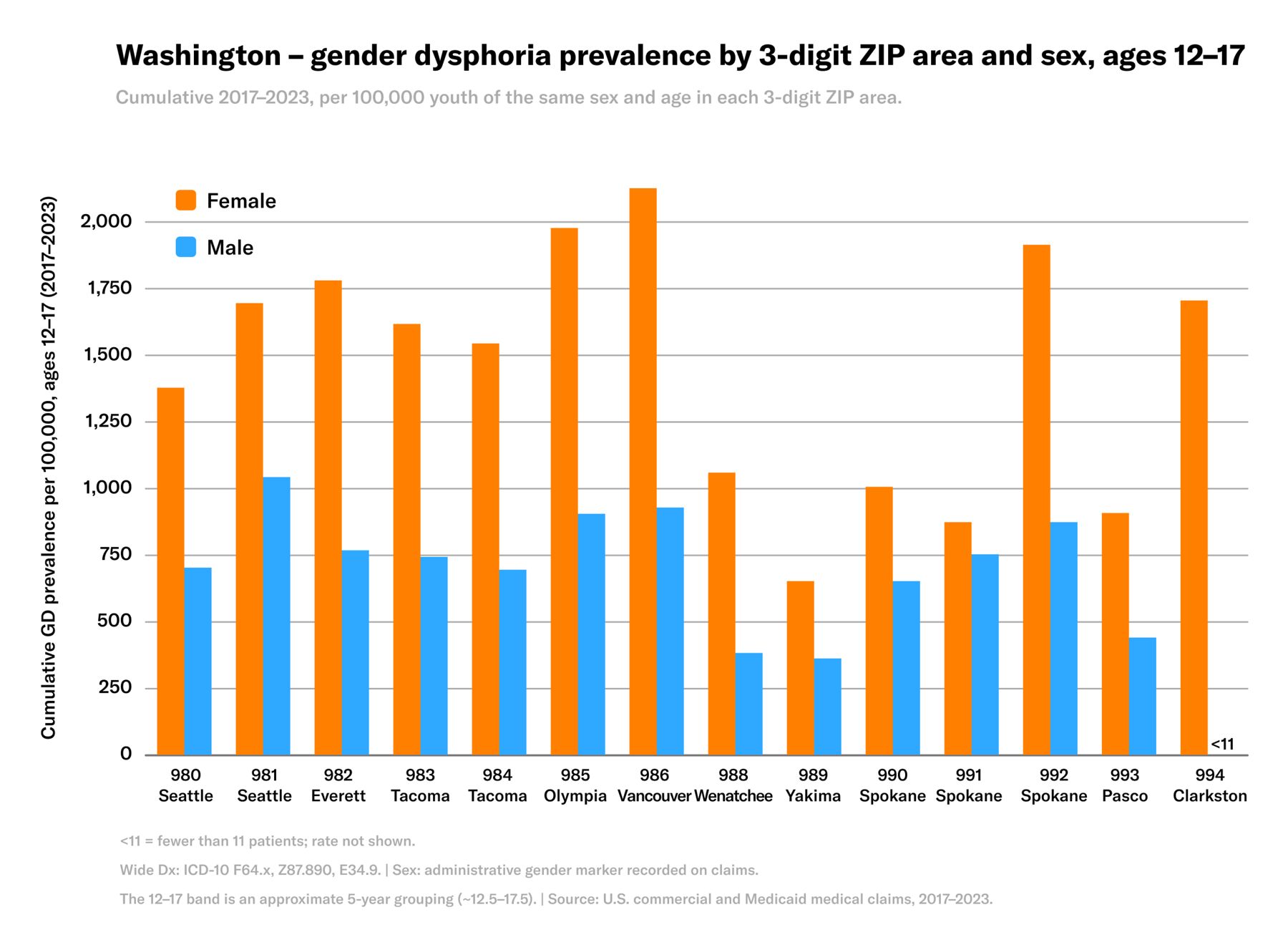
In 2022, the last year in our database for which we have claims through the end of the year, there were 378 out of 15,541 teen girls (2.43 percent) and 133 out of 13,590 teen boys (0.98 percent) with a diagnosis. The total population of the 986 zip area is approximately 700,000, which, based on population estimates, means roughly 55,000 teens aged 12 to 17 (27,500 of each sex), which is almost double our 2022 denominator. Our data set has insurance claims for only half of the population in this area. Assuming the missing data are similar in their diagnostic trends, there may be almost twice as many girls (670) and boys (270) with diagnoses in that area.
To put all this in perspective, under the DSM-5’s (pre-2013) highest estimated rates (0.003 percent of females and 0.014 percent of males), we would expect one girl and four boys in that area to have a transgender-related diagnosis.
Vancouver sits at the very southern border of Washington, just across the Columbia River from Portland, Oregon. Because Washington has no income tax whereas Oregon has no sales tax, Vancouverites (at least those who work for Washington employers) can avoid income tax and shop tax-free in Portland.
They can also access gender-transition services there, which our data suggest some do. Oregon, like Washington, is a “sanctuary state” for pediatric gender medicine. Portland is home to the Oregon Health and Sciences University, known to be a vanguard of “gender-affirming” medicine. Videos from the World Professional Association of Transgender Health (WPATH) conferences obtained through a lawsuit revealed OHSU clinicians discussing how they offer “nullification” (castration) surgeries to young patients who identify as “nonbinary,” report having had no sexual experiences, and say they have no desire for sexual experiences in the future. A gender clinic psychologist at OHSU explained how she helps surgeons overcome their doubts about operating on patients with severe psychiatric problems including “multiple personalities” and “psychosis.”
OHSU offers patients unusual genital surgeries including “penile preserving vaginoplasty”—a procedure that leaves male patients with their genitalia intact while creating an artificial orifice underneath—and says that it does so in accordance with the recommendations of WPATH. In 2024, court-obtained documents revealed that WPATH suppressed evidence reviews it deemed unfavorable and eliminated age-minimum requirements for all procedures except phalloplasty (creation of an artificial phallus) in response to political pressures.
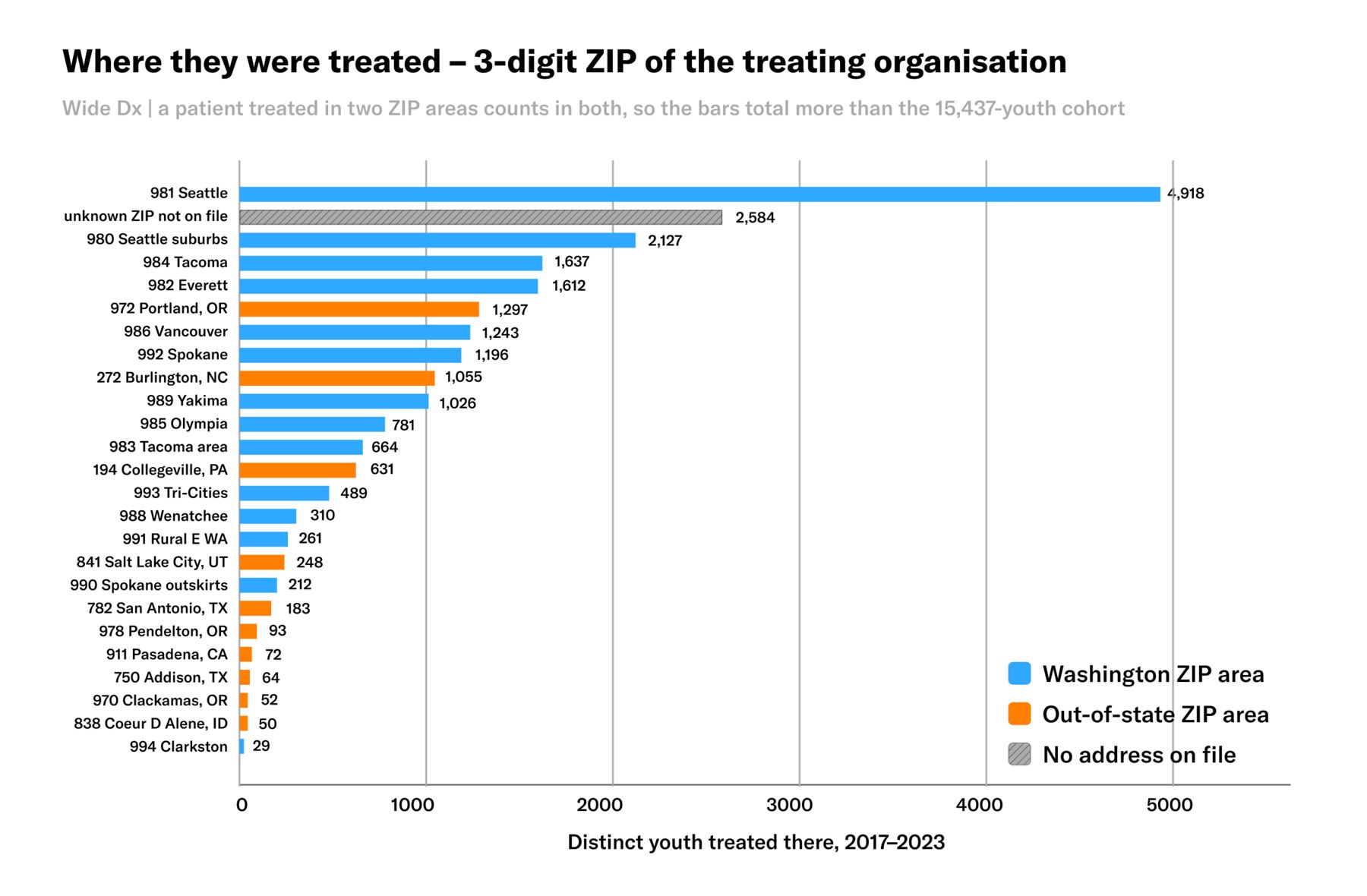
Our data also contained compelling findings about the place of treatment and providers. Here Seattle and its suburbs were in the lead. Vancouver and Portland likely make up a single category, since the Portland figure refers largely to patients from Washington (likely Vancouver) who sought treatment in Portland.
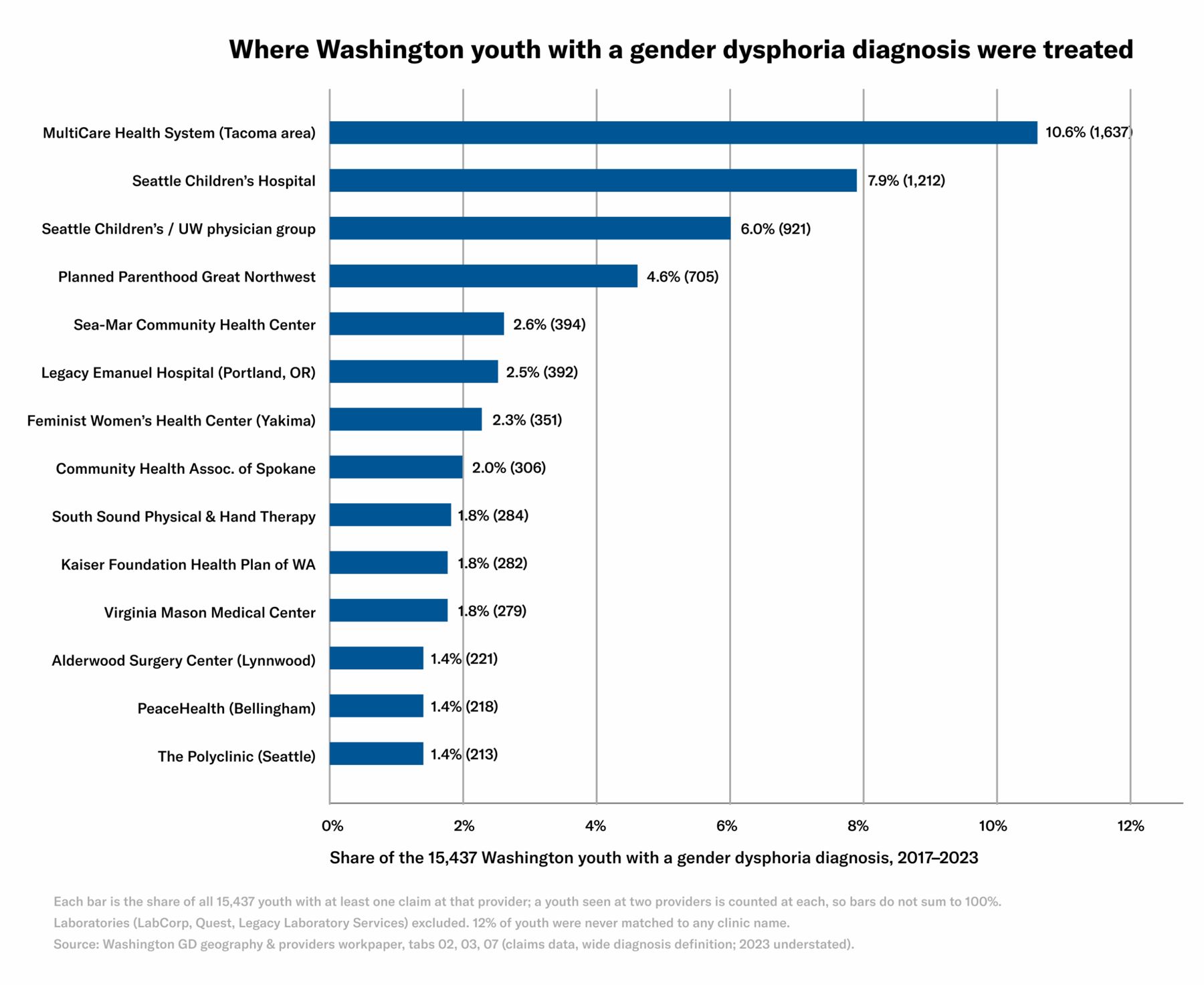
Of the 15,437 Washingtonian youth with a transgender-related diagnosis on a claim between 2017 and 2023, MultiCare Health System (which includes the Mary Bridge Children’s Hospital in Tacoma) accounted for 11 percent. MultiCare was the employer of whistleblower Tamara Pietzke, who in 2024 went public with evidence that MultiCare was medicalizing children with severely adverse mental-health problems and troubled personal histories who would not have qualified for hormonal interventions even under the lax standards of WPATH. Earlier this year, MultiCare closed its pediatric gender clinic at Mary Bridge Children’s, citing as its reason the “recent escalations at the federal level to eliminate medical interventions to treat gender dysphoria for minors nationwide, as well as investigations and significant penalizations of health care organizations that provide such care.”
Seattle Children’s Hospital accounted for 8 percent of youth claims in our data, while the Seattle Children’s / University of Washington physician group accounted for 6 percent. A single individual (specializing in “hypnotherapy”) appears as the provider on the transgender-related claims of 439 youth, or about 3 percent of the 15,437 youth with transgender-related claims in the state. (To protect her identity, we will not reveal her name.) Over 1,500 clinic names and over 9,000 individual providers appear in the claims, but 12 percent of Washingtonian youth were never matched to a clinic name, chiefly because the claim carried no provider identifier. Some youth can be seen at more than one center.
Washington is considered a “sanctuary state” for youth seeking medical transition. A law passed in 2023 prohibits Washington authorities from cooperating with authorities in other states in the enforcement of subpoenas, warrants, or information requests if the purpose of these is to deny youth access to medical interventions. A lawsuit currently before the U.S. Supreme Court, International Partners for Ethical Care, Inc. v. Ferguson, concerns Washington regulations that enable runaway minors to obtain “gender-affirming care” without the notice or consent of their parents.
According to the Office of the Insurance Commissioner of Washington, the state agency responsible for setting coverage standards, categorical exclusions of “gender-affirming” medical interventions—hormonal as well as surgical—are banned under state law. Washington’s Medicaid program explicitly defers to WPATH’s recommendations, as does UnitedHealth and possibly other commercial insurers. Denials of insurance reimbursement under both private or public insurance schemes are eligible for review by a clinician “with experience prescribing or delivering gender affirming treatment,” and who is very likely trained in the WPATH approach.
Last year, a pressure campaign by transgender activists resulted in the stripping of continuing medical education (CME) accreditation status of a course series at Washington State University, which had previously approved the course. The topic of the CME was the more cautious approach to treatment of youth gender dysphoria that has emerged in Europe.
Thus, like Oregon, Washington has systematically eliminated barriers to pediatric medical transition, and as in Oregon, this happened in parallel to the state experiencing a surge in the number of minors with transgender-related diagnoses appearing on their health insurance claims. Has the state expanded supply in response to demand, or has supply driven up demand?
K-12 schools are one potential pipeline into clinics, which is why the U.K Department for Education now considers “social transition” in schools not a neutral act of accommodation and respect but an “active intervention” with potential to solidify a child’s otherwise transient identity. Research suggests that young teens who are socially transitioned from childhood are more likely to end up on a medical pathway.
Seattle Public Schools policies prohibit the disclosure of a student’s “gender identity” to parents without the express permission of the student. In 2024, Defending Education discovered through Freedom of Information Act requests that Seattle-area schools had allowed health-care organizations to offer “gender-affirming” services, including hormonal treatments, to students on select campuses. The leader of one such organization confirmed the offering of these services to Seattle students but insisted that parents must be notified and give consent to medical treatments.
Transgender issues will be on the minds of Washingtonians on November 3, as voters in the Evergreen State face two related ballot questions. Ballot measure 638 would prohibit schools and athletic conferences from allowing males to compete in girls’ sports. Ballot measure 001, which deals with parental rights in education, would prevent schools from keeping parents in the dark about their children’s gender transitions in school.
According to recent polling, both Washington ballot measures are favored by more than 50 percent of voters. One of the chief limitations of polls, however, is that they typically do not assess voters’ baseline knowledge of particular issues. Washington voters would ideally go to the polls with a better understanding of the empirical realities behind the transgender youth debate. It is our hope that the numbers and analysis provided here offer a clearer picture of those realities.