
After several high-profile incidents at houses of worship—including disruptions, intimidation, and bloody violence—a bipartisan coalition of lawmakers has introduced federal legislation aiming to put an end to the phenomenon. Introduced in early August, the Right to Worship Act would prohibit disruptions within 100 feet of houses of worship while religious services are underway.
While the proposed bill would hardly fend off acute threats like attempted massacres at synagogues or Iran-backed attacks on Jewish schools, a federal buffer zone would raise the cost of antisocial behavior targeting religious Americans—which has a tendency to spill over into violence.
Finally, a reason to check your email.
Sign up for our free newsletter today.
The bill also raises three important questions. First, isn’t existing federal law enough to deter such behavior? Second, why shouldn’t we let state and local governments handle the problem? And third, does the law pass muster under the First Amendment’s free-speech protections?
Federal law already governs behavior outside houses of worship. The Freedom of Access to Clinic Entrances (FACE) Act makes it unlawful to “intentionally injure[], intimidate[] or interfere[] with . . . any person lawfully exercising or seeking to exercise the First Amendment right of religious freedom at a place of religious worship” if done “by force or threat of force or by physical obstruction.”
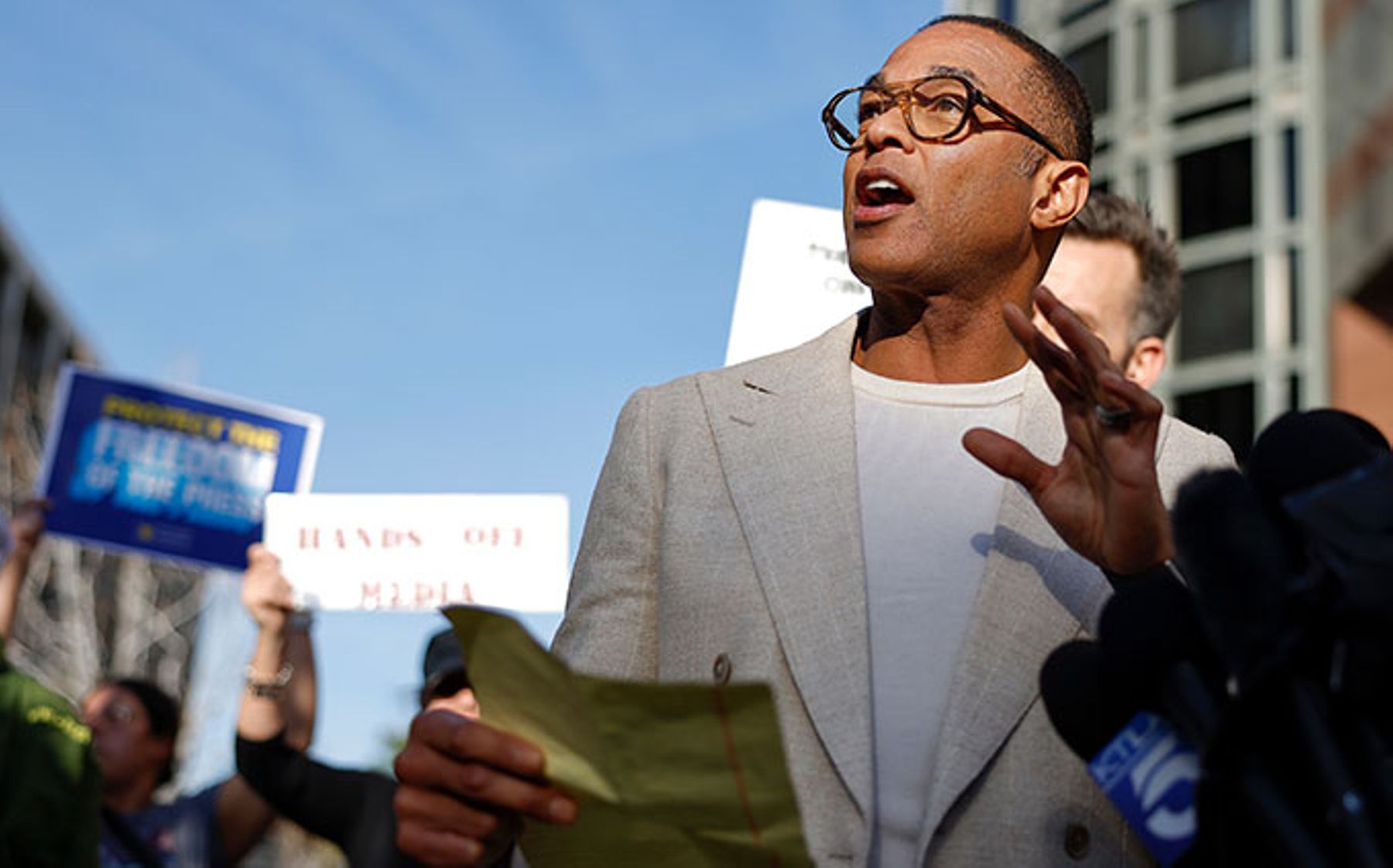
FACE Act prosecutions are rare, though journalist Don Lemon and about 30 others were indicted on federal charges for their alleged role in a disruptive anti-immigration-enforcement protest at a Minnesota church in January. They may escape accountability, however, because of the FACE Act’s inadequacy for handling the recent spate of demonstrations.
FACE prosecutions (and civil suits) often turn on whether genuine “intimidation” or “interference” has occurred. The statute defines “intimidate” as “plac[ing] a person in reasonable apprehension of bodily harm.” Interference means “to restrict”—not to prevent—“a person’s freedom of movement.” Obvious cases of “obstruction,” meanwhile, are rare, so FACE prohibits “rendering passage to or from . . . [a] place of religious worship unreasonably difficult or hazardous.”
This language leads to protracted arguments about the line between “reasonable apprehension of physical harm” and protected speech. Judges and juries are unlikely to err on the side of finding demonstrators liable when they invoke the sanctity of free speech. Organized intimidators therefore toe the line carefully, but even when they slip up and admit that intimidation is the goal, they rarely face consequences.
This points to another one of the FACE Act’s inadequacies, and the reason states and localities cannot be trusted to handle the issue on their own. After demonstrators gathered to intimidate and harass attendees at a November 2025 event at Manhattan’s Park East Synagogue, Governor Kathy Hochul sternly intoned that “No New Yorker should be intimidated or harassed at their house of worship.” The absence of state prosecution indicated that this was not a high priority, however. Meantime, Don Lemon can argue that President Trump is singling him out for prosecution—but if Minnesota authorities had bothered to enforce laws against trespassing, disorderly conduct, and disrupting religious services, the Department of Justice wouldn’t have needed to get involved.
The Right to Worship Act fixes some of the FACE Act’s deficiencies by moving the deterrents from ex post to ex ante. It aims to keep violators away before they can do damage—and without inviting endless scrutiny over the meaning of intimidation. And it doesn’t wait around for states and local governments to step up, which is good, especially considering that local efforts to curb the disorder have become so anemic as to be celebrated by the very groups whose behavior they sought to thwart.
Those groups have cynically claimed that buffer-zone laws are designed to crack down on dissent and “chill” speech. But American law has always included tradeoffs between freedom of speech and other legitimate public interests—especially when those interests involve the equally sacred First Amendment right to the free exercise of religion.
The Right to Worship Act sits comfortably within the tradition of time, place, and manner restrictions that allow multiple rights to coexist as freely as possible—and without scrutinizing the content of demonstrators’ expressions for signs that they would cause someone reasonably to fear imminent harm.
The notion that anyone should feel “chilled” by such buffer-zone rules is baffling. Or perhaps it betrays an assumption that free-speech rights are only fully realized when one group can effectively intimidate another or use expression not just to advance but to accomplish its political aims.
Buffer zones don’t solve the problem of assaults on houses of worship, but they do keep them at arm’s length. We can deter a great deal of antisocial behavior without being paralyzed by a need to deal with root causes.
Nevertheless, this is an area of law and social policy where investigating root causes reveals more opportunities to rein in lawlessness. The organizations behind church takeovers and demonstrations are not collections of lone actors who show up, get turned away, and go home chastened; they are coordinated enterprises, often with documented terrorist sympathies, whose goal is intimidation, which is why they interpret buffer zones as a violation of their right to effective protest. Whether invading a church in Minnesota for its members’ ostensible sins against progressive immigration orthodoxies or harassing Jews for imaginary violations of “international law,” the groups constituting the permanent protest ecosystem target communities with the goal of making them feel insecure and unwelcome, and ultimately driving them from public life.
Dealing with these groups will require disrupting them: prosecuting them for lawbreaking, cracking them open, and ensuring that they are deprived of the resources they need to continue their shambolic “protest” campaigns.
The Right to Worship Act recognizes this. Beyond the buffer zone, the bill also makes it a federal offense to conspire to engage in illegal demonstrations. That provision could serve as a mechanism for law enforcement to reach past an individual demonstrator violating the buffer zone and investigate the personnel and money behind him.
The organizations that the Right to Worship Act seeks to counter are, in many cases, not in the business of free expression at all. Groups like Al-Awda and CodePink, with their connections to ANSWER Coalition, Samidoun, and MECA, operate in a murky ecosystem of foreign funding—just a few degrees separated from terrorism and coordinated harassment campaigns. They are united by hatred of the West and all it stands for, including freedom of worship.
Ultimately, any federal effort to defend houses of worship will have to confront these groups head-on. If the Right to Worship Act can help in that effort, it will have done much more than just protect Americans’ religious rights.