When a leftist turns violent, Democratic politicians and their media allies offer a familiar response: yes, this is terrible, but right-wing violence is the greater threat. They have made that claim for decades, and it has always rested on a dubious premise.
The premise depends on statistics compiled by advocacy groups that exclude a vast catalog of left-wing violence—from the George Floyd riots to murders committed by pro-Palestinian activists and attacks on synagogues, Catholic churches, Tesla dealerships, and ICE facilities. Meanwhile, conservatives are routinely held responsible for the actions of violent loners, drug dealers, and conspiracy theorists with no coherent political program. Deranged anti-Semites, racists, incels, and antigovernment extremists get classified as right-wing, even when their targets span both parties.
Finally, a reason to check your email.
Sign up for our free newsletter today.
These statistical games obscure a fundamental distinction. Mentally disturbed lone wolves appear on the fringes of both sides, but organized violence in pursuit of political goals is not a right-wing specialty; it is a left-wing one. Since the French Revolution, it has been a recurring strategy for movements seeking to gain and wield power. Yet the Left’s influence over legacy media and cultural institutions continues to sustain the myth that right-wing violence poses the greater public danger.
Of course, political violence occurs on the Right, too—most obviously in the storming of the Capitol on January 6, 2021, an appalling spectacle that jibed with the myth. The event was cast not as a mere riot but as the opening act of an “insurrection” that put “democracy at risk.” After the FBI warned that armed protests were planned in all 50 state capitals and Washington the weekend before the inauguration, authorities barricaded government buildings across the country, while 25,000 National Guard troops were deployed to establish a secure “Green Zone” in Washington.
But the most alarming sight that weekend turned out to be at the state capitol in Lansing, Michigan, where hundreds of National Guard troops and police in riot gear, backed by armored vehicles, stood watch over 25 protesters, most of them members of the Boogaloo Bois, an antigovernment movement. The throng of 150 journalists photographed the ones with rifles but otherwise recorded nothing more exciting than a short statement by their leader, who displayed a Pride rainbow flag sticking out of his body armor as he declared peaceful solidarity with all groups protesting tyranny. In Lincoln, Nebraska, two lonely protesters stood outside the capitol. In Harrisburg, Pennsylvania, reporters from around the world took turns interviewing the single protester.
Undeterred, journalists and law enforcement kept bracing for more right-wing mayhem on Inauguration Day. Yet the only notable violence came from leftist groups in Seattle and Portland, Oregon. The anticlimactic atmosphere in Washington was captured in a viral photo showing a barricaded street that was empty except for a smiling woman in a MAGA hat surrounded by a swarm of reporters and cameras. Later that year, the Capitol was again fenced to keep out the angry masses expected for a demonstration supporting the January 6 defendants, but the few hundred attendees were outnumbered by police and journalists, who once again had to line up for interviews.
Why didn’t the vast network of right-wing fanatics mobilize its troops? Because the network doesn’t exist. There’s no right-wing equivalent of Code Pink, Extinction Rebellion, the Democratic Socialists of America, and the rest of the Left’s protest-industrial complex. The professionals inhabiting that world have spent decades mastering the art of turning out crowds for the progressive cause du jour: Occupy Wall Street, Black Lives Matter, the Global Climate Strike, the Women’s March, Free Palestine, Abolish ICE, No Kings, No Data Centers, No Billionaires, and whatever banner the Omniprotest flies next.
The protest organizers have permanent jobs, funded by foundations, unions, left-wing philanthropists, and government grants to nonprofit groups. While assuring donors that the money supports peaceful, law-abiding demonstrations, they also provide lawyers and medics (trained to treat tear-gas injuries) at events, just in case protesters decide to shut down a bridge, occupy a building, topple a statue, or brawl with police.
This violence is not exactly spontaneous. Leftist protesters draw on instruction manuals like the Do-It-Yourself Occupation Guide, regularly updated since its creation during Occupy Wall Street. Police found the latest version—along with bolt cutters, padlocks, and chains—among pro-Palestinian activists preparing to occupy a building at UCLA in 2024. After anti-Israel protesters seized Hamilton Hall at Columbia University, they erected barricades under the guidance of a Texas-based “protest consultant” with decades of experience working for labor unions.
When masked Antifa members carry clubs and other weapons to disrupt right-wing events across the country, they can draw on both practical guidance and philosophical justification from The Anti-Fascist Handbook, the New York Times bestseller by Rutgers historian Mark Bray. The vandals at Black Lives Matter protests could likewise find support from sympathetic scholars, who argue that “property destruction may be integral to the success of the uprising” and that “a reified notion of nonviolence is a mistake.”
You will not find conservative professors justifying this sort of violence. Conservative students do not establish “liberated zones” on campus. Liberals who speak at conservative schools do not require special police protection or personal security teams, like the one accompanying Charlie Kirk on the day he was killed. Republican governors and members of Congress do not hold press conferences supporting protesters in body armor who clash with law-enforcement officers, as Democratic politicians at the national and local levels have done during anti-ICE protests. Nor would a Republican mayor permit right-wing activists to post armed guards around an “autonomous zone,” as Seattle’s Democratic mayor effectively did when leftists occupied six city blocks surrounding an abandoned police station for nearly a month during the 2020 “summer of love,” as she called it.
You can find violent rhetoric and fantasies on alt-right websites, some of which have been quoted by shooters classified as right-wing. But their manifestos tend to be a jumble of idiosyncratic grievances, conspiracy theories, political demands, and personal invective. They don’t cite Republican members of Congress or the editorial pages of the Wall Street Journal.
By contrast, Luigi Mangione’s accusations against health-care executives echoed themes common in progressive politics: that insurance companies prey on the sick, enrich themselves through suffering, and place profits above human lives. The avid Rachel Maddow fan who opened fire on a congressional baseball practice in 2017 targeted Republicans because of their policies. And the accusations leveled against Trump by his would-be assassins—that he is a dictator, a threat to democracy, a rapist, and a pedophile—had circulated for years among Democratic politicians and their media allies.
Donald Trump is often criticized—by some conservatives as well as liberals—for shattering norms of civility through insults and name-calling. It is true that his style of personal attack is unprecedented for a U.S. president. But he was also the first Republican to grasp intuitively the power of the Left’s chief rhetorical weapon. The tactic is captured in Saul Alinsky’s 1971 playbook, Rules for Radicals: “Pick the target, freeze it, personalize it, and polarize it.”
Instead of criticizing abstractions like capitalism or a corporation’s policies, Alinsky advised going after specific executives, just as union leaders had singled out the steel-company president they dubbed “ ‘Bloodied Hands’ Tom Girdler.” Instead of complaining about school segregation, accuse the superintendent of being a “racist bastard.” And to generate the “necessary hostility,” Alinsky warned against the “political idiocy” of acknowledging any redeeming qualities in one’s target: “One acts decisively only in the conviction that all the angels are on one side and all the devils on the other.”
Demonizing political opponents is second nature to Democrats, as the conservative columnist Charles Krauthammer observed in what he called the fundamental law of politics: “Conservatives think liberals are stupid. Liberals think conservatives are evil.” Every Republican president since Richard Nixon has been branded a racist, a fascist, or both—and routinely compared to Hitler. Smear campaigns against conservative Supreme Court nominees have been standard procedure for decades. When Zohran Mamdani promoted his tax-the-rich agenda by filming a video outside billionaire Ken Griffin’s Manhattan penthouse, or when protesters outside Tesla dealerships waved signs reading “Smash the Fash” and “Honk if You Hate Elon,” they were following Alinsky’s playbook. Though Alinsky warned that political violence was often counterproductive because it provoked backlash, he overlooked an obvious danger of his strategy: if you convince followers that an opponent is Satan or Hitler, some will conclude that murder is justified.
Mangione and his many admirers believe that he acted on principle. So did Charlie Kirk’s accused killer, whose justification—“Some hate can’t be negotiated out”—echoed the demonization of Kirk by trans activists and the Southern Poverty Law Center, which had put Kirk’s organization on its “hate map.” So did the transgender woman who traveled across the country intending to assassinate Brett Kavanaugh, whose address had been published online by Ruth Sent Us, a progressive group that adopted the unprecedented tactic of organizing protests outside the homes of conservative Supreme Court justices.
The attempted assassinations of Trump underscored the dangers of Alinsky-style demonization, but Democrats did not stop portraying him as a fascist bent on destroying democracy. When the latest would-be assassin opened fire at the White House Correspondents’ Dinner at the Hilton earlier this year, demonstrators outside carried signs reading “Death to the Tyrant” and “Death to All of Them.” Yet the legacy media continued to insist that right-wing violence posed the greater threat and that the recent wave of left-wing violence was an anomaly, driven by the polarizing effects of social media and Trump himself.
But the trend started centuries before the internet and Trump. For many leftists, polarization and violence aren’t regrettable aberrations; they’ve long been part of the plan.
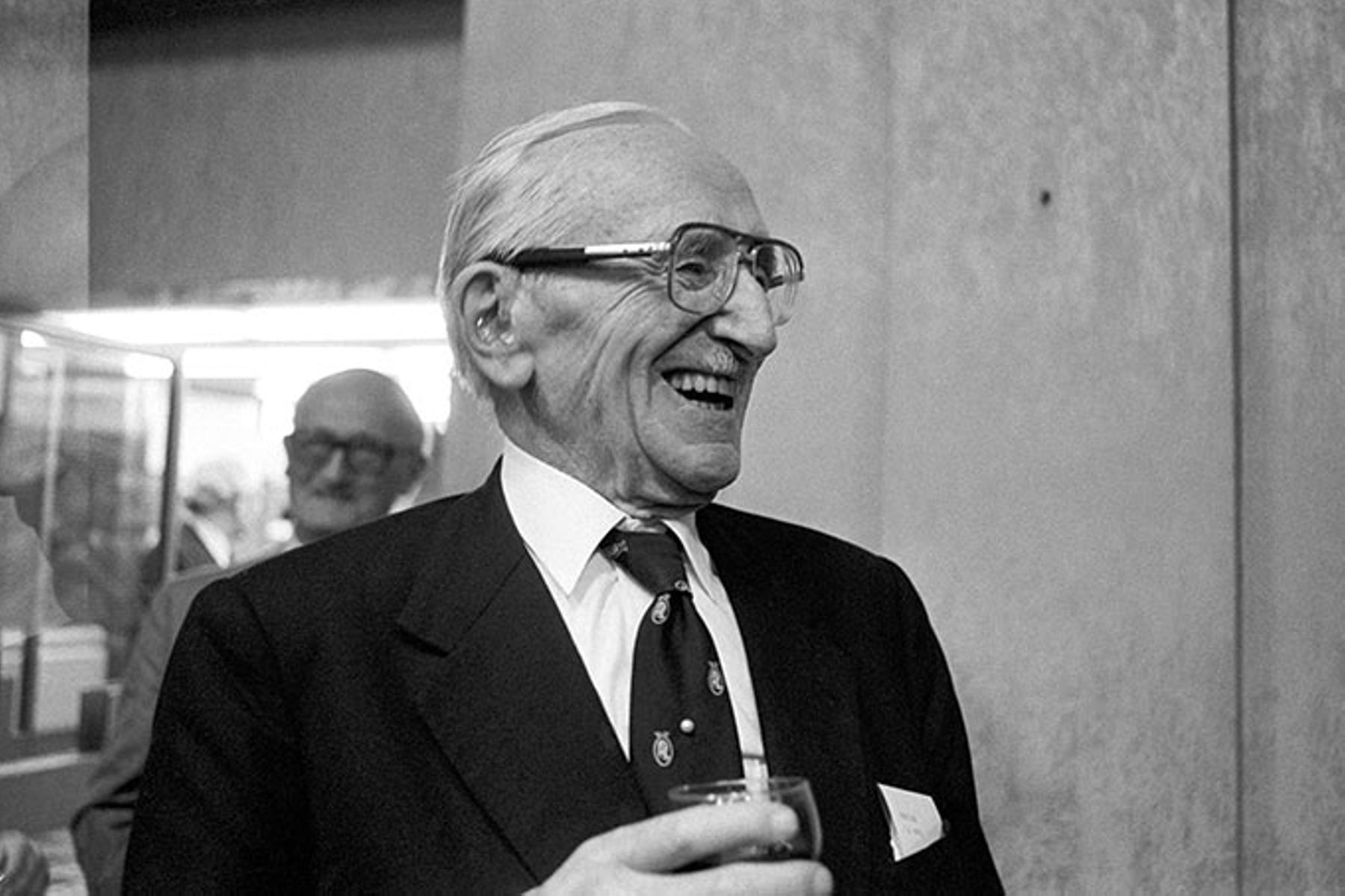
In 1944, at the height of intellectual enthusiasm for socialism, Friedrich Hayek warned of an intrinsic moral difference between the Left and the Right. Many economists, expecting the Soviet Union soon to surpass the West, advocated a kinder, gentler form of Communism: “liberal socialism,” in which democratic central planners would manage the economy more efficiently and distribute wealth more fairly. Unlike capitalists pursuing their own interests, these planners would serve the common good.
Who would these planners be? Western intellectuals imagined benevolent experts much like themselves. Hayek saw something different. In The Road to Serfdom, he argued that once the goal becomes the common good—social justice rather than individual justice—people inevitably disagree about what that goal entails and how to achieve it. Yet anyone seeking political power must still unite and mobilize a mass of supporters.
“It seems to be almost a law of human nature,” Hayek wrote, “that it is easier for people to agree on a negative program—on the hatred of an enemy, on the envy of those better off—than on any positive task.” This not only unites allies but also provides a rationale for stripping enemies of the protections traditionally afforded to individuals. For classical liberals like Hayek, government’s chief role is to uphold the rule of law and protect the rights of individuals—the rights to life, liberty, property, and equality before the law. “The rules of individualist ethics,” he wrote, “are general and absolute; they prescribe or prohibit a general type of action irrespective of whether in the particular instance the ultimate purpose is good or bad.”
If your main goal is social justice, the moral rules change. “The principle that the end justifies the means is in individualist ethics regarded as the denial of all morals,” Hayek wrote. “In collectivist ethics it becomes necessarily the supreme rule; there is nothing which the consistent collectivist must not be prepared to do if it serves ‘the good of the whole.’ ”
The leaders of such a society, Hayek argued, would need to be ruthless to gain and hold power because a planned economy was destined to stagnate. Lacking the information conveyed by market prices, central planners could never allocate resources efficiently. As stagnation impoverished the population and critics challenged the regime’s vision of the common good, the government could remain in power only through censorship, coercion, and violence directed at opponents. Hayek captured the problem in the title of one of The Road to Serfdom’s most famous chapters: “Why the Worst Get on Top.”
Hayek’s warning finds ample historical support in Sean McMeekin’s To Overthrow the World: The Rise and Fall and Rise of Communism, a magisterial history of socialism that won the 2026 Hayek Book Prize. McMeekin, a historian at Bard College, shows that leftist movements have been demonizing enemies and rationalizing violence ever since Jean-Jacques Rousseau’s eighteenth-century vision of an egalitarian society. Rousseau never fully explained how such a society would determine the “general will” of the community. But he did argue that those who violated the social compact could be treated as “public enemies” and removed from society by exile or even death. During the French Revolution, whose leaders frequently invoked Rousseau’s ideas, more than 30,000 people were executed or died as victims of the Terror.
McMeekin isn’t surprised that so many Americans share Mayor Mamdani’s fondness for what he calls “the warmth of collectivism.” Devout leftists have long been willing to overlook or rationalize the mob violence, social upheaval, and ruthless leadership required to impose their vision of the common good. As McMeekin notes, no Communist government ever came to power through a free election or remained in power without violently suppressing dissent—yet that did not prevent Western academics and activists from celebrating Vladimir Lenin, Joseph Stalin, Mao Zedong, Fidel Castro, Ho Chi Minh, and Pol Pot as champions of the people’s will.
The deadly consequences of these dictators’ policies were often ignored, minimized, or even defended by Western journalists. Walter Duranty, the New York Times’s Moscow correspondent, won the 1932 Pulitzer Prize for portraying Stalin as a farsighted planner and popular leader attuned to the “Russian character.” Yet Stalin’s Five-Year Plan, which dispossessed farmers and forced them into factories and collective farms, sparked peasant uprisings that were crushed through executions and mass deportations to Siberian gulags. Duranty didn’t dwell on such details in his reports praising Stalin’s “flair for political management.” As millions perished in the terror famine of 1932–33, he published a poem in the Times, “Red Square,” offering precisely the kind of moral rationale that Hayek warned against:
Russians may be hungry and short of clothes and comfort,
But you can’t make an omelette without breaking eggs.
Unlike the American leftists of the twentieth century, today’s socialists spend little time defending Communist dictators such as Stalin and Mao (though Fidel Castro still has his admirers). If pressed about the atrocities committed under those regimes, they typically argue that “true Communism” or “democratic socialism” has never been tried—or that, in any case, the Communists were not as bad as the right-wing Nazis.
But this claim is as dubious as today’s myth that right-wing violence is more prevalent. If political violence is measured by the death toll, Communists were much worse. R. J. Rummel, the political scientist who coined the term democide to describe murder by government, estimated that twentieth-century Communist regimes were responsible for about 150 million deaths through executions, massacres, government-induced famines, forced labor in gulags, and other forms of state killing. In his ranking of “megamurderers,” the 21 million deaths under the Nazis put Hitler in third place, below Stalin’s 43 million deaths and Mao’s 77 million deaths.
These statistics, of course, don’t capture the full monstrosity of Hitler. He looms as the Great Satan of political violence in Western historical memory for his perpetration of the Holocaust and for starting a war that led to over 70 million deaths. But why is this violence categorized as right-wing? It’s convenient for today’s leftists to disavow fascism, but Hitler was the leader of the National Socialist German Workers Party, and American progressives greatly admired Mussolini’s big-government philosophy. Hayek regarded fascism as another form of collectivism, one that substituted racial and nationalist hatred for class hatred to empower central planners pursuing the good of das Volk—Hitler’s version of Rousseau’s “general will.” The paramilitary street battles between the Nazi Brownshirts and the Communists’ equally lethal Red Front Fighters’ League were, in this view, an internecine struggle between collectivists.
Trump’s mass rallies are often compared with Hitler’s, and they do differ from traditional Republican events. But the crowds at Barack Obama’s rallies could be just as fervent. Democrats have long been the party of mass mobilization, with streets filled by protesters chanting, “The people . . . united . . . will never be defeated!” In 2011, well before Trump and George Floyd provided the latest catalysts for such demonstrations, Ann Coulter documented this tradition in Demonic: How the Liberal Mob Is Endangering America. The bestseller, which traces the history of left-wing mob violence—and debunks accusations against the Right—draws a Hayekian distinction between the American and French Revolutions.
Unlike the American Founders, whose commitment to the “unalienable rights” of individuals is celebrated on our national holiday, the French revolutionaries invoked Rousseau’s “general will” and embraced a series of what today’s protest consultants would call “direct actions,” beginning with one still commemorated annually by chapters of the Democratic Socialists of America. When the governor of the Bastille—a nearly empty prison—tried to surrender peacefully, the mob outside rejected the offer, stormed the fortress, murdered the governor and several guards, mutilated their bodies, and paraded through the streets with the governor’s head on a pike. Noting that this revolutionary triumph is now fondly remembered each Bastille Day, Coulter writes: “It would be as if this country had a national holiday to celebrate the L.A. riots.”
When it is not celebrated, leftist mob violence tends to be forgotten or blamed on the other side. Historians’ favorite example of capitalist brutality during the Gilded Age, the 1892 Homestead Strike, is commemorated near Pittsburgh with a monument honoring workers killed while striking “in defense of their American rights.” Yet these “Martyrs of the Monongahela,” as they are known in labor lore, were part of an armed mob that initiated the violence—first by occupying Andrew Carnegie’s steel mill, then by massing on the banks of the Monongahela River to confront a barge carrying Pinkerton detectives sent to reopen it. After a 12-hour battle in which three Pinkertons were fatally shot, the detectives surrendered and were forced to run a gauntlet of people who robbed them, tore off their clothes, pelted them with stones, and clubbed some into unconsciousness. The Pinkertons receive no mention on the monument.
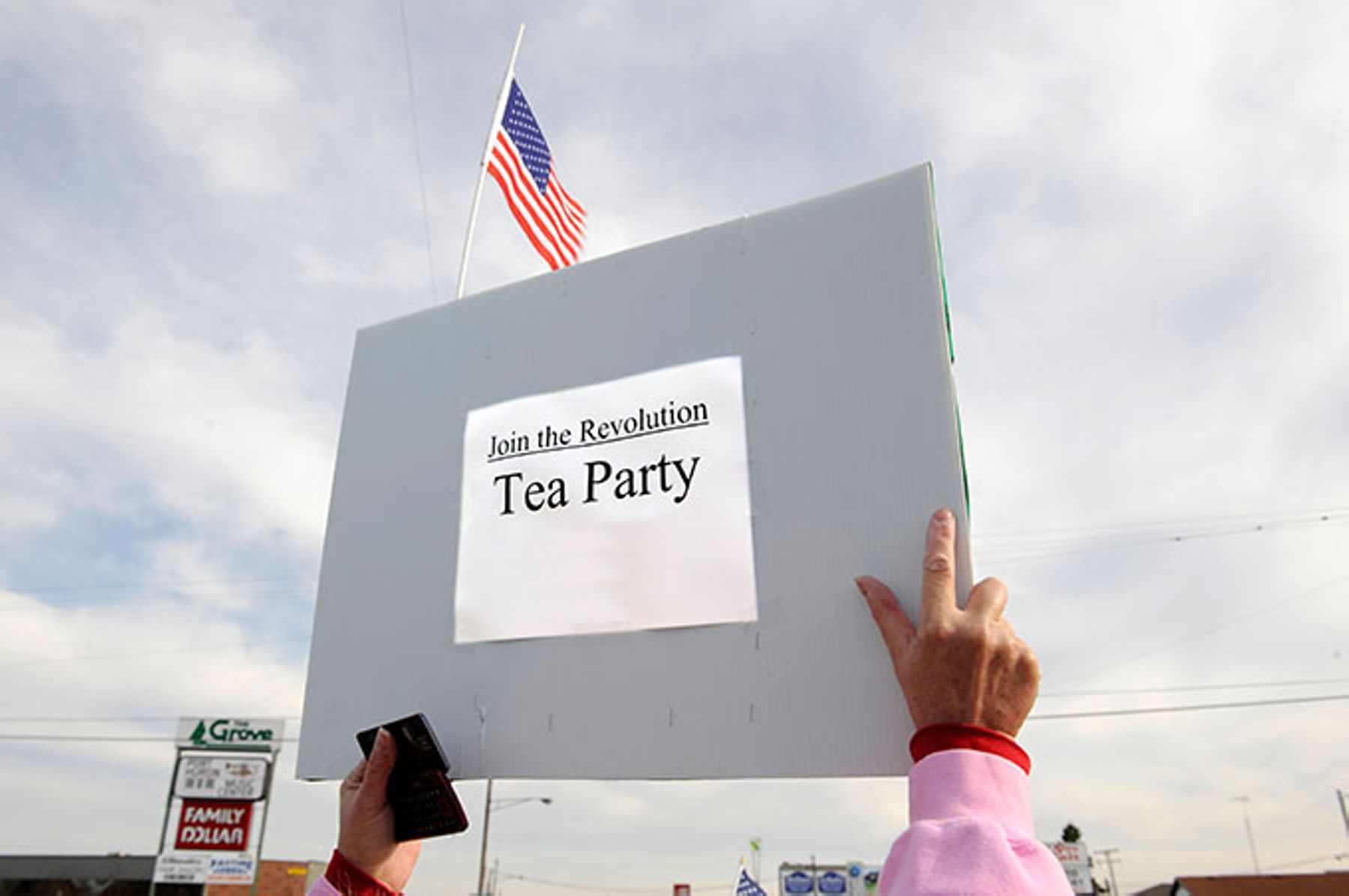
Journalists apply a similar double standard to contemporary political violence. Tea Party rallies were not known for violence—participants famously cleaned up after themselves in city plazas and on the National Mall—yet Democrats and mainstream journalists routinely compared them to Nazi gatherings. Reporters also eagerly amplified accusations that Tea Partiers at one rally had shouted racial slurs at black members of Congress. In response, the late Andrew Breitbart offered $100,000 for evidence. Yet despite the presence of countless journalists and camera phones, no one ever came forward to substantiate the claim.
Journalists weren’t so keen on drawing Nazi parallels with masked Antifa members, who repeatedly disrupted conservative speeches and marches (a common tactic of the Brownshirts) around the country, attacking police and conservatives with clubs, bricks, fireworks, and Molotov cocktails. While a handful of independent journalists—notably Andy Ngo, who was hospitalized with a brain hemorrhage after getting pummeled by masked Antifa “counter-protesters”—covered the group, the mainstream media largely ignored it. The few articles were often uncritical or even sympathetic.
The George Floyd riots of 2020 were the costliest civil disturbance in American history, causing more than $1 billion in property damage. Yet media coverage was epitomized by the CNN chyron displayed as a correspondent stood before a burning building: “Fiery but mostly peaceful protests.” Journalists continued to portray Black Lives Matter as a noble movement, ignored much of the violence associated with the unrest, and downplayed it by citing a statistic that 93 percent of the protests were peaceful—as though that excused the property destruction and two dozen deaths. As usual, audiences were told that right-wing violence posed the greater threat.
This claim keeps getting cited, despite obvious biases and other flaws in the statistics, as journalist Batya Ungar-Sargon and others have observed. In identifying, counting, and classifying violence, most of the statisticians depend heavily on the legacy media’s selective coverage, as well as on reports from the Anti-Defamation League and the Southern Poverty Law Center, left-leaning groups with an incentive to generate donations by exaggerating right-wing violence.
The SPLC, which has amassed a $700 million endowment with this tactic, was discredited long before the recent federal indictment accusing it of spending millions of dollars to manufacture right-wing extremism—like paying for Ku Klux Klan members to buy crosses and neo-Nazis to coordinate travel to the infamous Charlottesville protest in 2017. Scholars and journalists have shown that the group deliberately ignores left-wing extremism while falsely reporting “a rising tide of hate” on the Right. Its blacklist of dangerous “extremist” groups includes Prager University and Moms for Liberty—but not Antifa, which the SPLC argues should not be designated as a terror group.
Journalists often cite statistics from the Prosecution Project, which counts only incidents resulting in felony charges. Yet its right-wing category includes questionable cases, such as Aryan Brotherhood members convicted of assaults and murders tied not to politics but to drug trafficking, now the group’s principal activity. And the left-wing category is likely undercounted because many violent leftists in Democratic jurisdictions are never arrested, let alone prosecuted for felonies.
The three months of nightly protests in Portland, Oregon, in 2020 caused over $15 million in property damage and more than 450 injuries to police officers and federal agents, but the district attorney declined to prosecute most of those arrested. In Manhattan, a man in Union Square who painted “Slave Owner” in huge yellow letters on the granite base of the George Washington statue was charged with a misdemeanor, so he does not appear in the leftist statistics, but the right-wing category includes a driver in Delray Beach, Florida (a Democratic stronghold), charged with a felony for leaving skid marks on a street painted with a Pride rainbow.
The statisticians at the Center for Strategic & International Studies are frequently cited in discussions of political terrorism, but they classify anti-Israel violence as “ethnonationalist” rather than leftist. Their left-wing tallies thus exclude the murders of Israeli Embassy staffers, the firebombing that injured 15 participants on a pro-Israel solidarity walk, and other acts of violence by pro-Palestinian activists. The tallies also exclude the attacks on Tesla dealerships (classified as “economic vandalism” rather than terrorism), as well as most of the violence associated with the Floyd riots and ICE protests, because these incidents are deemed not to meet various requirements for terrorism (such as being premeditated and causing “broad psychological impact”).
Shortly after Charlie Kirk’s murder last year, the media trumpeted a calculation from the Cato Institute that, since 1975, right-wingers had committed five times as many politically motivated killings as left-wingers. It was the usual accusation, but this time it prompted rebuttals.
Conservatives complained that virtually none of the supposedly right-wing killers was pushing an agenda endorsed by Republicans and that Cato’s definition of politically motivated violence unfairly excluded lethality by leftists. The Conservative Action Project listed methodological objections in a letter to Cato, urging that the study be withdrawn. (Cato demurred.) A conservative writer, Jennifer Emick, posted her own tally of political murders since 1975, excluding some on Cato’s list and adding others. She concluded that left-wingers had committed twice as many as right-wingers.
It is refreshing to see some conservatives finally challenge the myth of right-wing violence, but they have less incentive than leftists to keep the argument going. Conservatives do not make a living sending angry crowds into the streets, so they have less need for statistics that distract from the resulting mob violence. Nor do they depend on mobilizing the masses against the latest Hitler. But the Left’s professional activists will always need to find a new demon to rally the troops—and then pretend it was the other side that started the war.