|
Forwarded this email? Sign up for free to have it sent directly to your inbox. |
|
|
Good morning, Today, we’re looking at celebrations in New York of Ayatollah Ali Khamenei’s death, skilled immigration in the U.S., and how the work of one psychologist helped radicalize the helping professions. Write to us at editors@city-journal.org with questions or comments. |
|
|
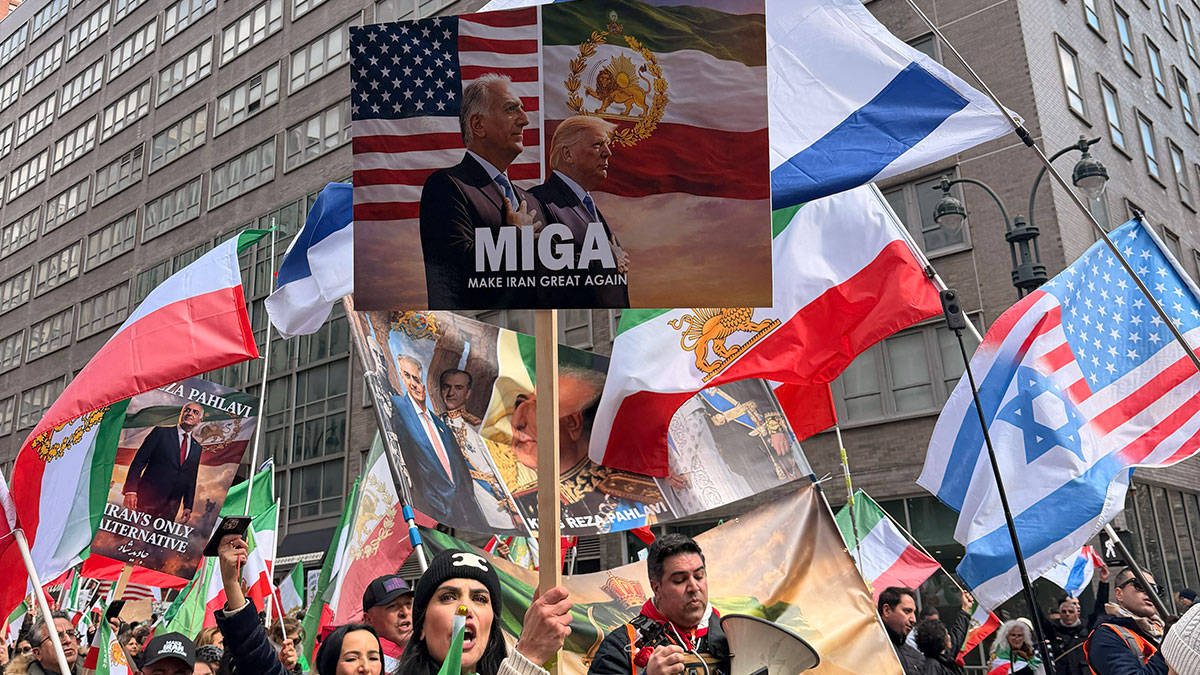
Outside the UN in New York City on Sunday, crowds gathered to celebrate the death of Iran’s Supreme Leader Ayatollah Ali Khamenei. Many of them Iranian American, they thanked President Trump and Israeli Prime Minister Benjamin Netanyahu, chanting, “USA! USA!” The day before, Mayor Zohran Mamdani called the U.S. military operation a “catastrophic escalation,” and assured Iranian New Yorkers that they “are part of the fabric of this city—you are our neighbors, small business owners, students, artists, workers, and community leaders. You will be safe here.”
“But the proud Iranian New Yorkers I met didn’t seem to need reassurance,” Yael Bar Tur writes. “Nor did they think for a minute that they weren’t safe in the land of the free. They wanted action—action carried on the under‑wing pylons of fighter jets, not in statements assuring them that they are ‘part of the fabric of this city,’ which they already know.”
Read more about the celebrations. |
|
|
Despite America’s complicated visa application process, a recent study found that interest among skilled workers in moving to the U.S. increased from 16 percent in 2021 to 22 percent in 2025. That’s welcome news, as these educated immigrants are a powerful asset, given their likelihood to be a major boon to the economy.
Even so, many on the Left believe that mass migration of any kind is necessary to keep GDP humming along. But that hasn’t proved to be the case. “Much of the problem is that the newcomers, particularly those arriving illegally, are far less educated than earlier waves,” Joel Kotkin writes. “The most recent massive immigration surge has had some negative effects, according to the Congressional Budget Office. These newcomers primarily compete with other poor people for living space, jobs, and social services.”
Read more about the need for skilled workers and the consequences of unregulated mass migration. |
|
|
Professions like social work and nursing have long leaned left, but their views have intensified in recent years, with the field increasingly embracing social-justice advocacy.
One reason? The work of psychologist Derald Wing Sue. As patients became more ethnically and racially diverse in the late twentieth century, his racialist theories began to take hold. He became a leading figure in the field of “multicultural counseling,” arguing that casting individuals as responsible for their own condition was “oppressive and discriminating toward clients of color.” He popularized the concept of “microaggressions,” argued that minorities were being harmed by “White institutions,” and denounced policies that “claim to ‘treat everyone the same.’”
“In time, Sue’s theories infected professional counseling and psychological organizations,” Forest Romm writes. Sue’s ideology captured “accreditation bodies and changed the character of the helping professions.” Read more about Sue’s work and the groups and fields he influenced.
|
|
|
-
Manhattan Institute Legal Policy Fellow Tal Fortgang on the Ricochet Podcast
- Manhattan Institute Senior Fellow Jason Riley on the Fox Journal Editorial Report
-
Manhattan Institute Nick Ohnell Fellow Rafael Mangual on The Joe Piscopo Show
|
| |
“The solution is increasing supply and decreasing demand.
That would require reducing rental protections and ending wage subsidies. However, both of these policies are central to the Democrat patronage machine, so they are unlikely to be changed. It’s a catch-22 for Democrats. Everyone knows the right answer, but they can’t implement it.” |
|
|
Photo credits: Yael Bar Tur |
|
|
A quarterly magazine of urban affairs, published by the Manhattan Institute, edited by Brian C. Anderson. |
|
|
Copyright © 2026 Manhattan Institute, All rights reserved. |
|
|
|