
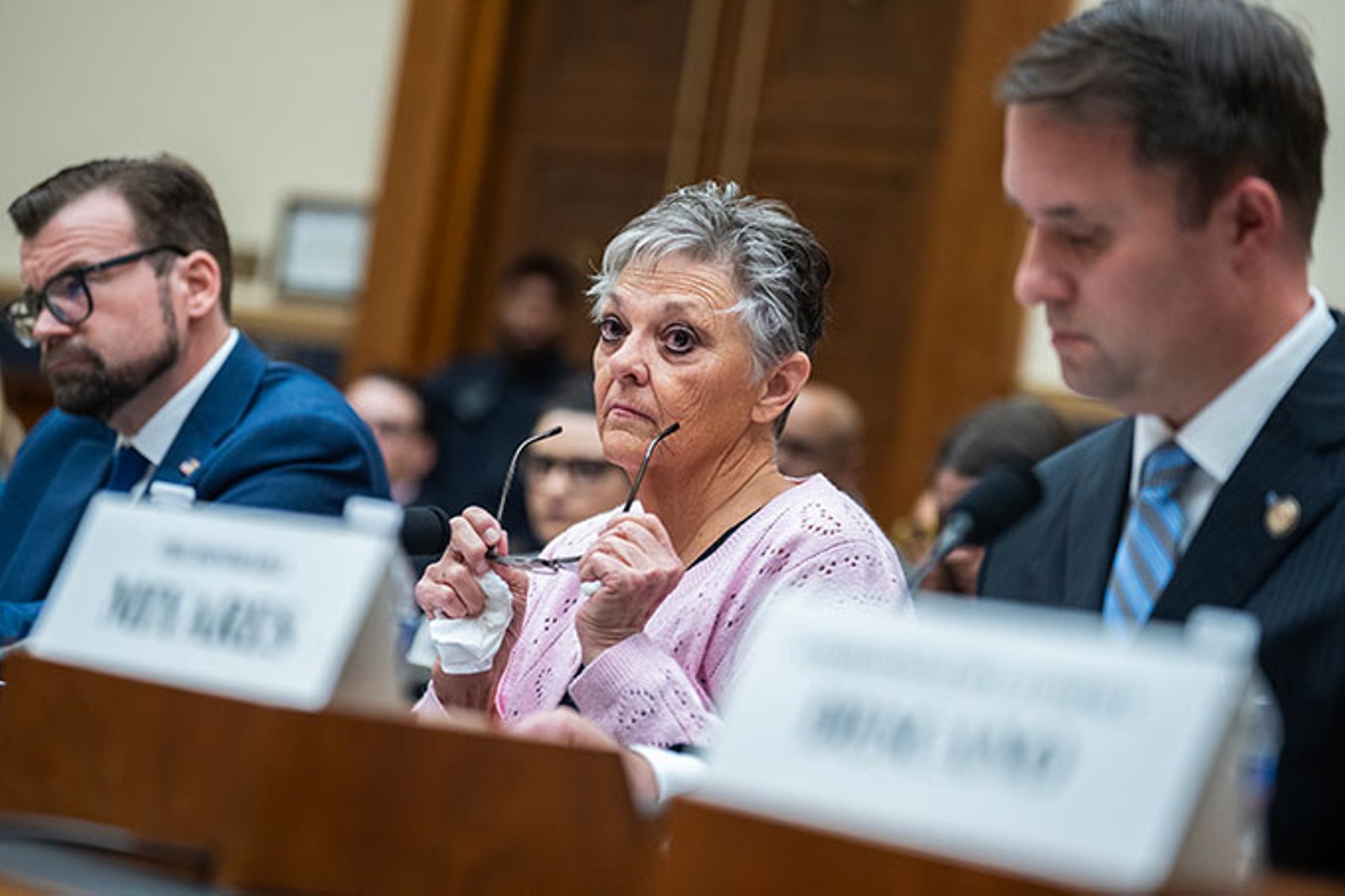
It took a congressional subpoena to get Steve Descano, the Commonwealth’s Attorney for Fairfax, Virginia, and a proud social justice warrior, into a hearing room. It took cameras and questioning under oath to get him to look Cheryl Minter in the eye and apologize for the death of her daughter, Stephanie, who was murdered by an illegal immigrant previously arrested multiple times on rape, robbery, and violent assault charges—nearly all of which Descano’s office had dropped.
Think about that for a moment. A mother buries her child. The Commonwealth’s Attorney whose charging decisions contributed to that tragedy offers no apology until Congress compels him to face her. That’s the bare minimum extracted under duress, and it tells you everything you need to know about the man and the office he ran.
Finally, a reason to check your email.
Sign up for our free newsletter today.
Descano’s defenders want to frame his failures as a philosophical disagreement about immigration enforcement, but the truth is harder to dismiss. Descano spent years systematically undercharging violent criminals—regardless of their immigration status. He dropped a felony strangulation charge against a twice-deported alien and let the accused plead down to a misdemeanor. He reduced sexual battery charges against a man accused of crimes against a child under 13. He built a charging philosophy that treated serious offenses as bargaining chips to be discarded, not prosecuted.
The predictable result was a string of tragedies. Marvin Fernando Morales-Ortez should have been in ICE custody. Instead, Descano’s office and Fairfax County’s sanctuary infrastructure conspired to put him back on the street. One day later, he allegedly murdered a man in Reston. A Honduran national arrested on child sex crimes was released, rearrested on four additional counts against additional child victims, and released again before ICE finally tracked him down months later in Maryland.
Descano’s office maintained impressive-sounding statistics. Fairfax County is a safe community, his staff said. Of course, it looks safe on paper when you’re consistently pleading felonies down to misdemeanors and declining to prosecute serious charges. But creative bookkeeping is not public safety. Meantime, the actual danger—the actual person—walked free to harm someone else. The reality: violent crime is up 92 percent under Steve Descano’s criminal-first, victim-last policies.
Real safety is built on accountability. Descano built an appearance of safety by avoiding accountability at every turn.
Descano claims his policies build “community trust.” The reality is that the catch-and-release of violent criminals destroys communities. You don’t build trust by releasing violent criminals back into the neighborhoods where they commit violence. The immigrant families living in Fairfax County—the vast majority of whom are law-abiding, hardworking people—deserve to be protected from predators. They are not safer because Descano declined to prosecute, or because the Fairfax Adult Detention Center released 1,150 individuals despite active ICE detainers.
The real message Descano’s catch-and-release approach sent to the community was this: if you are victimized by someone we’ve decided not to prosecute fully, that’s the price of the policy. It’s a price that his office never had to pay—but the victims did.
Finally, the most serious matter to emerge from Descano’s testimony may not have generated the headlines it deserves—at least not yet. When asked directly whether immigration status influenced his charging decisions, Descano denied it. But his own website told a different story, explicitly saying that his office shall, wherever possible, make charging and plea decisions that “limit or avoid immigration consequences.”
This is not prosecutorial discretion; it is discrimination against American citizens in favor of those here illegally who commit additional crimes. This policy is confirmed by a detailed ACLU questionnaire that Descano answered, in which he explained precisely how his office would handle immigration-related matters—including, it appears, the extent to which immigration status would factor into prosecutorial decisions.
The Department of Justice is investigating this apparent equal-protection violation. If any current or former member of Descano’s staff—prosecutors, deputies, administrators who worked those cases—can demonstrate that immigration status influenced the office’s charging decisions, Descano will have a very serious problem with Congress, lying to which is a federal crime.
Cheryl Minter deserved an apology long before she had to sit in a congressional hearing room to receive one. She deserved accountability long before cameras arrived. She deserved a Commonwealth’s Attorney who took the dangers in his community seriously enough to prosecute them fully—not one who needed congressional intervention to acknowledge the human cost of his decisions.
The consequences of Steve Descano’s tenure—the dropped charges, the released criminals, the families left to grieve without explanation—will far outlast his time in the office. The lights are on now. They should have been on a lot sooner.