
It’s past midnight in June, 250 miles north of the Arctic Circle.
As I walk around Deadhorse, Alaska, the settlement adjacent to the Prudhoe Bay oil field on the Arctic Coast, I grasp for the first time how sharp the Earth’s axial tilt really is. Up here, on the tundra of Alaska’s North Slope, the summer sun dances in an unending ellipse. By the time of my solstice visit, it hasn’t dropped below the horizon for five weeks. Feeling what I’ve only experienced before as an afternoon’s ambiance in the wee hours, I’m disoriented.
Finally, a reason to check your email.
Sign up for our free newsletter today.
Next morning I strike up a conversation with a cluster of workers heading out to a job site and ask: How do you manage any shuteye this time of year? “You don’t,” one replies, smirking. “Sleep when you’re dead,” pipes in another. The attitude is ubiquitous on the Slope. The men (and rare women) who make a living in Prudhoe Bay are here to earn as much cash as they can to take back home. Though Deadhorse has several thousand workers on the ground throughout the year, none is a permanent resident. Instead, each entity operating on the Slope—drillers, oil-field service companies, construction firms, and more—provides room-and-board for workers on rotation. The workers typically spend two weeks on-site (a hitch, they call it) followed by two back home. It’s reassuring to know that it isn’t just my un-Alaskan daintiness that’s throwing me off.
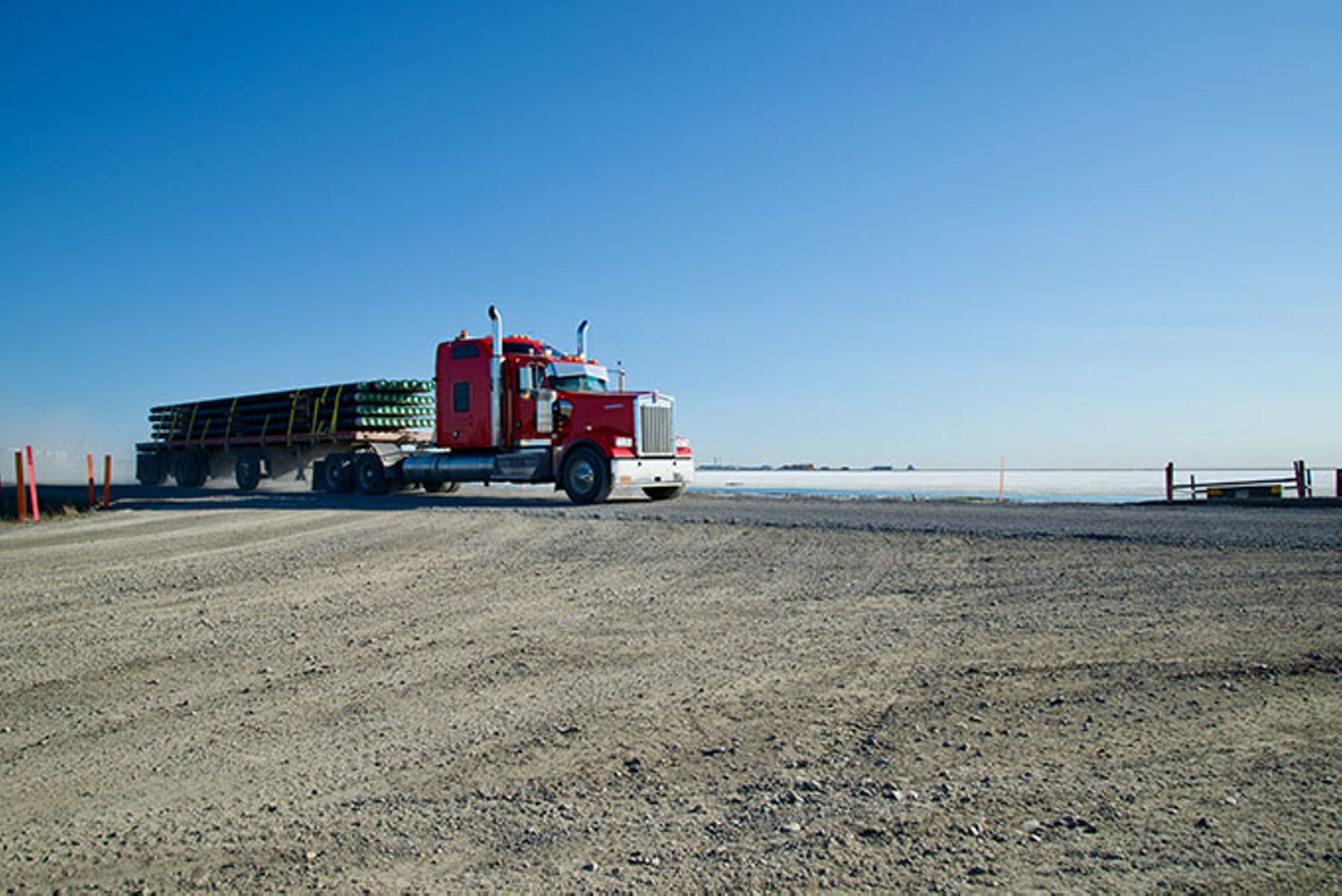
Spread over four square miles, pocked by frozen thermokarst lakes, and linked by gravel roads, Deadhorse is a humming jumble of oil rigs, pipelines, fuel depots, and spartan barracks. As I get to know it on foot, I soon realize why my hosts at Arctic Fox Environmental, Inc. raised their eyebrows at the idea of a walkabout. Eighteen-wheelers rumble off of the Dalton Highway and pickups loaded with workers and materials whiz by, shrouding me in dust.
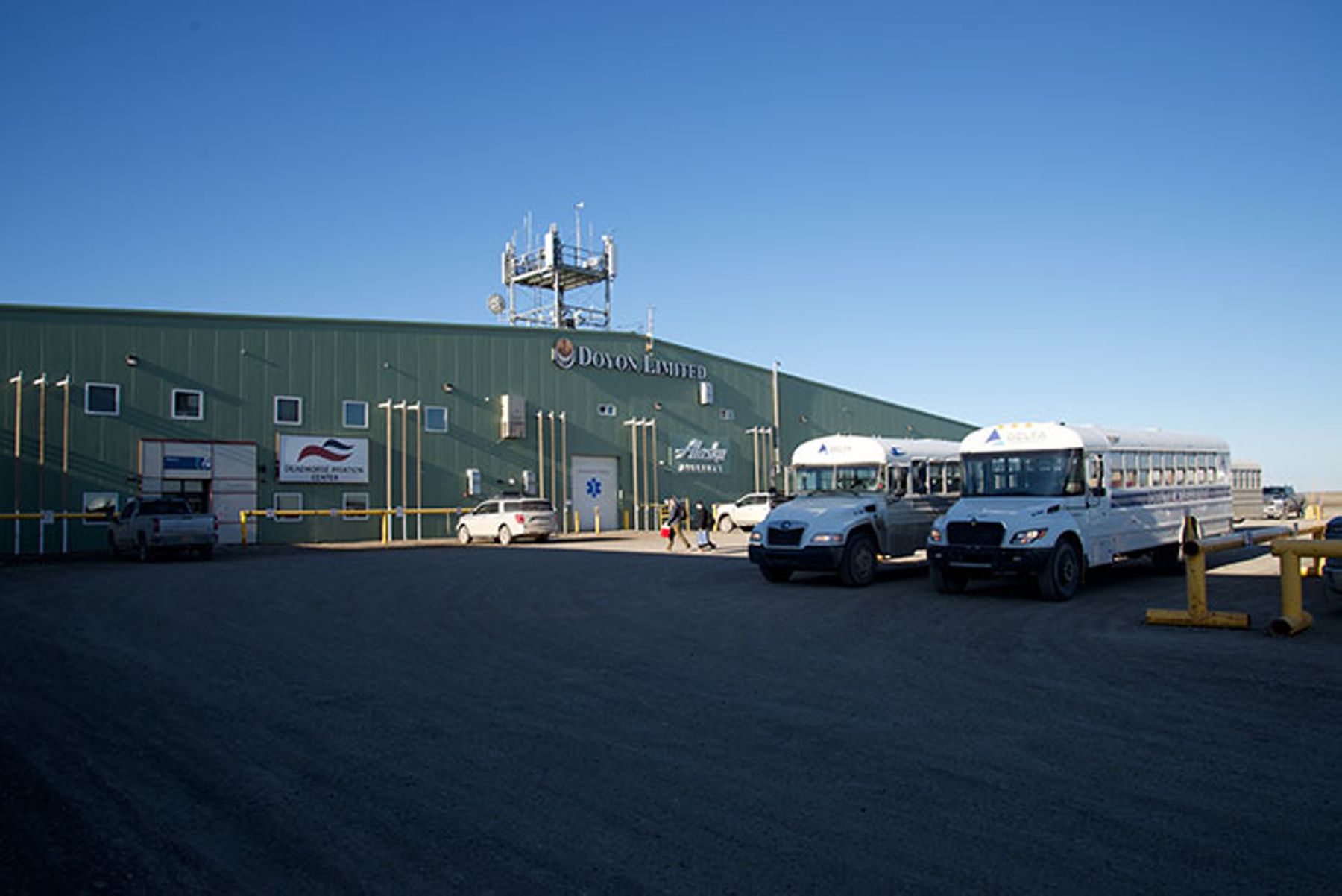
The barracks (camps, in Slope parlance) are self-contained units, housing everyone from command-post executives to oil-field roughnecks to janitors. The workers eat in cafeterias of varying reputations. Some camps have gyms and movie theaters. And now, with wifi, the workers suffer no lack of entertainment. With their daily needs accounted for (and alcohol barred), there’s virtually nothing resembling normal commerce in Deadhorse. Nor are there any public spaces. The one spot that comes closest is Brooks Range Supply. Its downstairs is home to the Prudhoe Bay Post Office (open two hours a day) and a hardware shop that keeps a running account with the operators; upstairs is a convenience store that does brisk business selling energy drinks and tobacco. As with the field workers, the Brooks Range Supply staff do hitches and stay in a camp next door.
Outside the store I meet Vaughn, Chantelle, and Connor having a smoke. The trio demonstrates the Slope’s occupational diversity and the lure of its hazard pay. All three work for NANA Management Services at the Prudhoe Bay Operations Center, run by the Slope’s dominant player, Hilcorp. Vaughn, a carpenter by trade, says he makes $120,000 working 26 weeks a year, leaving the other half free for hunting and fishing. Chantelle and Connor, a cook and a cleaner, respectively, decline to tell me their numbers, but they know they’re making a lot more than they could anywhere else, too. While Vaughn and Chantelle are both from the Anchorage area and have thus known from childhood about the Slope, Connor is here from faraway Florida. He learned about it online and jumped at the chance for adventure. Though he’s not working in the field, his friends back home are impressed nonetheless. “They think it’s dope. I’m not living at home.”
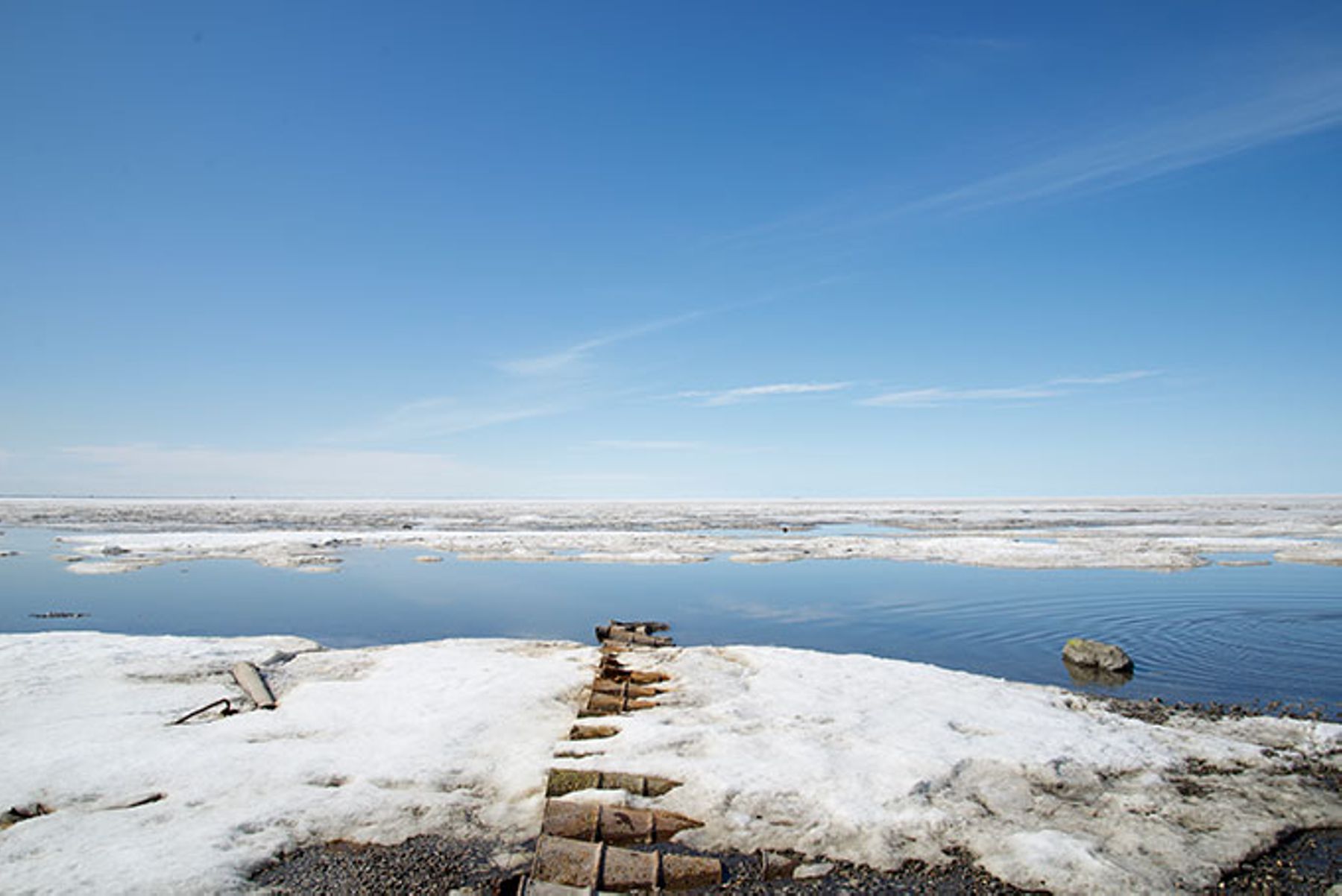
A taste of the more extreme edge of the North Slope comes from Kevin Daems. Raised on a ranch in Montana, Kevin has spent the past decade working as an oil-field operator on Spy Island. Forty miles west of Deadhorse, the Spy Island drill site is an artificial speck of land in the Arctic Ocean that’s a favorite haunt of the region’s polar bears. Kevin and his crewmates serve as the “eyes, ears, and nose” of Hilcorp’s remotest drilling operation. While buses take them to the coast, the last leg of the journey for the Spy Island crew is a ride aboard a hovercraft across the sea ice. (He sends me a video to prove it.) Their routine—day and night, winter and summer—involves dashing from one bear-proof cage to another to check and service wells.
Back inside Brooks Range Supply, I have a long chat with the affable clerk, Anna Cuadra, a member of the Tlingit Nation native to Southeast Alaska. A nurse by training, Anna began working on the North Slope when her Covid vaccine skepticism came into conflict with her profession’s requirements. She’s nothing but positive, however, exuding her own brand of frontier optimism despite the 90-hour weeks she puts in on her three-week hitches.
Logan and Ryan, the two guys who chuckle at my sleep needs, have the most aggressive rotations I hear about. For the last ten years, Logan has worked for QAP, a subsidiary of the civil engineering firm Colaska. “In the winter, I come up, I do two months, three months straight.” In those months of total darkness, he fills one of the Slope’s iconic niches, building ice roads to drill sites in the hinterlands.
After a month or two back home in Anchorage, he returns. “In the summertime you go pretty much six months straight. You just work, work, work, work. Twelve-hour shifts, minimum.” One worker after another says the intensity of the schedule and the hardships of the Arctic are worth it for the money and the extended R&R it affords them.
Yet hardships there are. Bears and blizzards are the most cinematic, but the quotidian challenges to the body and mind are more profound. On my way home I stop in Anchorage at the University of Alaska, where I meet with Diane Hirshberg, until recently director of the Institute of Social and Economic Research, and Ray Weber, dean of the university’s technical and vocational schools. They both tout the opportunities for upward mobility the North Slope offers, but they also see a ceiling. I ask why Alaska is losing workers despite the robust wages that people like Vaughn, the carpenter, garner in the Arctic. “The jobs suck,” Weber quips. “They’ve done it for 15 years, their body’s giving out. They’re sick all the time. They’re broken.”
Physically taxing though the work is, I sense the psychological drain is worse. Distance from loved ones hits men working on the Slope hard, especially if they’re beyond the bachelor phase. I overhear an old-timer counseling a forlorn newcomer on building trust with his wife. The young fathers I meet are the most ambivalent. Alex, a burly Army infantry veteran who does oil-field maintenance work for Schlumberger, tells me he got his start with the company right out of the service. “The only skills in the military that carried over was—well, there’s lots—but,” he lets out a sigh, “mainly being gone.” Josh, in his first year working at the hardware shop, has three kids back home in Anchorage. He says Thanksgiving was tough on the family. Hitches don’t pause for holidays—and I can’t help but notice that most of the men with gray hair I talk to are divorced or never married.
The Arctic, it seems, disorients more than the sleep-deprived traveler from the Lower 48. Still, for the right kind of person at the right stage in life, working on the North Slope oil field is a precious opportunity, offering not just high pay but a bit of adventure on America’s last frontier.