|
Forwarded this email? Sign up for free to have it sent directly to your inbox. |
|
|
Good morning,
Today, we’re looking at why juvenile detention is on the rise, “rental ripoff” hearings in New York, how the U.S. lost control of rare earths, a troubling bill in Oregon, and the case for letting gifted students skip a grade.
Write to us at editors@city-journal.org with questions or comments. |
|
|
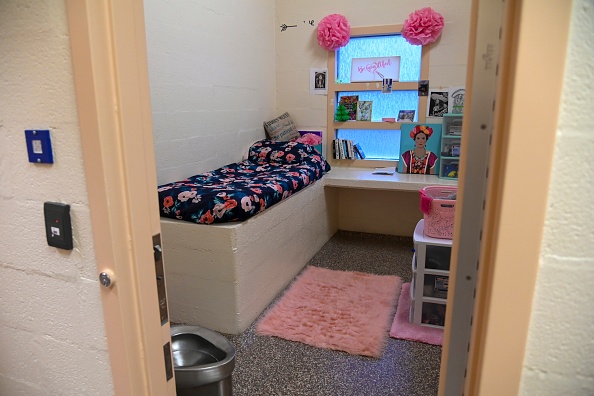
In 25 states across the U.S., teens with mental-health issues are being held in juvenile detention because of a lack of beds at treatment centers, according to a new bipartisan investigation. Residential treatment centers have long been on the decline—since 2010, the number of centers has fallen by nearly 61 percent, and the number of beds has fallen by nearly 67 percent.
“That contraction reflects a sustained policy shift away from residential care and toward community-based alternatives—a direction lawmakers are now seeking to accelerate through additional federal reforms,” Christina Buttons writes. “Adult deinstitutionalization followed the same theory. States closed psychiatric hospitals on the promise that community services would replace them, but the promised infrastructure never materialized at sufficient scale. Many adults with serious mental illness instead ended up homeless or incarcerated.”
Read more about the policies preventing troubled youth from getting the treatment they need. |
|
|
Last week, New Yorkers gathered in Brooklyn to attend the first in a series of “rental ripoff” hearings. Hosted by Mayor Zohran Mamdani’s administration, the events are intended to give city residents space “to share poor conditions and unconscionable business practices.”
Adam Lehodey attended. “The administration officials present assumed they knew both the problems and solutions, rendering alternative ideas irrelevant,” he writes. “There was little discussion of the onerous regulations keeping apartments empty or unbuilt (problems that will be worsened by freezing rents).”
Read more about it here. |
|
|
China didn’t always dominate the rare-earth industry. In fact, shortly after it opened in 1952, the Mountain Pass mine in California quickly became the world’s leading supplier of the metals, making America the biggest rare-earth player well into the 1980s. “But as environmental regulations tightened and costs rose in the U.S.,” Shawn Regan writes, “China began dominating the market through a mix of cheap labor, lax standards, and aggressive industrial policy.” China now accounts for about 70 percent of global rare-earth mining and about 90 percent of refining and magnet production. Mountain Pass, meantime, is the only rare-earth mine operating in the U.S. today, accounting for just over 10 percent of global supply. “Some initial refining occurs on-site,” Regan explains, “but most of the material still gets shipped to China for final processing before being sold to manufacturers around the world.” Read more about how the U.S. lost control, how China came to dominate, and how Washington can end Beijing’s grip on the industry. |
|
|
Democrats in Oregon are considering a bill that would restrict any state officer or employee from cooperating with out-of-state investigations into gender-affirming treatments that take place there. It would even prevent the state from responding to a simple “inquiry.”
“This language is so broad that Oregon officials could refuse to respond to federal requests for data from the state’s Medicaid program,” Kurt Miceli explains, “which is how the state has funded hundreds of pediatric gender treatments going back years.” The bill would also block requests from private individuals, which will make it harder for journalists and researchers to hold officials in Oregon accountable for pediatric gender treatments. Read more about the problematic legislation. |
|
|
Between 15 percent and 45 percent of elementary school students in the U.S. perform one year ahead of standard academic expectations. But most school districts don’t offer these students the option to skip a grade. Jonathan Barazzutti argues that it’s time for a new approach.
“Whole-grade acceleration is not only better for student achievement but also more cost-effective,” he writes. “The marginal cost of educating a student for an entire year runs into the thousands of dollars. Grade-skipping frees up these funds for other uses.”
Read more from Barazzutti on why states should mandate that school districts offer whole-grade acceleration for advanced students. |
|
|
“Hand written tests or even in-class essays will reveal the illiteracy (and of course innumeracy) of many students who then will fail. The outcome? More cries of racism and other isms and colleges needing to add more remedial courses. Ask any teacher.”
|
|
|
Photo credits: The Washington Post / Contributor / The Washington Post via Getty Images |
|
|
A quarterly magazine of urban affairs, published by the Manhattan Institute, edited by Brian C. Anderson. |
|
|
Copyright © 2026 Manhattan Institute, All rights reserved. |
|
|
|