|
Forwarded this email? Sign up for free to have it sent directly to your inbox. |
|
|
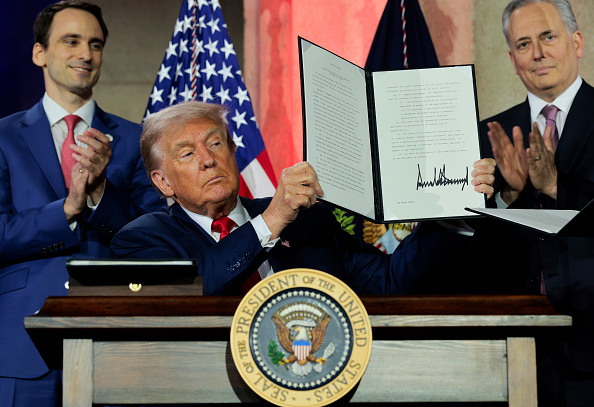
Good morning, Today, we’re looking at President Trump’s executive order on AI, progressive regulation of the technology, tariffs and their impact on consumer prices, and a soulful busker in Central Park. Write to us at editors@city-journal.org with questions or comments. |
|
|
Artificial intelligence is poised to shape the future of technology, potentially enhancing productivity and efficiency across industries. But AI, like any software, reflects the values and biases of its programmers. Those biases, left unchecked, could distort the technology’s accuracy and reliability.
Last week, the Trump administration addressed this problem with an executive order preventing the federal government from contracting with AI companies whose software includes “woke” filters. Christopher Rufo, whom the White House consulted in drafting the order, believes that the move will encourage the production of “unbiased AI models that serve the American interest.”
|
|
|
The version of the One Big Beautiful Bill that Congress enacted earlier this month came without one key provision found in earlier drafts: a federal moratorium on state-level artificial intelligence regulations. “That move has cleared the way for blue-state lawmakers to push forward the Biden-era AI agenda—potentially threatening America’s global competitiveness, especially against China,” writes R Street Institute’s Adam Thierer.
Retaining America’s global edge in AI depends on its developing a comprehensive, coherent, and light-touch national regulatory policy. That’s why it’s essential for Congress to act quickly to “halt the patchwork of progressive state and local AI regulations,” argues Thierer. Read his article here. |
|
|
The Labor Department’s June inflation figures cast “considerable doubt” on popular arguments that Trump’s tariffs have begun driving inflation, argues Milton Ezrati. “The sharpest June price increases were in goods largely produced domestically, where tariffs don’t apply,” he notes. That’s not to say that the tariffs won’t eventually impose some burdens on consumers—just that their impact is likely to be more limited and nuanced than Trump’s critics claim, thanks to changing consumer behavior and foreign currency effects.
“A better grasp of these dynamics would serve both the media and the public,” Ezrati writes. Read more here. |
|
|
Before moving to New York in 1989, Luis De la Cruz played flute and guitar in merengue bands in the Dominican Republic, where he grew up. Now 67, he plays the saxophone three or four days a week in New York’s Central Park. “He credits his mother for showing him the higher power of music,” Allan Ripp writes. Read De la Cruz’s story here. |
|
|
“From everything they do, one is tempted to think that Democrats are deliberately running California down to the ground, because overall poverty and misery are good for expanding the reach of the government into Totalitarianism.”
|
|
|
Photo credit: Chip Somodevilla / Staff / Getty Images News via Getty Images |
|
|
A quarterly magazine of urban affairs, published by the Manhattan Institute, edited by Brian C. Anderson. |
|
|
Copyright © 2025 Manhattan Institute, All rights reserved. |
|
|
|