|
Forwarded this email? Sign up for free to have it sent directly to your inbox. |
|
|
|
Good morning,
Today, we’re looking at New York City Mayor Zohran Mamdani’s first veto, the cost of hosting the World Cup, a new tax proposal in New York, and how the Left hijacked the Fair Housing Act.
Write to us at editors@city-journal.org with questions or comments. |
|
|
|
Photo credit: Anadolu / Contributor / Anadolu via Getty Images |
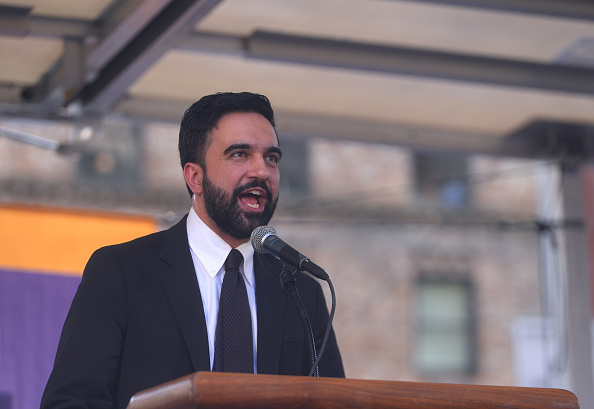
New York City Mayor Zohran Mamdani issued his first veto last week.
The bill he rejected: Intro 175-B, which would require the NYPD “to address and contain the risk of physical obstruction, physical injury, intimidation, and interference” during protests at schools and other educational institutions.
Mamdani said the bill was too broad in its definition of “educational institutions,” and therefore would have affected “workers protesting ICE, or college students demanding their school divest from fossil fuels or demonstrating in support of Palestinian rights.”
City Council Speaker Julie Menin made clear that the bill “simply requires the NYPD to clearly outline how it will ensure safe access when there are threats of obstruction or physical injury, while fully protecting First Amendment rights.” That Mamdani “even sees this bill as problematic,” Josh Appel writes, “reflects his roots not as a principled defender of free speech but as a campus radical-turned-politician.”
Read more. |
|
|
With the 2026 World Cup rapidly approaching, some U.S. host cities are realizing just how much it will cost. Foxborough, Massachusetts will host seven matches, which come with a nearly $8 million price tag for public safety. After learning that security costs could exceed $1 million a day, Los Angeles and New Jersey announced that they would charge for tickets to fan fests, which are supposed to be free events.
“Though more skepticism early on would have served them well, local officials are justified in their concerns about costs,” Steven Malanga writes. “Independent research confirms that major sporting events are often a big loss for taxpayers. A 2004 study examining the 1994 FIFA World Cup concluded that the average host city experienced more than $700 million in reduced local income during the tournament.”
Read more about how fans and taxpayers will pay the price. |
|
|
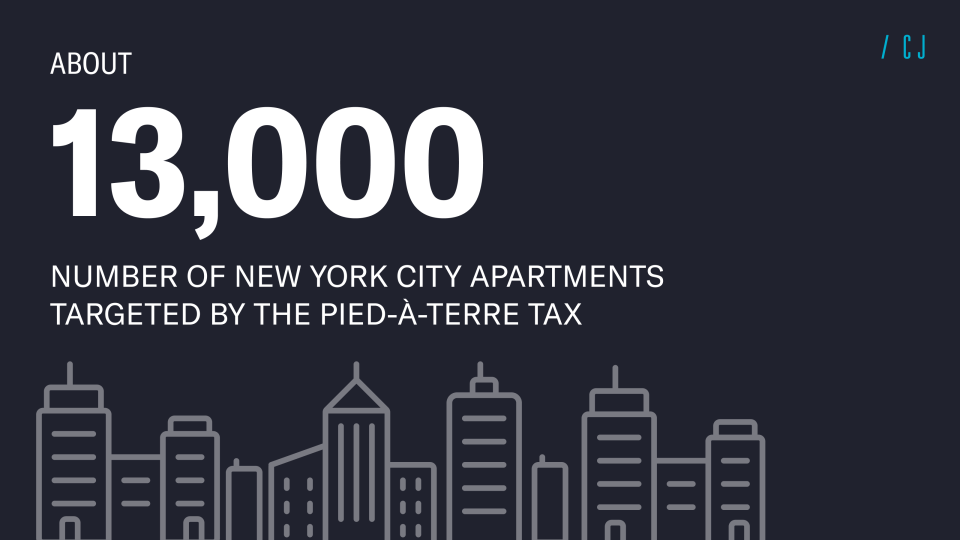
On Tuesday, New York City Mayor Zohran Mamdani and Speaker Julie Menin proposed trimming the amount of Pass Through Entity Tax (PTET) credits that can be applied to city income tax bills. PTETs essentially allow partners and co-owners to pay taxes using company funds, which are then treated as fully deductible business expenses. The credit can go toward an individual’s state and city income tax bill.
Mamdani and Menin want to lower that rebate from 100 percent to 75 percent. “Putting aside the risk of accelerating New York City’s tax-base erosion,” Ken Girardin writes, “Mamdani and Menin are trying to balance the budget with the shakiest, and most poorly understood, form of revenue possible. They may also be overstating the revenue potential for the city.”
Read why the proposal could be so problematic. |
|
|
Enacted in 1968, the Fair Housing Act prohibits discrimination in housing transactions. That includes buying, selling, and renting, along with advertising and lending.
Unfortunately, those tasked with enforcing the law have distorted it to push an ideological agenda. “Using exotic ideas about legal liability, fair housing bureaucrats have pursued social engineering of American communities and whole industries to achieve a racial composition they deem desirable,” Craig Trainor of the Department of Housing and Urban Development writes. “This behavior is sustained and encouraged by legacy civil rights organizations with a vested interest in such policies.”
The good news, Trainor writes, is that the Trump administration is rolling back these abuses. Read what it’s doing to restore the Fair Housing Act to its core mission. |
|
|
“Tax revenue keeps going up. Deficits keep going up. How can anybody seriously believe that increasing tax revenue even more will somehow magically reverse that correlation? Increasing tax revenue just allows politicians to afford more debt. The ONLY way to fiscal sanity is long-term, sustained spending restraint. And as long as voters keep supporting whoever promises them the most stuff, spending will always be maximized.” |
|
|
|
A quarterly magazine of urban affairs, published by the Manhattan Institute, edited by Brian C. Anderson. |
|
|
|
Copyright © 2026 Manhattan Institute, All rights reserved. |
|
| |
|