Foster’s Bighorn, a tavern in Rio Vista, California, feels far removed from San Francisco. Two blocks from the Sacramento River and 60 miles from the Embarcadero, it’s the sort of small-town watering hole where local lore looms as large as the hunting trophies above the bar. Deep in eastern Solano County, Rio Vista can seem alien to Bay Area denizens.
If Jan Sramek and his tech backers have their way, however, Foster’s Bighorn and San Francisco are about to get much closer. Sramek is the founder of California Forever, a real-estate venture proposing to turn a 100-square-mile tract of farmland outside Rio Vista into a new planned city—anchored by an advanced-manufacturing park, a riparian shipyard, and, ultimately, a population nearing half a million.
Finally, a reason to check your email.
Sign up for our free newsletter today.
Locals don’t seem thrilled. In the alley parking bay between Foster’s and Kramer’s Barber Shop on Rio Vista’s Main Street, I meet Nikki, a Gen X mother of three, smoking a cigarette. Asked what she thinks of the plan, she replies, “It’s a shitshow.” Pressed to elaborate, she says, “It’s just political money, foreign money. They’re buying up land, they’re trying to sue farmers for their land, and we don’t need all that.”
“Generational farmers,” adds her companion, who prefers to be identified only as a retired member of the Sons of Hell, a biker band that rides out of nearby Stockton. “This is a generational town,” Nikki continues. “I’ve been here 21 years, my kids grew up here, they graduated high school here. We don’t need another town. I’m happy with the 10,000 people we have here, and we don’t need all that.”
Sramek’s case is that while the people of little Rio Vista might not need all that, the state of California does. For Sramek, who as a kid idolized California as the place where dreams come true, the only way for the Golden State to shine again is to build it anew from scratch.
The millennial son of an auto mechanic, Sramek grew up in the post-Communist Czech Republic and says that he first set foot in Solano County in 2016, soon after arriving in California. What was meant to be a relaxing fishing trip planted the seed of an idea that would shape the next decade of his life. Then a Goldman Sachs trader in his twenties, he found the Bay Area’s reality—its low-rise sprawl, endless surface parking, and glacial pace of physical change—far from inspiring. But Solano County’s open landscapes, he thought, could someday spark a Bay Area renaissance.
By the next year, he had concluded that this was a project he wanted to pursue full-time. In 2017, he raised $10 million in four months, convincing Silicon Valley heavyweights Michael Moritz, Marc Andreessen, and Reid Hoffman that California needed to reaffirm its industrial ethos by building something other than software. Over the following six years, Sramek quietly acquired and stitched together parcels through a purchasing entity called Flannery Associates. By 2023, as the New York Times reported, the firm had spent over $900 million and secured a mostly contiguous tract twice the size of San Francisco.
“The vision from the beginning,” Sramek says, “was that California needed a new place to build—a new frontier.” When it burst into public consciousness that year, announcing itself as California Forever, the company seemed to Bay Area techno-optimists as a kind of salvation—a physical embodiment of Andreessen’s influential 2020 manifesto, “A Time to Build,” which lamented the obstacles standing in the way of domestic production of crucial goods like housing and infrastructure.
In California, particularly its coastal areas, Andreessen’s case is unassailable. Statewide, housing production has fallen from an annual average of about 200,000 units in the 1950s, 1960s, and 1970s to roughly 100,000 since the turn of the millennium. The long-promised San Francisco–Los Angeles high-speed rail link, to cite just one of many infrastructure false starts, has already cost taxpayers $15 billion and remains decades from completion. Industries and middle-class workers are, as a partial consequence, fleeing in droves.
That’s where California Forever comes in.
The plan hasn’t changed. But obviously, the country has changed in a big way,” Sramek says. Back in 2016, no bipartisan consensus existed seeking to counter China’s challenge to American techno-industrial supremacy. Only after the pandemic—and China’s progress on many of its Made in China 2025 goals—did reindustrialization become a national watchword. “Nobody was talking about shipbuilding in 2016, but we happened to buy the best maritime plot on the Pacific Coast,” he adds, referring to the dredged harbor that the company owns along the Sacramento River estuary.
Andreas Lieber, another European, heads California Forever’s industrial buildout, Solano Foundry. Formerly an executive at Uber and chief operating officer at Shippo, a logistics firm, Lieber envisions a 2,100-acre industrial park hosting “industries that are in the first inning, not the last one.” His “target group” includes firms at “pilot production and one step further” in the emerging industries of AI, robotics, drones, defense, and energy. Asked how a real-estate company will fulfill the promise to bring in high-value production, not just warehouses, Lieber emphasizes the deliberate intention to foster “ecosystem dynamics” to operate on a distant time horizon and to be “as methodical as we can here . . . versus just having a broker running around selling land.”
Leading California Forever’s urban-planning division is Gabriel Metcalf, an American who has worked for urbanist think tanks in the U.S. and Australia. Understated throughout our conversation at the company’s current headquarters in a Fairfield, California, office building, Metcalf nevertheless radiates an affection for America’s urban heritage. His aim is to make the new city—dubbed, for now, New City—into a “comfortable, intuitive, and recognizable” community. “The overall city design—this is more important than any other goal in the urban design—is to make it a place where people walk. . . . The city plan we’re proposing is a classic American town plan. It’s got a street grid set on the Jeffersonian grid of county roads, just like Chicago.”
Unlike Irvine, California, and The Woodlands, in Houston, where single-family homes dominate, New City will consist of “a mix of row homes and apartment buildings,” he explains, with “many different property owners able to develop and redevelop according to their preferences.” An affordable middle-density city “doesn’t exist” in California, he says. “If you want walkable urbanism in the Bay Area, you are in an ultra-luxury neighborhood. Our goal is to provide the housing supply that is both walkable and more affordable.”
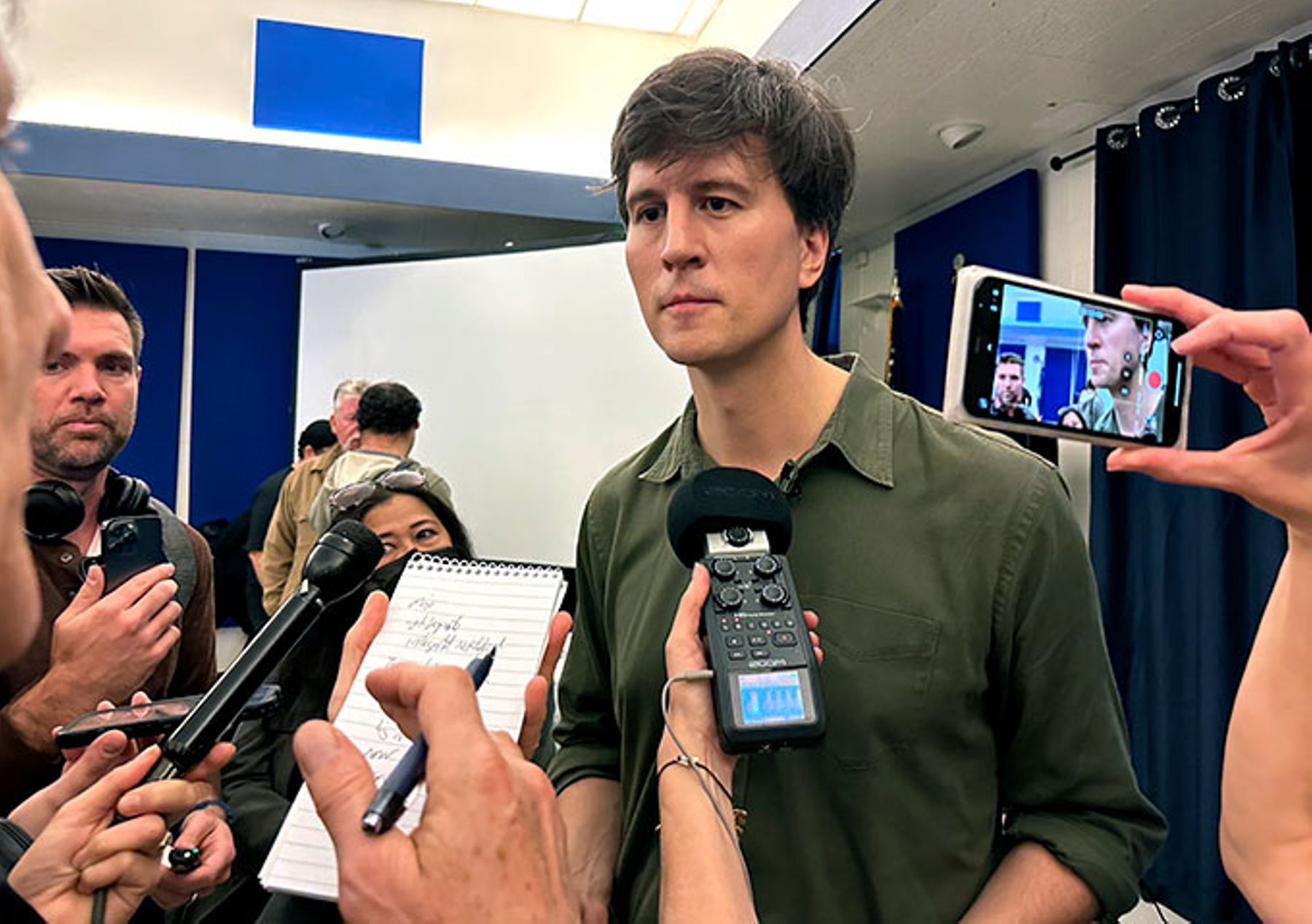
Sramek’s world-building impulse, Lieber’s practicality, and Metcalf’s urban vision appeal to Bay Area techies and urban romantics. But can California Forever win over the people who actually live in Solano County?
Ed McGaha, who hails from Virginia’s Tidewater region and has the drawl to prove it, first came to Solano in 1972, when he was stationed at Travis Air Force Base, the county’s largest employer. His long Air Force career—he flew KC-10s—took him elsewhere not long after, but McGaha returned to Solano County a decade ago, semiretired and offering flight lessons out of Rio Vista’s small municipal airport. He is circumspect about California Forever: he sees that new development could bring easier access to quality health care—and certainly better shopping—for his adopted community.
Ultimately, though, he counts himself a skeptic. “They have some utopian idea that people are going to walk and it’s going to be totally green and all this stuff,” he tells me in the Rio Vista McDonald’s. “I don’t know, I’m more of a practical guy. I’m not a utopian guy. It might be good for some of it, but I don’t see how it’s going to be good for the people who are already here. What advantage are they going to get?”
Nikki, outside of Foster’s, scoffs at the “yuppie, hippie, Berkeley-type people” the new town will attract. Her male companion worries that his son will never know the real Rio Vista. It’s an antidevelopment sentiment that is understandable; people reasonably worry that their comfortable lives may be destabilized by forces beyond their control.
Some in the area are cautiously optimistic. At Hap’s Taps, across the street from Foster’s Bighorn, I meet Jarred Brown, who lives on nearby Ryer Island. A monoplegic since a motorcycle accident 15 years ago, Brown thinks that California Forever “could liven up this town.” But having first learned about the project on YouTube, he worries about what new growth might do to the relative bargain that Solano County still offers. “This is affordable housing out here—people can still buy houses for under five hundred [thousand dollars] in a good community. So, it’s kind of a Catch-22, in my opinion. It’ll be interesting to see if they pull this off.” One thing Brown, who grew up in Antioch, the last stop on BART’s Yellow Line, is certain of: Rio Vista is not part of the Bay. “This is a delta town.”
Conflict has already been sown with the area’s more rural neighbors. West of Rio Vista, surrounded by parcels that California Forever has stitched together, lies the hamlet of Birds Landing. Founded in the late nineteenth century by the Bird family, Birds Landing today sits a few miles south of Highway 12 and directly north of the proposed shipyard site. The terrain around it could be mistaken for the rolling farmland of Kansas: cattle ranches line Shiloh Road to the west, wheat fields blanket the hills to the east, and industrial-scale wind turbines tower over both. Down the road is Birds Landing’s lone intersection, a four-way stop, and just beyond that, the Birds Landing Hunting Preserve.
On a clear, crisp weekday morning, I meet Dale and Ashley, who work at the preserve, and George Dana, a 76-year-old town native who serves as both local fire chief and, according to Ashley, “the local gun wizard.” The preserve comprises 1,000 acres of hunting grounds and a lodge with a shop and kitchen, where farmers go when they get rained out of the fields. While the property boasts a herd of Tule elk, Dale tells me, those are off-limits to hunters because of the state’s wildlife protections. “We hunt upland game birds here, pheasant and chukar.”
Ashley, the preserve’s caretaker, sees only trouble coming from California Forever. “There’s no infrastructure. The roads suck,” she says. “It’s just a bad idea . . . and it’s baffling to hear they want to build a town from scratch there, right at the back of Travis Air Force Base.”
Dana, as fire chief and local doyen, has had more contact with Sramek’s outfit. He finds California Forever eager to please but also overbearing. The group has been “more than generous” to his fire department, he says, since it, too, has an interest in keeping properties safe from fires. Like the wind-power companies that arrived earlier, California Forever has provided much-needed new equipment. “If we said, ‘I want a hundred thousand dollars,’ they’d probably give us a hundred thousand dollars,” Dana jokes.
Yet those deep coffers have proved double-edged. In 2023, the firm sued a group of Solano County landowners for a combined $500 million, alleging that they colluded to inflate land prices in violation of federal antitrust law. “I had friends who held out to the last because they didn’t want to sell,” Dana says. “My engineer in my fire department was able to keep his land, but he was in court on lawsuits for nine months and had to pay for it out of his pocket so that they wouldn’t take his land. He was able to keep his land, but he had to get lawyers.”
Others he knows, he claims, haven’t withstood the onslaught. “This person, who’s got this hill,” Dana says, pointing out the lodge window across Shiloh Road, “wouldn’t sell his property. They said, ‘If you don’t sell the property you own, we’re kicking you off the leases we bought.’ They went to court, tried suing him again, and he ended up having to sell—they forced him to a point where he had to sell his property or lose his livelihood. He farmed; he had sheep and cattle.”
A federal judge allowed the collusion case to proceed in 2024, and while several landowners have since settled, the remaining claims are still in pretrial discovery. Confronted with the negativity generated by the legal saga, California Forever changed tack. Its initial political plan was to pursue a countywide ballot initiative, but a few months before the 2024 election season, Sramek and County Commissioner Mitch Mashburn issued a joint statement “recognizing the need of our community for more time and information.”
Neither Ashley nor George Dana had much to say positively about the project, but they understand the limits of their opposition. Ashley thinks that it will probably move forward one way or another. “If they have enough money to throw at it, they’ll get it done eventually.”
California Forever has new momentum. A week after my October visit, Suisun City—the gateway to the project from the west and to San Francisco Bay beyond—formally annexed part of the company’s landholdings, streamlining development and moving it out of the county government’s control. According to city manager Bret Prebula, “Suisun has been a city that has tried short-term things to try to save itself, but never really had this long-term vision.”
Tucked just east of Solano County’s main transportation artery, I-80, Suisun has a plausible claim to being the Bay Area’s outermost fringe. In 1988, a San Francisco Chronicle survey ranked it 98th out of the 98 cities and towns in the region. But today, Suisun—rhymes with “bassoon”—has climbed a bit. At Babs Delta Diner, the kind of breakfast joint where they call you “sweetie,” I order Rod’s Special: corned beef, eggs, cheese, and, at the urging of Nikki in Rio Vista, Babs’s breakfast fried rice.
In larger Suisun, unlike in Rio Vista and Birds Landing, California Forever isn’t on everyone’s mind. Neither the first patron I approach, nor the waiter, has heard of the effort. Anabel, a woman of about 30 working behind the counter, has a generally positive but vague impression of it. But the city council is firmly on board. By extending its city limits eastward to include the California Forever plot, Suisun hopes to give its economy and strained municipal budget a lift. The annexation now awaits approval from the Solano County Local Agency Formation Committee.
The bullish case for California Forever is straightforward: it aligns with the nation’s reindustrialization moment. Across the country—from Silicon Valley to the natural-resource heartland to the Eisenhower Executive Office Building—consensus has grown that America must re-empower its manufacturers. Industrial policy has become a competitive sport between the parties. Donald Trump’s first term brought a liberalization of resource production and a dose of protectionism. Joe Biden’s administration pursued defensive and offensive industrial strategies to stay ahead of China, while keeping Trump’s tariffs largely in place. Now, Trump is looking to jump-start manufacturing and win the global race for AI and defense tech.
California has unique potential to support this strategy. It is the nation’s most populous state and its technology leader. But it is constrained by its own policies—onerous labor and environmental rules and restrictive land-use regulations that make it cheaper for firms to move elsewhere. Regional specialization has long proved efficient, but physical proximity between design and production remains useful for successful manufacturing ventures.
That’s the proposition that California Forever aims to offer producers. As Ukrainians near the front lines spin up new battlefield tech seemingly overnight, they remind the world that proximity accelerates innovation. Sramek and Lieber want to lure new firms inland, offering the kind of industrial symbiosis at which Silicon Valley once excelled, from semiconductors to ballistic missiles.
While California Forever’s playbook has been to work around as many local and county bodies as possible, the state government may be an X factor. Now late in his second term, Governor Gavin Newsom has grown more supportive of the tech sector—vetoing, for instance, a labor-backed bill that would have required human drivers in autonomous trucks, and backing the state’s housing-supply reform bill, SB 79. If Sramek can convince the White House hopeful that California Forever would send a positive signal to voters, he might find an ally in Sacramento.
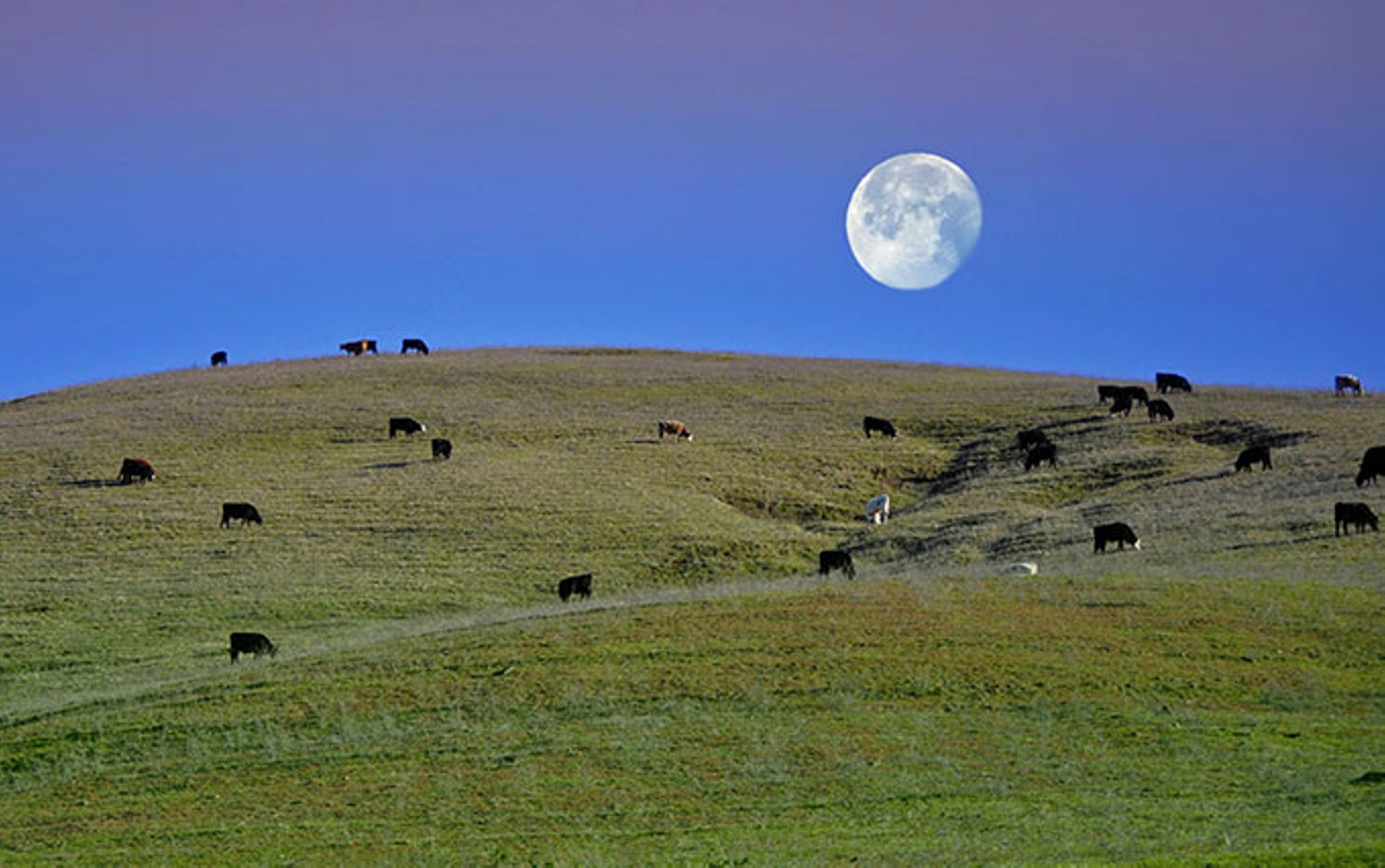
The locals in Rio Vista who bristle at the idea of central Solano County being within the Bay Area do have a point, though, at least geographically. My drive from San Francisco International Airport to the planned site of New City took more than an hour and a half. By the time I stepped out to survey the farmland, the marine climate was long gone, and the temperature had climbed to 95 degrees.
And as Ashley in Birds Landing noted, the infrastructure is bad. Highway 12 is narrow, fast, and poorly lit—so harrowing that locals call it Blood Alley. At its easternmost point in the county, the road crosses the Sacramento River into Sacramento County via the Helen Madere Memorial Bridge. With one lane in each direction and a vertical lift to let cargo ships pass, the bridge frequently becomes a bottleneck, sometimes closing for an hour or longer as vessels inch through.
When I asked planner Metcalf about the infrastructure, it was clear that I’d touched a sore spot. He rubbed his temples as he rattled off the alphabet soup of county and state agencies that California Forever would need to petition for upgrades. Even if Metcalf and company succeed, the Helen Madere Memorial Bridge—the main exit from Solano County to I-5 and the Central Valley beyond—will remain a choke point. On the manufacturing side, the roads are such a hindrance that Solano Foundry would be a “rail-first” industrial park, according to Lieber.
The Bay Area could use the kind of strategic depth that the Inland Empire of Riverside and San Bernardino Counties provides Los Angeles. But without a robust road network, I worry that Solano cannot play that role, let alone absorb several hundred thousand new residents.
And where would the envisioned 490,000 additional people come from? Who would move to such a remote, disconnected place? Even if Lieber can be choosy about the firms that he recruits (focusing on early-stage advanced manufacturing), how many jobs will materialize? The kinds of companies he has in mind are light on labor. They won’t be hiring men by the thousands to shovel coal into furnaces.
Paradoxically, California Forever’s prospects may be tied to the continued sclerosis of the Bay Area’s core cities. The need for something as bold as a new city has arisen only because these areas’ vested interests remain recalcitrant—blocking new housing, resisting density, and fighting infrastructure expansion. If San Francisco’s West Side remains an expanse of $2 million single-family homes, if Marin stays reachable only by car or ferry, and if Palo Alto zones middle-class families out of its housing market, then California Forever can serve as an escape hatch.
If the Bay Area truly reforms, however, the case for California Forever may weaken. The same forces that have put capital and enthusiasm behind the project have also pushed some common sense back into San Francisco politics. A recalled city prosecutor, a rebuked school board, and a new pragmatic mayor, Daniel Lurie, show that even San Franciscans’ tolerance for progressive excess and governance failure has limits. If local groups like GrowSF achieve their goals of economic dynamism and a renewed focus on baseline public goods in the City by the Bay, why would a young, ambitious person want to move more than an hour inland?
Jan Sramek, of course, disagrees. His optimism rests on what he sees as a generational divide. When we spoke in October, he noted that, on the ground in Solano, he could sense a real difference in receptivity between the old and the young—between those who have settled into a certain comfort in exurban California and those who have not.
I saw it, too, outside Foster’s, when a young man whipped his sedan into the parking bay. As I stepped aside, Nikki shouted, “Hey, gorgeous!” Wearing baggy jeans and a tank top, the young man walked over and put his arm around her shoulder. “Hi, son,” she said.
Daniel, about 20, lives half an hour away in Vacaville and works construction around the area. He listened to our conversation, bummed a cigarette from his mom, and, when I asked what he thought, offered a refreshing contrast to Nikki’s hostility: “More women, more jobs. I like it.”
In Jan Sramek—and in Daniel from Rio Vista—the California spirit may yet live on.
Top Photo: The Helen Madere Memorial Bridge, the eastern gateway to the envisioned city (Anthony Dunn/Alamy Stock Photo)