In his November victory speech, New York City’s new mayor, Zohran Mamdani, observed that “a great New Yorker”—his vanquished opponent’s father, Mario Cuomo—“once said that while you campaign in poetry, you govern in prose.” But Mamdani, like all mayors, will have to govern in numbers. Every one of his expansive policies, from universal day care to city-run grocery stores, must run through the city budget. And under the city charter, he must submit his first draft to the city council just one month after he takes office. That inaugural budget presentation—one of his earliest executive acts—will reveal far more about the untested 34-year-old’s governing style than any platform or speech: whether he is a rhetorician or a negotiator, a radical or an incrementalist, an ideologue or a leader.
Mamdani’s budget will be the first moment when his campaign narrative meets hard math. His election partly rode on a myth advanced in recent years by progressive economists and historians, including Kim Phillips-Fein: that, since its near-bankruptcy in the mid-1970s, New York City has governed itself under an “austerity” regime. On this view, permanent state oversight imposed during the bailout, combined with a supposed deference to later Reagan-era neoliberalism, has artificially constrained the city’s spending on public services and social programs.
Finally, a reason to check your email.
Sign up for our free newsletter today.
In reality, Mamdani will inherit a budget that has grown faster than inflation and population under nearly every mayor, Democrat and Republican, since the mid-1970s. In 1975, the city’s precrisis proposed budget would have hit $12.3 billion (including federal and state funding). Had spending merely tracked inflation, today’s budget would be about $76.7 billion. Instead, outgoing mayor Eric Adams’s final budget for FY 2026 is nearly $120.5 billion—about 57 percent real growth, far exceeding the roughly 21 percent rise in population since the late 1970s trough. Tax collections show the same pattern: in 1980, the first year with reliable data, the city took in $29.2 billion in today’s dollars; in 2025, it likely collected $81.7 billion, with the balance of spending covered by state and federal grants.
Back in 1980, the city workforce stood at 338,000; today, it’s only about 600 larger. And after the city reversed its 1970s cuts in the 1980s and 1990s, New York’s surging budget did not translate into markedly better basic services: trash pickup, policing coverage, and other core functions remain about the same. Instead, growth has flowed largely to an expanded education bureaucracy and a wide array of redistributive social services, many delivered through opaque nonprofit contracts, such as with homeless-shelter providers, that offer little accountability on outcomes.
By my calculations, using raw data from the city’s Independent Budget Office, education and social-services spending accounted for roughly 49 percent of last year’s budget, up from 47 percent four and a half decades ago—essentially the same slice of a far larger pie. Another major driver has been mounting contributions to pensions and retiree health care, including for uniformed workers eligible to retire after 22 years. Last year, these costs consumed nearly 20 percent of the city budget, up from under 15 percent just two decades ago.
That New York now spends far more for the same baseline services shows up in city hall’s priorities, or the lack thereof. Recent mayors haven’t built vast new programs or bloated the workforce. Even the lone exception, Bill de Blasio’s universal pre-K for four-year-olds, launched in 2014, costs “only” about $800 million yearly. By contrast, under Mayor Eric Adams, annual homeless-services spending nearly doubled, to $4 billion—not because he pursued an ambitious anti-homelessness agenda but because he mishandled the Biden-era migrant surge, which sent tens of thousands of arrivals into a system that guarantees a bed to anyone who asks. In New York today, spending tends to rise by inertia, not design.
Mamdani would smash this pattern. He ran on a host of ambitious new programs, a government expansion that the city hasn’t seen in decades. Chief among them is a universal child-care system for children six weeks and older—a basic service for every family and a multibillion-dollar annual commitment. He also wants a new “Department of Community Safety” to take over certain policing duties, at an estimated cost of $1.1 billion a year.
Mamdani also called for major new social services that would be universal rather than targeted. His free-bus plan would turn what is now a limited benefit—half fares for seniors and four-person households with income under $50,000—into a broad entitlement. His four-year rent freeze on nearly 1 million rent-regulated apartments would extend a new housing benefit to roughly a quarter of the city, regardless of income. And his idea of city-run grocery stores, eliminating the middleman owners’ (modest) profit, would give any resident or visitor access to a publicly subsidized staple of daily life.
New York City, despite its reliably liberal politics, has avoided creating major new programs or universal entitlements for half a century for a simple reason: they’re extraordinarily expensive, even by the city’s standards. Mamdani estimates that his agenda will cost $10 billion a year, with at least half devoted to universal child care. He identifies only $300 million in savings and another $700 million from tougher enforcement of existing taxes and fees. That means $9 billion in new taxes: $5 billion from a state income-tax surcharge on the city’s millionaire earners and $4 billion from a higher state corporate tax.
A little perspective helps clarify the scale. Because Mamdani isn’t asking Washington to fund his agenda, the entire burden would fall on the local tax base. For his first fiscal year, beginning next July, New York expects to collect $82.8 billion in state and local taxes. Mamdani’s plan would raise that burden by roughly 11 percent. Put another way: even without any new programs, the city projects that state- and locally funded spending will rise by $8.5 billion over the next three years. Mamdani plans to double that increase.
Or does he? Part of the reason Mamdani’s campaign succeeded was offering proposals that sounded concrete—buses are either free or not; child care is either universal or not—while leaving details fuzzy. Apart from his rent freeze, which he said would take effect “immediately,” he never offered timelines for universal child care, free buses, or the rest. We’ll learn what he actually envisions only when he releases his budget, which will finally require him to attach real schedules—and real funding—to his ideas.
The first indication of how aggressively Mamdani intends to pursue his campaign pledges will come from his yet-to-be-announced budget director: How will that person approach the arcane but crucial task of revenue forecasting? One legacy of the 1970s fiscal crisis is that, regardless of the mayor, the city typically underestimates future tax revenues across the four-year financial plan that it must present. For example: the tax revenues for fiscal year 2025, originally estimated at $69.4 billion, came in at $80.4 billion.
The city’s (deliberate) habit of underestimating tax revenues makes future deficits look larger than they ultimately prove to be; higher-than-forecast revenues reliably “appear” each year to close much of the gap. This practice offers at least a modest check on spending, allowing mayors to invoke looming deficits when resisting generous raises for politically powerful unions. It also acts as a recession buffer, supplementing the city’s roughly $6 billion in official reserves with billions in effectively “phantom” savings. When downturns hit, revenues still come in below forecast, but the shortfall is smaller than it would have been had the city projected more optimistically.
It would be a worrying sign if Mamdani’s budget office adopted rosier revenue forecasts, but such projections would let him launch parts of his agenda before securing the tax hikes that he wants from Albany. (Even if the legislature and Governor Kathy Hochul approve higher rates, they wouldn’t do so until April, when the state budget gets passed.) By assuming a few extra billion in revenue, even without new taxes, Mamdani could, say, begin universal child care for two-year-olds while still meeting the state’s balanced-budget rule. Once the program is in place and politically entrenched, he could then argue that rising costs make it unsustainable without the tax increases that he originally suggested.
Another possible change—this one positive—would involve an equally arcane corner of the budget process. Under both de Blasio and Adams, the mayor’s budget office developed a habit of micromanaging city agencies, requiring commissioners to seek approval for most new hires, even when replacing departing staff. As Andrew Manshel, former assistant commissioner in the city’s information-technology department, observes, the budget office “needs to get back to making the budget, and get out of the business of approving every expenditure.” In a well-run administration, the budget director’s role—absent a crisis—is to help the mayor allocate resources among agencies, and for agency heads to be empowered to use them.
Instead of micromanaging agencies, the budget office should take a broader look at whether the city needs as many workers (especially white-collar ones) as it currently employs. Bradley Tusk, a Bloomberg campaign veteran and former deputy governor of Illinois turned venture capitalist and strategist, argues that the budget should prioritize deploying technology to make government work better and “free up spending that can be used for better purposes.” This wouldn’t require a DOGE-style purge of filled positions but would unfold gradually, through attrition: automated noise meters at construction sites could reduce the need for inspectors, for instance, and a system enabling residents to report illegally parked cars with time-stamped phone photos could shrink the traffic-agent workforce, while generating additional revenue.
Beyond procedural adjustments, a far bigger test of Mamdani’s governing posture looms: Will he use his inaugural budget to demand the full $9 billion in annual tax hikes from Albany—baking all that revenue into his first-year plan? For a year on the campaign trail, and even after the election, Mamdani has had it both ways. Before business leaders, he says he’d work with the governor to figure out a way to fund his agenda without tax hikes; before other audiences, he takes a less compromising line. His initial budget will be the first time he must put it down in ink and reveal whether he wants the full amount in year one or is willing to pursue a more long-term plan.
This decision will be important fiscally—the tax hikes could be enormously damaging to New York City and state economy—and politically. How much, how fast, and even whether Mamdani can hike taxes will depend largely on the governor, who has lately endured “tax the rich” chants from Mamdani supporters at public events. Facing her own reelection year, Governor Hochul must weigh which threat looms larger: a left-wing primary challenger in June, or a Republican opponent in November.
How Mamdani treats new state-controlled city taxes in his preliminary budget will shape that political calculus and reveal whether he’s a gradualist or a radical. Does he send his energized supporters after Hochul right away by demanding the full $9 billion, allowing her to head off a primary challenge? Or does he signal that he’d settle for, say, $2 billion? He could even present a budget that assumes no immediate new taxes until the state acts. He likely has room to maneuver: the city council may not press him to raise taxes immediately, having just named a moderate, Julie Menin, as its incoming speaker.
Mamdani’s desired four-year rent freeze on regulated apartments wouldn’t hit the city budget directly; the burden would fall on private landlords. But he has hinted that he would ease that burden by offering relief on property taxes and other costs.
A rent freeze is a bad idea regardless of the details, but how Mamdani structures it will determine whether it’s merely bad or truly disastrous. He could, for example, offer landlords cash subsidies to offset forgone rent increases—creating a new taxpayer-funded housing benefit for a key voting bloc while muting landlord opposition. Or he could use the freeze as an impetus to launch a long-overdue reform of the city’s property-tax system, which favors owners of one- to three-family homes over apartment-building owners. This could at least leave behind a more rational property-tax system, once the rent freeze has ended.
Though Mamdani shouldn’t micromanage individual agencies, he can reconsider spending allocations across agencies that he will inherit from previous mayors. The obvious place to start: the Department of Education. It boasts a nearly $35 billion operating budget, up from $28.2 billion (in today’s dollars) since the end of the Bloomberg administration, despite shrinking enrollment.
A pragmatic Mamdani—one not demanding instant tax hikes—might fund part of his child-care program by conducting a full-scale efficiency drive. He could start with the DOE’s administrative positions, long a source of high-paying patronage jobs. The number of non-classroom positions is now nearly 26,700, up from 23,900 when de Blasio took office 12 years ago.
Mamdani will also have to decide how to deliver his child-care program. Whether he hires new unionized city workers, relies on private providers, or uses a mix of both will affect the bill. He has said that he would pay child-care workers at “parity” with public school teachers. But paying workers roughly $100,000 a year, before benefits, to care for infants would get expensive fast, and sharply constrain the program’s scope.
Another indicator of Mamdani’s governing approach will be his initial policing budget. Which Mamdani will emerge: The vocal “defunder” who criticized quality-of-life enforcement? Or the more pragmatic politician who now says that he’ll retain Adams’s final police commissioner, Jessica Tisch—a champion of a larger department and of policing lower-level crimes?
His budget will show, for example, how quickly he expects his Department of Community Safety to absorb certain policing duties. As Christian Browne, a private-sector attorney who served in the Giuliani administration, asks, “Is he going to propose funding for it? How will he implement and organize [it]?” Mamdani has said that he would cover the department’s $1.1 billion cost with roughly $500 million from new taxes and $600 million in transfers from other agencies, including the NYPD.
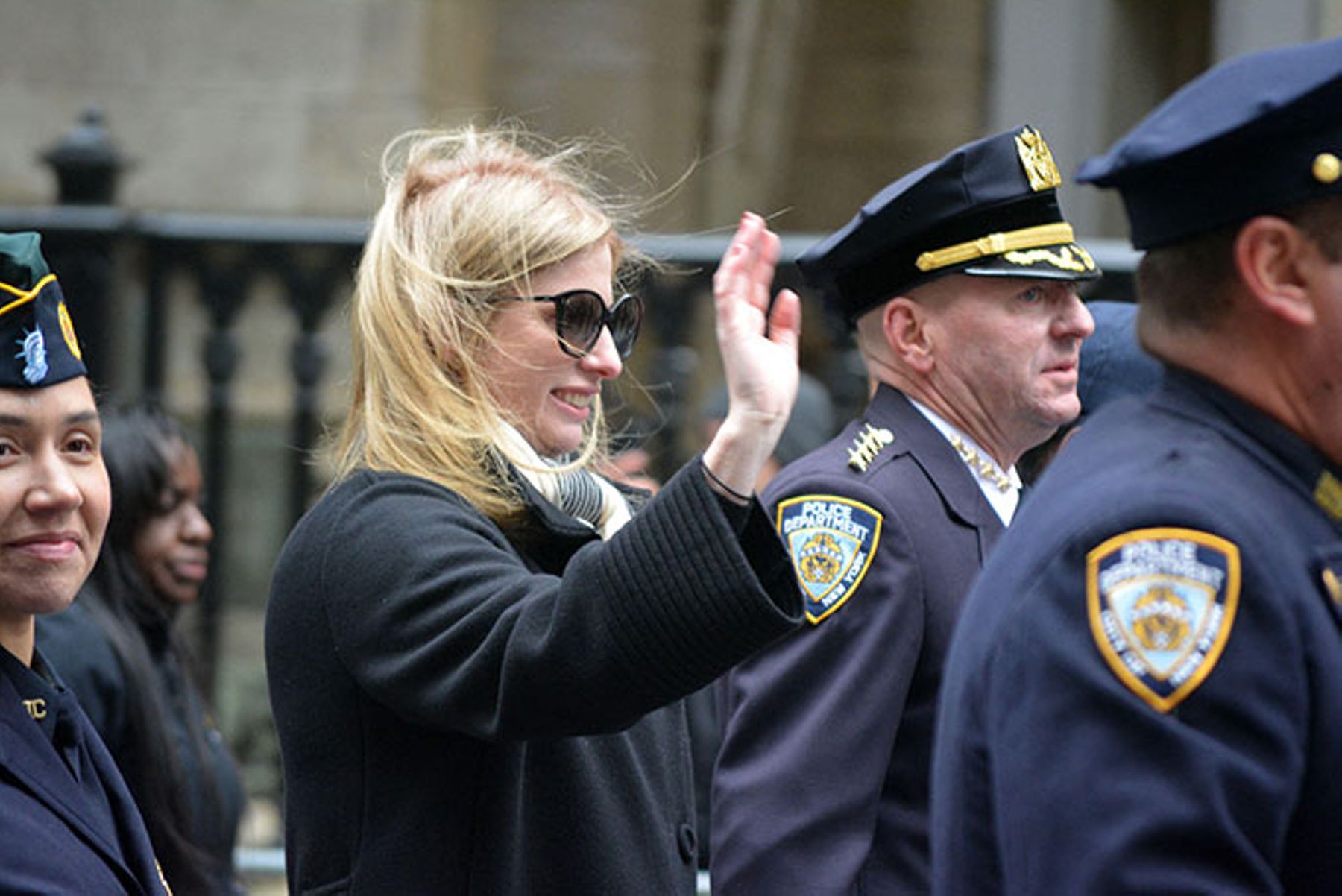
The mayor’s January plan will reveal whether he means to launch the department immediately—even without new tax revenue—or take time to refine the idea while negotiations with Albany unfold, deferring meantime to Tisch on public safety. And a deeper structural decision remains: whether he will try to create a formal city agency with its own commissioner, requiring council approval, or simply establish a mayoral office to oversee functions already spread across agencies, including the NYPD.
Mamdani also must decide whether to accept a political gift from the outgoing Adams administration: a budget that already assumes more police. In his final budget update before leaving office, Adams proposed adding 5,000 officers to the uniformed ranks, which would bring the total to 40,000 by mid-2028, near the record high reached in the early 2000s. The extra cops eventually would cost about $300 million annually.
Adams should have moved faster to add these officers during his own term in office, but the idea is sound, and Tisch supports it. Mamdani could quietly keep the funding if he chooses. “If Mamdani keeps Adams’s incoming class,” says Frank Morano, a new Republican councilman from Staten Island, “I’d like to see those officers redeployed to emphasize prevention, presence, and community relationships—not just administrative roles. If he wants to show ideological flexibility, this is the place to do it.” Alternatively, Mamdani could make a spectacle of cutting the funding in January to satisfy his antipolice base.
“Does Mamdani reconsider the Rikers plan—perhaps canceling two of the four borough-based jails in favor of new facilities on Rikers itself?”
Mamdani’s budget will also hint at how seriously he intends to pursue his other marquee ideas: free buses and city-run grocery stores. Making buses free would require replacing the $700 million to $1 billion in annual fare revenue lost by the state-run Metropolitan Tranportation Authority—and even if Mamdani offers the money, the MTA gets the final say. It remains to be seen whether he will immediately budget for that replacement funding or make free buses contingent on new tax revenues—buying himself months, or perhaps years, of delay.
Likewise, will he include direct funding to operate city-run grocery stores in Year One, and if so, how many? Or does he recast the idea as a long-term goal? On both fronts, the best sign that Mamdani is shifting from campaigning to governing would be silence.
Beyond its day-to-day operating budget, New York City maintains a capital budget, through which taxpayers fund new and repaired infrastructure. The current one anticipates $87.7 billion in investment over four years, all but $4 billion paid for from city tax and fee dollars. New York mostly pays for these projects—or promises to—with long-term debt, but, as both borrowing levels and interest rates have increased, the city’s annual debt-service payments will rise from $8.5 billion to $11.5 billion in the next three years.
Councilman Morano wants a “real rest” on capital spending—and on the byzantine contracting process that it involves. “For years, New Yorkers have watched multiyear, over-budget capital projects move with the speed of continental drift,” he says. “If the new administration wants credibility out of the gate, it should take on the capital process directly. Publish timelines, publish inevitable delays, publish cost escalations—and hold every agency head accountable for explaining them. A one-page ‘Capital Truth Sheet’ for each major project would go a long way.”
Morano suggests that Mamdani begin with “an honest accounting” of one major project that he will inherit: the long-delayed plan, dating to the de Blasio era, to replace Rikers Island’s aging jails with four smaller borough-based facilities. Originally estimated at under $10 billion, the project has swollen toward $20 billion, and it is unlikely that any of the new jails will open before the city’s self-imposed 2027 deadline to close Rikers. Candidate Mamdani emphasized that he’d “do everything in my power” to meet the deadline. But he was vague about how he would cut the city’s jail population nearly in half to fit the new facilities’ combined capacity of under 4,000 inmates.
The question: Does Mayor Mamdani reconsider the Rikers plan—perhaps canceling two of the four borough-based jails in favor of new facilities on Rikers itself? “If the city is serious about closure,” Morano advises, “then the budget has to reflect the real price tag. . . . If closure is going to be delayed (and it may well be), the administration should say so directly and budget accordingly. We’re long past the point of pretending timelines will meet themselves.”
Mamdani can also use the capital budget to confront another chronic crisis: the New York City Housing Authority’s tens of billions of dollars in backlogged repairs. Layla Law-Gisiko, a longtime civic leader now running for a Manhattan assembly seat, says that she’ll be looking in Mamdani’s first budget for “a concrete implementation of his stated NYCHA commitments: a doubling of the city’s capital funding for major repairs.” That means “a clear, multiyear increase over current baselines, tied to specific campuses, scopes of work, and timelines—roofs, risers, heat and hot water systems, elevators, and mold remediation.” Once Mamdani is looking at the true cost of maintaining the city’s existing public housing stock, he may think twice about building new public housing, as he once advocated.
Capital dollars are finite, and money tied up in an unrealistic jails plan can’t be used for truly public infrastructure. Tim Tompkins, former head of the Times Square Alliance and now an urban-planning lecturer at NYU, says that he’d “like to see real city investment in parks and public-space management and programming partners outside the Manhattan core,” including better stewardship of streets converted into public plazas. He envisions “small and medium-size grants to the hundreds of neighborhood open-streets partners, parks groups, and smaller BIDs beyond central and lower Manhattan—free of the usual impossible paperwork and payment schedules that knock small players out—and indexed so lower-income areas receive more support, since they struggle to raise private or charitable funds.”
Mamdani might also consider what his transportation legacy will be beyond free buses. Samuel Turvey of the ReThinkNYC civic group urges him to use the capital budget more fully “to engage the mayor’s office in the Penn Station transformation.” The Trump administration recently took control of the long-delayed project from New York State, and Washington is expected to cover most of the multibillion-dollar cost.
The project could deliver major benefits to Gotham. Converting Penn into a “through-running” station—allowing trains to run from Queens through Manhattan to New Jersey and vice versa, rather than sitting idle and consuming scarce track space—would make New York a stronger jobs center. Added capacity would let operators run more frequent trains at lower fares. Mamdani has said that he’s open to working with Trump on projects that make the city more affordable. “The mayor would do well to fund his own economic-development agencies to fully explore the economic benefits such a through-running conversion would have,” including spurring private housing investment in Queens and the Bronx, Turvey says. Even a modest city contribution would indicate goodwill toward Washington and give New York a real voice in Penn Station’s redesign.
No mayor leaves office as he entered it, and few are remembered as they hoped. Adams set out to be the public-safety mayor; though he did reduce homicides to near record lows after their post-2019 spike, he will be remembered primarily for the migrant crisis and for his entanglements in corruption. De Blasio planned to be the pre-K mayor; while that program endures as his main accomplishment, his legacy is dominated by the surge in crime—especially subway crime—during his final two years.
Mamdani’s inaugural budget cannot account for the crisis that he will almost inevitably encounter. Some risks are foreseeable: the Trump administration could impose cuts to state and city budgets, particularly in education and health care, if relations sour despite their cordial November meeting. In anticipation, Mamdani should “put money aside to blunt the first blows of federal cuts,” advises Andrew Rein of the Citizens Budget Commission. Such preparation would give the city leverage by signaling that it is not vulnerable to every shift in Washington.
But Trump is a known risk; the larger danger lies in what cannot be forecast. What happens in a recession, perhaps triggered by an AI-market downturn? What if New York suffers another disaster like Superstorm Sandy, necessitating billions in emergency repairs? The best protection against the unknown is a resilient budget and a strong tax base. On that score, the best outcome for Mamdani—and for New Yorkers—is that his tax hikes never materialize. Enacting them would weaken the city’s economy and revenue base while locking New York into new spending that it could not easily scale back in a downturn.
Top Photo: New York’s spending has largely risen by inertia, not design. Mamdani would smash that pattern: he ran on a host of ambitious new programs, a government expansion the city hasn’t seen in decades. (Karsten Moran/The New York Times/Redux)