
Mayor-elect Zohran Mamdani wants to reimagine public safety in New York City. On the campaign trail, he promised to devote more than $1 billion to the “Department of Community Safety,” a new agency that will “tak[e] a public health approach to safety.”
But what will his agenda look like in practice? Late last month, the mayor-elect released the roster of his transition team’s Committee on Community Safety, a 26-person group that will advise him on criminal-justice and related issues. The list contains several activists who are not only openly hostile to law enforcement but also reject the very concept of carceral punishment.
Finally, a reason to check your email.
Sign up for our free newsletter today.
These choices raise questions about Mamdani’s real intentions. He has publicly distanced himself from his earlier support for “defunding the police” and other 2020-vintage radicalisms. But his selected advisors suggest he may not have traveled as far from those positions as he now implies.
Many believe that the government’s primary responsibility in criminal-justice matters is to prevent and punish crime. Some on Mamdani’s transition team seem to think otherwise. Brooklyn College professor Alex Vitale, the author of The End of Policing, has argued, for example, that policing is “fundamentally a tool of social control to facilitate our exploitation.” He has also described police as “violence workers,” who should be turned to only as a “last resort.”
Fellow transition-team member Justine Olderman, a scholar at NYU Law’s Center on Race, Equity and the Law, has made similar claims about policing’s effects. In a 2022 interview, she described how a single “touch-point” with the criminal-justice system can trap people in “various legal and non-legal . . . punitive systems.” These consequences, she claims, can create a chain of “unbearable amounts of trauma” passed down through generations.
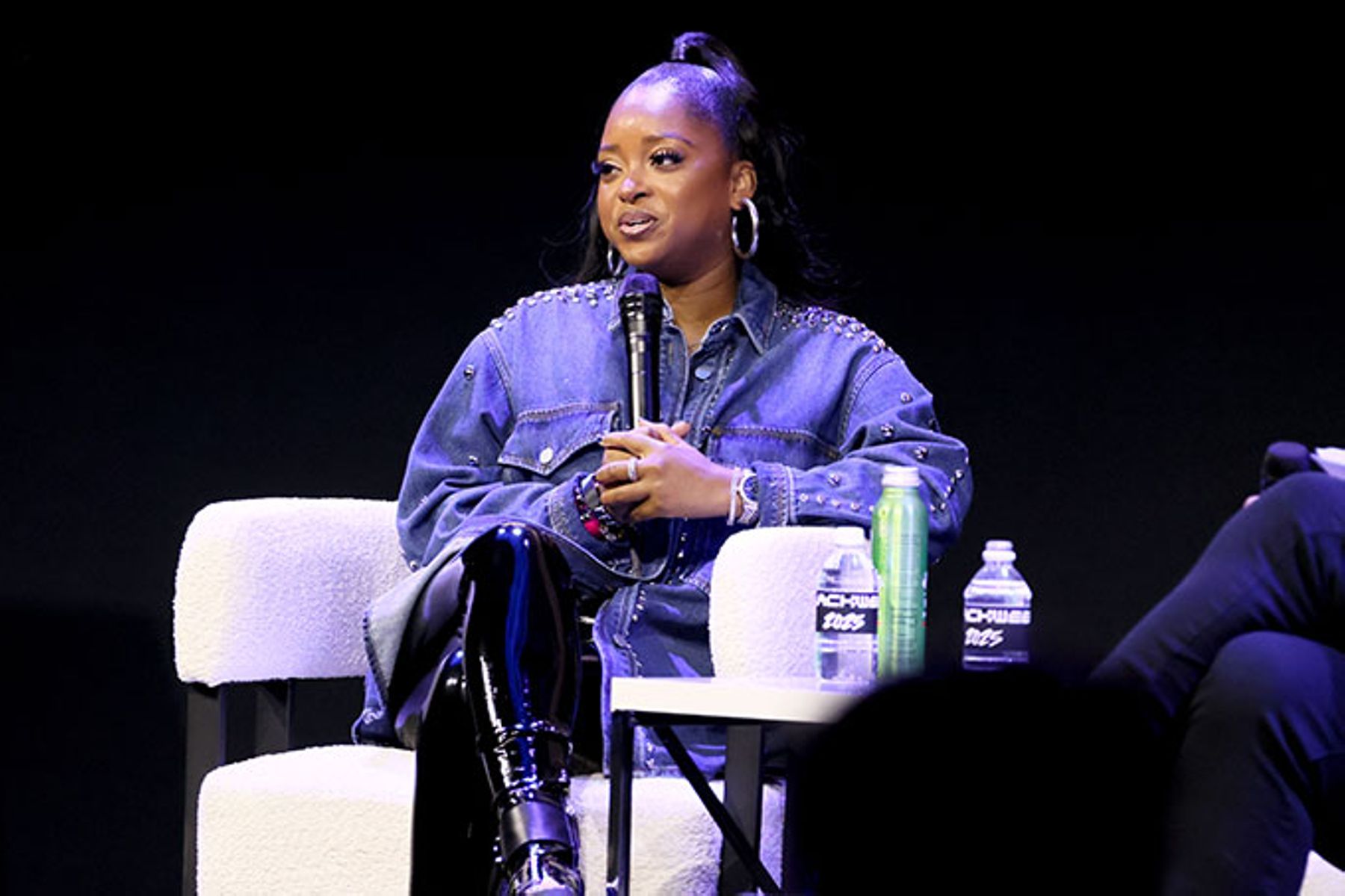
Advocates like Vitale and Olderman often cast the criminal-justice system, and even America itself, as a villain. In doing so, they echo the worldview of transition-team member and former Women’s March leader Tamika Mallory, who said days after the death of George Floyd in 2020, “We are not responsible for the mental illness that has been inflicted upon our people by the American government institutions and those people who are in positions of power. Don’t talk to us about looting. We learn violence from you.”
Others on Mamdani’s transition team want to reduce Gotham’s jail population dramatically—consistent with Mamdani’s commitment to closing the Riker’s Island jail complex. Meg Egan of the Women’s Prison Association, for instance, helped design the plan to close Rikers Island. She has envisioned a future in which incarceration is “obsolete,” and argued that the borough-based jails that replace Rikers should be “centered on care rather than security or control.”
Similarly, committee member Janos Marton ran for Manhattan DA on a platform that called for cutting the local jail population by 80 percent, virtually eliminating pretrial detention, capping sentences at 20 years, and “ending the war on drugs” by abolishing New York City’s Special Narcotics Prosecutor’s Office.
Some of Mamdani’s transition-team members have a Machiavellian streak. Marton, for example, argues that cases of police misconduct present an opportunity to “shrink the size of the police budget so that there’s fewer police officers.” Fewer cops means fewer retirees and families, he notes, which will shrink police officers’ political influence. Every scandal becomes a lever to ratchet down the NYPD’s headcount and move “in the right direction towards abolition.”
Dana Rachlin, another committee member, applies a similar approach to political organizing. In a 2020 radio interview, she noted that her group, We Build the Block, hired young people from “impacted blocks”—neighborhood blocks with high incarceration rates—to “register the block to vote.” Rachlin also claimed that, at the time, there were “40,000 names on the gang database,” compared with “only 36,000 members of service in the NYPD.” “That’s more votes,” she said.
Kassandra Frederique, head of the Drug Policy Alliance and another Mamdani committee member, has framed her advocacy in “abolitionist” and revolutionary terms. During a 2021 appearance on a web show, for example, she discussed the prospect of black revolutionaries “tak[ing] over the state.” She also seemed to endorse drug use as a way for some advocates to embrace more radical positions. “There are some people in our movement that need to be high so that they can imagine the world that we can’t see currently,” she said.
This is not the language of conventional municipal administration. It is the expression of a movement that wants to embed itself inside the state and use state power to advance its revolutionary ambitions.
Some members of Mamdani’s team have concrete plans. Take Max Markham, executive director of NYU’s Policing Project. Markham has argued that the city should reduce police officers’ involvement in certain emergency-response situations. In an interview with a nonprofit group last month, he claimed that the city does not need to dispatch police to calls involving “animal control, property theft, traffic accidents, and towing.”
Another committee member, CUNY social work professor Maurice Vann, has advocated a similar approach. “As we defund the police,” he told students in a 2020 lecture, “social workers will get more funding and more employment opportunities.” He encouraged his students to consider “forensic social work” as a career path.
These advocates’ work is complementary. Markham wants to reduce police involvement in certain categories of law enforcement; Vann has pushed for a cadre of social workers to take on the resulting “community safety” roles.
Nearly half the members of the Committee on Community Safety are pushing for radical overhaul of what most New Yorkers would think of as public safety. For some, it’s a calculated policy shift; for others, an ideological imperative. Either way, they’re not alone—powerful allies elsewhere on the transition team, like the Committee on the Criminal Legal System, share the same appetite for sweeping change.
Many are openly hostile to policing as a practice and reject the very concept of a carceral system. The question for Gotham is whether pragmatic voices can push back against this bloc, or whether they will strike an unholy alliance to secure a share of the billion-dollar budget. For now, New Yorkers are test subjects in what may become the largest anti-policing experiment in the world.
Top Photo by ANGELA WEISS/AFP via Getty Images