Is there a right way to witness history? Asked to name famous examples from the last century, I should think first of George Orwell shouldering a rifle alongside ill-equipped Spanish partisans, James Agee reverently cataloging the meager contents of sharecroppers’ homes, and Robert Capa clambering ashore at Normandy with his camera alongside soldiers of the Fighting First, from which ordeal only 11 blurred snapshots survived, showing those about to die already ghostlike in his lens. Percipience is a must; and above other traits, we have tended to want our witnesses to history—especially the bad side of history—to be humane. What are we to make, then, of a war correspondent, a writer of real courage, who saw more clearly and comprehensively than almost anyone else, yet who was only intermittently interested in the lives (especially the inner lives) of others? A man who cultivated a brutal dictator as his father figure; who was attracted to blood, and perhaps more fascinated than appalled by many of the horrors he bore witness to; and whose putative masterpiece contains, in its author’s own words, “nothing but soldiers, corpses, dogs, sunflowers, horses, and clouds”? A chameleon who veered from fervent Fascism in 1920s Italy to avowed anti-Fascism after the war, remaining an incorrigible fabulist all the while: Could such a figure possibly be a valuable, not to say a reliable, witness? What are we to make of the mercurial, controversial, egotistical Curzio Malaparte?
First, there is the matter of his extraordinary access to the dark heart of the Axis powers. He went places no Capa ever could. Having seen heavy action in World War I, Malaparte held by the outbreak of World War II the rank of captain in the Italian army. Italy was then Germany’s ally, and his rank and uniform—along with his official duties as a war correspondent—opened any number of doors. In the two strange, searing books that resulted, Kaputt and The Skin, Malaparte (or a narrator sharing his name) carries himself inviolate through wintry Finnish outposts, Nazi dinner parties, wretched Polish ghettos, the unspoiled beauty of neutral Sweden, a martini lunch with Oswald Mosley (the memory of which intermingles with the surreal violence of Moldavia during a pogrom), a Ukraine scarred and strewn with the carcasses of scorched war machines—and parts beyond. He walks between worlds, like Odysseus in disguise. His prose blends fact inextricably with fiction, reality with dream, as though doing war reportage in the key of magical realism. His perspective is pan-European, his allegiances shifting and uncertain, his sympathies not easily aroused except by suffering or slaughtered animals, most innocent of war’s victims. And by men, women, and children reduced to the guiltless condition of animals.
Finally, a reason to check your email.
Sign up for our free newsletter today.
Novels, says Novalis, arise out of the shortcomings of history. Kaputt and The Skin arose also out of Malaparte’s own shortcomings, as much as out of his strengths. The self-mythologizing dandy is here forced to confess his own impotence in the face of disaster, even as at crucial moments he casts off his apparent indifference to defend a disintegrating moral order. Beseeched in Jassy, Moldavia, by a deputation of elderly Jews to intervene on behalf of their people, the narrator of Kaputt at first scoffs: “Should I have myself shot in Unirii Square defending the Jews of Jassy? If I were capable of it, I would have had myself shot in an Italian square defending the Italians.”
On the night of the pogrom, however, he strives alongside the Italian consul to save as many Jews as he can. “Sartori,” he says, “we are fighting for civilization against barbarism.” The scene of him and Sartori smoking on the steps of the consulate where Jews are hiding, guarding the threshold, displays a stoicism worthy of Hemingway’s heroes: “I felt safe with that tranquil Neapolitan who was shaking within with fear, horror and pity, but showed no outward sign of it.” In the morning, packs of dogs pick their way delicately among the dead bodies choking the gutters, while human beings act in a bestial fashion by stripping the corpses. “It was a gay bustle, a merry occasion, a feast and a marketplace all in one.” This may smack too much of allegory to be literally true. So hallucinatory is the atmosphere of Malaparte’s account that the line between reality and allegory, crossed and recrossed, becomes yet one more contested boundary, constantly being redrawn.
When Malaparte’s “horribly gay and gruesome book” (as he called it) first arrived on the scene in 1944, with tanks still rumbling along the roads of Europe, it shocked the conscience to see that this war’s barbarism was not imposed from without but had sprung from the very tree of Western civilization whose roots it gnawed. Though nauseated by what he found, with a phobia of filth that made his stomach churn for more than purely moral reasons, Malaparte seems to have been sufficiently armored by narcissism to confront realities that would have driven most men mad. Mussolini’s ministry of the interior noted the writer’s “unbounded self-love [and] limitless ambition.” His conversational mode was usually the monologue. He wanted desperately to be Marcel Proust; he had striven to be a political success under Fascism. Fortunately for us, he failed at both—while achieving a dark mastery all his own.
Born in 1898 to a Lombard mother and German father in the working-class Italian city of Prato, the boy who would become Malaparte quickly outgrew his provincial surroundings. Almost as rapidly, disavowing his antagonistic father’s heritage, he reinvented himself along purely Tuscan lines, first changing his name from Kurt Erich to Curtino, then Curzio, Suckert; and then, from 1925 on, to Curzio Malaparte. Initially a mere pseudonym, later his legal name, it was a nom de guerre with a frisson of evil (male) in it, the polar opposite of Bonaparte. It means the “bad side” or the “bad part”: a piece of nominal determinism for a man who by then had suffered some of the worst of one world war and would undertake a “long, cruel four-year journey” through the wreckage of the next.
His verbal charisma was magnetic. From a young age, according to his biographer, Maurizio Serra, Malaparte exhibited the ability “to believe in his own reality—perception interwoven with fabrication.” Though raised in a comfortable home and benefiting from an elite boarding-school education, he forever denied his status as a bourgeois. The republican spirit of 1789 formed a foundational layer of his loyalties, though his attraction to the aristocracy was another; he spent his adult life moving fluidly between the proletariat and the titled grandees of Europe, though neither ever truly accepted him as one of their own.
Later, in the war-scarred world of Kaputt, he would flash back repeatedly to Warsaw and other hot spots as he had known them decades earlier. Confronting an upside-down political order in which villains occupy the places of honor, even as (often unwillingly) he rubs elbows with Heinrich Himmler and other architects of Nazi atrocities, Malaparte’s narrator numbers himself with the phantoms of an older, nobler, obsolete Europe: “I, too, was certainly a ghost, a dull ghost of a remote age—perhaps of a happy age.”
It was for that older, happier Europe that a teenage Curzio fought. If there was a strong strain of narcissism in him, even before he became Malaparte, there was also an uncommon courage. The Great War was less than a year old when, in what he was to call “the most beautiful page of my life, the purest page,” at age 16 he ran away to join the Garibaldi Legion of Italian volunteers in France. Already fluent in French, having read avidly the Romantics and Symbolists, he chose to fight for the nation whose literature he loved—and against his father’s Vaterland. The risk he ran was tremendous. Himself a German national (not yet a naturalized Italian), he knew that capture by the enemy would mean suffering a traitor’s fate: the firing squad. After Italy entered the war, on May 24, 1915—turning against its erstwhile allies Germany and Austria-Hungary—newly 17-year-old Curzio, without waiting for the draft, again volunteered. Assigned to the Alpine Brigade, he would spend the next two years facing death in the Dolomites, as Italy and Austria struggled for position in what came to be known, owing to the snow and lethal cold, as the White War.
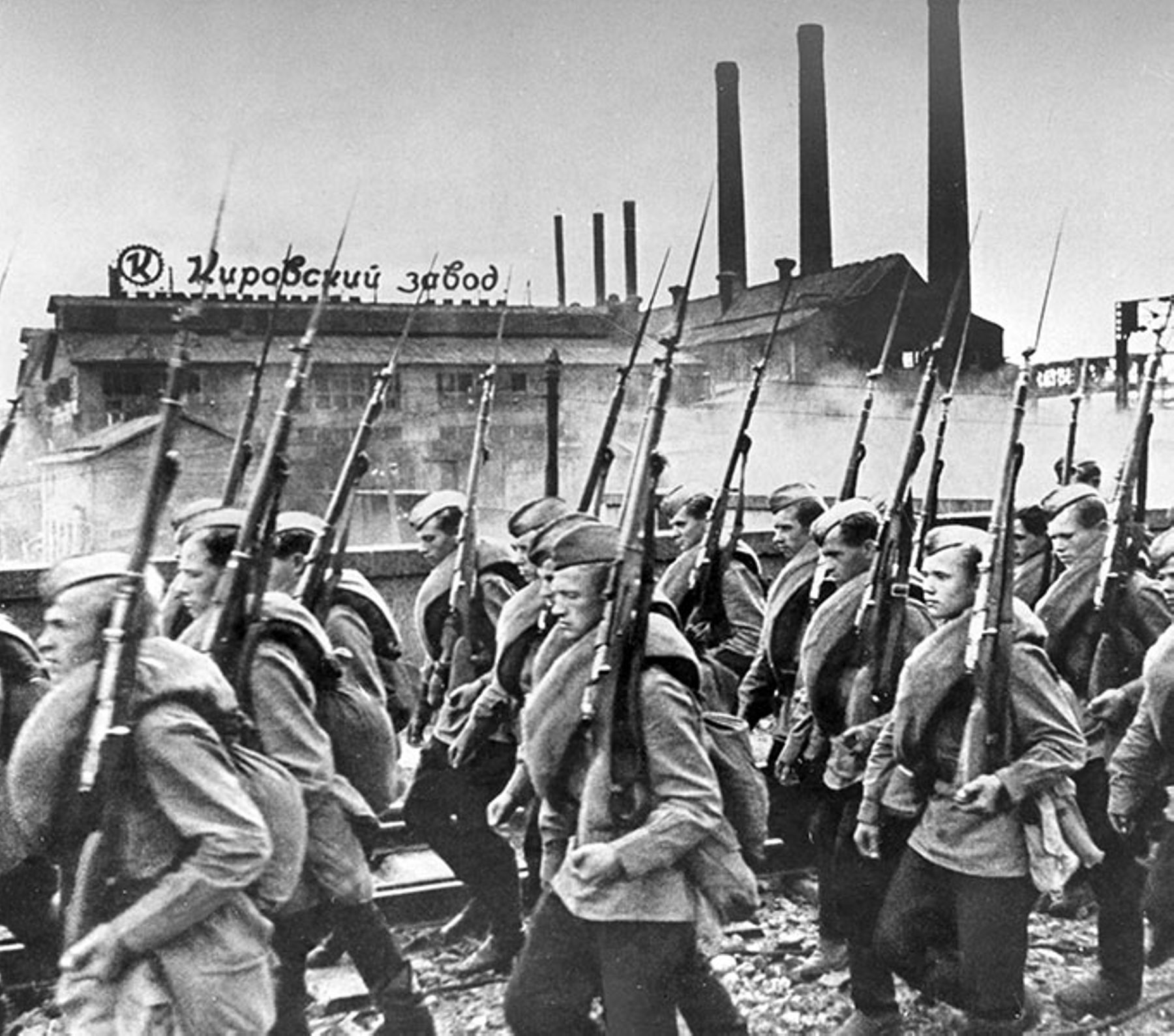
The twentieth century as it should have been—a rising renaissance in culture and the arts—was killed aborning by the guns of August 1914 and the four years of insane slaughter that followed. The Dolomites are one of the places where it died. Along a rugged, mountainous front stretching some 375 miles, hundreds of thousands of young men performed individual acts of bravery and endurance that only contributed to the mass hideousness and horribly drawn-out nature of a long bloodbath. Trenches at ten thousand feet, massifs stitched with rope ladders, miles of tunnels dug under glaciers, enormous detonations cratering the wild landscape—and the beautiful, beardless Curzio Suckert, who shaved his arms and chest, in the middle of it all, always “neat as a pin,” his regiment’s standard-bearer and mascot, roles that must have pleased him.
He would later dub the Italian mountain offensives “glorious, gory, moronic, and useless”—language entirely fitting for the war writ large. Though he cherished the camaraderie of those years, in other respects it was a catalog of calamities, as Serra describes: men were “frozen, amputated, overwhelmed by snowstorms, buried by avalanches, flattened in ravines under mules and baggage trains, torn apart by explosions, poisoned by water from corpse-infested streams, blinded by the winter sun, driven crazy or to suicide by the never-ending slaughter.” Malaparte emerged from the hostilities a decorated officer: his part in a near-suicidal defensive action in France, halting a German push (“Unable to do otherwise,” he remarked, “we performed miracles”), earned the young lieutenant an Italian bronze medal, the French Croix de Guerre with palms—and a pulmonary lesion from exposure to mustard gas. He was “a twenty-year-old who had known nothing,” writes Serra, “but boarding school and war.”
Malaparte’s first book, Viva Caporetto!—the title cites with bitter irony a disastrous rout suffered by Italian forces—caused an uproar in 1921 by heaping scorn on the politicians and pea-brained generals (chief among them the hated Luigi Cadorna, known as “the Butcher”) who had sent him and his comrades to die. Years earlier, he had seen in his fellow Garibaldian legionaries—among whom were represented the various conflicting republican, trade-unionist, and anarchist factions—“the appearance and faces of civil war.” Though they were making common cause in France, he sensed that the time of antidemocrazia, of European revolution, was near at hand. In 1917, the Bolshevik uprising proved him right; and on the last page of Viva Caporetto! he looks forward to a rivalry between “two revolutions: Italy’s, dominated by individualism, and Russia’s, dominated by collectivism. Fascism versus Bolshevism.” It is telling that Malaparte the loner—who always remained vitalistic, not nihilistic—saw Fascism at that time not as a totalitarian ideology but as a movement for individualists. He hated the bourgeoisie and had a low opinion of mass society; to lose himself altogether in mass politics was not his style. Nonetheless, he marched on Rome with Mussolini in 1922 and, like many other Italian intellectuals, remained staunchly Fascist until the early 1930s.
As Fascist orthodoxy hardened and Italy threw in its lot with Hitler’s Reich, Malaparte repeatedly ran afoul of the regime. By the middle of the decade, he had been stripped of his National Fascist Party membership and sent into internal exile on Lipari, an island in the Tyrrhenian Sea. Only the personal intervention of Mussolini’s son-in-law, Galeazzo Ciano, secured his early return (having first changed the writer’s place of exile from Lipari to lovely Ischia, then to the fashionable resort of Forte dei Marmi). It was to be the first of several arrests: dozens of informers for the political police kept Malaparte under constant surveillance, and Kaputt’s closing chapter opens with him having just been released from jail. His time in politics was largely spent shooting himself in the foot.
Why did he not moderate his attitudes? Adaptable, acutely attuned to shifts in the prevailing political winds, he was drawn nonetheless to lost causes and “could neither live nor write without attacking,” Serra remarks. Malaparte was one of those authors—among Americans, Philip Roth and Norman Mailer come to mind—who court controversy, brawl with critics, make long lists of enemies, and spend their lives in reinvention, while remaining indisputably themselves. Silence was for him the worst possible reception.
In Italy, Fascism was no flash in the pan. It ate up the avant-garde and remained for the next 20 years the dominant political ideology on the peninsula. By the end of 1926, however, Malaparte had disavowed the notion of a specifically “Fascist art.” The Dizionario del fascismo quotes his “friend and enemy” Piero Gobetti as calling him “the strongest pen of Fascism,” which I take to be an homage to Malaparte’s literary gifts, rather than a comment on his skill as a promoter of the Fascist cause. In fact, his writings of the 1920s appeared in both Fascist and anti-Fascist outlets, the latter including Gobetti’s magazine La Rivoluzione liberale. Says Serra, “Malaparte would never be a faithful hack, ready to fall in line.” He disliked Hitler from the start, deeming him as early as 1931, in his book Technique du coup d’État—which was translated into English the following year and became a bible for Che Guevara and other power-hungry revolutionaries—“not in the least virile . . . a weak man who takes shelter in violence.” Mussolini, by contrast, was masculine, the exemplary padre padrone.
Il Duce’s domineering slogans—“Live dangerously!” was one—blared from walls all over Italy. But he proved a disappointing patron. Mussolini promised to do “something” for Malaparte, but it never materialized. “Malaparte didn’t want affection, not knowing what to do with it; he wanted respect and something more,” reports Serra. Still the sullen dictator remained aloof. He had no interest in making Malaparte “his heir apparent, his favorite disciple.” For the spurned acolyte, disillusionment soon followed. In September 1933, scant weeks before his first arrest and confinement, Malaparte confided in a letter: “One needs to remember that Caesar does not offer happiness, only compensation. Happiness must . . . be sought in the secret realms where Caesar does not reign. Friendship, art, goodness: here is what remains.”
Serra’s more than 700-page Malaparte: A Biography, published in an English translation by New York Review Books in 2025, gives a comprehensive account of the byzantine intrigues, romantic entanglements, and political maneuvers that preoccupied Malaparte during the 1920s and 1930s. A brief tenure as editor of the Turin daily La Stampa ended when Giovanni Agnelli, the powerful head of Fiat and Italy’s richest man—with whose daughter-in-law Malaparte would later carry on a scandalous affair—forced him to resign. After the war, Malaparte, though less blameworthy than many of his peers, would earn more opprobrium than most by vehemently denying having cozied up to Mussolini as he had and by falsely claiming that his imprisonment was due to anti-Fascism. If such overnight conversions and autobiographical whitewashings were common in the postwar years, Malaparte took the tendency where he took most things: to an extreme.
The turning point came with Kaputt, in October 1944. Its author would later maintain that he had finished and published the book in 1943, before the fall of the Fascist regime, so as to seem even more prescient—and less calculating—than he was. In any case, the book established Malaparte as one of the first chroniclers of the cataclysm that had befallen Europe, as well as one of its first psychologists: “the Second World War, with its procession of atrocities,” Serra asserts, “was the ideal theme for his pen.”
Pages of lyrical prose marred by clotted, occasionally clumsy, syntax and errant punctuation are torn open as if by lightning to reveal indelible vignettes. In a forest near Leningrad, dead Russian prisoners of war are sunk in snow, their frozen outstretched arms pointing the way as “traffic police” for the Nazis. An elk with a broken leg materializes out of the winter night in Helsinki and drags itself bleeding to the steps of the palace of the president of Finland, where a crowd of foreign diplomats gathers around the injured beast and finally, with the help of the president himself, hoists the elk into a waiting ambulance. Our correspondent sees “a group of manacled Jews,” barefoot, trudging along in the custody of Romanian soldiers, while from the windows of the Jockey Club in Jassy, “fat, round-bellied Moldavian gentlemen, sweetly and tamely adipose” (it is practically a Malaparte signature that he calls them rotund in triplicate) look down on the miserable scene. And inside the club, where these bloated Beau Brummels play bridge, what is the atmosphere? “Swarms of flies like roses whirled about in the air and buzzed persistently at the windows.” These pests are still to be found today in the fine establishments of Mitteleuropa: as so often in Malaparte, the description rings true while also being symbolic.
“War is the objective landscape of this book,” Malaparte writes in his preface. Neither a novel nor a strictly factual account, Kaputt is a work of Dantean reportage, a Grand Guignol satire staged across a tremendous swath of hostile Europe. As the narrator passes through environments instinct with human misery—in the Warsaw ghetto, “the soft crunching of snow under thousands of feet seemed like the grinding of teeth”—his account swerves into surrealism and dream when the real world of wartime becomes unbearable or incomprehensible, which is often. Writing with the special license that satirists have to exaggerate, distort, mix high and low, to treat the horrible in an ironic or mocking fashion (the better to discomfit their readers); and wielding in service of a higher truth what Serra deems “his gift for superimposing the imaginary on the real,” Malaparte—who seems never to have visited the Jewish ghetto, despite the hideous vividness of his images—breaks through into a mode that remains unstable as nitroglycerine to the very end.
Given his daringly varied settings, from fire-gutted villages on the Eastern Front to the glittering dining rooms of diplomatic missions and Nazi-commandeered palaces in the capitals of Europe, full of Dresden china and champagne on ice, Malaparte’s tone could hardly be less heterogeneous. Even allowing for the book’s there-and-back-again-and-there-again narrative structure, however, his technique is an acquired taste. Within a single scene, he often doubles—sometimes trebles—back, repeats himself, as though disbelieving his own memories or distrusting the reader to absorb what he is being told. Of a stormy sky: “It looked like an enormous, painfully breathing black lung. Swollen and empty like an enormous lung. I saw the sky expand and contract; I saw it breathe like a huge lung.” As the narrative proceeds, Malaparte’s own interlocutors routinely refuse to digest what he tells them. Having appalled a Hohenzollern princess with several awful anecdotes (cannibalism and lidless eyes and acts of SS cruelty), he apologizes: “Horrible stories give me the creeps too. But there are certain facts that you must know.” One part of Kaputt is the compulsion to bring back word from Malebolge—the front. Another is indicated by something a Berliner tells him: “What is most horrible in war is precisely what is gentle in it. I cannot bear to see smiling monsters.” Hence the interludes in what is left of high society, among compromised elites in Warsaw, Kraków, Helsinki, Berlin.
One such figure is Hans Frank, the deluded German governor-general of Nazi-occupied Poland. “I shall win these people over by the arts, poetry and music! I shall become the Polish Orpheus,” he declares. Ensconced in the old Polish royal palace, this Chopin-loving pianist and polyglot is nonetheless, for all his finer feelings, someone who can matter-of-factly discuss over a supper of spitted roe deer a death rate for children in the Warsaw ghetto of 54 percent, oblivious to his own monstrosity. Fascinated and disturbed, Malaparte (whose compulsion to put himself at the center of the action anticipated the New Journalists by decades), lithe and elegant at a hair over six feet tall, is the true Renaissance man cannily dining with pretenders to that title, disagreeing now and then but mostly keeping his own counsel. While dropping mollifying bons mots for the benefit of his hosts, not for a moment is he taken in by their protestations to be acting for the good of the Poles and other conquered peoples.
He adopts the same skepticism toward history itself, which he no longer believed, in Serra’s words, “had a meaning or instructional value for leaders, individuals, and peoples, destined to fall again and again into the same errors and lunacies.” If he paints with too broad a brush, using a person’s physiognomy as representative of character, he is often able to fix with a well-chosen detail one or another of his grotesques. Thus Frank’s gluttonous wife is “thick-set . . . with hands bejeweled with rings that fitted her too tightly and sunk deeply into the flesh.” She squats atop a mountain of stolen magnificence, we understand, of beautiful objects plundered from the Polish gentry, and she is self-contented about doing so. We are back in the world of Thucydides’s Melian Dialogue, in which the strong do what they can and the weak suffer what they must. It is not that might makes right, but rather that might makes the question of right irrelevant, even absurd. When force is being applied, it is not the injustice of that force but the force itself with which one has to contend.
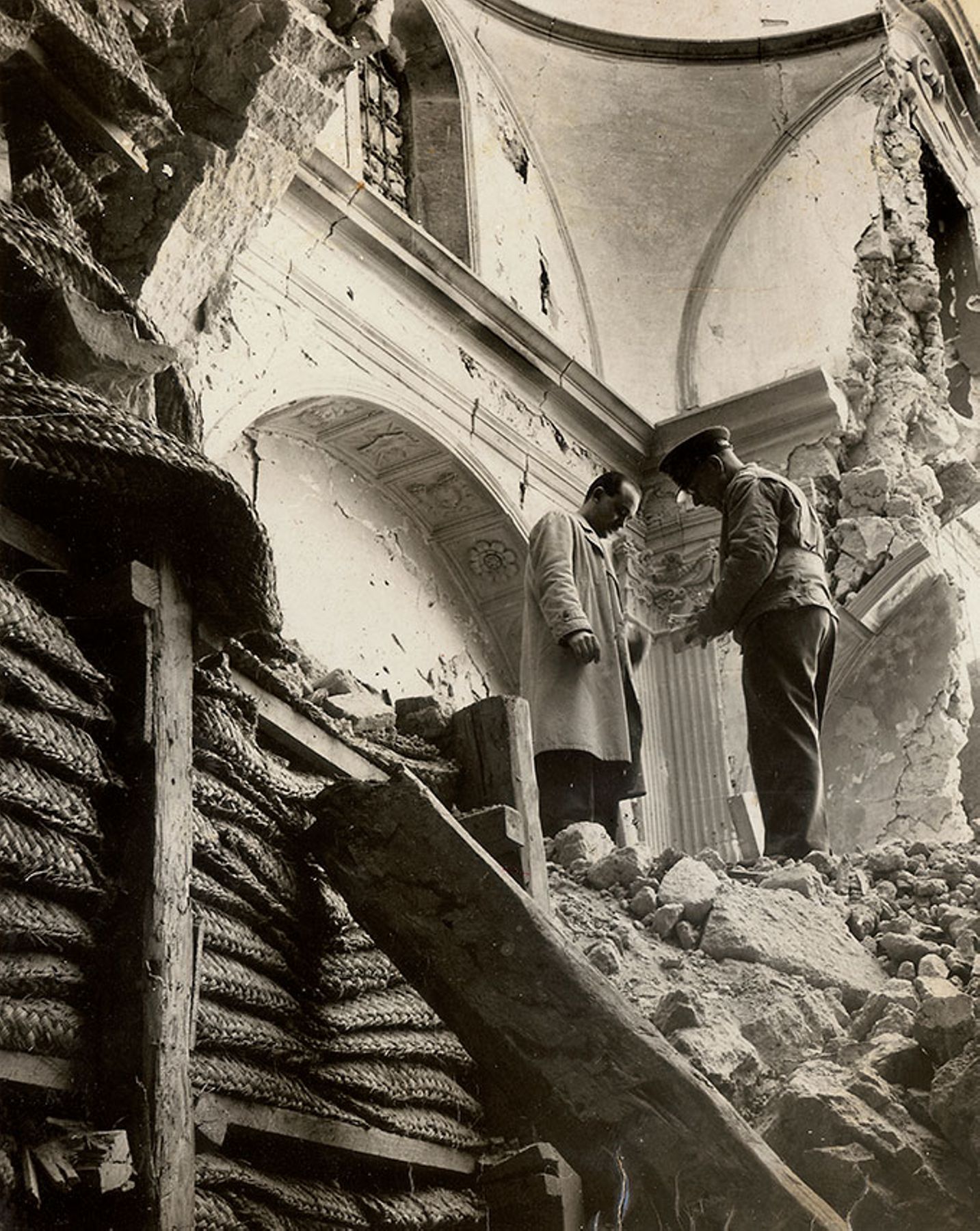
War is horrible, as Malaparte knew. And horribly wondrous. An attack by Russian paratroopers appears as miraculous as an advent of angels: “There were men up there, walking on the roof of the storm. Small, awkward, round-bellied, they walked along the edges of the clouds, holding up with one hand a huge white umbrella that swayed in the gusty wind.” A terrible beauty is born.
The tour-de-force final chapter of Kaputt depicts the unreal, carnivalesque atmosphere of Naples in August 1943, several weeks before the Allies take the city. “Everybody was intent on helping others”: sheltering beneath the city, volunteers midwife a woman in labor, unkempt priests bless the huddled poor, and bowls of vegetable soup pass from hand to hand; this subterranean society, in a city from which everybody able to flee has already fled, is one of Malaparte’s few uplifting portrayals of human endurance. As always, however, the writer stands apart, understanding more of his countrymen than they understand of themselves, as on the train into Naples:
They were fleeing from war, hunger and plague, from the wreckage, the terror and death; they were running toward war, hunger and plague, toward the wreckage, the terror and death. . . . They were fleeing from despair, from the miserable and wondrous despair of a lost war; they were running toward . . . the miserable and wondrous hope of a lost war. They were fleeing from Italy and running toward Italy.
The Skin intensifies this bitter ambivalence. Picking up where Kaputt leaves off, it had its origin in dispatches that Malaparte wrote for L’Unità as a liaison officer attached to the American army during its military occupation of Italy, starting in the fall of 1943. (The Italian Communist Party, under whose aegis Malaparte—presenting himself as a fellow traveler—wrote these dispatches, would later deny him membership, a slight that contributed, in another change of colors, to the inveterate chameleon’s virulent anti-Communism for the next decade of his life.) Both Naples and the Catholic Church banned The Skin when it was published in Italy in 1950. It is not hard to see why. The degradation of the Neapolitans is absolute. Disease, starvation, prostitution, and petty crime are rife. Citizens of a ruined city, at once liberated and conquered, “ashamed of being Italians and even of belonging to the human race,” the people of Naples—under the good-hearted but oafish, even uncomprehending, oversight of Allied forces—endlessly debase themselves: “they spat on their own country’s flag and publicly sold their own wives, daughters and mothers.”
Feats of criminal ingenuity occur: a Sherman tank is stripped for parts; a Liberty ship, part of an American convoy, is stolen lock, stock, and barrel out of Naples harbor. “This bastard, dirty people” is Colonel Jack Hamilton’s comment on the populace. Everything is for sale; consequently, everything (“even an empty jar, a cigar stub, a piece of orange peel”) acquires value in the fight to survive. A “plague,” writes Malaparte, has descended on Naples, a plague of suffering and shame, a corrupting Black Death of the soul:
Drunken soldiers danced with women who were almost or completely naked in the squares and streets, in the midst of the wreckage of the houses that had been destroyed in the air raids. There was a mad orgy of drinking, eating, gaiety, singing, laughing, prodigality and revelry, amid the frightful stench that emanated from the countless hundreds of corpses buried beneath the ruins.
Amid the desolation, liberty wears her reddest cap. And Malaparte, with his wounded lungs, with all that he has seen of war, is moved to confess: “I preferred the war to the plague.” The wreck of Naples reads through his eyes as equal parts Dante and Boccaccio. Should we take our witness at his word when he avers, “I do not like to witness the spectacle of human baseness; it is repugnant to me to sit, as judge or as spectator, watching men as they descend the last rungs of the ladder of degradation”? In one sickening scene, Allied soldiers (and a reluctant Malaparte, in the company of Captain Jimmy Wren of Cleveland) line up and pay a dollar a head to see a young Neapolitan virgin spread her legs, as though an intact maidenhead had become a freak-show attraction. “You can touch. Put your finger inside. Just one finger,” her shameless tout tells the audience. And one soldier does.
The annals of history are not a place to look for reassurance about the pacific nature of mankind. Where wisdom and tolerance have flourished, they have done so chiefly through force of arms—or under the suspended threat of overwhelming force, like a thermonuclear sword of Damocles hanging over the heads of those who agree to play by the rules. Force is, unfortunately, primary. Whatever his undoubted lyrical power, Malaparte speaks to us today chiefly as a realist in an age where naked force has again come to the fore. What he understood is what the Athenians told the Melians: that matters of justice are enforceable only between equals, for “the standard of justice depends on the equality of power to compel.” Mere civilization makes in the end a poor bulwark against barbarism.
Hence Malaparte, who died in 1957, with decades still to go in the Cold War, was not optimistic that the Europe he had deemed “broken, finished, gone to pieces, gone to ruin”—the meaning of the German kaputt—would ever recover what had been lost. The Skin is dedicated to “the brave, good and honorable American soldiers . . . who died in vain in the cause of European freedom.” In vain. Few, if any, American authors have dared entertain so bleak a view of the Second World War. We might well deplore Malaparte’s narcissism, his opportunism, his slippery refusal to take, once and for all, a side—any side—but in his near-total lack of humanitarian illusions, he was the right man to record, and reimagine as fiction, the absurdities and perversities of an inhumane time.
His leave-taking was majestically prolonged. First in a Chinese hospital (where he was diagnosed with lung cancer, exacerbated by lesions from the long-ago German gas), and then in a Roman clinic, Malaparte held court with a constant stream of luminaries, including two Jesuit confessors who managed finally to baptize and confirm the terminally ill man—overcoming a lifetime’s worth of anticlerical vitriol. He could not, said one friend, “be left to die in the hands of the Communists.” His usual perspicacity had failed him when faced with Mao’s China, after a lifetime spent seeing through dictators’ pretensions. And the skilled swordsman who had once fenced with Monsignor Ratti, the future Pope Pius XI, was forced to confront the wasting of his formerly athletic frame. Yet he remained voluble to the end: the morbidly curious treated a trip to Malaparte’s sickbed as a social occasion not to be missed.
Ambitious to a fault, absolument moderne, Malaparte looms up out of the tenebrous twentieth century as a towering yet tragically limited figure, a kind of crippled titan. In his thousands of pages, Serra tells us, “there is not a single story, a single scene, of true love.” In his sexual life he had been more courted than courting. Monogamy was always foreign to him, and he left behind no family, sired no children. He loved dogs, flowers, and Lucretius. The poet Umberto Saba, who thought Malaparte his “antithesis,” asked a priest to say a mass for the peace of the dead man’s soul. A remark in Kaputt about Frank, Poland’s Nazi governor-general, may hold the key to its author’s motive and method. “I knew enough of him to detest him,” writes Malaparte, “but I felt honor-bound not to stop there.”