

Twenty-five years after 9/11, the United States faces a disquieting paradox. On the one hand, the country has largely been spared another major terrorist attack. Only one lethal incident directed by a foreign terrorist organization has succeeded on American soil since 9/11: the 2019 shooting at Naval Air Station Pensacola by a Saudi al-Qaeda operative, which killed three sailors and wounded eight others. This record is a towering achievement. In the dark and fearful days after 9/11 and during the early years of the war on terror, such an outcome was a matter of hope rather than certainty. The horrific attacks in Madrid in 2004, London in 2005, Mumbai in 2008, Paris in 2015, Sri Lanka on Easter Sunday in 2019, and Moscow in 2024 underscore the importance of the 9/11 Commission’s recommendations and the Intelligence Reform and Terrorism Prevention Act of 2004 in keeping the United States safe from another catastrophic attack.
On the other hand, the broader war on terror has produced a more troubling, and still unresolved, outcome. Al-Qaeda survived, spawning a global network of franchises, allies, and even more lethal offshoots. A decade ago, its Iraqi affiliate, rebranded as the Islamic State, resurrected the long-defunct but deeply venerated Muslim caliphate: the supranational political-religious authority governed by Islamic law (Sharia). At its peak, the Islamic State controlled some 40,000 square miles and ruled nearly 8 million people across Iraq and Syria. After a five-year campaign involving some 90 countries, the group was ultimately defeated. But the ideology—and divinely ordained narrative—that sustained it, and has long guided al-Qaeda, remains a force driving both organizations.
Finally, a reason to check your email.
Sign up for our free newsletter today.
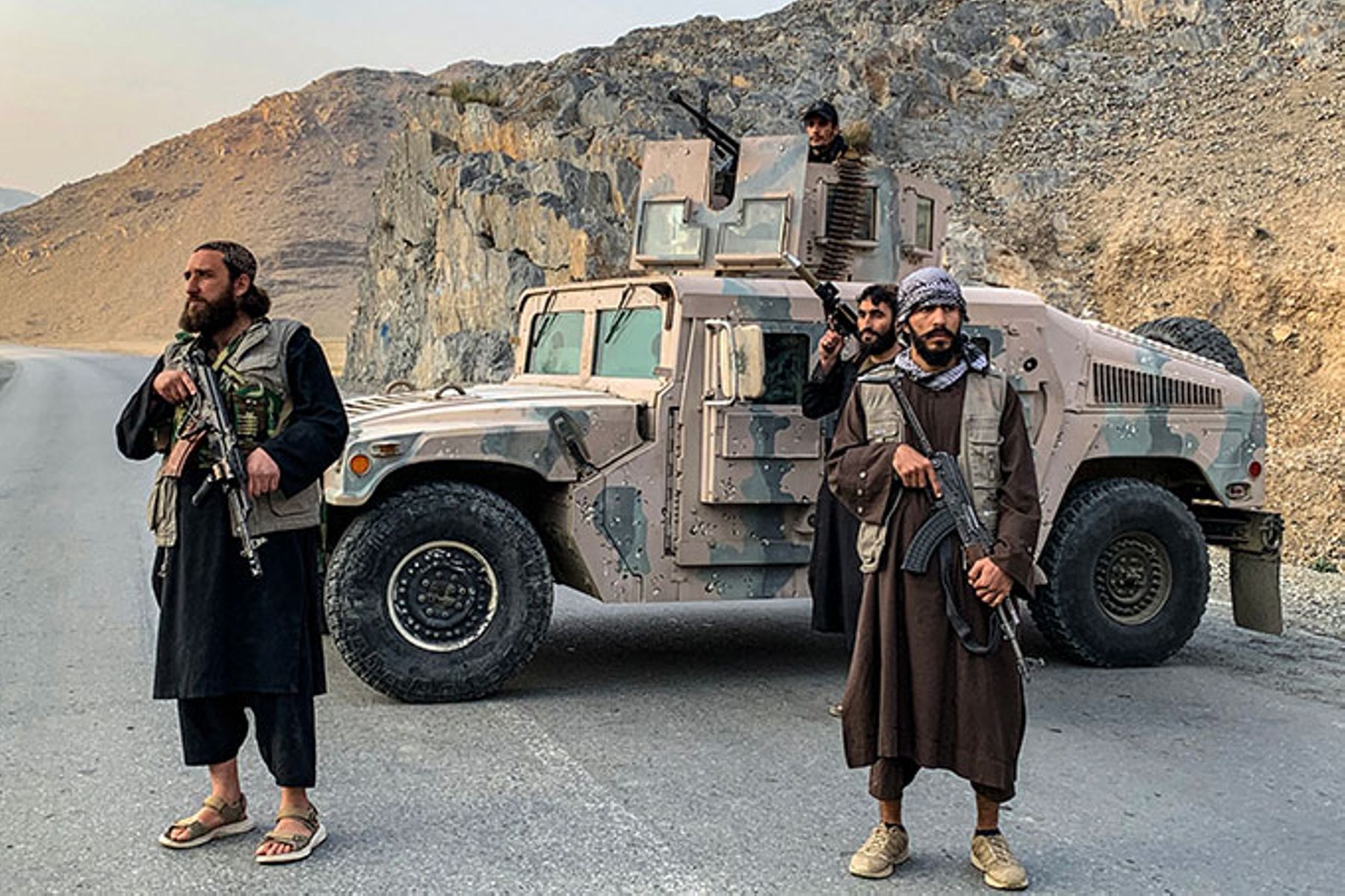
The situation today therefore remains worrisome. The Taliban again rules Afghanistan, with al-Qaeda reportedly having recently reestablished its pre-9/11 terrorist training camp at Tarnak Farm. Al-Qaeda’s affiliate in the Sahel, JNIM (Jama’at Nusrat al-Islam wal-Muslimin, or the Group for the Support of Islam and Muslims), has besieged Mali’s capital and threatens to overrun the country. In East Africa, al-Shabaab continues to undermine the stability of the Somali government, while the Islamic State’s network of branches wages violent campaigns across Africa, the Middle East, and Asia. In recent years, its adherents have carried out attacks in countries as diverse as Iran, Turkey, Russia, and the United States.
Two factors explain the resilience of the Salafi-jihadi terrorist movement. The first is ideology. Both al-Qaeda and ISIS draw from the same intellectual tradition, rooted in the conviction that Muslims are under siege from foreign infidels, corrupt apostate regimes, and a Western liberal order fundamentally hostile to Islam. That worldview was most powerfully articulated by Abdullah Azzam, the Palestinian-Jordanian cleric who became Osama bin Laden’s mentor. Building on the medieval theologian Ibn Taymiyyah’s treatise The Religious and Moral Doctrine of Jihad and the writings of his own mentor, the Egyptian Islamist thinker Sayyid Qutb—especially his seminal work Milestones—Azzam transformed the concept of fard ayn, the individual Muslim’s obligation to defend the faith wherever it is threatened, into a universal call to arms. Azzam was assassinated in 1989, but the clash-of-civilizations framework that he advanced remains the ideological bedrock of both organizations.
The second factor is organizational adaptation. After al-Qaeda’s core leadership was decimated following 9/11, the group devolved authority to regional franchises. Within eight years, for example, its affiliate in Yemen, AQAP (al-Qaeda in the Arabian Peninsula), had surpassed the parent organization as the most serious terrorist threat to the United States and its allies. ISIS replicated that model less than a decade later, dispersing into 33 formal “provinces” across nearly a dozen countries. This decentralized structure has enabled both groups to absorb repeated military setbacks while continuing to marshal fighters and resources to prosecute the war that bin Laden declared 30 years ago.
The differences between al-Qaeda and ISIS have always been more tactical and hence stylistic than strategic or substantive—matters of tone, not ideology or outcome. Both reject democracy as incompatible with Islamic governance, both seek the restoration of a caliphate under strict Sharia law, and both frame Western influence and intervention in Muslim lands as necessitating violent resistance. When the Islamic State’s founder and leader, Abu Bakr al-Baghdadi, announced the caliphate in June 2014 and declared himself caliph, he was not departing from bin Laden’s vision but accelerating it.
With this bold move, al-Baghdadi dramatically upstaged al-Qaeda. His aim was to achieve what bin Laden had only promised: nothing less than redrawing the map of the Middle East, erasing the artificial states and borders created by the Western powers after World War I, and laying the foundation for the resurrection of a Muslim empire stretching from Spain across North Africa, through the Middle East and the Caucasus, into South and Southeast Asia.
Though the new caliphate proved short-lived and ultimately fell to the international coalition arrayed against it, the surviving remnants of the Islamic State continue to derive satisfaction from having withstood the combined power of a massive coalition led by the most technologically advanced military in history: the U.S. armed forces. In one of his last publicly released video addresses, in 2004, bin Laden similarly boasted that al-Qaeda had defeated the Red Army in Afghanistan and forced its withdrawal in 1989. He even claimed to have set in motion the chain of events that led to the collapse of the Soviet Union and the demise of Communism as a global ideology. Having survived the war on terror proclaimed by President George W. Bush, al-Qaeda, bin Laden argued, had demonstrated that the same fate would eventually befall the world’s other superpower, the United States. For both ISIS and al-Qaeda, their continued existence reinforces the narrative that the ultimate triumph of Salafi-jihadism is divinely ordained.
If bin Laden were alive today, he might well be pleased. The enterprise he launched in August 1988 has survived decades of sustained, international counterterrorism pressure. And it continues to inspire violence and resistance, attracting new recruits and supporters who were not even alive on September 11, 2001. This is exactly what bin Laden’s chief bodyguard, Abu Jandal, said would happen. “In case of his death, I think he will be a symbol for all those who follow him,” Abu Jandal told bin Laden’s biographer, journalist Peter Bergen, as recounted in Bergen’s The Osama bin Laden I Know. “His death will be a great force for stirring up everybody’s emotions and enthusiasm to follow him on the path to martyrdom.”
The result, a quarter-century after the epochal 9/11 attacks, is a movement that has defied predictions of its demise. It has franchised itself across continents, recruited fighters born after 9/11, and sustained an ideology compelling enough to inspire violence from North Africa to Southeast Asia. Protecting the American homeland has been a success. Defeating the movement that made 9/11 possible has not—at least, not yet.