

Anyone over 40 remembers the Global War on Terror. As announced by President George W. Bush, it was a multipronged effort on five continents to eradicate the networks that had inspired and supported the attacks of September 11, 2001, along with the jihadi Muslim extremist movement that had murdered not only nearly 3,000 people that day but thousands more around the world, including in Europe and Israel, over five decades.
By one (admittedly biased) estimate, calculated 20 years after the attacks, the war on terror had cost $8 trillion, including hundreds of billions spent to bring about regime change in Iraq and Afghanistan, where over 7,000 American military personnel lost their lives and 52,143 were maimed and injured.
Finally, a reason to check your email.
Sign up for our free newsletter today.
The war on terror also led to a radical restructuring of government under the Patriot Act, which enabled unprecedented cooperation among federal intelligence agencies and expanded federal powers of electronic surveillance to uncover terrorist networks and their supporters. It gave the Treasury Department a new global reach to find and shut down the financial networks that paid for terror.
Here we are, 25 years later, though, and some would argue that, far from having eliminated support for Islamist terrorism, we see its sympathizers embedded in our politics.
The skeptics would point not only to our failure through two “endless wars” to bring about democratic regime change as promised in Iraq and Afghanistan but also to the spread of jihadi sentiment in the streets of American cities—and even on the campuses of our most elite colleges and universities. They would point to a popular commentator (Hasan Piker) who has declared that America “deserved 9/11,” and yet shows up on the campaign trail for some Democratic politicians.
In the aftermath of 9/11, University of Colorado–Boulder professor Ward Churchill was fired for saying something similar (he referred to the victims as “little Eichmanns”). Today, he’d be chair of his department or running for Congress.
A skeptic can find other glaring evidence that those who wished us harm on 9/11 have found a sympathetic home here in the United States. Consider the ebbing support for Israel, whose efforts to defend itself against enemies committed to its destruction are routinely denounced as “genocide” in the same elite circles that express sympathy for Hamas and other terrorist groups whose aims are explicitly genocidal.
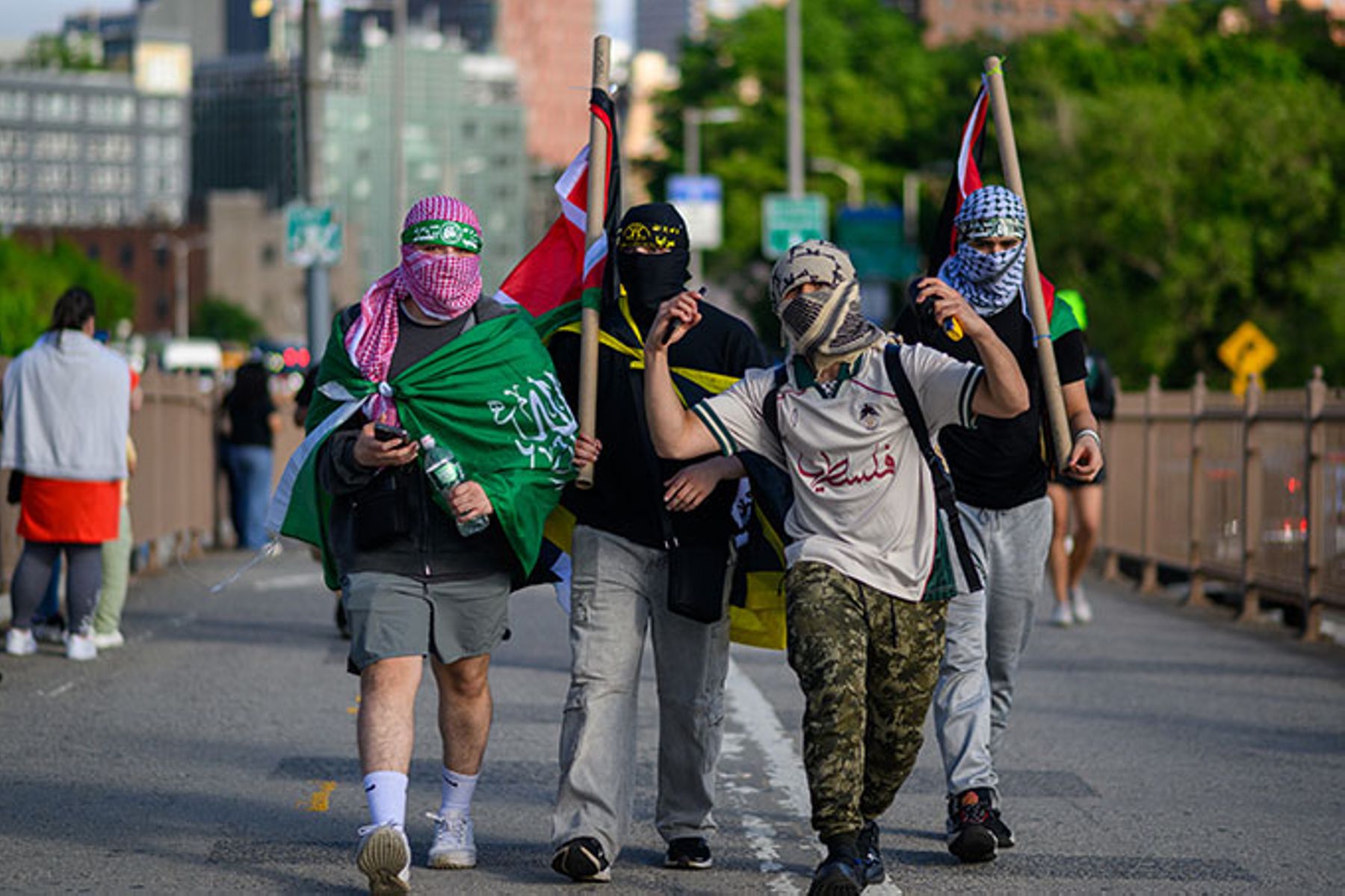
We’ve seen attacks on Jewish students at leading college campuses and in the streets of major cities, where the presence of pro-Hamas banners and Palestinian flags is no longer shocking. And we’ve seen the election, in the city with the country’s largest Jewish population, of a mayor who has repeatedly equivocated when pressed about Hamas and anti-Israel extremism.
Even worse, the Biden administration’s open-borders policy led to a flood of terrorist watch-list candidates hammering at our gates. According to data from U.S. Customs and Border Protection, border officials encountered at least 382 individuals on the federal terrorist watch list trying to cross the southwestern border illegally between fiscal years 2021 and 2024. How many more slipped through undetected is anyone’s guess, but at least 99 were released after being detained—with at least 50 still unaccounted for.
The U.S. Muslim population has more than doubled, from roughly 2 million in 2001 to more than 4 million today. It would be outrageous to claim that any beyond a small minority of American Muslims are terrorists or terrorist sympathizers. Yet there is no denying that some heavily Muslim communities—including Cedar-Riverside in Minneapolis and, more recently, Dearborn, Michigan—have emerged as centers of concern over Islamist radicalization.
In Europe, the terrorists seem to have gained the upper hand. Major cities, from London and Paris to Brussels, Madrid, and Milan, regularly see masked and black-garbed Islamists flood their streets to protest and riot, while political leaders cower before the social and cultural crisis they have helped create.
It’s true that America hasn’t suffered another attack as catastrophic as 9/11, though not for want of trying by terrorists seeking to emulate their predecessors. Instead, we’ve endured a series of long-wolf attacks, from the 2009 Fort Hood shooting and the 2013 Boston Marathon bombing to attacks on synagogues and Jewish individuals. What would have seemed monstrous before 9/11 has become a recurring feature of American life.
Was the Global War on Terror worth it? When considering that the radical Islamist movement once run remotely from bases in the Middle East or Somalia is now excused or openly celebrated here at home within the ranks of the Democratic Party, a reasonable person could answer: No.
Yet strangely, in the Middle East itself, the terrorist cause has rarely been weaker.
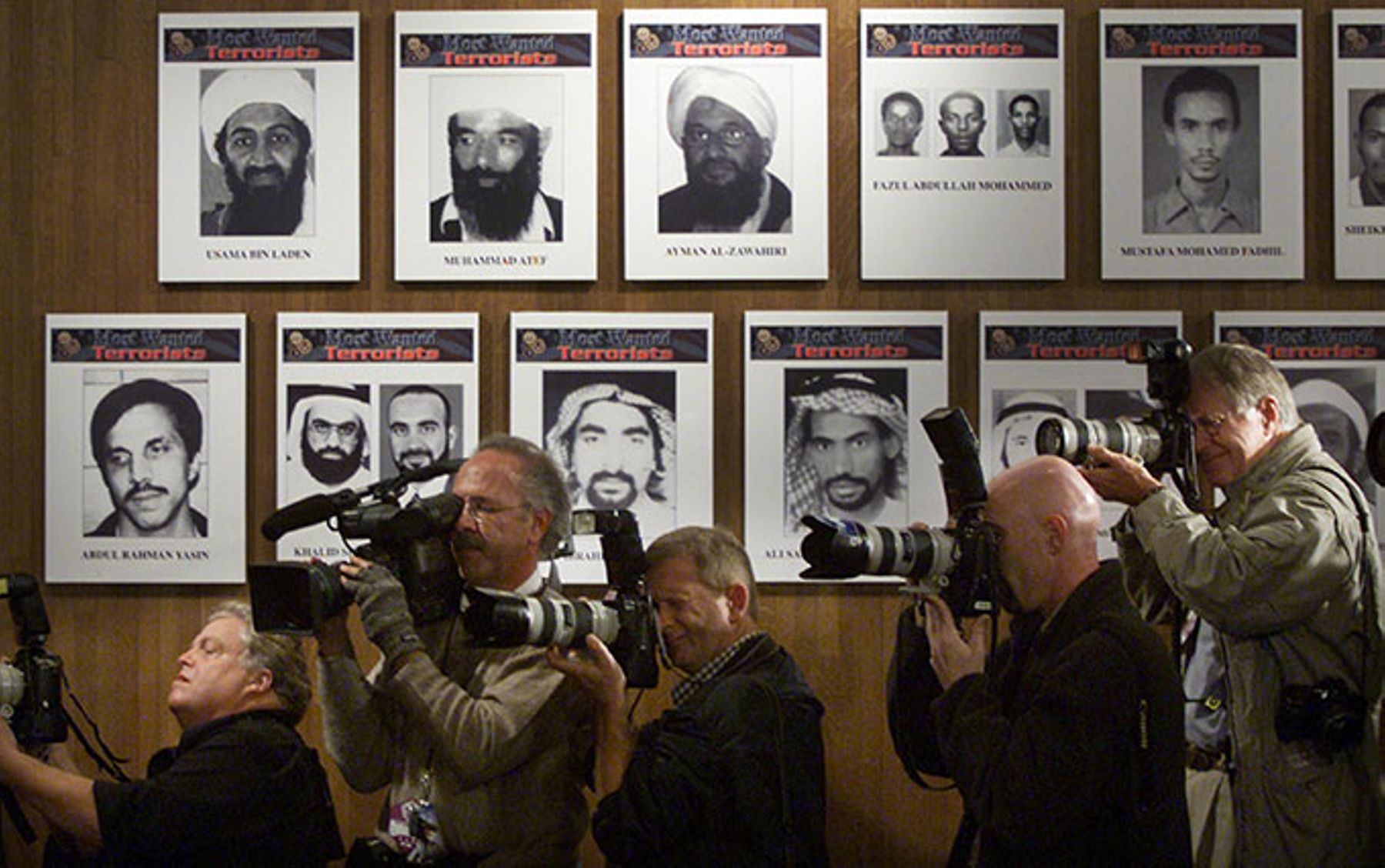
Over the past two decades, we’ve seen al-Qaeda reduced to a shadow of its former self, and likewise its more savage and apocalyptic successor, ISIS. Though the Taliban remains firmly in control of Afghanistan after the U.S. withdrawal in 2021, and violence by radical Islamist groups has surged in Pakistan, the opportunities for jihadis to export terror beyond their borders have shrunk.
Over the past two years, Israel has essentially destroyed Hamas as a conventional fighting force and steadily reduced Hezbollah from a strategic threat to a diminished one, with little or no pushback from its Arab neighbors.
Iran has long occupied the center of the global terror network—yet its power and influence are at historical lows. When Donald Trump entered the White House for the second time, Iran was the dominant power in Syria, Lebanon, Iraq, and Gaza, as well as a major force in Yemen through its Houthi proxies. Tehran was also being regularly courted by Turkey and Qatar and had built a formidable alliance with both Russia and China.
Now, Iran has been mostly forced out of Syria, Iraq, and Gaza. Its proxies are in retreat both in Lebanon and the Arab peninsula, while Turkey has been aligning itself with the major new geopolitical force in the region: the Israeli–Arab Gulf state alliance that Trump has fostered. As for Russia and China, their influence in the Middle East has been reduced to cameo appearances rather than starring roles.
The biggest change of all has been in Saudi Arabia. Under Crown Prince Mohammed bin Salman, the country that spawned most of the 9/11 terrorists has moved slowly but decisively into the U.S./Israel camp—one might even say the Western camp.
As for Israel itself—now, as always, the prime target of the leftist/jihadi movement—the Jewish state has never been stronger regionally or more firmly entrenched as a U.S. ally.
If this is what losing a war on terror in the Middle East looks like, it’s hard to imagine what winning might resemble.
So why the disconnect with what has happened here at home?
In the end, we must conclude that the success of America’s jihadi enemies domestically has less to do with their intrinsic strength and more to do with us—specifically, with a lack of confidence in our own values and civilization, especially the Judeo-Christian values on which our civilization is built.
This is particularly true among our college-educated elite today, but its roots go back to the days and months after 9/11 itself. We saw it first in the Left’s swift change of heart when it came to standing up to terrorism following the massacre of Americans on that day. After some initial enthusiasm for taking the fight to the enemy by stamping out al-Qaeda in Afghanistan and then seizing weapons of mass destruction in Iraq, it didn’t take much—a few photos from the rogue prison at Abu Ghraib—to convince the Left that a robust response to Islamist terrorism “wasn’t who we were.” The Left soon decided that U.S. efforts were only creating more terrorists than we captured or killed—or fueling Islamophobia. The best way to defeat terrorism, the argument seemed to go, was to admit that we were in the wrong, as we had been since at least 1948.
That’s why it’s no good blaming the Bush administration alone for serial policy failures in Iraq, or Afghanistan, or anywhere else. The Left was primed for defeat from the start, as epitomized by the Obama administration’s decision to cultivate closer relations with the Islamic Republic of Iran while distancing ourselves from Israel.
American support of Israel, or lack of it, has always been a barometer of how we feel about ourselves. During the Six-Day War in 1967, Americans never felt stronger, and support for Israel cut across the political spectrum. Today, elites are down on America and about their own future prospects. Support for Israel has paid the price.
Soul-searching about the war on terror has an earlier analogue in questions that lingered after the end of the Cold War in 1989. Two decades later, some of us asked: “Who won the Cold War?” We wondered because we saw leftist academics enthralled by Communism and socialism more firmly entrenched in our colleges and universities than ever before. Now their students are out in the world, with their deeply distorted views of the U.S. and the West. That view, in turn, resonates in today’s politics, shaping an equally skewed view of the Middle East and Israel and of America’s global responsibilities.
Objectively, America as leader of the West has rarely been stronger. It is the sole superpower; the builder of a grand alliance between Israel and the Arab Middle East; the world’s biggest producer of oil and gas; the leader in AI compute and innovation, the decisive door to the future. The United States dominates the globe. And yet.
Rarely have political perceptions been more out of step with empirical reality. After the massacre of 9/11, we avenged our countrymen and defeated evil where it truly lived. What we didn’t know then was that we would have to defeat it here, as well.