Last August, a dust storm swept across northern Utah, crossed the Great Salt Lake, and kept going, carrying toxic sediment more than 50 miles through heavily populated areas. Buildings disappeared into a brown haze. Cars were coated in a fine, pale film. Parents kept children inside. Health officials issued advisories about toxic particles now suspended in the air above one of America’s fastest-growing metropolitan areas.
Scenes like this are no longer uncommon along Utah’s Wasatch Front. The reason: the Great Salt Lake is rapidly drying up. As the lake recedes, it exposes a vast lake bed laced with arsenic and other toxic metals both naturally accumulated and elevated by decades of industrial activity. When the wind picks up, it lifts these fine sediments and carries them toward the region’s booming cities. Researchers have found that the smallest particles, light enough to stay airborne for weeks, can penetrate deep into the lungs and are associated with higher rates of respiratory disease. On some days, this part of Utah records the worst air quality in the country.
Finally, a reason to check your email.
Sign up for our free newsletter today.
The Great Salt Lake has been declining for decades. Since the 1980s, it has dropped 22 feet. In 2022, it reached its lowest recorded level, exposing 800 square miles of lake bed—an area larger than Rhode Island. The lake is terminal, meaning that water flows in but never out, leaving only through evaporation. Over centuries, that process has concentrated salts and minerals, making it the largest saline lake in the Western Hemisphere.
The lake is also the ecological and economic foundation on which northern Utah was built. Its lake-effect moisture significantly boosts the nearby mountain snowpack—the source of most of the basin’s water supply. The surrounding slopes draw skiers from around the world to what Utah calls “the greatest snow on earth.” A shrinking lake means less snow, while dust drifting from the exposed lake bed darkens the remaining snowpack, causing it to absorb more heat and melt faster. The lake also moderates regional temperature swings, helping make northern Utah habitable at the scale that its rapidly growing cities require.
The lake’s importance extends further still. Minerals extracted from it supply potassium sulfate fertilizer for high-value organic crops worldwide. Its brine shrimp provide nearly half the world’s aquaculture feed, sustaining a global seafood industry most consumers know little about. Millions of migratory waterfowl and shorebirds also rely on the lake as a vital stopover along the Pacific Flyway.
All this is now at risk. This spring, the region recorded its worst snowpack ever. By late summer, the lake is expected to reach a new low. The timing could hardly be worse. The Wasatch Front—Salt Lake City, Ogden, Provo, and their booming suburbs—is growing rapidly. More than 2 million people now live downwind of the drying lake bed. And as Salt Lake City prepares to host the 2034 Winter Olympics, there is a real risk that visitors will arrive to find the city’s namesake lake gone and its mountains short on snow.
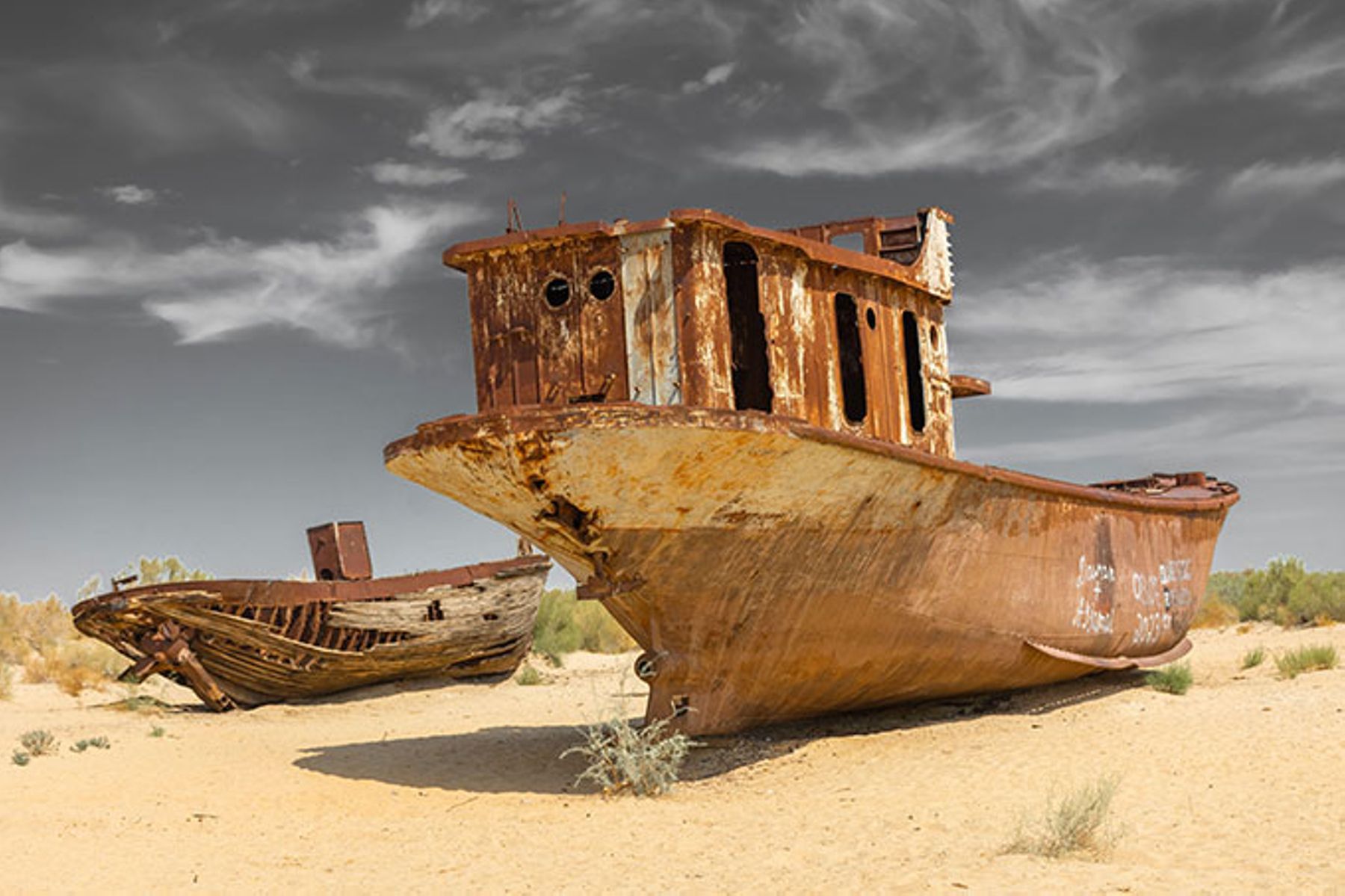
No country has ever reversed the decline of a saline lake like the Great Salt Lake. The Aral Sea—drained by Soviet-era irrigation schemes—shrank to less than a tenth of its original volume, poisoning the surrounding region and displacing hundreds of thousands of people. Iran’s Lake Urmia, once the largest lake in the Middle East, has lost over 80 percent of its surface area, leaving behind a salt flat and a public-health crisis.
Utah has decided to be the exception. Last September, Governor Spencer Cox stood at the edge of the receding shoreline and pledged that the state would fully restore the Great Salt Lake before the Winter Olympics in 2034. “We will not let the Great Salt Lake fail,” he announced, promising that when the world arrives it will not see a region in decline. “This will be one of the great environmental successes in the history of humankind, and Utah is going to write that next chapter.”
That message has reached the White House. Addressing the National Governors Association in February, President Trump echoed the urgency—an unusual priority for a president otherwise skeptical of environmental campaigns. “We’re going to save the Great Salt Lake,” he said. “That’s what I call a real environmental problem,” unlike, he added, worrying that “using hairspray” would “ruin the ozone.” In a social-media post, Trump pledged to “MAKE ‘THE LAKE’ GREAT AGAIN!”
That will take some doing. To stabilize the lake, let alone restore it, will require sending hundreds of thousands of additional acre-feet of water to it each year, water now diverted by upstream farms and cities that hold legal rights to its use. The question hanging over Utah’s effort is whether a rapidly growing, politically conservative state committed to property rights and limited government can rescue a collapsing ecosystem without coercive mandates—and before it’s too late.
The West has spent more than a century fighting over water. Utah is betting it can do something different: save a dying lake through voluntary cooperation and market incentives.
The strategy rests on a crucial insight. While drought and warming temperatures have worsened the lake’s decline, upstream human water use accounts for the lion’s share of the lost inflows. On the one hand, that makes the problem—unlike climate change itself—something Utah can solve. Water use can be reduced. The streams that once fed the lake still flow; much of that water simply never reaches it. At its core, it’s a supply-and-demand problem, exactly the kind that markets can address.
On the other hand, restoring the lake means shifting large volumes of water away from current users who hold legal rights to it. In the Great Salt Lake basin, as across much of the American West, that inevitably points to agriculture.
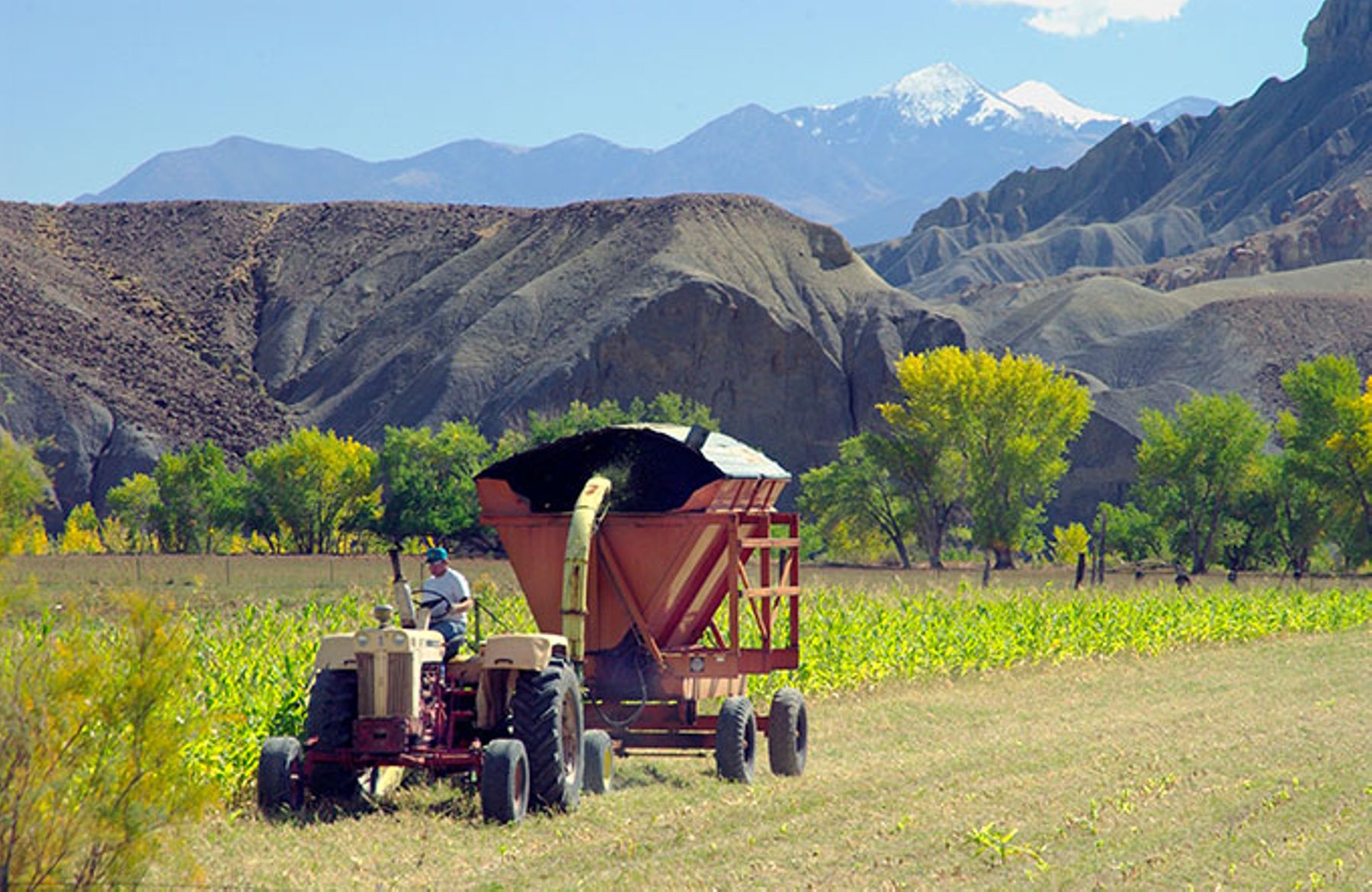
Farms dominate water use in the basin, consuming roughly two-thirds of depletions. Cities and industry take much of the rest—though despite explosive population growth along the Wasatch Front, per-capita urban consumption has declined in recent decades, thanks to efficiency gains and conservation. On farms, alfalfa reigns supreme. Well suited to the region’s soils and climate, it forms the backbone of Utah’s rural economy, feeding dairy and beef operations that have sustained the same families for generations.
Utah’s idea is not to take water from farmers or other water users, but to purchase it through voluntary leasing: paying them to conserve water, lease what they save, and send it downstream to the lake. Farmers receive compensation for the water they forgo, the lake gets water it desperately needs, and rural communities, in theory, remain intact. The aim is to redirect water through voluntary exchange rather than government mandate.
In nearly any other Western water crisis of this scale, conflict would erupt—or at least, heavy regulatory mandates and court battles. Yet in Utah, so far, diverse groups are on board with the plan. Governor Cox has built his political brand around the idea that Utahns can “disagree better,” finding common ground without deepening divides. Local chapters of environmental groups such as the Audubon Society and the Nature Conservancy support water leasing. The Utah Farm Bureau has cautiously endorsed voluntary agricultural leasing. And the state’s Republican-led legislature, whose members would fiercely oppose federal mandates, has spearheaded major legislation to support the effort.
“This is not just the environmental left who’s interested in saving the lake,” Cox said in February. “It’s the MAGA right as well. All of us across the political spectrum know how important this is.”
But success will require more than political will and funding. It will demand reforming core elements of Western water law that have evolved over more than a century to promote use, not conservation.
Those rules begin with the doctrine of prior appropriation, often summed up as “first in time, first in right.” Under the doctrine, whoever established the earliest claim to use water from a river or stream holds the strongest legal entitlement to it. In a drought, junior rights-holders are cut off first, while senior rights-holders keep their full allocation until the last drop. Farmers in the Great Salt Lake basin hold some of the oldest and most senior rights in Utah.
Relatedly, under traditional Western water law, rights that go unused can be forfeited, a rule designed to encourage productive development. A farmer who decides to use less water risks having that allocation stripped away and reassigned. For generations, voluntary restraint was legally treacherous. Water rights are also treated as vested property rights, meaning that any attempt to curtail them without compensation invites litigation.
After the lake’s record low in 2022, Utah’s legislature passed dozens of bills overhauling state water policy. Lawmakers removed “use-it-or-lose-it” penalties for water voluntarily conserved and authorized in-stream flow leasing, allowing rights-holders to dedicate water to the Great Salt Lake. They created split-season leasing arrangements, enabling farmers to idle fields for part of the year, while retaining full rights for the rest. Lawmakers also established the Great Salt Lake Commissioner’s Office to coordinate rescue efforts and created a water trust to broker and administer leasing transactions.
The state has appropriated $200 million for agricultural optimization projects, offering cost-sharing grants to help farmers adopt more efficient irrigation technologies. Farmers who generate verifiable water savings can now lease that water for lake restoration without risking their rights. Utah has also directed tens of millions toward voluntary leasing programs.
Taken together, these reforms represent the most significant overhaul of Utah water law in a generation. Public and private investment in Great Salt Lake restoration now exceeds $1 billion. The money is there; the political will, for now, is genuine.
Despite these efforts, progress toward restoring the lake has been slow. Last year, the state and its partners secured 163,000 acre-feet of water for the lake through leasing. But experts estimate that the lake needs at least 800,000 additional acre-feet per year just to have a coin-flip’s chance of reaching healthy levels by 2034. (An acre-foot is what it takes to cover one acre in one foot of water.) To put that volume in perspective: that’s enough to cover the entire five boroughs of New York in about four feet of water, or to irrigate 300 square miles of alfalfa.
Several factors help explain the gap. The first is skepticism among farmers. Though voluntary water leasing enjoys broad political support, relatively few farmers have participated, despite ample funding. After more than a century of use-it-or-lose-it rules, many worry that they won’t get their water back once they lease it. Others fear that leasing could set a precedent that might later be used to erode their water rights. These concerns are understandable. For generations, farmers have operated under a system that punishes, rather than rewards, conservation.
Measurement presents a separate challenge. Before the state can pay a farmer for conserved water, it must establish how much that farmer would have used without the conservation measure—a baseline that varies with weather, crop mix, soil conditions, and other factors. It must then verify how much water was saved and track it downstream to the lake. Both steps require measurement techniques that remain incomplete across much of the basin. Without reliable measurement, leasing programs must rely on estimates that are tough to defend legally and even harder to scale.
The physical infrastructure of Western irrigation adds another complication. Much of the water in the Great Salt Lake basin moves through a network of canals maintained by irrigation companies—collective entities that deliver water to individual farmers and depend on sufficient flow to serve all their shareholders. If one user leases water out of the system, canal flows can drop enough to make delivery to downstream users unreliable or even impossible. In practice, that means that many leases require cooperation not just from individual farmers but from entire irrigation networks.
Even the state’s flagship agricultural-optimization program has produced mixed results. Utah has invested heavily in efficiency, helping farmers install improved irrigation technologies intended to reduce water use. But greater efficiency doesn’t always translate into more water reaching the lake. Farmers often respond by applying water more precisely, allowing them to grow more crops on less land. In such cases, the net effect on flows reaching the lake may be small—or even negative. No farmers have yet leased water saved through these efficiency projects, suggesting either that the projects haven’t produced meaningful savings or that the tools to verify those savings reliably are still catching up.
Compounding all this is a deep-rooted fear in rural communities about the potential impacts of large-scale water leasing: farms consolidated, towns hollowed out, and agricultural economies quietly dismantled. “I certainly don’t want to see the lake dry up and disappear,” a Utah farmer told the New York Times last year. “But I also don’t want my industry that I’ve grown up with and love to be impacted just to prolong the inevitable.”
In theory, the state could offer higher prices for water to draw more farmers into the market, a straightforward supply-and-demand response. But some farmers worry that if the state bids too aggressively, it could pull too much land out of production, sending ripple effects through rural economies. And because many farmers in the region rely on rented land, they fear that higher prices for water rights would benefit not the farmers who work the ground but the landowners who hold the rights. In this context, a market solution can create winners and losers in ways that cut against the very communities it is meant to help.
Utah’s leasing efforts may need more time to mature, and farmers more time to gain confidence in the system. But time is precisely what the lake does not have. And if the state cannot move water quickly enough through voluntary means, it may soon lose the ability to proceed on these terms.
The first pressure point is already in court. A lawsuit working its way through Utah’s district court argues that the state has violated its public trust obligations by letting the Great Salt Lake shrink to critically low levels. The plaintiffs argue that, under Utah’s public trust doctrine, the state—as trustee—has a duty to protect the lake. If the plaintiffs prevail, a court could order reductions in upstream water use by judicial decree.
Another threat is gathering at the federal level. The U.S. Fish and Wildlife Service is considering a petition to list the Wilson’s phalarope—a migratory shorebird whose populations are declining alongside the lake—under the Endangered Species Act. Such a listing would trigger the act’s sweeping “take” prohibitions and could require basin-wide reductions in water use to protect the species’ habitat. Unlike voluntary leasing programs, those reductions would not require compensation. For Utah’s farmers, this outcome would represent precisely the kind of federal intervention the state wants to avoid.
The history of similar conflicts offers little encouragement. In the 1970s, environmental groups sued Los Angeles under the public trust doctrine to save California’s Mono Lake, another terminal saline lake. The courts eventually ordered major reductions in the city’s water diversions, but the process took nearly 20 years of litigation. During that time, the lake’s salinity nearly doubled and the surrounding ecosystem continued to deteriorate. Mono Lake’s decline was eventually halted, but only after significant ecological damage that earlier voluntary action might have avoided. Today, the lake still sits far below its state-mandated target level.
The comparison that haunts Utah planners most, though, is Owens Lake in eastern California, just south of the Sierra Nevada. A century ago, water diversions caused the lake to disappear entirely, leaving behind a vast alkaline flat laced with arsenic, cadmium, and nickel. That turned Owens Lake into what was once the single largest source of particulate dust pollution in the United States. Controlling that dust—through shallow flooding, gravel spreading, and chemical stabilizers—has cost Los Angeles ratepayers over $2.5 billion.
The Great Salt Lake’s exposed lake bed is already more than 16 times the size of Owens Lake. If the lake keeps shrinking, that area will only expand. Estimates suggest that suppressing dust at that scale could cost Utah hundreds of millions of dollars annually, indefinitely, on top of the mounting public-health costs of worsening air quality along the Wasatch Front.
Utah still has options. This year, lawmakers approved several bills aimed at streamlining leasing processes and ensuring that water leased for the lake actually reaches it, rather than being consumed along the way. The goal, according to Deputy Great Salt Lake Commissioner Hannah Freeze, is to find more ways to treat “water as a commodity” that can benefit farmers. One measure, however, reflects the political tightrope the state must walk: it prohibits farmers from leasing water to the lake more than two years out of five, an effort to reassure rural communities that leasing will not lead to widespread fallowing of farmland—even if it constrains how much water can reach the lake.
The state is also casting a wider net for extra supply. Utah has proposed paying California to build desalination plants along its coast in exchange for a portion of Utah’s allocation of water from the Colorado River—a counterintuitive arrangement that could, in theory, free up water within the broader system. California Governor Gavin Newsom expressed cautious interest earlier this year. Any such deal would take years to negotiate and billions to execute, but the fact that it’s being discussed signals how seriously Utah is searching for additional supply.
Engineering solutions are being explored as well. The state is examining whether targeted dikes in portions of the lake bed could create shallow pools near dust hot spots close to population centers—flooding exposed areas before they become a public-health threat. Cloud-seeding programs are also being expanded in Utah in an effort to boost snowpack and increase the runoff that feeds the lake’s tributary rivers. Neither approach substitutes for getting water to the lake, but both could buy time.
Perhaps the most underappreciated asset in Utah’s tool kit is alfalfa itself. The crop has a reputation as a water hog, but it is well suited to the flexible, split-season management that the state’s leasing reforms aim to enable. Alfalfa is perennial and hardy; it can go dormant during dry periods and recover when water returns. That flexibility makes it more compatible with split-season leasing than many other crops, suggesting that the agriculture often blamed for the lake’s decline may also help drive its recovery.
New pressures are emerging on the demand side. Recent data suggest that cities and municipalities consume a larger share of basin water than previously estimated. As Utah’s population grows, the urban sector will have to do more with less. The rise of data centers along the Wasatch Front presents a related challenge: these facilities use water for cooling, and their numbers are increasing rapidly. Saving the lake means confronting how the region’s expanding economy continues to generate new demands for water, even as the state struggles to send more of it back to the lake.
More funding could accelerate all this. Last fall, Utah business leaders and donors committed $100 million to the lake’s recovery, in recognition of its importance to the region’s economic vitality. And, after Trump’s public remarks in support of the lake, state officials are now seeking $1 billion in federal funding.
The primary constraint on Utah’s strategy, however, is not money. The state has already committed over $1 billion to restoration efforts, and significant sums remain unspent. What the lake needs most is more farmers willing to participate. That is the unresolved tension at the center of Utah’s experiment: an unusual alignment of political will, institutional capacity, and financial resources straining against the slower forces of trust, culture, and rural identity that legislation and money alone cannot change. Spencer Cox has staked his legacy on the idea that Utahns can solve hard problems together and find common ground where others find only conflict. The fate of the Great Salt Lake will test that proposition.
When the world arrives in Salt Lake City in 2034, it will encounter either a restoration story or a cautionary tale. Between now and then, Utah is attempting something audacious: rescuing a collapsing ecosystem not through mandates or litigation but through voluntary exchange. If the experiment works, the Great Salt Lake could become one of the most remarkable environmental success stories of the modern West. If it fails, the next decisions will likely be made not through cooperative agreements but in courtrooms—and at costs far greater than those that Utah faces today.