
The sky was darkening, and the snow started pounding on the Old Capitol building in Iowa City, Iowa. Inside, a group of conservative academics, administrators, and regents prepared for the arrival of Governor Kim Reynolds, who was scheduled to speak at the launch event for the University of Iowa’s Center for Intellectual Freedom, a conservative research institution created to bring balance to the left-leaning campus.
The Old Capitol, a sublime classical building centered around a unique reverse-spiral staircase, was built in the 1840s. When the state capital was moved to Des Moines in the 1850s, the Old Capitol became the first building—now designated Building 0001—of the University of Iowa.
Finally, a reason to check your email.
Sign up for our free newsletter today.
The historical connection between politics and academia was not lost on me. For the past few years, I have patiently attempted to explain to conservatives that public universities are not radically autonomous institutions; they operate on an implicit contract with the public, and, therefore, have a duty to reflect the values and serve the interests of the public. In a conservative state such as Iowa, that means eliminating left-wing ideological programs, such as DEI, and providing strong representation of conservative ideas on campus.
The argument seems to have caught on. Since the George Floyd revolution, a number of red states have begun taking action along these lines, establishing conservative research centers within their state universities and recruiting conservative faculty who specialize in American history, political theory, constitutional law, and civic culture. In Iowa, Governor Kim Reynolds and state legislators initially pitched the Center for Intellectual Freedom as a corrective for decades of ideological drift, during which conservative faculty have been filtered out of the departments and conservative ideas have been forced out of the campus debate.
Earlier this year, state legislators finalized a bill that forced the University of Iowa’s president to establish the center and selected the brilliant, Brazilian-born economist Luciano de Castro as its interim director. Though insiders say that some administrators quietly tried to hamstring the program, the governor, state legislators, and activist regents forced reluctant officials into compliance and provided support for conservative academics.
The key lesson for reformers, highlighted by all of the speakers at the Old Capitol launch, was that leadership matters. Governor Reynolds provided leadership at the top; legislators, most notably State Representative Taylor Collins, worked the democratic process; and the Board of Regents, led by activists such as Christine Hensley, ensured that the legislative vision was translated into administrative reality.
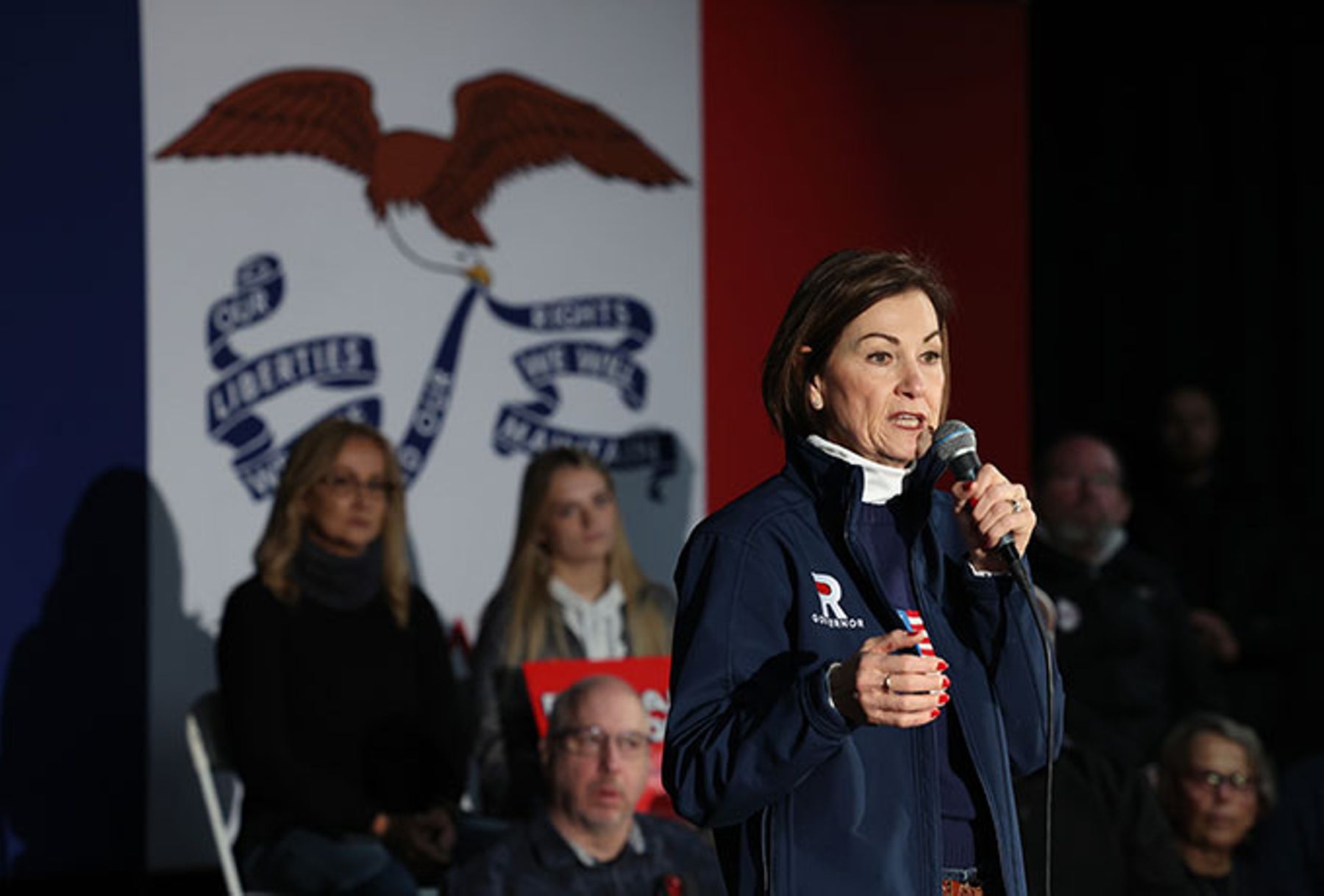
Governor Reynolds, in particular, deserves credit for her engagement. She is a skilled politician who represents the best of the Old Right and the New Right, gracefully combining fiscal conservatism—cutting taxes, eliminating departments, balancing the budget—with aggressive action on culture war issues such as critical race theory, DEI, and ideological capture. And she has done so while maintaining an optimistic tone and high public approval.
As I explained in a keynote address, the center’s creation represents a significant shift. Under the leadership of de Castro, conservatives will finally have a voice on campus and, more importantly, an infrastructure, budget, and community of colleagues that can stand together against left-wing faculty, particularly within the humanities, who have denied students access to the full range of American ideas.
The event also brought together leading conservative academics from institutions including Stanford, Northwestern, the University of Texas, and the University of Chicago, many of whom worked behind the scenes to launch similar initiatives in Florida, Ohio, Arizona, and Tennessee. These faculty members, who have long felt besieged, permitted themselves some optimism: the hiring pipelines for conservative-leaning faculty are better than they have ever been, and the rise of conservative academic centers could lead to the hiring of hundreds, if not thousands, of academics with commitments to American principles.
Given the nearly 1 million university teaching positions in the United States, this might not seem like much, but it’s a strong beginning—and one that seemed all but impossible in the depths of the Floyd mania.
It is worth noting that, during my remarks, two left-wing protesters tried to discredit the new center, illustrating what reformers are up against. One of them, a neon-haired graduate student who said she taught a course on bookbinding, suggested that she supported academic freedom but wanted to see the Center for Intellectual Freedom abolished—freedom for me, but not for thee. I responded that she teaches bookbinding but seemed to support book burning. To my shock, she agreed: certain books needed to be burned, she said.
There may be no greater encapsulation of academic nihilism than this. The activists on campus would like to turn the academy into a partisan agent and banish all dissenting views. Fortunately, the political structure of the United States allows for a remedy: organized, unapologetic political action. Governor Reynolds has demonstrated that it’s possible. I hope other states follow suit.
Top Photo by: Don and Melinda Crawford/UCG/Universal Images Group via Getty Images