
In the early hours of Saturday morning, explosions rocked Caracas as a surprise attack struck Venezuela’s ruling regime. Hours after the operation began, the White House announced that self-proclaimed president Nicolas Maduro—who had remained in power despite losing the 2024 election in a landslide—was in U.S. custody. Thus ended a years-long process that began with Maduro’s 2020 indictment in federal court in Manhattan for narcoterrorism and related offenses.
Maduro’s capture culminates months of armed stand-off with his regime. Previously, the Trump administration had launched a series of drone strikes against suspected drug-smuggling vessels in the Caribbean. These strikes destroyed boats tied to Venezuelan cartels, killing more than 100 alleged narco-traffickers.
Finally, a reason to check your email.
Sign up for our free newsletter today.
In an October memorandum to Congress, the White House explicitly declared this an armed conflict against narco-terrorist cartels, branding them unlawful combatants and enemy belligerents—no longer mere unorganized criminals, but legitimate targets under the laws of war. According to that memo, the strikes were legally justified as acts of self-defense.
Trump then escalated that campaign by deploying the largest military presence in the Caribbean in nearly 40 years—including positioning America’s largest aircraft carrier, the U.S.S. GeraldR.Ford, and roughly 15,000 personnel— to support the mission to pressure and ultimately extract Maduro. Secretary of State Marco Rubio announced in November that the U.S. would designate the Cartel de los Soles cartel as a Foreign Terrorist Organization, which triggers assorted counterterrorism authorities under existing law.
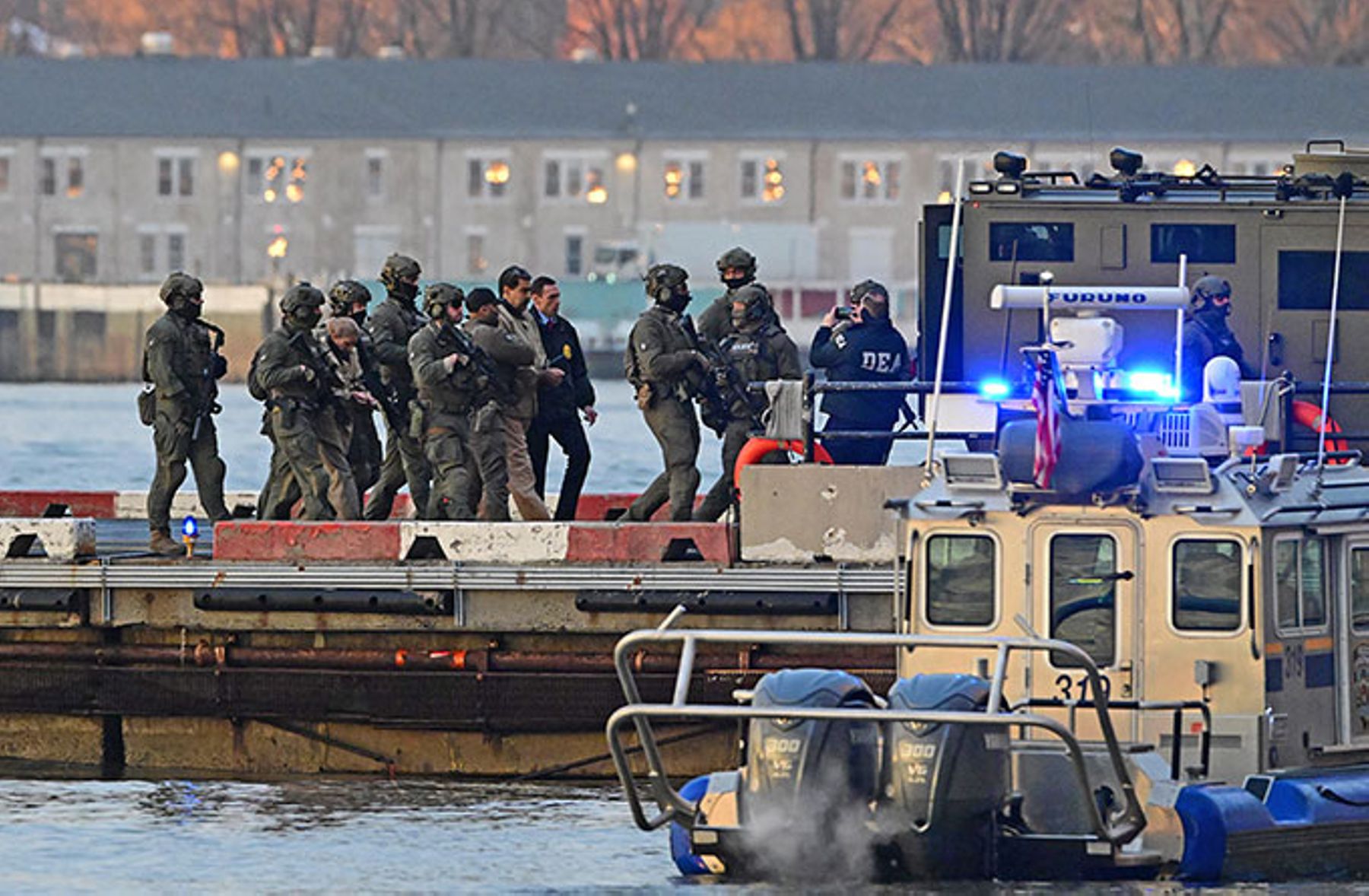
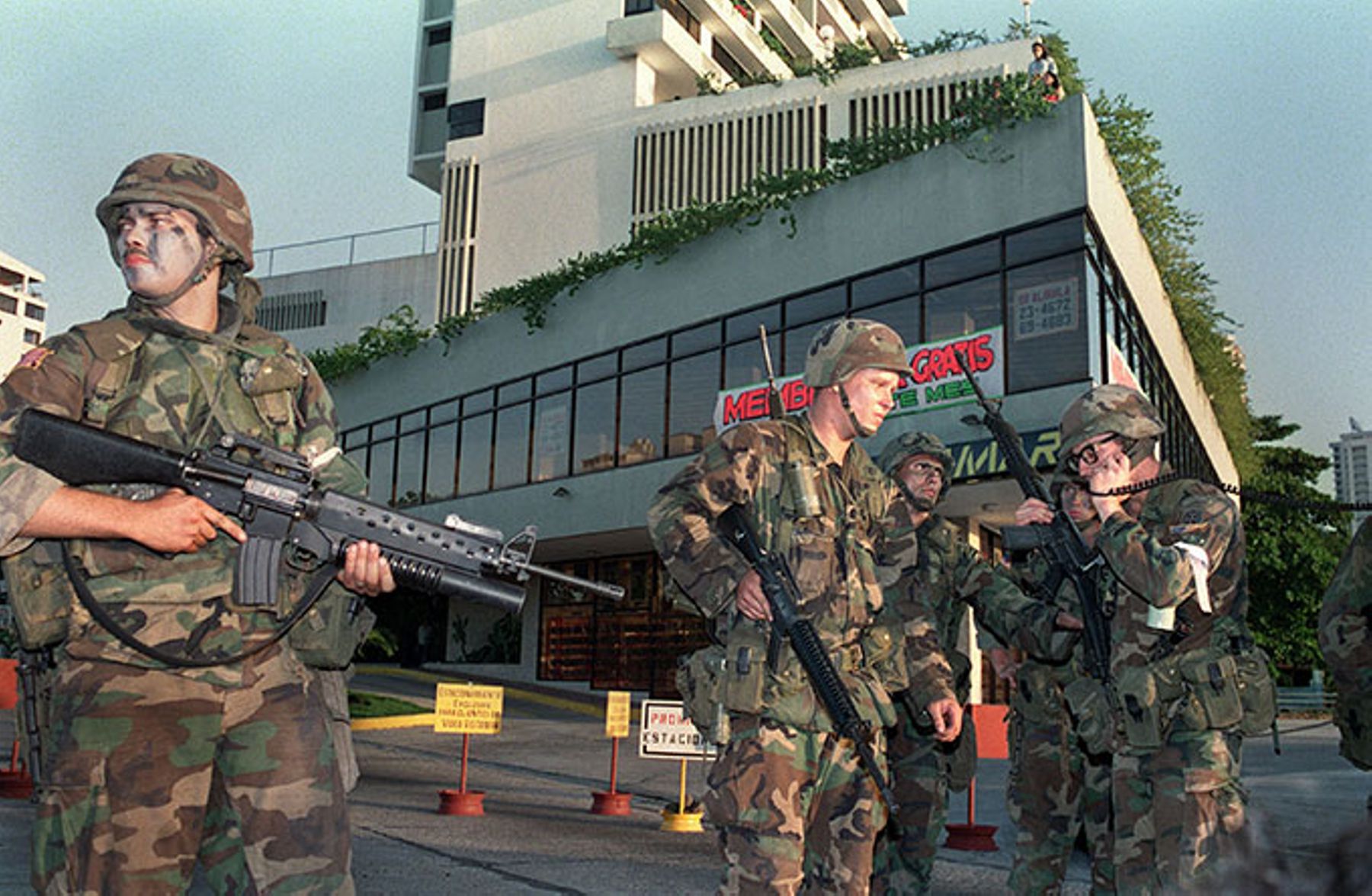
Critics denounced the boat strikes as illegal “secret wars” and the arrest of Maduro as a violation of international law, warning of executive overreach and another “forever war.” But Trump’s approach—targeted force to protect U.S. interests—follows a long tradition of presidential action, from Thomas Jefferson and James Monroe to George H. W. Bush and Barack Obama. Operation Absolute Resolve, the mission to remove Maduro, parallels Operation Just Cause, which deposed Panamanian strongman Manuel Noriega (who was also wanted for drug-smuggling), but it was much shorter and cost no American lives. These precedents put Trump on firm legal footing for his actions thus far.
The United States has often used military force abroad without a formal declaration of war. Indeed, Congress has declared war only 11 times in U.S. history, and not once since World War II. Nonetheless, American presidents have deployed troops or ordered strikes hundreds of times under their own authority.
When President Thomas Jefferson took office in 1801, the Barbary states of North Africa were preying on American merchant ships and demanding hefty tributes to spare U.S. vessels. The Pasha of Tripoli even declared war on the United States by cutting down our consulate’s flagpole. Rather than ask Congress for a formal war declaration, Jefferson dispatched a U.S. naval squadron to the Mediterranean to combat the Barbary pirates. (Recall the bit in the Marines’ Hymn about the “shores of Tripoli.”) Congress later authorized military action by statute—permitting the seizure of enemy ships and goods—but never issued an official declaration of war.
In 1823, President James Monroe warned European powers not to interfere in the Western Hemisphere. While the Monroe Doctrine itself was a policy statement, subsequent presidents acted as its enforcers. President James K. Polk threatened the use of military force to limit British and Spanish influence in the Americas, while President William McKinley went to war with Spain in the Caribbean.
Though the Spanish-American War of 1898 was authorized by Congress, it reflected America’s self-appointed role as the hemisphere’s guardian. President Theodore Roosevelt’s corollary to the Monroe Doctrine explicitly asserted the right to intervene in Latin America to stop “chronic wrongdoing.” TR backed this doctrine with action: U.S. gunboats were sent to Venezuela in 1902 during a debt-collection dispute, while Marines landed in Nicaragua in 1912 to quell unrest.
In the twentieth century, presidents continued to initiate hostilities under their constitutional powers, often without prior congressional approval. When President Harry Truman committed troops to the Korean War under a United Nations mandate, Congress appropriated funds for this “police action” but never formally declared war. President Lyndon Johnson escalated the Vietnam War based on the Gulf of Tonkin Resolution—a congressional authorization that also fell short of a formal war declaration. Notably, Congress’s decision nine years later to stop funding combat operations in Cambodia effectively ended the war over the protests of President Richard Nixon.
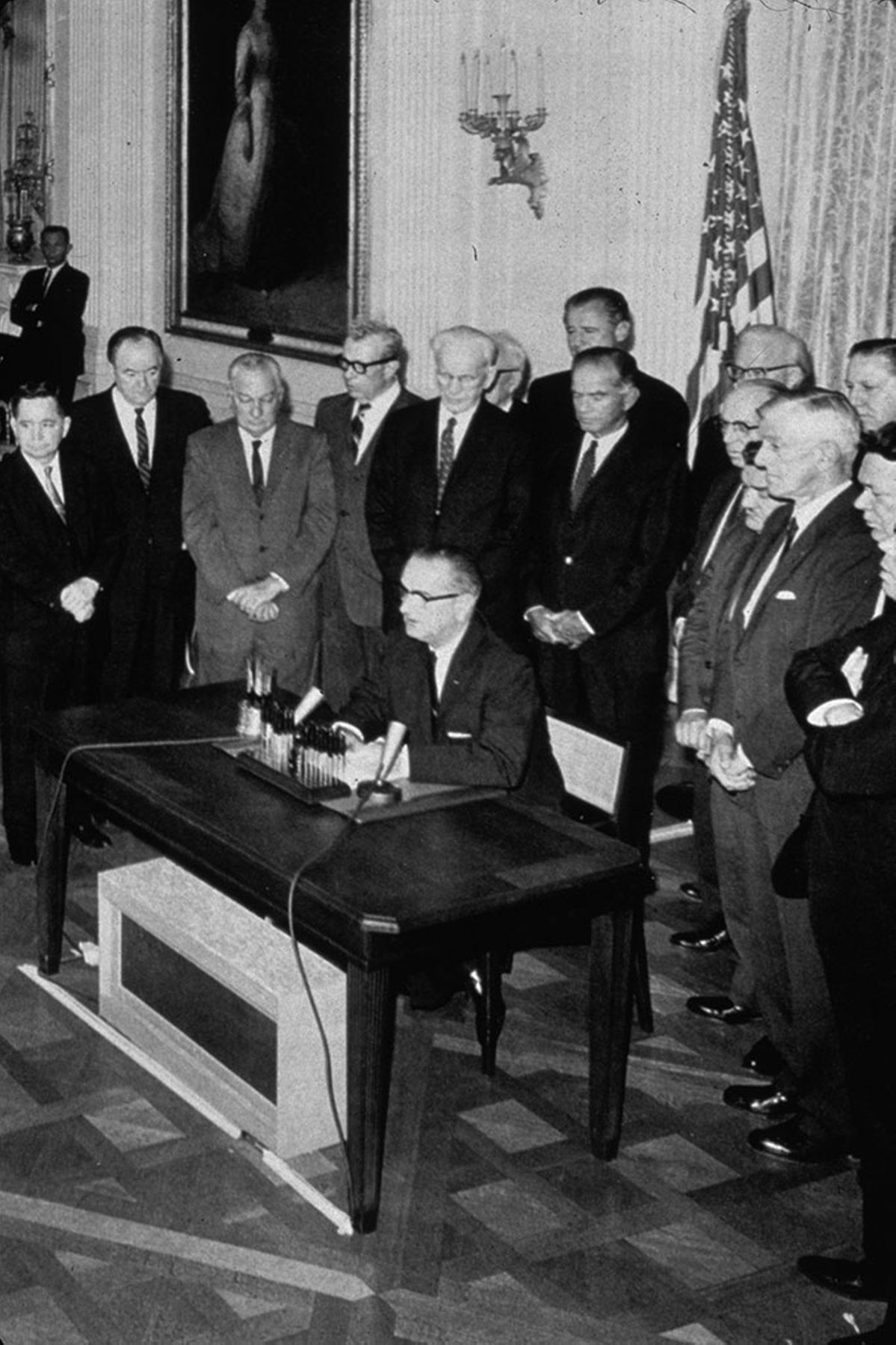
Concerns about unchecked executive warmaking then led Congress to pass the War Powers Resolution of 1973—an attempt to regulate the president’s authority as to national-security concerns—over Nixon’s veto. The Resolution, colloquially known as the War Powers Act (WPA), requires the president to notify Congress within 48 hours of deploying troops and restricts military engagement to 60 days without a congressional declaration of war or other specific authorization.
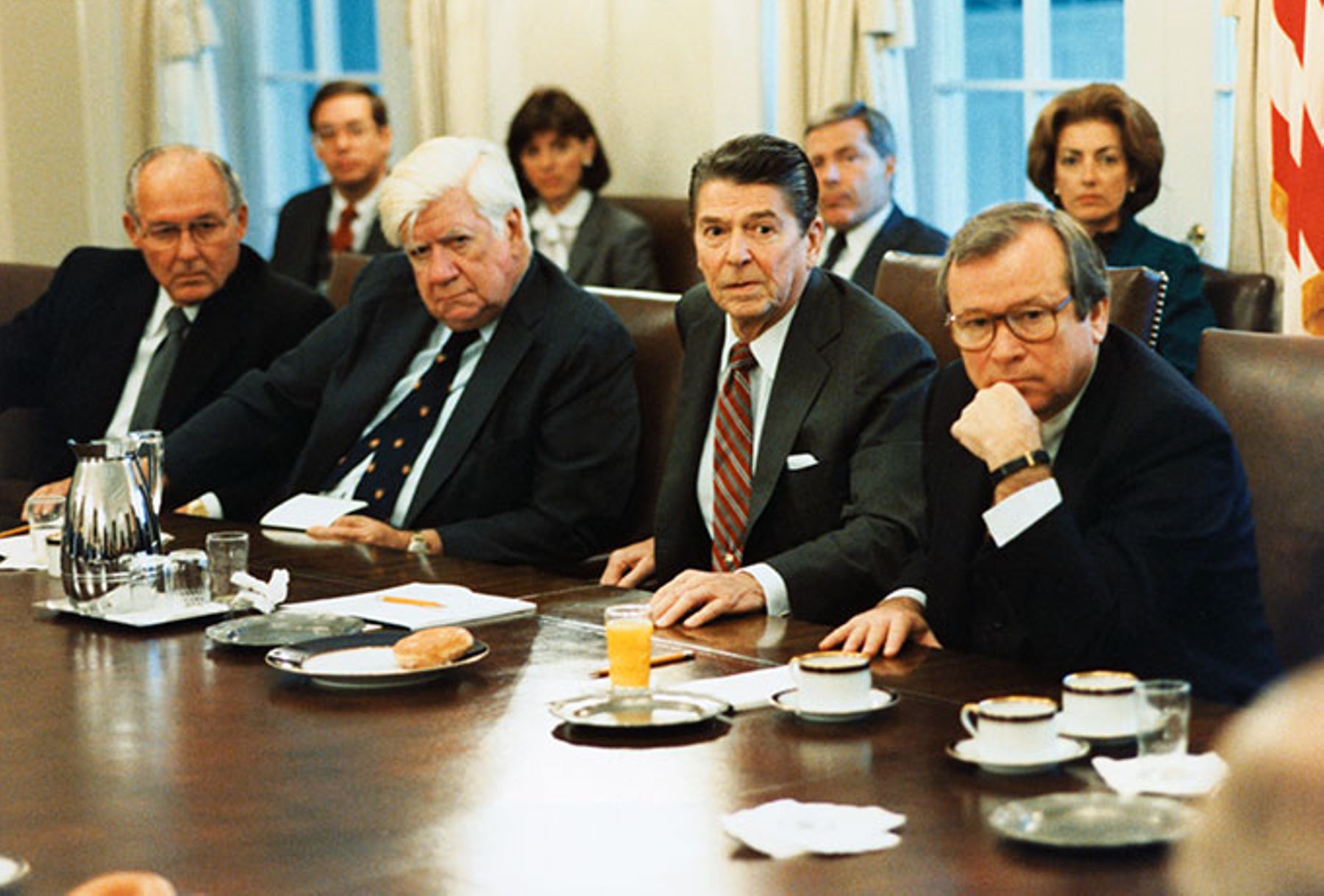
Since Congress passed the WPA, presidents of both parties have often used limited military force abroad, typically complying with the WPA without accepting its constitutionality. President Ronald Reagan invaded Grenada in 1983 to protect American students and ordered strikes against Libya in 1986 with only minimal, after-the-fact consultation with Congress. In 1989, President George H. W. Bush launched the aforementioned Operation Just Cause without a war declaration.
President Bill Clinton conducted extensive air campaigns in the Bosnia and Kosovo conflicts of the 1990s under NATO auspices—again without explicit congressional approval, aside from general funding and an implied acceptance of short-term operations. Notably, Clinton’s 79-day NATO bombing of Yugoslavia in 1999—to protect Kosovo—went beyond the WPA’s limitation, but Congress didn’t force a halt.
After the September 11, 2001 attacks, Congress passed broad Authorizations for Use of Military Force (AUMFs) for Afghanistan (2001) and Iraq (2002). Presidents have used these to justify military operations beyond those countries. Under those AUMFs, Presidents George W. Bush and Barack Obama carried out strikes against al-Qaida and associated terrorist groups in countries like Yemen, Somalia, and Pakistan.
Even with those authorizations on the books, presidents still relied on independent Article II powers for new situations. President Obama didn’t seek congressional approval for his 2011 Libya intervention, a multi-month air war to protect civilians and topple Muammar Gaddafi. Instead, Obama cited a U.N. resolution and NATO alliance backing, and assured Congress that U.S. involvement would be limited in its nature, duration, and scope. The Justice Department’s Office of Legal Counsel (OLC) at the time agreed, concluding that the “limited military operations” in Libya were “not a ‘war’ in the constitutional sense”—and thus did not require prior congressional authorization.
Finally, President Trump himself ordered airstrikes in Syria twice (2017 and 2018) to punish chemical weapons use. President Joe Biden conducted more strikes in Syria (2021 and 2023) against Iran-backed militias that threatened U.S. forces. None of these actions had specific congressional authorization, yet they were justified as falling within the president’s independent authority to defend U.S. interests and personnel.
The pattern is unmistakable: U.S. presidents have a long precedent of acting first and seeking Congress’s endorsement later (if at all), so long as the military action is limited in scope. Congress can act to halt certain military operations—as it did in the Vietnam War—but otherwise presidents have broad discretion to protect national security.
The constitutional division of war powers seems clear in theory, but in practice it has left a gray area or overlap. Congress has the power to declare war, raise and support armies, and maintain the navy. Meantime, the president is the Commander in Chief of the armed forces. The Founders intended that Congress have the decisive say on entering large-scale wars but also recognized that the president might need to repel sudden attacks or conduct limited defensive or even preemptive actions without waiting for Congress to assemble. There’s an obvious gray area there between full-blown military engagement—and the legal implications of a formal war declaration—and smaller-scale operations to secure discrete American interests.
In Venezuela, President Trump has identified Venezuelan drug cartels as a major threat to the homeland, and connected them to the Maduro regime. But Congress did not formally recognize the removal of Maduro as an American national-security interest. So where does that leave presidential decision-making regarding both the attacks on drug boats and recent exfiltration?
The executive branch’s legal opinions have generally drawn a line based on the anticipated “nature, scope, and duration” of a conflict. If a planned military engagement is prolonged and substantial, especially if it involves significant risk of U.S. casualties or a commitment of ground troops over a sustained period, then it would cross into “war” territory needing congressional authorization.
Conversely, if an operation is limited in scope and duration, and not intended to occupy territory, presidents have argued that they can proceed on their own authority. As the Obama administration’s OLC explained, even intensive military campaigns like the 17-day NATO bombing in Bosnia or the two-month Kosovo air war were carried out without congressional preapproval. These were not considered constitutional “wars” because they had limited objectives and no prolonged deployment of ground forces. The WPA itself, enacted to check unilateral executive power, acknowledges that the president can use force in hostile areas for a short time.
What, if anything, has the Supreme Court said about all this? Most famously, Justice Robert Jackson’s concurring opinion in Youngstown Steel (1952)—in which the Court rejected executive seizure of private property in the absence of specifically enumerated constitutional or statutory authority—established a three-part framework delineating the division between presidential and congressional power. The president has maximal power when he acts under the “express or implied authorization of Congress” but is on thin legal ice when he “takes measures incompatible with the expressed or implied will of Congress.” But there is a “zone of twilight” in which the president and Congress have “concurrent” authority, where the “distribution is uncertain.” Back to the gray area.
Luckily, cases both predating and postdating Youngstown help elucidate the matter. In United States v. Curtiss-Wright Export Corp. (1936), the Supreme Court recognized that the president has significant authority over foreign affairs independent of Congress. The president is the nation’s “sole organ” in international relations, allowing for broad power over diplomacy and military engagement. The Court explained that a “political society cannot endure without a supreme will somewhere. Sovereignty is never held in suspense.”
Then in Dames & Moore v. Regan (1981), the Court okayed executive orders dissolving legal judgments, suspending pending claims against the Iranian government, and creating a new tribunal in The Hague to resolve them. President Reagan took these actions to facilitate the end of a hostage crisis, which raised questions that then-Justice William Rehnquist noted “touch fundamentally upon the manner in which our Republic is to be governed.” Though Rehnquist tried to couch his near-unanimous opinion as modest and fact-bound, he cited both Curtiss-Wright and Youngstown Steel in identifying the “tension between the President exercising the executive authority in a world that presents each day some new challenge with which he must deal, and the Constitution under which we all live and which no one disputes embodies some sort of system of checks and balances.”
We haven’t quite reached that level of tension regarding President Trump’s directives to use military force against the Venezuelan cartels. Only if Congress defunds or otherwise expresses disapproval for targeted operations would we be in a different scenario.
With that background, how do Trump’s actions in Venezuela measure up? The administration is following the well-trod tradition of justifying limited military action under Article II, emphasizing self-defense and narrow objectives to stay within constitutional lines in an area where Congress hasn’t legislated.
The core claim is that these interventions were necessary to protect the United States from a concrete threat. The Trump team asserts that the drug-trafficking activities of Venezuelan cartels, reaching the highest levels of the Maduro government, pose a direct danger to Americans by flooding the U.S. with deadly narcotics and fueling violence inside our country. It’s not a big leap to go from that statement of fact to the administration’s conclusion that the cartels are conducting an armed attack on the United States by means of drug terrorism that can and should be repelled by military means. The case for such action becomes stronger the more evidence we have that the Venezuelan narco-terrorists are supported by the national government.
That, too, appears to be factual. As Latin America expert Joshua Treviño has noted, “Venezuela’s regime is the archetype of a cartel-state synthesis, un estado de narco, in which state and criminal activity exist in cooperation, integration, and mutual reinforcement.” The state provides legal and political protection, while the cartels provide funding (to both the state and individual officials), as well as mafia-style law enforcement and a check on the regime’s political opposition.
The 1989 invasion of Panama overthrew a similar government, also sending its leader to a U.S. prison. Venezuela presents a more important challenge, having allowed geostrategic enemies like China and Iran to gain footholds in the Western hemisphere.
The Trump administration rightly points out that presidents have undertaken larger military actions against lesser threats without congressional authorization. Importantly, Trump has disclaimed any intention of introducing ground forces or attempting to occupy Venezuelan territory, factors that would indisputably transform “kinetic military action” (such as missile, drone, and other air strikes) into full-scale war.
True, Trump’s interventions have faced significant pushback from Congress over the past few months. Lawmakers—primarily Democrats, but also some Republicans—argue that he is risking an escalation without the legislative branch’s consent. But Congress as a body has not expressed disapproval, with repeated failures to muster majorities to do so.
In early October, Democratic senators Adam Schiff and Tim Kaine introduced a War Powers Resolution to terminate Trump’s strikes on cartel targets. But the resolution failed 48–51, reflecting significant disagreement with the president but not anything that would move us out of Justice Jackson’s twilight zone.
Meanwhile, in the House, Democratic representatives Jason Crow and Ilhan Omar introduced separate War Powers Resolutions to halt the attacks. Crow’s measure mirrored the Schiff-Kaine approach, blocking the use of force against any nonstate organization engaged in drug trafficking without Congress’s approval. Omar’s resolution went even further, seeking to prohibit the use of U.S. armed forces against the Venezuelan government itself.
These proposals have gone nowhere, largely for partisan-political reasons, but also because the drone strikes are minor operations in the context of presidential use of force post-9/11, while Maduro’s arrest is overwhelmingly popular in the Venezuelan-American community. Independent trackers estimate that President George W. Bush authorized about 57 drone strikes in Pakistan, killing roughly 399 to 540 people. President Obama dramatically expanded the program to about 540 strikes in Pakistan, Yemen, and Somalia, with about 3,797 people killed, including hundreds of civilians. President Trump’s first term saw roughly 195 drone strikes that killed between 893 and 1,366 people. Joe Biden presided over far fewer strikes—on the order of 50—though that tally still includes the notorious August 29, 2021 Kabul strike, which the Pentagon admitted killed 10 civilians (including seven children) but no terrorists.
In other words, the Caribbean incursions have killed far fewer people than any previous U.S. drone campaign, but have drawn outsize condemnation. Whether this outrage reflects genuine concern for the rule of law or is simply a reflexive, anti-Trump posture is unclear. What’s clear, however, is that American interests were threatened with Maduro in power.
Modern history shows that not every American use of military force has produced negative outcomes like those in Iraq or Afghanistan. Discrete incursions like Grenada and Panama—countries that more closely resemble Venezuela in scale and geography—tell a different story. Even the First Gulf War was quick, clean, and successful—and popular. None of Grenada, Panama, and Kuwait would be as free, stable, or prosperous today as each is without decisive U.S. action. And they make far closer analogues to Venezuela than the long, open-ended occupations of Iraq and Afghanistan that critics invoke.
In early December, Trump announced a renewal of the Monroe Doctrine to coincide with America’s 250th anniversary. The president asserted a broad constitutional authority to use force—short of full-scale war—to protect U.S. interests, adding the corollary that the American people would always control their own destiny in their own hemisphere. Trump’s Venezuelan crusade is just the latest chapter in a bipartisan, centuries-old pattern of presidents using limited military force to secure U.S. interests.
Top Photo by Jim WATSON / AFP via Getty Images