
How bad was President Trump’s loss last week at the Supreme Court in the tariffs case? Really bad.
How does this defeat compare with other losses suffered by presidents at the Court? There is no sugarcoating it: the Roberts Court handed Trump the worst judicial defeat in presidential history.
Finally, a reason to check your email.
Sign up for our free newsletter today.
There isn’t even a close second. Not Richard Nixon’s Watergate case. Not Franklin D. Roosevelt’s New Deal setback. Not Harry S. Truman’s attempt to seize steel mills. Not George W. Bush’s War on Terror losses. None were in the same ballpark as the ruling in Learning Resources v. Trump. Even when those presidents lost, their own appointees generally ruled in their favor—in contrast to Trump, who saw two of his own nominees rule against him.
The results suggest that Trump will suffer many more defeats in the remainder of his second term—often through the votes of justices he selected.
Trump’s ability to impose and remove tariffs unilaterally was the cornerstone of his domestic and foreign policy agenda. Trump used this authority to force other nations to the bargaining table to reach trade deals. To avoid tariffs, countries promised to rebuild American industry. Tariff fees would also have contributed to the American economy (at least in theory).
The Supreme Court rejection of Trump’s unilateral tariff power therefore has undermined him on the world stage. Will any country take seriously his threats to impose new tariffs now? In fact, China and other countries can use trade surrogates to support litigation against future tariffs.
What made the defeat even more stinging for Trump was that two of his nominees—Justices Neil Gorsuch and Amy Coney Barrett—joined the majority opinion. Trump’s harsh comments at his press conference after the decision make more sense in this broader context.
A review of the history finds no comparison. Go all the way back to Marbury v. Madison (1805). Many know that case as the one in which Chief Justice John Marshall applied the long-standing doctrine of judicial review in federal courts (no, he didn’t make it up). But the actual facts of the dispute are not well understood. James Madison, the Secretary of State under President Thomas Jefferson, refused to finalize the appointment of William Marbury, a midnight judicial appointment by the outgoing President John Adams. Marshall ruled that Marbury was in fact entitled to his position—a setback to President Jefferson—but that the Supreme Court lacked the power to command the president to finalize the appointment in this case.
Some scholars might hold up Ex parte Merryman (1861) as an example of a presidential defeat, but that case doesn’t make the cut. During the Civil War, while Congress was in recess, President Abraham Lincoln unilaterally suspended the writ of habeas corpus. With this power, the military in the border state of Maryland detained John Merryman without affording him the usual judicial processes. Chief Justice Roger Taney, acting alone and not on behalf of the Supreme Court, declared that the president lacked the power to suspend habeas corpus during a civil war.
Contrary to a common misconception, Taney never actually ordered Lincoln to release the prisoner or do anything else for that matter. Merryman was not really a defeat for Lincoln. Indeed, Congress promptly ratified Lincoln’s decision to suspend the writ.
President Franklin Roosevelt’s first term offered several potential candidates for worst judicial defeats—especially Schechter Poultry v. United States (1935). Here, the Supreme Court unanimously struck down the National Industrial Recovery Act, a centerpiece of FDR’s New Deal agenda. While FDR hadn’t nominated any of the justices serving on the Court at that time, Justice Louis Brandeis, a prominent progressive appointed by President Woodrow Wilson, ruled against the president.
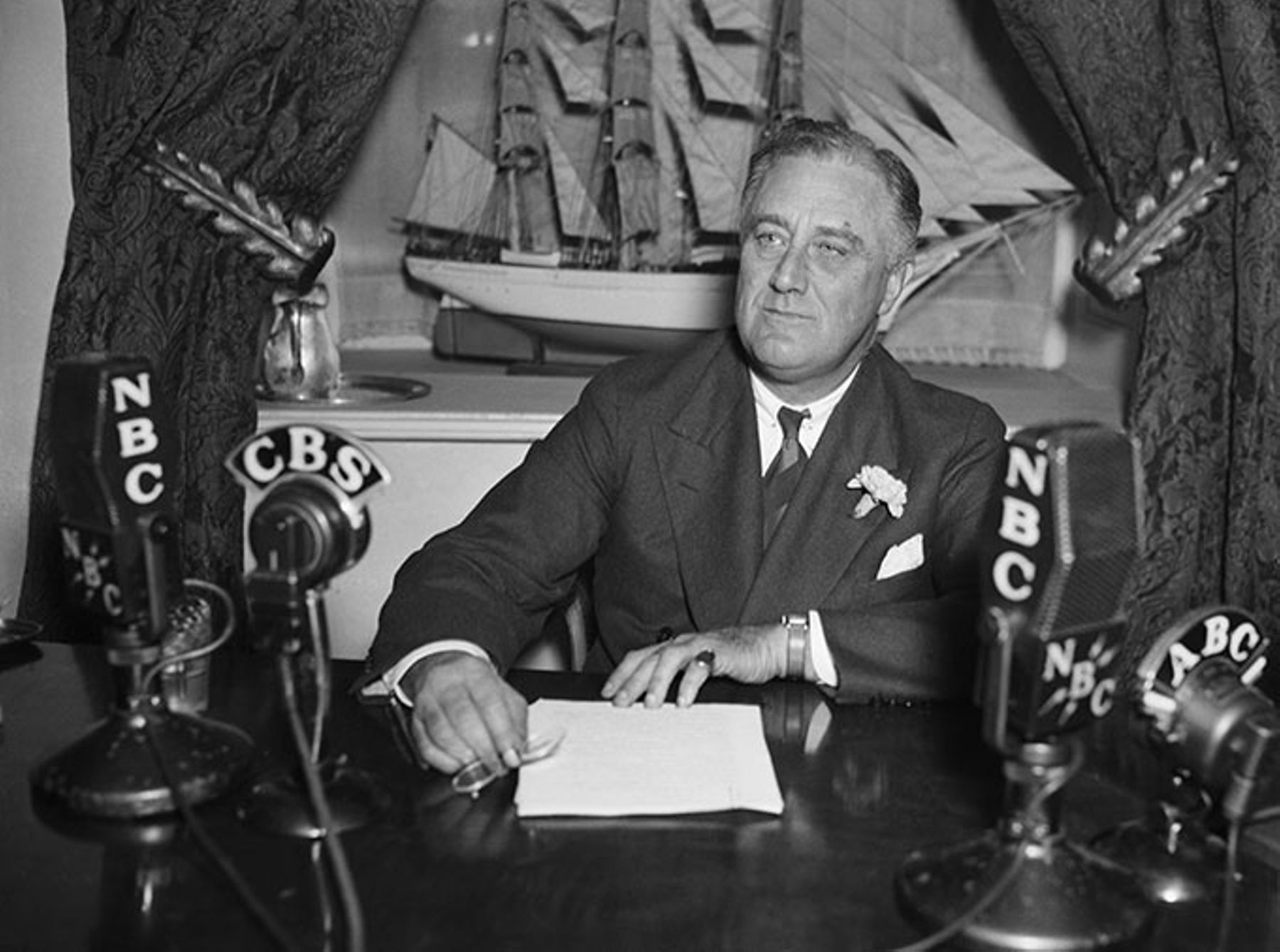
After FDR’s infamous “court packing” attempt in 1937, the Supreme Court no longer posed a threat to FDR. Indeed, Roosevelt was prepared to defy the Court if it blocked his efforts to eliminate the gold standard for paper money. It is noteworthy that in Korematsu v. United States, which upheld the president’s power to round up enemy aliens and U.S. citizens of Japanese ancestry, six of FDR’s appointees ruled in his favor, while only two were in dissent.
Another candidate might be Harry Truman’s loss after he attempted to force striking steel workers to stay on the job. In Youngstown Sheet & Tube Co. v. Sawyer (1952), the Court ruled against Truman by a 6-3 vote. Congress, not the president, had the power to seize the steel mills. Two of Truman’s three Supreme Court nominees ruled in his favor, while five of the six FDR appointees ruled against him.
This ruling unquestionably set back Truman’s domestic and foreign policy at the height of the Korean War, but it did not have a major practical effect. The labor strike lasted 50 days, but it caused no apparent disruption to the military’s steel supply lines.
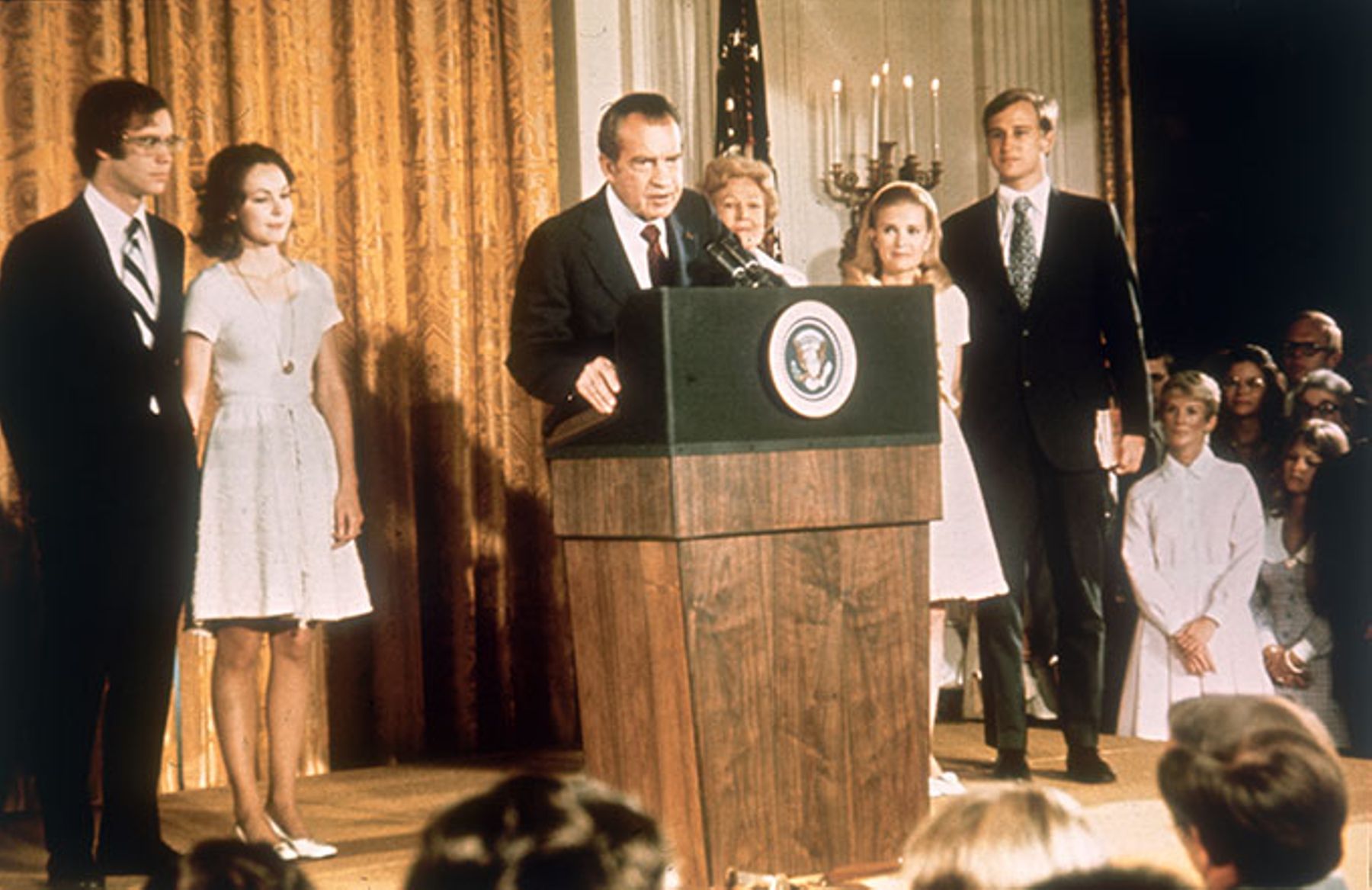
No president in American history had ever been so hobbled by lawfare as Richard Nixon—at least until Trump. In United States v. Nixon (1974), the Court ruled that President Nixon must produce the Watergate tapes. Three of the Court’s four Nixon appointees ruled against the president (Justice Rehnquist had recused). The decision led to Nixon’s resignation 16 days later.
But while the Court had delivered the coup de grace, Nixon’s presidency was already mortally wounded at this point. Even if the Court had not required Nixon to produce the tapes, Congress likely would have impeached and removed him from office anyway. (Contrast this with the current Congress, which refused even to vote on rescinding Trump’s tariffs.) While momentous, the Nixon decision accelerated events but did not alter them.
The next five presidents suffered losses at the Supreme Court, but none of the magnitude of United States v. Nixon.
Morrison v. Olson (1988) upheld the constitutionality of the independent counsel statute. Chief Justice William Rehnquist wrote the majority opinion, which was joined by fellow Ronald Reagan appointee Justice Sandra Day O’Connor. Justice Antonin Scalia wrote a legendary dissent, finding that the statute violated the separation of powers.
President Bill Clinton suffered two important losses, though neither was momentous. Clinton v. City of New York (1998) invalidated the Line-Item Veto Act, though that was primarily a Republican initiative—part of Speaker Newt Gingrich’s Contract with America. Clinton v. Jones (1997) allowed Paula Jones to pursue a civil suit against a sitting president for sexual harassment. Still, Clinton promptly settled the case, and it was quickly forgotten. Clinton’s two appointees, Justices Ruth Bader Ginsburg and Stephen Breyer, ruled against the president in both cases.
President George W. Bush had more serious run-ins with the Supreme Court. In a series of decisions, the Court pushed back on Bush’s efforts to detain enemy combatants at Guantanamo Bay. But this process was gradual and stretched across both of Bush’s terms after 9/11. Indeed, at each juncture, Bush obtained additional authorities from Congress, only to be rebuffed by the justices.
The final blow came in Boumediene v. Bush (2008). Justice Anthony Kennedy’s majority opinion held that detainees at Guantanamo Bay could petition for a writ of habeas corpus in federal court. Bush’s two nominees to the Court, Chief Justice John Roberts and Justice Samuel Alito, vigorously dissented.
Still, Boumediene, decided on June 12, 2008, had a limited effect on the by-then lame duck president. After the case, the Supreme Court largely ignored the status of the detainees at Guantanamo, some of whom remain there to this day.
The Obama administration nearly suffered a catastrophic loss when the Court came close to striking down the Affordable Care Act, but Chief Justice Roberts threw the first of many life rafts to the Left. President Barack Obama did suffer two other defeats, but they didn’t concern his own policies, and neither was paradigm-shifting.
Citizens United v. Federal Election Commission (2010) invalidated decades-old limits on campaign finance. Though Obama assailed the decision at that year’s State of the Union address, Democrats and Republicans alike benefited from the decision. Shelby County v. Holder (2013) found that Southern states no longer needed permission from the federal government to change their election laws, but this landmark decision invalidated only part of the Voting Rights Act of 1965. The predictions of widespread voter suppression in the wake of Shelby County proved to be exaggerated.
That brings us to Trump. An entire semester of constitutional law could be taught on just the Trump cases.
In Trump v. Anderson (2024), the Supreme Court rejected efforts to remove Trump from the ballot on grounds of alleged insurrection. That decision was unanimous, and as I argued, should never have been close.
The president’s biggest victory came in Trump v. United States (2024). The Court, by a 6-3-ish vote (Justice Amy Coney Barrett largely agreed with the majority), ruled that Trump had presidential immunity from criminal indictment for many of his actions. But this ruling wasn’t really about Trump. As Justice Gorsuch maintained, the Court was “writing a rule for the ages,” not simply for this president.
But Trump has suffered many major defeats. Department of Commerce v. New York (2019) rejected Trump’s effort to add a citizenship question to the census. DHS v. Regents of the University of California (2019) blocked Trump from canceling the DACA immigration policy; both Trump appointees ruled in his favor on this case. Trump v. Vance (2020) ruled that Trump must release his tax returns to the New York City district attorney. Justices Gorsuch and Brett Kavanaugh largely agreed with the majority, though they reaffirmed the president’s powers. At the time, I wrote that “the two Trump appointees formally declared their independence from” Trump. Only Justices Alito and Clarence Thomas were in dissent.
Of course, there was Trump’s ill-fated litigation to block the certification of the 2020 election, for which none of the justices supported him. In the past year, Trump appointees ruled against his efforts to remove enemy aliens and use national guardsmen to enforce immigration law.
All these defeats pale in comparison with the tariffs case. While Justice Kavanaugh argued that the president could use other powers to accomplish the same ends, time will tell whether a majority of the Court would reject these grounds, as well. In any case, the Learning Resources ruling has greatly diminished tariffs’ utility as a bargaining chip, since negotiators on the other side of the table now have ample reason to believe that the courts will bail them out.
It remains to be seen whether the Supreme Court will continue to hobble President Trump for the remainder of his second term, but the tariff ruling suggests a rocky road ahead.
Top Photo by SAUL LOEB / AFP via Getty Images