Donald Trump is everywhere; that’s true for his country and for the world. At home, Trump is engaged in an astonishing number of high-visibility battles with institutions once controlled by the progressive Left: the lower courts, the prestige universities, corporate media old and new, cultural gatekeepers like the Smithsonian Institution and Washington’s Kennedy Center, the governors and mayors of Democratic-run jurisdictions, and more. Beyond these shores, we find him bunker-bombing Iran, orchestrating peace between Israel and Hamas, inaugurating a shooting war on Mexican and Venezuelan drug cartels, forcing NATO allies to jack up their defense spending, and ripping apart the globalized economy.
It’s a lot of drama, and it’s all personalized. A Democratic governor like Illinois’ J. B. Pritzker isn’t fighting the federal government when it comes to the deportation of illegal aliens in his state; he’s fighting Trump. Similarly, nobody speaks of a generic American plan to end the conflict in Gaza—it’s the Trump plan. Both Trump and his antagonists, for different reasons, like it personal, and there’s some justification for this approach. Trump is an attention vortex and probably a world-historical personality.
Finally, a reason to check your email.
Sign up for our free newsletter today.
But when a towering figure dominates a group portrait, critical information will be obscured. Look behind the monumental image, and you will find media structures, social conflicts, and demographic trends that Trump has navigated to the heights and that could, just as unpredictably, bring him back down to earth. Even now, at the zenith of power, when he appears as a prime mover—the wheel that spins the whole machine—Trump is less cause than effect.
This brings me to a proposition. Suppose we treated the president as a visual obstruction and, by a cheap analyst’s trick, extracted him from the scene. What would the picture of the U.S. and the world look like?
Once out of Trump’s shadow, a different world comes into view—one teeming with humanity on the move. Impoverished and disordered nations across Africa, Asia, and Latin America are sending their populations outward in search of better lives. Ours is an age of vast, wandering migrations, a modern Völkerwanderung that recalls Europe at the end of the Roman Empire: unruly masses pushing toward the benefits of civilization, even as their advance threatens to undermine the very goods that they seek.
The numbers tell the story. At least 8 million migrants entered the U.S. between 2020 and 2024 alone; the true total could be much higher. Approximately 10 million of Britain’s 68 million inhabitants are foreign-born; 40 percent of the population of London is of nonnative stock. In Germany, the foreign-born amount to nearly 17 million; for Canada, the total comes close to 10 million, or 23 percent of the population, which, on current trends, will rise to 34 percent by 2041. Even Japan, that bastion of racial and cultural insularity, now hosts a record 3.5 million immigrants.
Many of these new arrivals inhabit a twilight zone between legality and illegality. Many come from ethnic and religious communities whose traditions sit uneasily with the norms of the host country. They seek the benefits of the welfare state, while often holding fast to the inherited prejudices and rigid hierarchies of their homelands.
Criminality is often confused with revolt. Paris is surrounded by a ring of immigrant-origin ghettos, the banlieus, that periodically erupt into orgies of destruction and pitched battles with the police, fought to the sound of hip-hop music. Placid Sweden has been shaken by hundreds of bombings and shootings tied to immigrant gangs. Expressions of resentment have increasingly taken an overtly political turn. Rage over something called “Palestine” can summon violent crowds. Recent anti-Semitic attacks in Britain and the stabbing of children in a German park were likewise expressions of imported hatreds.
The wanderers’ destination—the affluent nations, the great democracies of the West—exist in a state of profound institutional decadence. This is easy to see with Trump in the frame, but just as evident without him. Seduced during the Covid-19 pandemic into imitating China’s harsh quarantine measures, the people in charge earned widespread public contempt and distrust. Governments at every level have lost their sense of purpose. Their current policy ambitions, such as “decarbonization,” have fallen flat. The ruling classes keep borrowing to fund entitlements, but now the bills are coming due: the coffers are empty, economies are wavering, and a reckoning seems close at hand.
The institutions meant to deliver meaning, beauty, and truth have been corrupted to produce the opposite. A Beethoven sonata or a film like Some Like It Hot, though part of our heritage, can today feel foreign and inscrutable, as if bestowed on us by a race of compassionate space aliens. In such a metaphysical vacuum, a shared higher purpose, or even a clear sense of the national interest, becomes impossible.
At the bottom of the social pyramid, this produces a seething sense of grievance and anxiety, quick to explode into rage. At the top, the elites cosplay Franklin Roosevelt and Charles de Gaulle to each other’s applause. The ruthless grip on reality needed to build into the future has been displaced by fever dreams of climate destruction and “degrowth.”
Social relations as they actually exist, and democratic politics as they are actually practiced, are repudiated. Everyone is against, but few can say what they stand for. The radical Left, which wields substantial influence within major institutions, loathes nearly every aspect of Western civilization—its history, its economic system, its racial and sexual norms—and would happily demolish the entire edifice. The populist Right is eager to smash whatever regions or organizations that the Left controls, with little regard for the consequences. And the institutional elites, who might be expected to defend the status quo, now feel compelled to strike insurgent poses and denounce the very structures that they oversee.
The crush of the migrant multitudes has intensified these internal contradictions, to the verge of a breakdown: capitalist liberal democracy, a world-conquering system, could perish from the trauma. For the Left, the intruders are natural allies in the project to uproot Western society; even fundamentalist Islam, as distant as one can imagine from the Left’s revolutionary ideals, can help batter the established order. The ruling elites, for their part, view the newcomers as an inexhaustible stream of dependents on state largesse, justifying ever larger budgets and ever more intrusive measures of control in the name of protecting the marginalized. This compact between radicals and elites over immigration now sets the moral tone for politics across the democratic world.
But it is the populist Right that has been most transformed by the issue. Once an invertebrate movement defined by anger at globalist elites, populism has gained urgency and coherence in defending national cultures against the perceived invading hordes. From the populist perspective, liberal governments have betrayed their countries in pursuit of political advantage. In a landscape dominated by establishment norms and voices, populist politicians have stood alone in condemning the migrant tide. Because mass immigration happens to be deeply unpopular with voters, populist parties have surged.
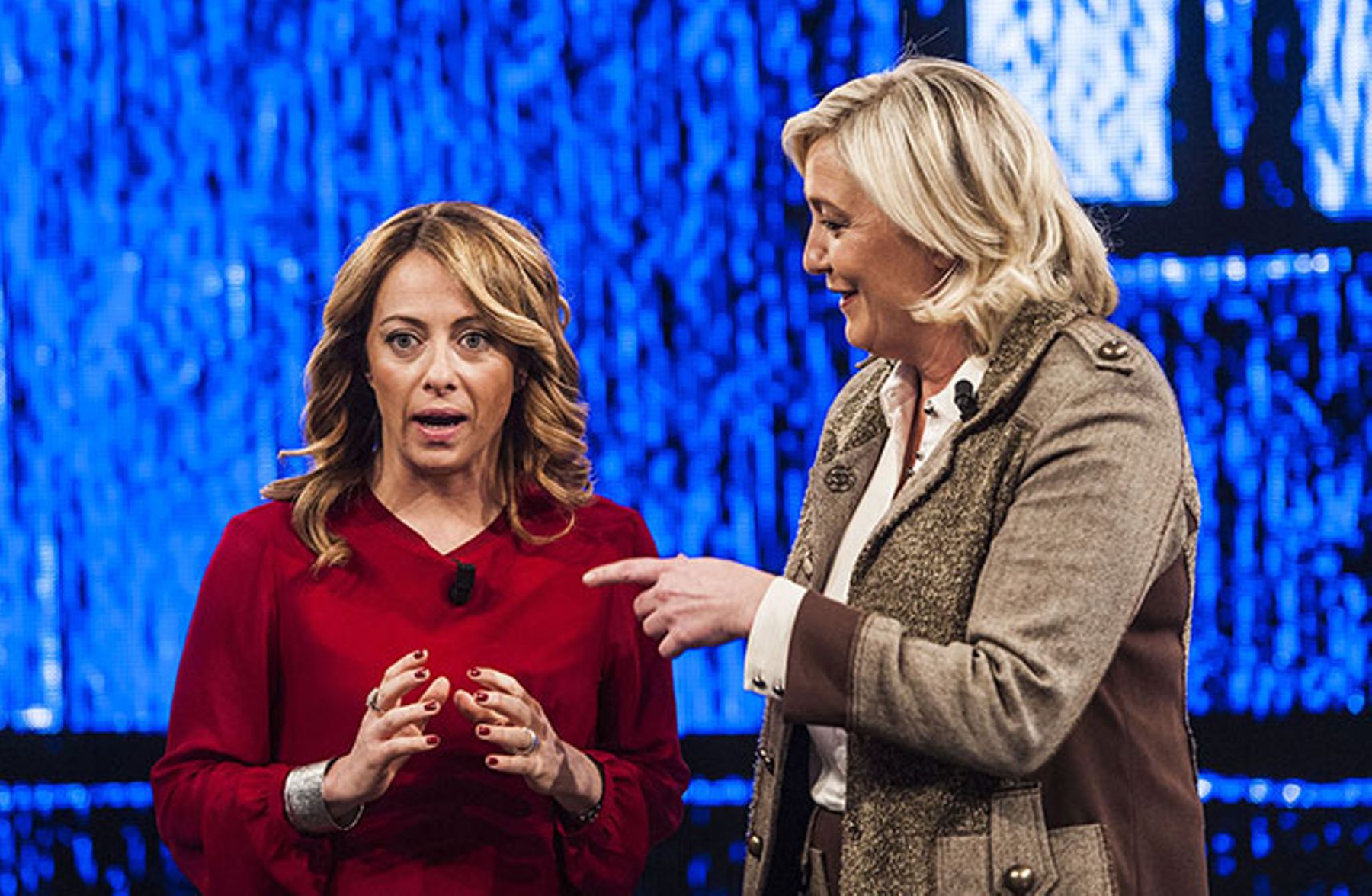
Reform in Britain and Alternative für Deutschland (AfD) in Germany, recently formed to oppose immigration, now challenge and often surpass the traditional parties in popularity. Older populist parties burdened with sketchier pasts, like Marine Le Pen’s National Rally, have ridden anti-immigrant rhetoric to the threshold of power. In El Salvador, Hungary, Austria, Poland, and the Czech Republic, that threshold has been crossed, and populists now command the machinery of government. Giorgia Meloni recently proposed tighter restrictions on Islamic face coverings in Italy; her popularity remains undimmed. Javier Milei, destroyer of Argentina’s “Deep State,” issued a decree in May 2025 curbing immigration and won October’s midterm elections by a large margin.
Local conditions have largely driven these developments, with few, if any, links to the distant presence of Trump.
While the populists advance, the traditional parties seem to be staggering toward oblivion. That monstrous machine, the state, no longer functions as intended; the levers are stuck, and all that comes out is sound and fury. Those running the institutions, including the old parties, face a sociopolitical Rubik’s cube: how to rule effectively over fractured societies from a shrinking minority position.
Ideologically exhausted, the elites have leaned heavily on the utopian projects of the radical Left. Mass immigration, anti-Zionism, decarbonization, racial equity, transgenderism—such contemporary pieties only intensify public alienation. Establishment leaders appear bred to be pale, weak, and lacking in media dazzle. Many are in free fall: approval rates stand at 13 percent for Britain’s Keir Starmer and 14 percent for France’s Emmanuel Macron. Both are historical lows.
In a paradox born of self-preservation, the Western establishment has come to repudiate the system that it has controlled for over a century. Defeat has taught the elites this lesson: if the status quo is to be saved, everything must change. Liberal democracy must be deconstructed into “our democracy.”
Since voters are unpredictable, the anti-populist counteroffensive has relied on institutions insulated from electoral control: the courts and the bureaucracy, with transnational bodies like the European Union also playing a role. Populist parties have been tagged “far right” and even as incipiently genocidal. With an obedient legacy media endlessly repeating these epithets, mainstream politicians feel justified in shunning the evildoers and excluding them from coalition governments. Russia and Vladimir Putin likewise loom large in establishment demonology. Populists are routinely portrayed as puppets of a foreign tyrant and thus unworthy of elected office.
Using institutional muscle to throttle the electorate isn’t a finely tuned strategy, though sometimes it works. Under EU pressure, Romania’s Constitutional Court, an unelected body, annulled the first round of the 2024 presidential election and disqualified the populist winner, Călin Georgescu. The justification given was Russian disinformation on TikTok, but little evidence was produced, and no attempt was made to explain how TikTok posts could mesmerize so many Romanian voters.
Three months after the anti-immigration AfD became the largest opposition party in Germany, that country’s equivalent of the FBI classified it as a “confirmed right-wing extremist” organization. The “extremist” label opens the door to police surveillance and potential banning. Remarkably, the evidence for this judgment, which holds profound implications for German democracy, remains secret. Yet the intent isn’t exactly a mystery: “The AfD is no longer a democratic party. It is the duty of our constitutional state to prevent it from acting,” explained the cochair of the Social Democratic Party. Translation: “our democracy” must disenfranchise the millions who keep voting the wrong way.
None of these maneuvers has revived a decaying regime. Class entitlement, it turns out, isn’t enough to earn the mandate of heaven, and old-fashioned abuses of power lose their force on the darkling plain of the information wars.
The present century has been shaped by its chaotic information environment. New communication technologies predated Trump and made his rise possible. The same technologies beckoned the immigrant masses out of their failing nations and guided them along the way. The web search, the algorithmic social media, the smartphone with its camera, artificial intelligence—with overwhelming speed, darkness turned to blinding light, the hidden was revealed, and the solemn murmur of the ruling class was drowned out by a roar of plebeian voices. The cognitive and social frameworks of the industrial age fell under these blows. Nothing has replaced them.
Those most battered were the last to grasp what was happening. It took the shock of Brexit and Trump’s 2016 victory for the people running the system to awaken to their predicament. By then, the barbarians were already inside the walls. The conflict now turns on belief structures, and the strategic terrain where victory will be decided is less political than definitional. The pandemic and the Black Lives Matter riots of 2020 clarified the stakes for the elites: the game will be won by whoever conquers the truth.
How, for instance, are we to characterize the millions of strangers who have poured into the democracies? For the establishment and the Left, they are innocent victims who will replenish aging native populations. For the populists and much of the public, they are foreign invaders who will destroy traditional ways of life. Other issues—climate change, transgenderism, the Palestinian cause—are equally unsettled. Add the discordant perceptions on both sides, and we end up hallucinating two mutually exclusive worlds.
In the conquest of truth, being empirically correct matters little. What matters is who gets to decide. The grand hierarchies of the industrial age anointed accredited experts as the arbiters of reality; outside of cranks and flat-earthers, no dissent was possible. The digital dispensation has shattered that arrangement. Much like the breakup of the Catholic Church following the Reformation, we now have multiple “establishments,” each claiming the right to determine the truth. We have crossed into a disordered post-truth moment, in which authenticity is a battleground, the facts are crowd-sourced—voted up or down with our likes and attention—and, as media theorist Andrey Mir has noted, “the universal gives way to the multiversal.”
Populism is a political by-product of the post-truth condition. Once presidents and TikTokers stand on the same plane of plausibility, with only the unruly public to choose between them, the temple of establishment authority is destined to tumble like the walls of Jericho. Sensing this, elites have succumbed to a reactionary panic—they want their twentieth century back. The first article of faith in “our democracy” is that the public must be pushed out of the commanding heights of the information sphere and that the power to construct a single, universal reality should return to those deemed properly trained for the task: the expert, the scientist, the politician, the journalist, the bureaucrat.
Barack Obama is the American apostle of epistemic reaction. “Part of what we’re going to have to do,” he said recently, “is to start experimenting with new forms of journalism, and how do we use social media in ways that reaffirm facts, separate facts from opinion. We want diversity of opinion; we don’t want diversity of facts.” But as every attorney knows, most meaningful disputes turn on the facts of the case. Obama isn’t really interested in diversity; his aim is narrative control. The facts will be supplied. The only question is: By whom? His answer is “government regulatory constraints” on digital platforms. Truth, like meatpacking, will be placed in the hands of bureaucratic inspectors, protecting the public by shutting down tainted voices. Implicit is the criminal prosecution of transgressors.
The Obama approach to truth—essentially a version of the Chinese Communist Party model—is already in place in many democratic nations. The EU’s Digital Services Act mandates inspectors, known as “trusted flaggers,” to scour platforms to ensure a “safe online environment”; fines for noncompliance can run to billions. In Brazil, Elon Musk’s social-media platform, X, was first shut down and then forced to censor populist content after a judge threatened to imprison the company’s local representatives. Pavel Durov, founder and CEO of Telegram, was arrested on arrival at Le Bourget Airport, Paris, on a flimsy pretext relating to his encrypted platform’s content.
While the tech firms feel squeezed and their platforms remain under constant surveillance, ordinary citizens find themselves bullied into submission. The British government has arrested more than 12,000 people for posting messages that cause “annoyance” or “anxiety”—by one measure, a larger number than China’s. In Germany, it’s now a crime to insult politicians online, and hundreds of police raids on private homes have been conducted to enforce this law. In Brazil, the same judge who shut down X has imprisoned countrymen whose political views inclined toward populism.
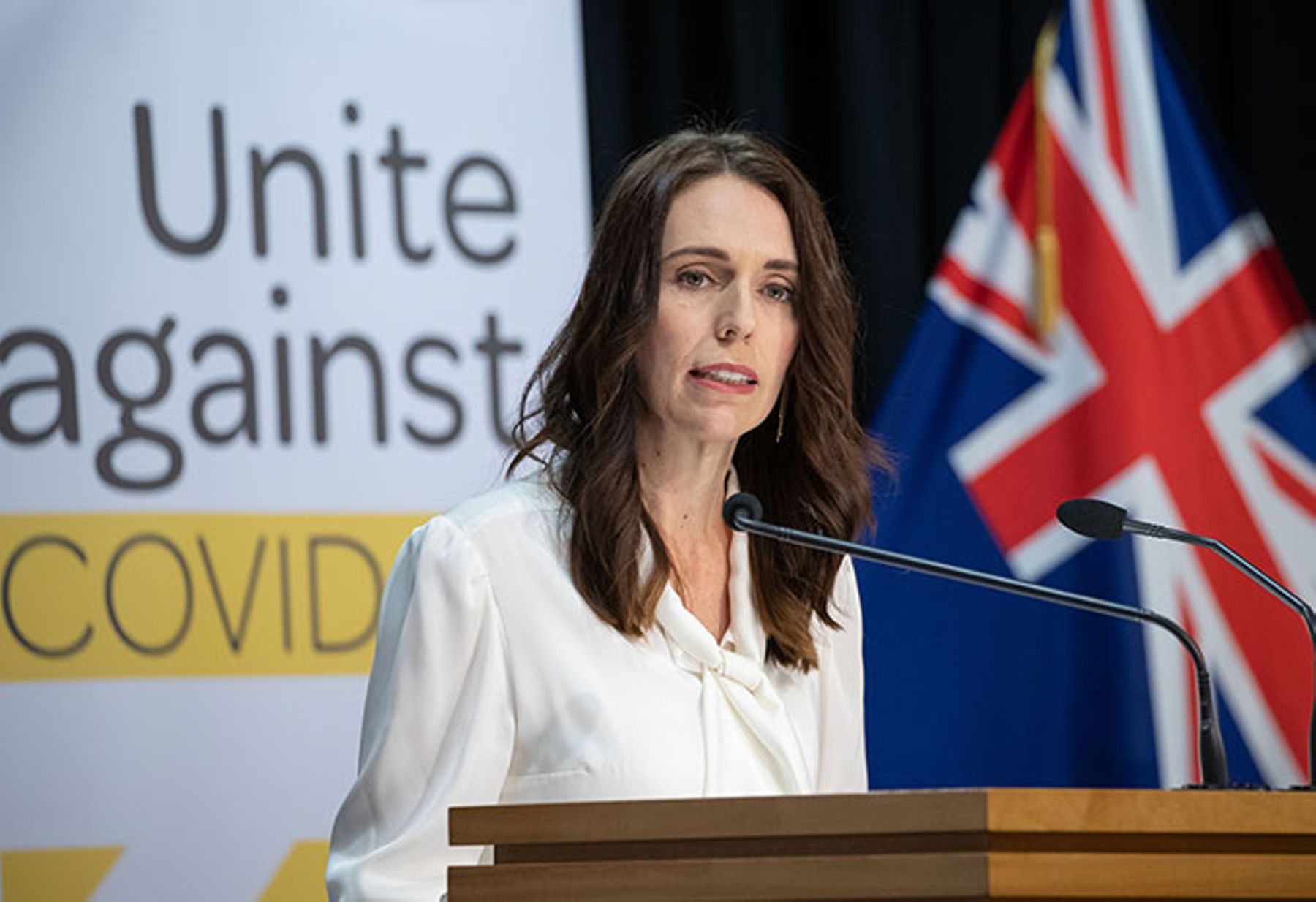
During the pandemic, Jacinda Ardern, then prime minister of New Zealand, provided an unusually explicit version of the elite objective. “We will continue to be your single source of truth,” she told the public. “Unless you hear it from us, it is not the truth.” It was a brave but futile boast. By January 2023, weighed down by unpopularity, Ardern had to resign. A few months later, her Labour Party found itself swept from office in a landslide. The truth may indeed be one, but the day is long gone when governments could claim a monopoly over it.
Even without Trump, then, the world remains a place turned upside-down. The old rules and categories have vanished, even if we still mutter the same familiar words in our civic rituals. Democracy now means perpetual conflict. Information now means a war over the truth.
If the populists prevail, the very form of modern institutions will be thrown into doubt, and a convulsive casting out of unwanted migrants will unsettle relations among nations in ways impossible to predict. Yet if the establishment somehow regains control and imposes the program of the Left, the repressive impulses of “our democracy” will make a mockery of liberalism, even as large numbers of unassimilated newcomers strain the system and threaten the very institutions that the elites seek to preserve.
On the margins, the authoritarian powers—China and Russia—await their turn. Neither can defeat the democracies in a direct confrontation, but both are content to aid in their unraveling.
The historical meaning of Trump becomes clear once we reinsert him into the picture. He is the avatar of the spirit of the age, a mighty whirlwind of change and disruption standing at the intersection of multiple, competing pressures, who, in success or failure, may hold the key to an unfathomable future.
Trump is the decider in this war of worlds. Should he self-detonate into nihilistic chaos, the old regime will triumph by default, and the window on an era riven by revolts from below may close. But should he achieve his objectives and pass the baton to a successor, the transformation of the system will accelerate to warp speed. The times would be defined by an immense horizon of possibilities, including, for example, a reconfiguration of government along lines shaped by the capabilities of artificial intelligence. Whether, at the end of this process, anything resembling our current dreams and ideals will remain may be the most consequential question we can ask—and one for which there is, at present, no answer.
Top Photo: President Trump surrounded by European leaders in the Oval Office, August 2025 (Daniel Torok/White House/Newscom)