|
Forwarded this email? Sign up for free to have it sent directly to your inbox. |
|
|
Good morning,
Today, we’re looking at the New York City Council’s proposed budget, Mayor Zohran Mamdani’s Citywide Racial Equity Plan, recent Supreme Court rulings about transgender rights, and new signage at the President’s House Site exhibit in Philadelphia.
Write to us at editors@city-journal.org with questions or comments. |
|
|
Photo credit: Gary Hershorn / Contributor / Corbis News via Getty Images |
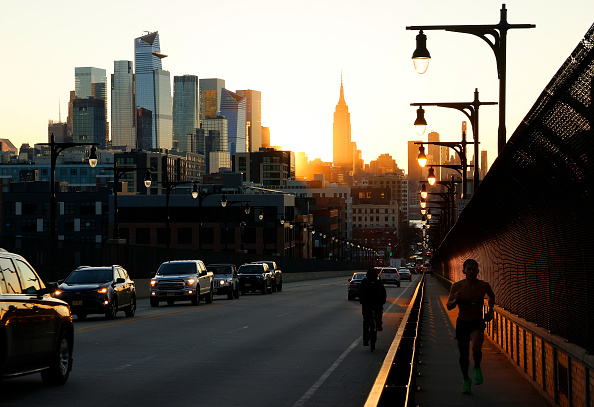
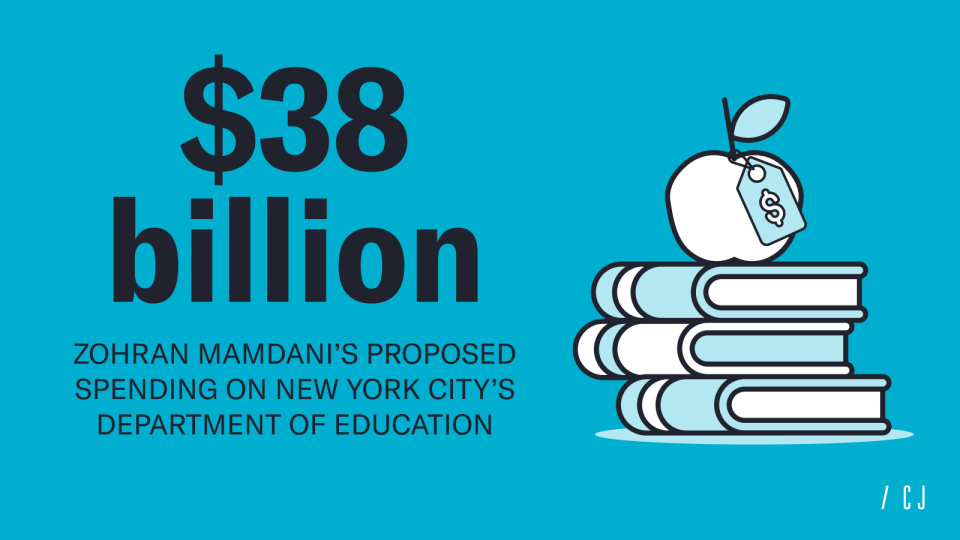
Last week, the New York City Council released its proposed budget for fiscal 2027. John Ketcham and Christian Browne note that while the plan isn’t perfect, it’s still “more fiscally responsible and pro-economic growth” than Mayor Zohran Mamdani’s. To eliminate the city’s budget gap, the council’s proposal relies on revenue re-estimates and targeted tax increases—but far more modest ones than Mamdani wants. “The council seems to recognize that the city will imperil its long-term viability by imposing ever-more taxation on the high earners and corporations that employ millions of New Yorkers,” Ketcham and Browne write.
Read more about the budget proposal. |
|
|
Earlier this week, New York City Mayor Zohran Mamdani released a Citywide Racial Equity Plan that seeks to address the city’s high cost of living with, as Santiago Vidal Calvo puts it, “a sprawling managerial framework.” Indeed, the mayor’s plan spans 45 agencies and contains more than 200 goals, 600 indicators, and 800 strategies. The result? “An administrative fog machine that substitutes box-checking for attaining outcomes New Yorkers care about,” Vidal Calvo writes. “The sheer bureaucracy on display here is staggering.”
It makes little sense to expand the government even further when Mamdani already faces a budget shortfall of between $5.4 and $7.1 billion. “New York doesn’t need more government frameworks or new cost indicators,” Vidal Calvo writes, but a focus on outcomes that matter—“housing units completed, rent burdens, childcare seats, job placement, job retention.”
Read more about the plan here. |
|
|
On Inauguration Day last year, President Trump signed an executive order declaring that the U.S. recognizes two genders: male and female. “Critics may have thought the order was mere symbolism,” Josh Blackman writes, “but Trump’s policy reflected the position around which public opinion had coalesced—that asserting biological truth does not constitute bigotry.”
It didn’t take long for the Supreme Court to adapt to this shift. Over the past year, the Court has ruled that the Defense Department could discharge transgender service members, that states could prohibit gender transition for minors, that parents can opt their children out of LGBTQ teachings, that the State Department can print passports that list only a person’s biological sex, that schools can’t secretly transition students, and that Colorado can’t prevent therapists from counseling individuals to be comfortable with their sex.
Read more about these Court decisions and how they reflect Americans’ perceptions of transgender issues. |
|
|
Since it opened in 2010, the President’s House Site exhibit in Philadelphia has pushed a woke historical agenda. Rather than capture the momentous events of America’s first two presidencies, the signage there cast many of the Founders as tyrants and failed to note their disdain for slavery. In fact, nearly all of the 30 signs at the site were devoted to race relations.
That might change soon. The National Park Service has designed new signs that will be installed at the site if federal courts grant approval to the Department of the Interior. The signs are more informative and balanced, address the site’s broader history, and seek to understand—not slander—George Washington.
“Of all the actions that will mark this momentous anniversary of American independence,” Jeffrey H. Anderson writes, “redesigning the prominently situated, heavily visited, historically significant President’s House Site at Independence Park is one of the most important.” Read more here. |
|
|
“It seems that the goal of most public K–12 ‘education’ is to produce people whose opinions are set before they can encounter any conversation in college. The goal of far too much ‘higher’ education is to preserve and further embed that mindset.” |
|
|
A quarterly magazine of urban affairs, published by the Manhattan Institute, edited by Brian C. Anderson. |
|
|
Copyright © 2026 Manhattan Institute, All rights reserved. |
|
|
|