In mid-November, President Trump addressed hundreds of McDonald’s franchise owners and suppliers gathered in Washington, D.C., assuring them that he understood their predicament—and was acting on it. One imagines the audience listened closely. Few sectors have been as battered over the past five years as the restaurant industry, long known for its thin margins and fragility. Covid lockdowns brought thousands of permanent closures and erased millions of jobs; many operators are still struggling, years after the formal end of the pandemic.
Trump ticked through a familiar catalog of pressures: soaring wholesale food costs, an ever-thickening web of federal and local regulations, and relentlessly rising minimum wages that, for many restaurants, have proved fatal. When he turned to energy prices under the Biden administration, the room likely leaned in. Restaurants are heavy users of electricity, and for some owners, the final blow—after shutdowns and labor shocks—came in the form of crushing power bills.
Finally, a reason to check your email.
Sign up for our free newsletter today.
Even Trump’s expansive 49-minute speech did not touch on all the industry’s problems. He said nothing about rising crime and broader social disorder, which would have evoked vivid images for franchisees: fast-food outlets set ablaze during the George Floyd riots; frantic police calls from employees over increasingly violent customers; and owners who ultimately gave up and closed because patrons no longer felt safe traveling to their neighborhoods.
Many press accounts treated Trump’s remarks as little more than an encore to his much-publicized 2024 campaign stop at a McDonald’s, where he surprised drive-through customers by handing them their orders. But the speech served a more serious purpose. Despite significant policy achievements, including a major tax cut, Trump has struggled to gain traction with many Americans on the domestic affordability crisis.
Restaurants sit at the center of local economies, making them an incisive barometer of those pressures. In addressing their owners, Trump had an opportunity to translate his economic agenda into terms the public readily understands. Yet the industry’s troubles—many rooted in misguided government policies and an increasingly antibusiness turn in local politics—also underscore the scale of the challenge.
“As long as I’m president, I’ll always defend your right to run your own small business and do it well,” Trump told the McDonald’s gathering. Few industries over the next three years will offer a more illustrative test of that promise than restaurants.
Given their small, local, and largely in-person character, restaurants were among the businesses most vulnerable to Covid shutdowns. Beginning in mid-March 2020, 43 states issued stay-at-home orders, prompting the closure of hundreds of thousands of establishments nationwide. By April, restaurant employment had plummeted to about 6.3 million, from 12 million a year earlier, according to the Bureau of Labor Statistics.
Though health officials initially promised “two weeks to flatten the curve,” the shutdowns lasted far longer, driving workers out of the business and saddling owners with heavy financial burdens. Even by late spring 2021, six months after the rollout of Covid vaccines, 30 states still imposed restrictions on restaurants, including California, Illinois, Michigan, Massachusetts, and New York, where many eateries were limited to 25 percent capacity. By mid-2022, researchers estimated that 70,000–110,000 establishments, over 10 percent of the industry, had not reopened.
Restaurants that did resume operations faced stiff obstacles, from rebuilding their clientele to digging out from accumulated debt. One survey of Colorado restaurants, for instance, found that the typical establishment had taken on some $180,000 in Covid-related debt. Even as society revived, hiring grew harder and more expensive. Extended federal and state unemployment benefits, which lasted into late spring 2021, discouraged many workers from returning to work sooner. One survey found that, by mid-2022, half of those who’d lost jobs during the shutdowns still weren’t looking for work. Supply-chain disruptions, compounded by government stimulus that flooded the economy with cash and shot prices upward, further increased costs. One study estimated that the price for food and labor from 2020 to mid-2025 rose 35 percent. Restaurants responded by raising menu prices by nearly a third, on average, but at the cost of dampened demand.
Bad news kept chasing the industry, even as Covid receded in the rearview mirror. The result was a new slump in 2024, the toughest year since the 2020 shutdowns. Major national chains shuttered hundreds of outlets, and 16 of the 500 largest restaurant operators in America went bankrupt. The wave of closures continued into 2025. In total, the largest restaurant operators now run almost 1,000 fewer outlets than they did in 2019. Local newspapers and industry websites have been filled with stories of prominent operators going under—“The Shocking State of the Restaurant Industry,” as a May 2024 Los Angeles Times headline described it. “We can’t afford to be open. We can’t afford to be closed,” one restaurateur told the paper, which counted some 65 “notable” restaurants that had recently shut their doors. From Miami to Chicago to Seattle, local outlets have reported similar stories of once-successful eateries closing.
Though the industry faces challenges, including higher food prices, that are national in scope, restaurants operate locally—so the pain is unevenly distributed across the country. The greatest strain falls on eateries in states that continued to raise taxes and tighten regulations during Covid and afterward. A 2024 study by an industry publication ranked California, New York, Colorado, and Illinois among the most expensive places to open and operate restaurants. Of the ten highest-cost states identified, eight are governed by Democrats, while the remaining two have divided government.
Mounting minimum wages have been a major factor inflating costs. In recent years, minimum wages have soared, especially in Democratic-controlled jurisdictions. California increased its minimum wage from $9 in 2014 to $16 today and, in 2024, instituted a special $20-per-hour wage for workers at national restaurant chains. New York State’s minimum wage rose from $8 in 2015 to $16 today, while New York City’s rate for restaurant workers now stands at $17. Roughly 60 municipalities—including Denver and Seattle—have set local minimum wages above their state levels.
The Seattle increase, now mandating a $20.76 hourly wage for restaurant workers, led to several closings that owners attributed directly to the higher pay floor. The owner of the Bebop Waffle Shop told the press that the mandate would cost her an extra $32,000 a year. “Where do I make up that money?” she asked. Another owner explained the closure of his bakery in a note taped to the front door: “Our revenues, unfortunately, are not able to cover the close to 20% increase in mandated wages, salaries, and payroll taxes put into effect by the Seattle City Council.”
Though decades of research have documented the deleterious effects of minimum-wage increases on businesses and employment, advocates keep pressing for them. Recent hikes have made those effects easier to discern. In 2015, for instance, Los Angeles enacted a minimum wage above the state level. A four-year study by researchers from the University of Chicago and UCLA’s Anderson Graduate School of Management found that establishments located near the city’s borders—and where competitors were not subject to the higher wage—as well as eateries in low-income neighborhoods within the city suffered the highest failure rates. The findings mirror a broader body of research on entry-level jobs, which shows that higher minimum wages tend to reduce job opportunities for young, entry-level workers in low-income, largely minority neighborhoods.
A recent study by foot-traffic tracking platform Placer.ai examined national-chain restaurants in California after the April 2024 rise in the minimum wage to $20. Comparing sales at California outlets with similar locations in other states, the study found a sharp drop in sales volume as chains raised prices to offset higher labor costs. While in California Wendy’s visits rose 1.83 percent in February and March compared with the same period the previous year, after the minimum wage went into effect on April 1, visits declined 3.24 percent in April and May. McDonald’s and Burger King saw comparable declines.
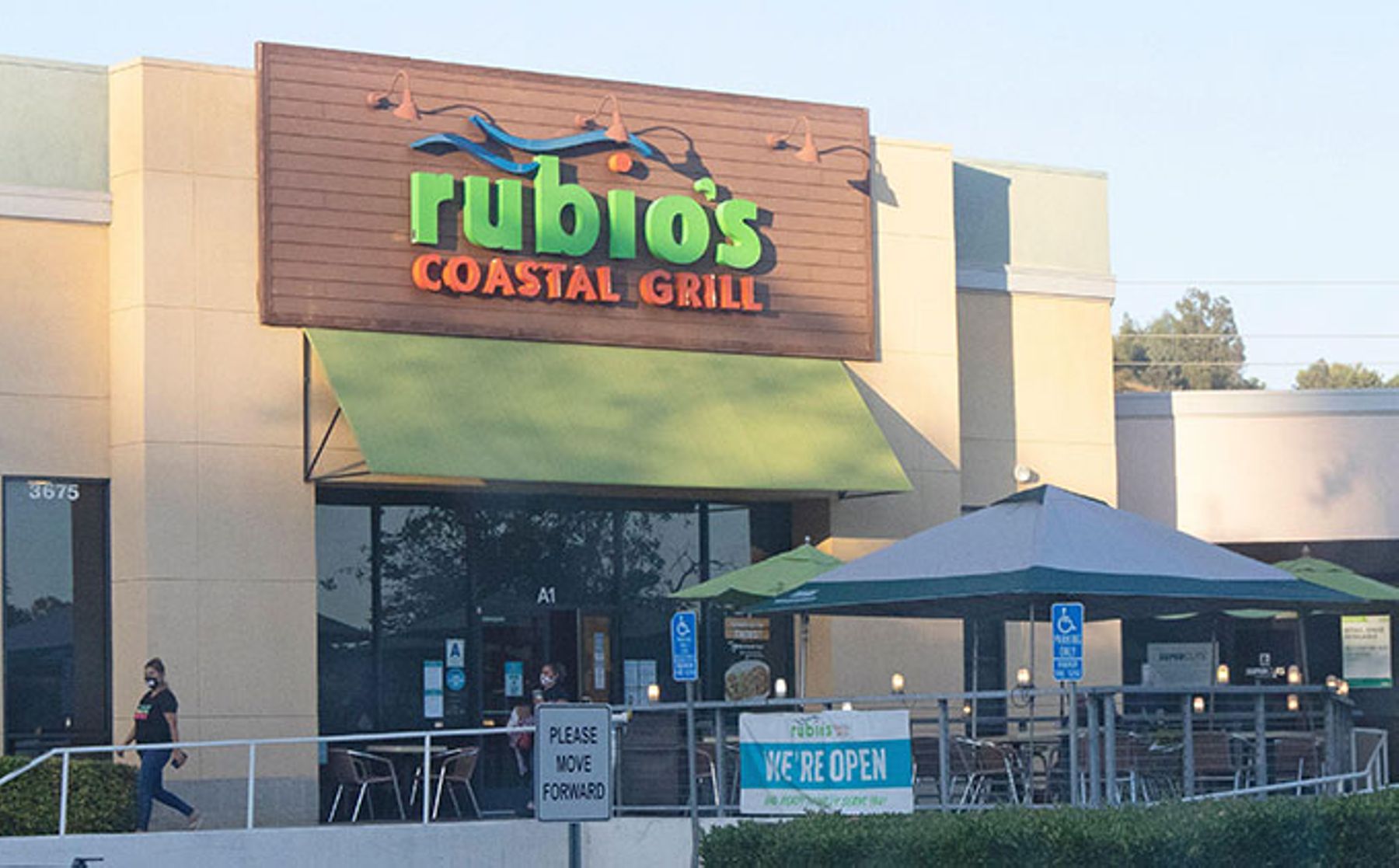
Several operators later blamed the wage hike, coming on top of other pressures, for store closures. Rubio’s, a West Coast sit-down chain, abruptly announced the closing of 48 locations just two months after the new wage took effect, citing “the rising cost of doing business in California.” Shortly afterward, Shake Shack said that it would close six California locations, including five in Los Angeles—the first time the fast-growing chain had shuttered stores for reasons other than remodeling. The locations were “not projected to provide acceptable returns in the foreseeable future,” the company said in a statement.
Pointedly, even as restaurant employment nationally continued a modest rebound in 2024, the industry shed roughly 25,000 jobs in California and remains well below pre-Covid levels, according to BLS state data. Preliminary figures for the first nine months of 2025 show that California still had fewer restaurant jobs each month than in the same period a year earlier, suggesting that the contraction has yet to run its course. Other high-cost states that have also raised minimum wages, including New York and Illinois, show a similar pattern: by the end of 2024, their restaurant sectors had likewise failed to recover lost employment.
By contrast, in Southeastern and Southwestern states that have become hot spots for restaurant investment, such as Texas, Tennessee, and Georgia—none of which has raised its minimum wage recently—the industry surpassed 2019 employment levels.
Restaurants remain in the crosshairs of local governments scrambling for revenue. Most states apply their general sales tax to restaurant meals, so in an era of inflation, when food and labor costs rise and menu prices follow, sales-tax collections rise, too. Those added revenues have been a boon for states and municipalities—one reason sales-tax collections surged 14 percent nationally in 2022—but they’ve also pushed up the cost of dining out, stifling demand.
“One study said that the price for food and labor from 2020 to mid-2025 rose 35 percent. Restaurants then raised menu prices by nearly a third.”
In a number of states, local municipalities can slap an additional sales tax on restaurant meals. Thirteen of the nation’s largest cities—including Chicago, Washington, D.C., Miami, Boston, and Denver—now tax dining at higher rates than other purchases. Minneapolis has the highest combined restaurant sales tax among major cities, at 12.03 percent. Chicago follows at 11.75 percent, Kansas City at 10.85 percent, and Seattle at 10.35 percent.
Big cities aren’t alone in singling out restaurants. In Massachusetts, 251 of the state’s 351 jurisdictions tax restaurant meals at higher rates, including Amherst, Lexington, and Nantucket. In Virginia, cities like Falls Church and Richmond and counties like Loudoun and Fairfax collect extra taxes, totaling 3 percent to 5 percent of a restaurant bill.
As the Tax Foundation notes, such special taxes are typically reserved for products like tobacco, to discourage consumption and offset social costs. Restaurants, however, have become a notable exception—and an easy target for legislators.
Far less attention has been paid to the role of rising crime in the restaurant industry’s decline. Yet growing disorder—especially in downtown areas where high-profile restaurants cluster—has taken a toll. In the aftermath of the 2020 Floyd riots, criminal-justice reforms deemphasizing “nonviolent” offenses have left repeat offenders on the streets, even after multiple property crimes. These policies rest on the premise that crimes against property don’t warrant jail time, favoring rehabilitation without incarceration, a shift that has imposed real costs on vulnerable businesses.
A recent Journal of Urban Economics study on street crime and restaurants in Chicago demonstrates the damage that this philosophy has inflicted on eateries. Observing that the economic effects of crime are rarely examined, the authors analyzed daily restaurant visits as crime rose in the city after 2019. While violent crime is often assumed to drive customers away, the study found that patrons also respond strongly to property crime, with restaurant visits declining as such offenses rose. The authors’ conclusion—that “consumers take crime rates into consideration when deciding whether to visit a business”—may seem obvious, but it cuts against the criminological approach that downplays the economic consequences of property crime.
Given this evidence, it’s no surprise that chefs and restaurant owners are speaking out about how crime of all kinds has undermined their businesses. Celebrity chef Andrew Gruel, of the Food Network’s Food Truck Face-Off, denounced what he called Los Angeles’s “soft-on-crime insanity” in July 2024. “How many thousands of cases do we need to see to know it leads to more violence? Everyone, left, right, and center, can see this,” said Gruel, pledging not to open more restaurants in the state until conditions improve. “The goal is to instill fear and destroy communities.” Iconic burger outlet In-N-Out announced earlier that year that it was closing its Oakland restaurant, the first eatery that it has ever shuttered, because of crime. “Despite taking repeated steps to create safer conditions, our customers and associates are regularly victimized by car break-ins, property damage, theft, and armed robberies,” the company said. “We feel the frequency and severity of the crimes being encountered by our customers and associates leave us no alternative.”
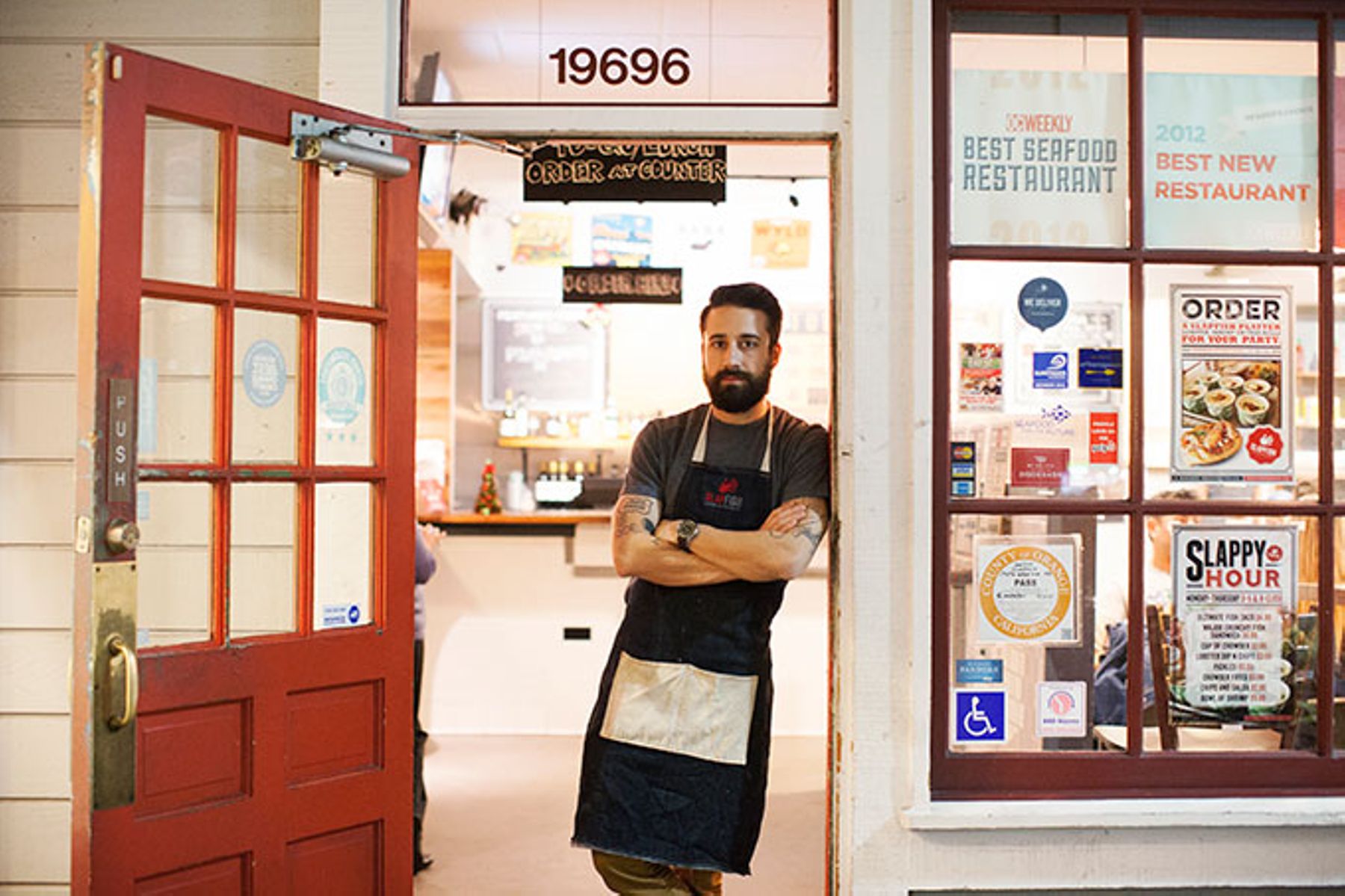
Such grievances are common in crime-plagued cities. In Baltimore, chef and restaurateur Ashish Alfred closed all three of his establishments in 2024 after meetings with city officials and police—prompted by a sharp drop in visitors as crime rose—failed to yield solutions. “The last two and a half years have become exceedingly difficult,” Alfred said. “We’re down in revenue simply because people are not returning to the city.”
In nearby Washington, D.C., even as Covid receded in 2023, prominent restaurant closures followed. Owners often blamed crime. “Unfortunately, the challenges of the restaurant industry since the pandemic, the current economic climate, and the spike in violent crime have made it increasingly difficult to operate and impossible for us to survive,” said the owners of Brine Oyster & Seafood House in Dupont Circle.
Rising crime has victimized restaurant properties and employees. The National Employment Law Project found that Chicago police receive, on average, 21 emergency calls per day just from McDonald’s outlets. The group notes that crime against restaurant workers rarely draws media coverage. A New York City McDonald’s has even hired a “bouncer” to control unruly customers. Patrons have also become bolder about ripping off restaurants. Many owners describe a surge in “dine-and-dash” incidents, with patrons eating and then leaving without paying—sometimes after running up tabs of $1,000 or more. In high-crime areas with overburdened police departments, such offenses are often treated as a low priority, with scofflaws unlikely to get jail time even if caught.
More troubling still is the targeting of restaurants for mass robberies of diners, including a spate in Manhattan and Brooklyn. “Allowing all of these crimes has really ripped apart the social fabric that we know of as the foundation of businesses,” the Food Network’s Gruel has observed.
In his speech to McDonald’s owners, Trump returned nearly a dozen times to the impact of energy prices on businesses, and with good reason. Soaring utility costs have hit eateries particularly hard. Though the figure varies widely by state, the average restaurant now spends about $2,300 a month on energy—roughly 50 percent more than the typical business, reflecting the energy-intensive nature of food preparation.
Over the past five years, energy costs measured per kilowatt-hour have risen about 30 percent nationwide, with far steeper increases in some states, particularly for natural gas, a key input for restaurants. California has the highest average electricity costs in the continental U.S., followed by Massachusetts and New York. While geography plays a role, state policies, including bans on fracking and restrictions on pipeline construction and other energy infrastructure, have also been a significant factor.
That has wreaked havoc on restaurant bottom lines in some states. An upsurge in California natural-gas prices in 2023, driven partly by the state’s growing need to import energy, contributed to a wave of restaurant closures. One owner told the Fresno Bee that $18,000 in energy bills over the preceding year had sunk his business. Another blamed the one-two punch of higher utility costs and a rising minimum wage. The general manager of three San Jose eateries showed CBS News a monthly utility bill that jumped from $4,611 to $12,856 in just a few months.
Something similar has occurred more recently in Illinois. Though the state long enjoyed relatively moderate energy prices, an aggressive transition to renewables has left it unable to meet rising demand. Over the 12 months beginning in late summer 2024, Illinois led the nation with a 20 percent increase in energy costs. Some restaurant owners reported their monthly energy bills doubling, to as much as $5,000. The operator of a new Peoria restaurant, the Queen of Squash, told local media that the increases could sink her business. “It takes years for a new restaurant to get out of the red,” she said. “Every month, I pray we are going to make it.” Like other local owners, she attributed the price spike in part to the premature closure of reliable coal-fired power plants.
On top of these burdens, the Biden administration rolled out a series of costly mandates. In late 2021, the Labor Department issued a so-called 80–20 rule for tipped workers, forcing employers to pay the full minimum wage to servers who spent more than 20 percent of their time on non-tipped tasks, such as cleaning. The rule raised labor costs and added extensive new reporting requirements for restaurant owners.
The National Labor Relations Board also reinstated the Obama-era “joint employer” rule for franchisees, which the first Trump administration had rescinded. Under the rule, parent companies of major franchise systems like McDonald’s and Burger King can be held liable for labor violations committed by individual franchise owners, exposing franchisers to potentially massive lawsuits. Meantime, the Energy Department issued new environmental standards for equipment commonly used by restaurants, including walk-in freezers, which industry groups warned could raise prices by as much as 10 percent. These regulatory moves coincided with the administration’s unsuccessful push for legislation that would have more than doubled the federal minimum wage.
Trump told the McDonald’s assembly that much of his first months back in office had been devoted to undoing Biden-era mandates, including reversing new energy regulations on restaurant equipment. In this, he has been aided by the courts, which struck down both the 80–20 tipped-worker rule and the joint-employer standard. Trump framed these moves as part of a broader pro-growth agenda aimed at restoring margins across the economy. He pointed to higher take-home pay resulting from his recent tax cut and to business-friendly provisions of the One Big Beautiful Bill Act, including full expensing for equipment investments. He also emphasized rolling back regulatory burdens to reduce operating costs. The president’s words made clear that, even in an industry dominated by small, local operators, national policy still matters—and a pro-business policy can materially change the outlook.
Trump has been less decisive on the minimum wage. At times, he has floated a modest increase, while also insisting that the issue should be left to the states. That stance all but guarantees further minimum-wage hikes in left-leaning jurisdictions, despite mounting evidence of sharply divergent outcomes between places that raise wages and those that do not.
Some of Trump’s tariffs have also hit restaurants hard, chiefly through higher food costs. Last summer, he imposed levies on hundreds of food items, including Brazilian coffee, European cheese and olive oil, tomatoes and avocados from Canada and Mexico, bananas from Central and South America, and beef from several foreign suppliers. Those tariffs were followed by sharp price increases—notably, a 21 percent rise in coffee and a 14 percent increase in beef, compared with a year earlier. For an industry still reeling from Covid food-price inflation, the tariff shock provoked widespread ire. In November, after industry complaints, the administration rolled back tariffs on hundreds of categories, including bananas, which are not widely grown in the U.S.
Restaurants occupy a unique place in the U.S. economy. Though they account for roughly 10 percent of private-sector employment, the industry is made up largely of hundreds of thousands of small (often very small) businesses. It provides millions of entry-level jobs, from students working their way through school to adults seeking second, part-time incomes. And more than many other major employers, restaurants are deeply exposed to local government policy and regulation.
As state and local governments increasingly diverge in their approaches, the operating environment for restaurants is becoming dramatically uneven from one jurisdiction to another. Ironically, some of the cities best known as culinary centers apply the most hostile policies to the business itself. Reports of prominent chefs canceling expansions in New York City or Los Angeles over antibusiness policies, as well as articles with titles like “How Chicago’s Dining Scene Lost Its Mojo,” are becoming more common. So far, these headlines haven’t provoked much empathy within the political class for the small-business owners and workers victimized by this decline.
Can Trump change that? He promised the McDonald’s franchisees an administration “that’s got your back”—not one intent on regulating restaurants out of business or layering on mandates that raise costs and stifle operations. The message was blunt and familiar: government should get out of the way and stop making it harder to run a business. After years of rising costs, tighter regulation, higher crime, and uneven local governance, it’s no wonder his audience greeted that assurance with enthusiasm.
Editor’s note: This article has been updated since originally published.