
In the wake of Hamas’s terrorist attacks on Israel on October 7, 2023, many observers assumed that the massacre would release a wave of sympathy for the Jewish state and for Jews around the world. That would have been the logical expectation. After all, some 1,400 Israelis and Jews from other nations were killed in the attacks, and more than 200 were taken into Gaza as hostages.
Yet, something altogether different happened: the attacks unleashed a barrage of criticism against Israel, along with a resurgence of anti-Semitism in the United States and Western Europe. Jews were victims twice over: first in the terror attacks; second, in the response to them. That may have been part of the plan all along, since anti-Israel marchers hit the streets almost as soon as the event occurred. Nevertheless, the counterintuitive response took many by surprise.
Finally, a reason to check your email.
Sign up for our free newsletter today.
Among those not surprised was Norman Podhoretz, who died on December 16, one month shy of his 96th birthday. Podhoretz was widely known for his transition in the late 1960s from radicalism to conservatism, in defiance of views widely and vehemently held by those who then dominated New York’s intellectual scene. In rejecting his youthful views and, much worse, turning himself into a conservative, Podhoretz became an outcast among his former friends, as he chronicled in Ex Friends, one of his later books. But by turning in those credentials, he won a larger following not only among Jews but also among many Americans who were not Jewish and had never stepped foot in Manhattan but looked to him, and to Commentary, the magazine he edited, for guidance in cutting through the fashionable left-wing views that they encountered in schools, Hollywood movies, and television news programs. It was a response that he did not expect but certainly welcomed.
Moreover, the concerns that caused him to change his views more than a half century ago were basically the same as those that led his allies today to lament the resurgence of anti-Semitism and hostility to Israel after the October 7. Podhoretz saw decades ago, as he saw recently, that an irrational and deeply rooted animus existed on the left toward Israel, linked to a parallel animus toward the United States. The more successful these countries are, the more the organized Left despises them. As much as anything, Podhoretz’s recognition of these twin impulses led him along a path toward conservatism, and turned him into the most influential editor and public intellectual of the postwar era.
Podhoretz was a gifted and prolific writer, with an impressive academic background, long before he moved to the right. He studied literature under two of the most influential critics in the English-speaking world—first with Lionel Trilling at Columbia University and later with F. R. Leavis at Cambridge University. He wrote poetry and literary criticism in the footsteps of his mentors. With that background, he might have become a college professor, or, more plausibly, a literary critic, but chose (thankfully) to follow other paths.
He arrived at Commentary as editor-in-chief in 1960, at just 30, following the death of his predecessor, Eliot Cohen. He was then, by his own description, a liberal in politics and a radical in culture, in line with the views of other intellectuals in New York City and with the general outlook of the American Jewish Committee, the organization that sponsored the magazine. Political liberalism pointed in the direction of reform, especially in foreign policy and civil rights; cultural radicalism to the proposition that the quality of life in the United States might be improved by relentless social criticism. Neither Commentary nor the New York intellectuals were very specific about what they hoped to achieve along these lines, beyond agreement that cultural life under modern capitalism, disfigured by routine work in factories and offices, made for a drab, uninspiring existence.
Podhoretz addressed that theme in his first issue as editor (February 1961). “The boredom one senses on all sides, the torpor, the anxiety, the listlessness, somehow seem a deeper cause for alarm,” he wrote, noting the rising divorce rate, widespread use of drugs, nervous breakdowns, and juvenile delinquency as symptoms of America’s cultural malaise. Beginning with that issue, Podhoretz published in successive months three lengthy essays by Paul Goodman, which were soon turned into a best-selling book, Growing Up Absurd. The point of Goodman’s book was that these acts of disaffection were rational responses to a society that offered few opportunities for genuine fulfillment. It was the society that was “sick,” not its victims. Goodman’s book reached a large audience, was widely discussed, and may have played a role in setting off the cultural revolution that unfolded later in the decade. When that awakening occurred, in the form of feminism, race politics, drugs and sex, and the “counterculture,” it was not exactly what the editor of Commentary had in mind when he published those essays.
This may be one reason why Commentary never pushed too hard on Goodman’s theme of “liberation”—Podhoretz was too much the representative of America’s growing middle class to experiment with lifestyles he judged to be dismissive of the family, hard work, and success. He had no intention of “dropping out” and would not recommend it to readers.
Podhoretz would later write about an evening spent around this time with Allen Ginsberg, the Beat poet and former associate of his from Columbia University. Ginsberg was put off by an essay that Podhoretz had written about his poetry, and tried to talk him into the virtues of an unconventional lifestyle. The conversation went nowhere, as Podhoretz recounted it. He could not go along with Ginsberg, perhaps because he was not at heart a true cultural radical. As he departed at the end of the evening, one of Ginsberg’s compatriots shouted, “We will get you through your children.”
From the early to the late 1960s, Commentary may have been most notable as a high-quality general interest magazine, featuring in-depth articles on emerging political and economic subjects. Podhoretz himself appeared rarely as a writer in the magazine during these years, aside from his explosive 1963 essay, “My Negro Problem—and Ours,” and another that year (equally explosive),” “Hannah Arendt on Eichmann: A Study in the Perversity of Brilliance.” That may have been because his energies were directed elsewhere—that is, to writing his highly readable autobiographical memoir, Making It, which appeared in 1967. Nevertheless, Podhoretz found the time to publish, and edit, the works of many first-class writers, including Nathan Glazer, George Lichtheim, Alfred Kazin, John Kenneth Galbraith, Richard Hofstadter, Daniel Bell, Irving Kristol, Theodore Draper, and Alexander Bickel.
No other journal at the time, with the possible exception of the New York Review of Books, published articles by such an array of impressive writers. All, of course, were liberals, some leftists, which reflected the general political tenor of the magazine at the time, in which respectable political debate took place on a spectrum from the liberal left to the more radical left, including some forms of Marxism, but excluding Communism and, importantly, conservatism as well.
Commentary in these years did not put much stock in conservatives or conservatism. Like other journals, it published critiques of the John Birch Society and the “religious right,” describing them as “conspiratorial” or uninformed and uninterested in recent developments in the world. In a review of F. A. Hayek’s The Constitution of Liberty, Irving Kristol wrote sympathetically about the author’s purposes but also observed that “Hayek often gives the impression that he considers reality to be one immense deviation from true doctrine.” In a review of Up from Liberalism by William F. Buckley, Jr., Murray Kempton wrote sympathetically about Buckley the man but dismissed his ideas as having little to do with the twentieth century. In early 1965, after the Barry Goldwater debacle in the 1964 presidential election, Richard Rovere wrote condescendingly about “the conservative mindlessness,” as his article was titled. He dismissed Buckley, describing him as a “naïf” next to James Burnham, who had just published The Suicide of the West. He had nothing positive to say about the books and articles recently turned out by conservatives. As he wrote, “From the rightist intellectuals we have had, so far as I am able to tell, almost nothing but insults to the intelligence.”
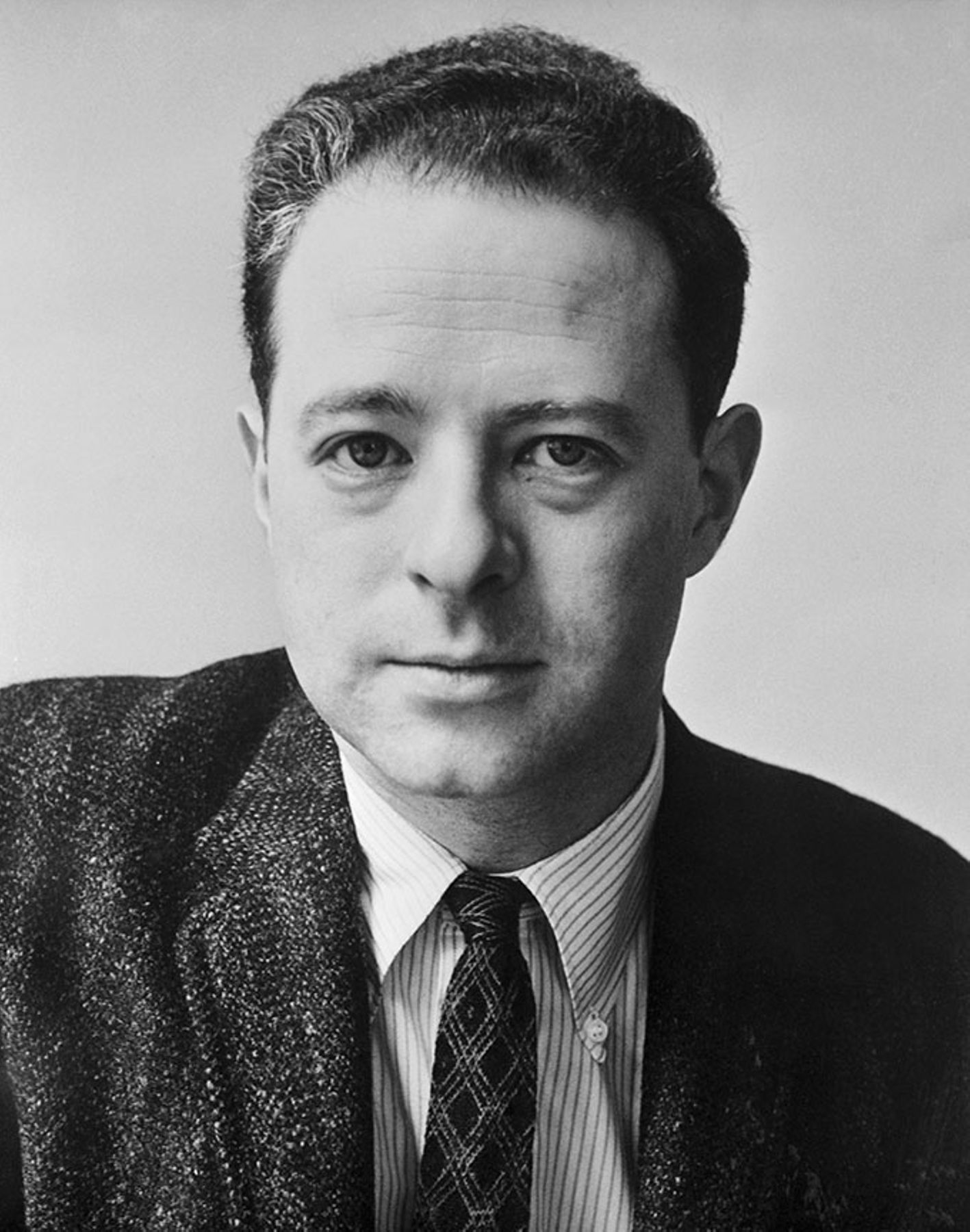
The success of Commentary during those years renders Podhoretz’s conversion from left to right appear all the more remarkable. It was not as if his magazine was struggling and in need of an infusion of intellectual energy. Quite the opposite: Commentary was widely read and esteemed by writers and the reading public. The magazine’s political posture fit well with the overall zeitgeist. Podhoretz was seen as a controversial but influential editor and author. Yet within just a few years, in the late 1960s, he engineered a transition in his magazine and in his own career and personal life that exploded into fragments much that he had accomplished up to that point.
There were some early indications of this transition, in addition to those encounters with Ginsberg. As early as 1965, Nathan Glazer wrote critically in Commentary of the student revolt at Berkeley, which was viewed in liberal and radical circles as a signal triumph. But Glazer confessed that he, along with other professors, was “filled with foreboding” at the implications of the event, as they feared (correctly as things turned out) that it would lead to the politicization of the academy. In 1967, Daniel Patrick Moynihan lamented that liberal Democrats blew up an opportunity to pass a guaranteed annual income when they denounced the Moynihan Report because, in their view, Moynihan’s concerns about the black family amounted to “blaming the victim.” Race could no longer be discussed in realistic terms.
In 1968, Diana Trilling, following Glazer, contributed a critical review of the student uprising at Columbia University early that year, casting it as “a revolt against liberalism.” In 1970, Glazer wrote that the events of previous years, especially the various campus revolts, caused him to change his views from those of a liberal to those of a “mild conservative.” Many students, he wrote, cared little about practical reform and much more about revolt against the entire university system. Given that outlook, Glazer did not expect anything positive to come out of the campus tumults. Podhoretz took a parallel approach, criticizing New Left leaders as “arrogant snobs” whose attacks on middle-class values reflected contempt for millions of Americans less affluent and less privileged than they.
Then, perhaps to punctuate Commentary’s transition, Dennis Wrong published a lengthy article in late 1970 on the radicalism of The New York Review of Books. Wrong was not the first to make this observation: Tom Wolfe had already described the publication as “the chief theoretical organ of Radical Chic.” Wrong criticized the magazine for praising Third World dictators (Fidel Castro, for example), for celebrating the New Left’s descent into irrationality, and, especially, for promoting “anti-American” themes in issue after issue. In all these ways, he wrote, the New York Review’s editors made common cause with campus radicals and their crusade to politicize the university. Wrong’s argument provoked much comment and controversy, for an obvious reason: it amounted to a declaration of war between left and right, expressed monthly in the pages of Commentary and in The New York Review.
When Podhoretz reviewed the transition that his magazine had made in the previous few years, he pointed to two large events that accounted in great part for the shift in his positions. The first was the Six Day War in 1967, in which Israel waged a successful preemptive strike against several Arab countries seeking to wipe out the Jewish state. It was not so much the war itself that was important but rather the aftermath, in which a wave of anti-Zionism swept the world, especially in left-wing intellectual circles.
The second event was the New York teachers’ strike of 1968 that pitted black activists seeking to control local schools against unionized teachers, many (or most) of them Jews. The strike, which continued for months, brought forth expressions of anti-Semitism from activists, along with white liberals and radicals, who felt that blacks should control the schools their children attended. It was a fraught situation in New York, home to large numbers of Jews who had supported black causes over the years but now found themselves branded as “oppressors.”
Podhoretz drew an important conclusion from these events: “Whatever the case may have been yesterday,” he wrote, “and whatever the case may be tomorrow, the case today is that the most active enemies of the Jews are located not in the precincts of the ideological Right but in the ideological precincts of the radical Left.” Commentary, he wrote, had been fighting the battle against the radical Left in defense of liberal values in America, but as events proceeded, it was clear that this defense coincided with the fight to defend Jewish security both at home and in Israel.
It’s striking here that Podhoretz did not make reference, as many did, to the war in Vietnam as a legitimate cause for radical protests. It was not that he defended the war, at least at this time. In 1971, in Commentary, he was willing to call for an immediate end to the war and a withdrawal of U.S. forces. His point was that the war may have been a mistake, at least in the sense that it involved the deployment of 500,000 troops to Vietnam. But even if that were true, it was a mistake of policy: it did not warrant the conclusion that the United States was corrupt and guilty of war crimes. This was the anti-American theme, prevalent on the left, that Podhoretz rejected.
It is said that, after 1970 or 1971, Podhoretz became a conservative, or a neoconservative, and then guided the magazine relentlessly in that direction until he retired as editor in 1995. That is obviously true, but calls for some qualification. As he wrote in 1971, he became a conservative in order to defend liberal ideals in America—liberty, rule of law, respect for constitutional processes, respect for the common man and woman. He was a liberal-conservative, or a conservative-liberal, but accepted the designation of “neoconservative” as an adequate description of his point of view. The radicals, not Commentary, had abandoned liberalism.
Fortunately, Podhoretz was active as editor of Commentary through those eventful years of the 1970s and 1980s as the New Left retreated into the academy, Communism dissolved, and the Cold War came to an end. Commentary played a large role in those events, as historians, even on the left, acknowledge. But the end of Communism did not bring about an end to history, nor did Podhoretz expect any such result. As he told a friend: “I try not to kid myself—that is, to talk myself into things I know not to be true.” He was not surprised as new challenges arose: the attacks on the World Trade Center, continued conflict in the Middle East, the “intifada,” the October 7 attack on Israel.
It is sobering to reflect on how, just before he died, he might have read about or seen on television the news about the recent terrorist massacre of Jews in Australia. He would have been dismayed about that news, as nearly everyone was; he would not have been surprised.
Top Photo by David Howells/Corbis via Getty Images