
Zohran Mamdani, New York City’s 112th mayor and a card-carrying member of the Democratic Socialists of America, has shown no signs of wavering in his commitment to socialism. In his inaugural address, he proudly proclaimed that he would “govern as a democratic socialist.” Mamdani’s win follows other recent Big Apple victories for DSA members and DSA-friendly politicians, including Representative Alexandria Ocasio-Cortez and State Senator Julia Salazar.
This isn’t New York City’s first dance with socialists. Though few readers may remember Vito Marcantonio and the American Labor Party, they were—like Mamdani and the DSA today—a force to be reckoned with in 1930s and 1940s New York.
Finally, a reason to check your email.
Sign up for our free newsletter today.
Marcantonio first made his mark on New York politics in 1934. He was elected to Congress from East Harlem, initially as a Republican. He gained notoriety in his first term as one of the House’s most far-left members and lost his re-election bid two years later, but made it back to Congress in 1938. Marcantonio returned not as a Republican but as a candidate of the left-wing American Labor Party.
As it is today, New York in that era was unique in permitting electoral “fusion.” This system allows one party (usually a minor party) to cross-endorse or nominate the candidate of another party (usually a major party). Fusion allows minor parties to wield real influence over elections and policy and to serve as something more than spoilers.
Founded in 1936, the ALP represented the extreme Left in New York politics—much like today’s Working Families Party. Its founders came from some of the most radical corners of organized labor. Many were socialists. Some were Communists. The Communist Party USA, which did not have party status under New York law, encouraged its members to enroll in the ALP.
With the ALP’s backing, a following that transcended party boundaries, and a shrewd understanding of New York’s electoral-fusion law, Marcantonio was able to enter and win primaries for both the Democratic and Republican nominations. As the nominee of the two major parties and an influential minor party, Marcantonio was sent back to Congress again and again, winning six successive elections between 1938 and 1948.
New York’s first flirtation with outright socialism eventually came to an end. The legal and political landscape changed for Marcantonio and the ALP in the early days of the Cold War. While the United States was allied with the Soviet Union during World War II, attitudes toward socialism and Communism changed in the late 1940s. Left-wing politicians like Marcantonio and Communist-friendly political groups like the ALP were no longer accepted in mainstream politics.
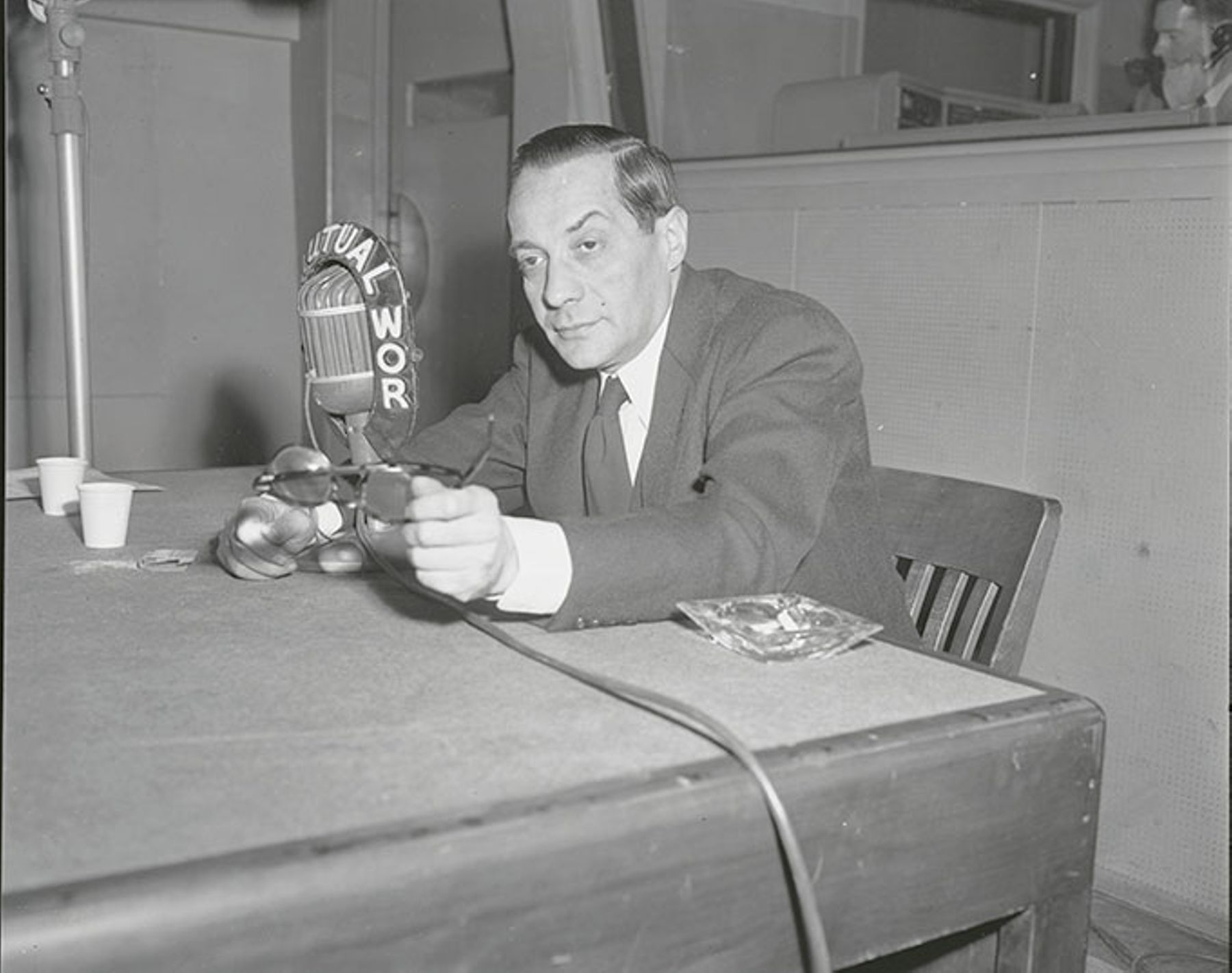
In an effort to undermine Marcantonio and the ALP, the New York State legislature enacted the Wilson–Pakula Law in 1947. Still operative today, the law kept electoral fusion but prohibited a member of one party from contesting the primary of another party without first obtaining party leaders’ permission. Albany’s clever change in the law weakened the ALP’s ability to influence elections and effectively blocked Marcantonio from stealing the major parties’ nominations.
Marcantonio won reelection in 1948. But two years later, the leaders of the two major parties united with the Liberal Party—a new, anti-Communist left-of-center party formed to rival the ALP—to nominate a single candidate against Marcantonio. Under the new Wilson–Pakula Law, Marcantonio was unable to run a primary against that candidate, James Donovan, for the nominations of the other parties. Donovan won the general election.
The ALP didn’t last much longer. After the defeat of Marcantonio, its most prominent member and officeholder, the ALP was eclipsed by the Liberal Party. Under then-New York law, a political party could keep its ballot status if its candidate for governor received at least 50,000 votes. In 1954, the ALP candidate for governor failed to meet this electoral threshold, and the ALP dropped off the ballot.
In many respects, today’s Working Families Party, the ideological heir to the ALP, exerts far more political influence and has scored more—and bigger—political victories than the ALP could have ever hoped to achieve. To be sure, the ALP and its candidates won races. But the ALP never saw a win to equal Mamdani’s election to the second-most-important office in the Empire State.
And, unlike the state legislature of 1947 that passed Wilson-Pakula, the current state legislature almost certainly will not tinker with the election law to undermine the WFP’s influence. On the contrary, even centrist Democrats in the State Senate and Assembly and, most importantly, Governor Kathy Hochul, actively seek out the WFP’s backing. In December, Hochul even signed a bill making it easier for parties to police their ranks and disenroll members, a move seen as favorable to the WFP.
To most politicos in twenty-first-century New York, Marcantonio and the ALP are, at best, footnotes. But for New Yorkers of the center-Right and pragmatic Left who are worried about the Big Apple’s current direction, the story of the ALP and Marcantonio shouldn’t be forgotten. Unless the state’s political winds shift dramatically, New Yorkers will have to contend with today’s far Left for years to come.
Top Photo: Bettmann / Contributor Bettmann via Getty Images