Back in the mid-1980s, in the days of mailed paper resumés and follow-up calls on landlines, I confidently applied for editing jobs in Boston, armed with a master’s degree and a diploma from Harvard’s Radcliffe Publishing Course. After three months of constant rejection, however—and a few “insufficient funds” slips from the ATM—I looked at a homeless woman sleeping in the Park Street T station one particularly discouraging afternoon and thought, “That’s going to be me.”
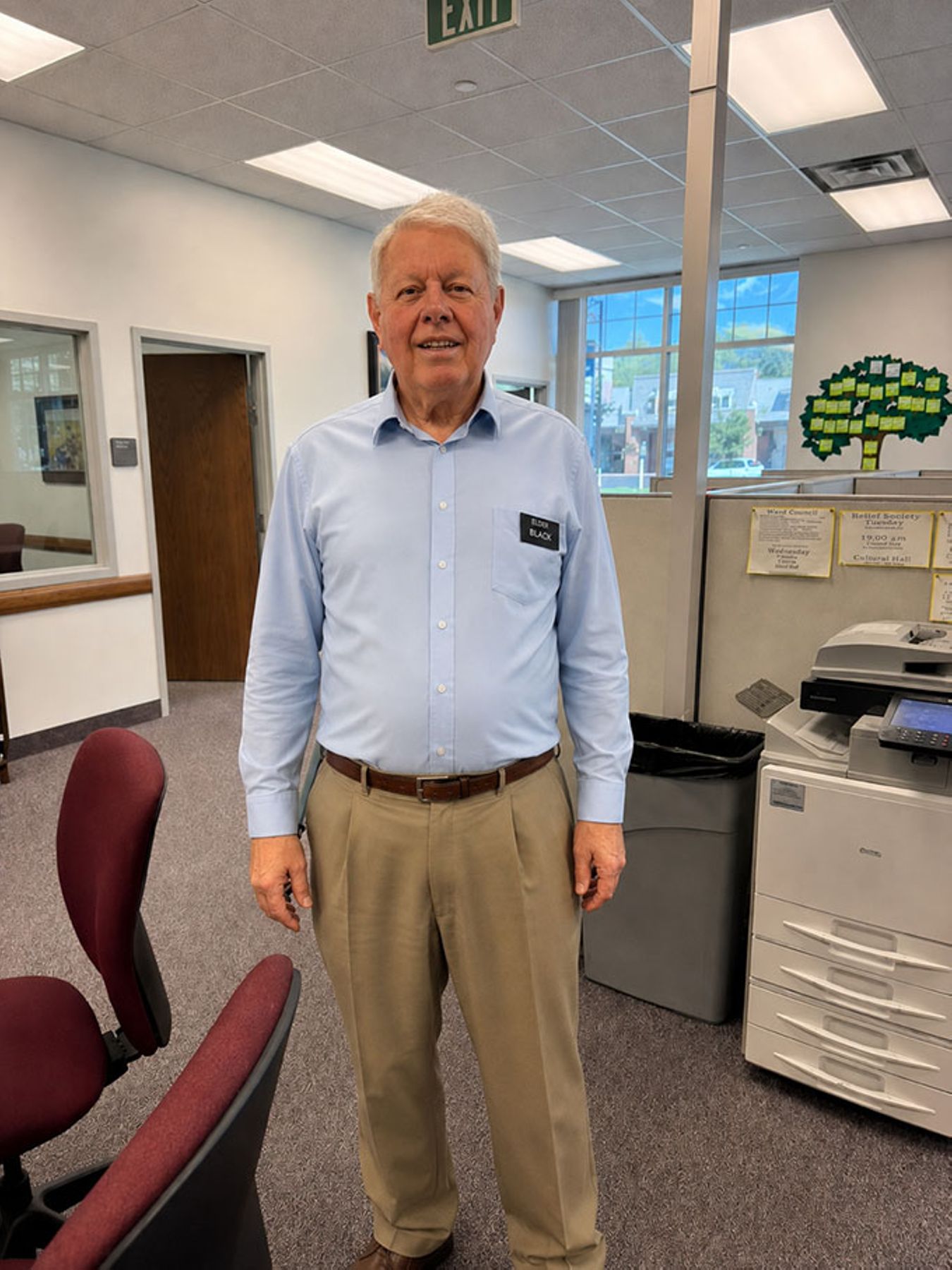
I had a supportive family and enough freelance work to tide me over, so it still surprises me that I worried about becoming homeless. Job rejection does strange things to our heads. Dave Black, a retired engineer in his seventies, knows those pressures well. He oversaw manufacturing plants, ran his own business, and worked as a traveling project manager, hiring and supervising employees throughout his career. Then he lost his job after 9/11 and endured 27 months of unemployment. “I’ve helped countless people get jobs,” he told me, “yet I’ve never known anyone who spent as much time as I did actively job hunting with no success.” His greatest qualification for helping others escape the abyss of unemployment? Empathy.
Finally, a reason to check your email.
Sign up for our free newsletter today.
Being without work, Black reflects, “affects everything—your ability to provide, your identity, purpose, self-respect, confidence, and relationships.” He now volunteers as an employment-service missionary for the Church of Jesus Christ of Latter-day Saints, which runs employment centers across the United States that are open to anyone, whether they walk through the door or join via web conference.
Volunteering once a week, Black serves at one of several Salt Lake City centers. Other employment missionaries finance their own relocation and living expenses in retirement to serve for a year or longer in cities from Oakland to New York, helping people find jobs, regardless of religious affiliation.
They neither preach nor proselytize, and they are not what most people picture when they hear “Mormon missionary.” (The Church of Jesus Christ of Latter-day Saints prefers its full name or, in shortened form, the Church of Jesus Christ or the Church.) Yet there is an existential, even spiritual, dimension to the search for work and to the rejection and occasional humiliation that accompany it.
Church Employment Services centers offer all the fundamentals: resumé writing, job leads and networking, interview practice, personalized coaching, computer access, and job-search groups. But the missionaries provide more than a carefully designed mix of job-hunting skills and coaching opportunities; they also offer friendship, moral support, and the kind of one-on-one mentoring that can make all the difference.
Working with people according to their individual circumstances and celebrating small victories along the way—whether assisting a novice in filling out a first job application or guiding an experienced worker toward a better position—is central to effective employment missionary work. Other faith-based humanitarian efforts could learn from the Church of Jesus Christ, which not only partners with other religions around the world to relieve suffering but also devotes considerable energy to helping people help themselves.
Entering one of Salt Lake City’s Church Employment Services centers, I’m struck by its blend of professionalism and homeyness: a reception area, consultation tables, computer cubicles, informational flyers and job leads, motivational sayings, and religious art on the walls.
I sit down at one of the consultation tables as Dave Black opens his laptop and guides me through a maze of links, starting at churchofjesuschrist.org and working through life help, employment, job seeking, job-search groups, and on to resources ranging from personalized coaching to maintaining emotional resilience during unemployment. He emphasizes the active online job-search meetings offered regionally and nationally each morning and on two evenings a week. Other virtual group meetings and workshops take place Monday through Friday, morning, noon, and night. “Sending in your resumé cold, your odds of getting a response are at 1 percent,” says Black. “But people involved with active job-search groups get a job in half the time of those who don’t.”
I find myself drawn to the table next to us, where a genial missionary is encouraging an older woman through what appears to be her first visit. “See, you do have what they call hard skills,” he reassures her, “like operating equipment and using data.” I assume that they’re working on her resumé, but other snippets drift in and out of earshot. “Maybe if you practiced answering questions in the mirror first,” he suggests gently, “you wouldn’t be so nervous about interviews. We can also practice here.” By the time I leave, the two are busy reviewing job listings and exploring her options.
Just who are these missionaries spending their free time helping strangers find work? Amy Walker’s full-time job is to recruit, oversee, and train them. A regional manager for the Northeast, she says that the Church’s employment offices in New York, New England, and Washington, D.C., keep service missionaries extremely busy. “I’ve sat next to people I’m training, some close to age 80, and they don’t think they can do this,” she says. “But they can, and with a tremendous amount of faith, effort, and success.”
“Working with people according to their circumstances and celebrating small victories is central to effective employment missionary work.”
Walker divides the missionaries into three categories: local volunteers like Black, couples who spend a year or two away from home and relocate to various parts of the country, and volunteers still working regular full-time jobs. This last group brings “valuable current perspectives,” observes Walker, “and a few of them are not church members but believe in what we’re doing and want to help.”
Training retired men and women with backgrounds in business, the trades, medicine, law, or homemaking to become employment counselors requires instruction in resumé writing, mock interviews, and networking, followed by weekly training meetings that address a rapidly changing landscape, especially AI’s impact on the job market. Specialists in every field are available for consultation and keep the program’s online information current.
The heart of the effort, however, is the missionaries themselves. Roger and Kaleen Jerman, from suburban American Fork, Utah, decided to serve a mission together when Roger retired after a career teaching fifth and sixth grade. They were surprised to be asked to manage an employment-service center in Oakland, California. “My only foray into business was elementary school Junior Achievement and Business Town curriculum,” Roger says. Kaleen had been a stay-at-home mom.
The Jermans left behind their large extended family, with a son and his friends renting their house to help cover the Bay Area’s high cost of living. (The Church of Jesus Christ helps with transportation to and from the mission and covers some housing costs, but the couple pays its own living expenses and volunteers without compensation.) Once in Oakland, the Jermans discovered that their soft skills and caring dispositions mattered more than the crash courses in resumé preparation. “We gained trust easily,” Kaleen says, “becoming the only friends, parent figures, and cheerleaders some people had.”
“People warned us about crime in Oakland,” Roger recalls, “but no one could have told us how fulfilling helping people find work would be. It feels good to give people food and necessities, but helping them find work that lets them keep eating and gives them purpose is even more meaningful.”
Aaron and Connee Sandvik echo those sentiments from the other side of the country, where they run an employment-service office in Midtown Manhattan. They moved to New York a year ago from St. George, Utah, where they operated Carl’s Jr. burger franchises across several counties. Now they live in a one-bedroom apartment and “work with all kinds of people,” says Aaron. “I thought we’d mainly be helping people get service-industry jobs, but I also work with attorneys, MBAs from top schools, and a lot of professionals.”
From Aaron’s perspective, it’s a tough market, with people coming in after layoffs from finance, tech, and nonprofits. “Whether you’re a doctor, hotel concierge, or executive, it’s devastating to be suddenly out of work,” he observes. “Everyone needs ‘next-step’ help if they haven’t been looking for ten years. It’s all changed.”
As long as job seekers are legally able to work in the United States, employment missionaries can help. “Our supervisors and specialists keep us abreast of best current practices,” Aaron explains. “They offer up-to-date information, first-rate workshops, and LinkedIn advice. We just start at the beginning, one step at a time.”
He has sensed an uptick in recent months, with people not necessarily landing their dream jobs and often taking positions for which they’re overqualified but still finding work. He tells those who contact the center before moving to New York in order to pursue their dreams: “Make sure you have a job before you get here!”
Measuring success at urban job-seeking centers is relative. Roger and Kaleen Jerman worked with a homeless young woman in Oakland who slept on a sidewalk near their center. She began applying for jobs every day, persisting even when no one called her back. Eventually, she found a job and bought a used car, which she now sleeps in. The Jermans consider her a success not just because a car is more comfortable than a sidewalk, but because she caught a vision of a better life.
“She’s saving for an apartment deposit and, even more important, became our friend and observed our marriage,” Kaleen says. “She was surprised that couples could be loving and committed, that parents could have healthy relationships with their grown children, and even that Roger and I communicate with and like our siblings.”
They also helped a college graduate living in his father’s basement get out of a rut. “He was a smart, competent guy, but tried for six months on his own,” says Kaleen. With encouragement from the Jermans, along with resumé revisions and contacts made through online job-search groups, he regained his motivation and found a professional job.
“People really need help and encouragement,” Dave Black has found, “even if they’re accomplished and experienced.” One woman who came into the Salt Lake City center was highly intelligent, with graduate degrees, but needed help interviewing. Black conducted eight mock interviews with her, after which she returned to the center to “ring the bell,” a celebratory ritual for anyone who finds employment.
Black keeps reaching out with suggestions to everyone he coaches, but about a third, he estimates, stop responding. He’ll move on after trying unsuccessfully for several months but continues mentoring anyone who wants his help. One man has been coming back to him for the past five years, working toward better jobs and promotions along the way.
“Yes, the end goal is a job,” Amy Walker concedes, “but baby steps and small successes keep morale up.” Employment missionaries celebrate every response to a job application and every interview that leaves a candidate better prepared for the next one. Online job-search groups build momentum through accountability and contact-sharing and also provide the camaraderie of not being alone in the trenches.
Black assisted someone who had spent three years out of the workforce reframe his hobbies in professional employment-market language, helping him land a position a month later. The Jermans connected a formerly incarcerated man with volunteer groups that provided clothing to people getting out of prison. They also called in specialists for particularly tough cases, including a man with mobility issues who wanted to join a security force. A specialist helped him find a surveillance job.
According to Eden Johnson, general manager of all employment centers at the Church of Jesus Christ of Latter-day Saints, “One benefit we shouldn’t forget is that these missionaries, while they don’t proselytize, do pray every day for the people they serve.”
Aaron Sandvik chokes up as he describes a man who came to New York with degrees and experience in film, only to find no work for months. His wife supported them both as a teacher, but the filmmaker broke down in Sandvik’s office, telling him, “I feel like a total failure.”
Sandvik asked if he could say a prayer, and during the prayer, the client received a text that he ignored until leaving. The next day, he returned to report that the text was from a former colleague; he now had a job. “The Lord’s hand is in this work,” Sandvik believes, recounting another story of a man successful in the trades until he lost his job, family, and home to alcoholism. “His homeless shelter had a decent employment skills program, which we encouraged him to continue using as he worked with us,” he explains. “He was able to find a family-owned construction company and got back on his feet again. That’s a miraculous thing to be part of.”
The Church of Jesus Christ operates 50 job centers nationwide, with approximately 1,060 missionaries volunteering in a given year. From 2023 through mid-2026, the program achieved 22,088 job placements. The ministry is part of a churchwide vision, according to Johnson, “to alleviate suffering, maintain human dignity, and instill hope for all of God’s children as we foster greater self-reliance through education, employment, and emotional health.”
While employment-service offices operate only in the United States, the program is part of a global approach that emphasizes achieving human potential and dignity. BYU-Pathway Worldwide offers higher-ed-certified degrees to students in more than 180 countries through online classes taught by qualified volunteers. By July, the Perpetual Education Fund had extended more than 135,000 loans across the world for vocational and educational training.
It’s a drop in the bucket compared with the scale of need, of course, and church employment centers and volunteers in the U.S. can accommodate only so many participants. Even with a low national unemployment rate of 4.1 percent, approximately 7 million Americans are jobless. But Johnson views this as a ministry not of job tallies, but of helping individuals understand their worth. “We want our job-service missionaries,” she says, “to have a lifelong impact and offer vital connections, especially for those with very little support.”
A heavy emphasis on finding the right support and connections pervades church employment online offerings, from “Ask an Expert” open forums to online videos like the bluntly titled “How Jobs Are Really Filled.” In that video, a recruiter describes hiring for 1,000 positions last year, most of which weren’t advertised but filled by someone the manager or a team member knew about. In another, “Basketball Got Me a Job,” a young man admits having red flags on his resumé. He practiced “Me in 30 Seconds” (elevator pitching), then shared his story with others whenever possible, including at basketball practice. Turns out that one of the players’ wives worked for a construction-management firm and gave the young man’s resumé to an industry group. He wound up getting a great job that had never been posted publicly.
“It’s harder to find jobs now, and it takes longer,” Walker admits. “We just had a recent MBA grad find a good job, but it took 16 months.”
With an impersonal hiring process and AI-powered applicant-tracking systems leaving most resumés unseen, Black finds that simply reaching the interview stage is a major challenge. He tells his job seekers, “Don’t be embarrassed! Tell everyone you know—friends, neighbors, relatives, your old gym teacher—‘I need a job!’ Make connections every single day, and someone, somewhere, at some point, will know about something.”
I’ve been unemployed several times in my life, though never as traumatically as in my early twenties. That experience taught me to treat job-hunting as a job in itself—one requiring months of perseverance and an ego-saving support system. I’ve also watched my adult children ride the emotional ups and downs of searching for work after earning supposedly job-guaranteed degrees.
In the 1980s, I was fortunate to receive job leads and encouragement from the director of the Radcliffe Publishing Course (now at Columbia). A church friend’s aunt gave me occasional copyediting work until I landed a stable publishing job. But what helped most psychologically, while I was pounding the pavement with paper resumés, was simply getting out and working.
A temp agency assigned me to answer phones at the Boston Small Business Administration, where retired business owners volunteered to coach aspiring entrepreneurs with patience and optimism. I was reminded of that atmosphere as I sat with Dave Black at the Salt Lake Church Employment Services office. He told me that “if anyone understands how to endure joblessness that seems interminable, it’s me.” What sustained him was meeting weekly with a church employment group and his resolve to “just keep swimming and try to connect and apply every single day.”
Employment missionaries say that helping others through unemployment changes them as well. Roger and Kaleen Jerman have been home from Oakland for two years but still keep in touch with former clients, including the woman who went from sleeping on a sidewalk to sleeping in a car. The experience brought them new friendships and strengthened their marriage. “I worked all those years while Kaleen was home,” Roger says. “In Oakland, we grew closer working alongside each other every day.”
Aaron Sandvik, serving one more year in New York, says that the giving flows both ways. “Our office is filled with flowers, mainly sent to my wife, who makes stronger emotional connections,” he says. A woman they helped find work at a massage clinic now invites Connee for free treatments. But what moves Aaron most is the man they helped who is now driving for Uber. “Connee and I had a meeting quite far into New Jersey,” he recalls. “He took us there, waited, and drove us all the way back. Wouldn’t let us pay him. He said it was the least he could do.”