
Michael Harrington (1928–1989), author of the highly influential 1962 book The Other America, helped launch the War on Poverty and founded the Democratic Socialists of America. He also devised the DSA’s “realignment” strategy: rather than operate as a third party, the organization would push the country leftward by capturing the Democratic Party from within. The DSA’s recent success in this effort gives Harrington’s life and career renewed relevance.
During the first half of the twentieth century, Eugene V. Debs and Norman Thomas led the American socialist movement. Throughout socialism’s twenty-first-century revival, Bernie Sanders has filled that role. Between those two eras stood Harrington. He came of age when the Soviet Union’s atrocities were a matter of public record and capitalism had produced the largest and most prosperous middle class in world history. Harrington died about three months before the Fall of the Berlin Wall, capitalism’s moment of supreme triumph. Yet he was right to believe that socialism was not dead in America. Since the 2010s, the number of card-carrying socialists has risen dramatically and now stands at slightly more than 100,000. A resurgent DSA ranks as the most powerful political organization in major cities and is making inroads into Congress. Some surveys have found that, within the Democratic Party, socialism polls better than capitalism, enjoying especially strong support with younger voters.
Finally, a reason to check your email.
Sign up for our free newsletter today.
But national adoption of Harrington’s agenda—and his focus was always on national, rather than local, politics—still seems doubtful. Harrington sought to end socialist factionalism and unite the Left around an economic agenda. Despite Zohran Mamdani’s popularity, neither goal appears any more attainable today than it did in Harrington’s time.
Harrington grew up in a lace-curtain Irish household in St. Louis. His first ambition was to be a poet, which he pursued by moving to Greenwich Village after college. At New York parties, he could hear high culture and Marxism debated with equal fervor. Harrington thought of himself as a political theorist as much as a political strategist. His archives at NYU contain extensive background notes on Hegel and other philosophers, though Karl Marx, of course, was his guiding inspiration.
In the early 1950s, Harrington became an editor at Chrystie Street-based Catholic Worker. The organization’s staff lived on the building’s top three floors with a few dozen Bowery “bums”: destitute single men beset with alcoholism. Often, contact with life at the bottom impresses observers with a prevalence of bad decision-making and other behavioral problems. Not Harrington. Instead, he became a leading advocate of the “root causes” theory of social dysfunction—the notion that injustices ranging from poverty to racism explain criminal and other antisocial behavior. In The Other America, Harrington argued that poverty causes mental illness. Real-life experience can be a fickle teacher when filtered through theory.
He became a professional socialist after leaving The Catholic Worker, spending the late 1950s and early 1960s working on civil liberties, civil rights, and labor issues. Then he struck paydirt with The Other America. The book established Harrington as the man who had discovered poverty and shattered postwar America’s confidence in its economic order. The prevailing view of that order was captured by Norman Podhoretz in his memoir Breaking Ranks: “Not only was the sheer profusion and abundance of this economy the wonder and envy of the world. More incredible still was the fact that it was so widely shared, that so many people—ordinary people, working-class people—were beginning to live in style that only the rich could afford in most other places.”
Harrington argued that, in evaluating the American system’s claim to excellence, the welfare of the middle class should matter less than that of the poor, whose condition could be improved only through aggressive government action. The book sold more than 1 million copies and attracted the attention of John F. Kennedy. After Kennedy’s assassination, Harrington joined a working group that helped craft what became War on Poverty under Lyndon B. Johnson. Unlike the New Deal, whose social insurance programs Harrington criticized as overly focused on the middle class, the War on Poverty targeted the poor through job training and “Community Action”: government-funded nonprofits loosely dedicated to grassroots uplift. Though Harrington’s influence on the program’s final design was modest, his role as its leading apologist would prove consequential.
Recalling the promise that greater spending would alleviate social dysfunction, yet instead witnessing years of riots, soaring murder rates, domestic terrorism, drug addiction, and family breakdown, many Americans reasonably concluded that the War on Poverty had failed. Harrington attacked such “neoconservative” (a term he either invented or popularized) sentiments by claiming that the real War on Poverty was never tried due to “penny wisdom and pound foolishness.” He lamented that many other 1960s-era initiatives—including Medicare, Medicaid, and civil rights legislation—had become conflated with the War on Poverty proper, which received less funding than he had originally recommended. He struggled, however, to explain why this broader expansion of social spending should be considered irrelevant to the era’s social outcomes. In Losing Ground, Charles Murray notes that, by 1980, federal spending on health care was six times its 1950 level, public assistance 13 times higher, education spending 24 times higher, and housing spending 129 times higher. The United States pursued a Swedish-style expansion of social spending and emerged looking less like Sweden than before.
The War on Poverty experience posed, and still poses, a problem for the democratic form of socialism Harrington favored. Democratic processes tend to yield incremental, not revolutionary, change. The American system’s conduciveness to policy experimentation is sometimes said to be one of its distinctive virtues. Socialists must trust that the American public will like what it sees through gradual growth in regulation and spending, and support further expansions—until finally, we wake up one day and find ourselves with bona fide socialism. But what if each incremental step only makes things worse? Harrington’s arguments for greater spending in the 1970s and 1980s were the social-policy equivalent of a CEO insisting that, while his company was losing money on every sale, it would make up for it in volume.
Harrington served as chairman of the Young People’s Socialist League from 1952 to 1954, succeeded Norman Thomas as chairman of the national Socialist Party in 1968 (serving until 1972), and founded the Democratic Socialists of America in 1982, leading it until 1985. Throughout his career as a socialist organizer, Harrington was chiefly concerned with overcoming factionalism.
Having attended college in the 1940s, he was a generation older than the 1960s radicals—a comparative elder statesman at 34 when he attended Students for a Democratic Society’s 1962 Port Huron conference, where he feuded with younger activists over Communism. Harrington insisted that the integrity of democratic socialism required a firm, public stand against the Soviet Union. Younger figures, including Tom Hayden, instead adopted an anti-anti-Communist position.
Beyond the generational divide, class differences between working-class and college-educated leftists profoundly shaped intra-socialist debates over Vietnam. The Socialist Party of the 1960s had a prominent right wing defined by its support for the Vietnam War and close ties to organized labor. Harrington’s reading of Marx gave him an abiding belief that a durable socialism could not succeed without working-class action and support. “The Western labor movement . . . was—and is—the most powerful single force for social change within capitalist society,” he wrote in Fragments of the Century (1973). Though Harrington did not personally support the war, he was determined to resist efforts by left-wing activists to make opposition to Vietnam a litmus test. He also rejected the New Left’s contempt for “labor bureaucrats.”
Modern socialist historians find it shameful that the Socialist Party failed to benefit from 1960s activist culture, and blame Harrington’s leadership. Party membership remained flat during a decade in which socialism was strong internationally, and on the domestic front, many left-wing organizations saw their memberships swell.
But Harrington stuck with his equivocations on Vietnam for as long as he did because of his orthodox socialist belief that what united the Left’s disparate groups was more powerful than what divided them—namely, economics: jobs, benefits, and redistribution. In his 1988 memoir The Long-Distance Runner, he reflected:
I used to say that we had to unite the constituencies of the “three Georges”: the largely middle-class, antiwar forces of George McGovern; the blue-collar partisans of AFL-CIO President George Meany, a dedicated hawk; and the largely working-class and “redneck” followers of George Wallace, people who were responding not simply to a very real racism, but to a phony populism as well. How were these contraries to be yoked? On the basis of economic interest, we replied.
He formally broke with the party over trade union leaders’ failure to support George McGovern unequivocally in 1972, resigning the chairmanship in October. The next year he founded the Democratic Socialist Organizing Committee. Its goal was “realignment.” Twentieth-century American socialists long lamented the absence of an authentic social democratic party akin to Britain’s Labour Party. Harrington and many of his colleagues concluded that their best chance of creating one was not to revive the third-party strategy that American socialists had long pursued (Norman Thomas’s final presidential campaign was in 1948). Instead, they sought to realign the Democratic Party—or, in socialist parlance, “bore from within” —to make it more ideologically cohesive. The DSOC backed Ted Kennedy’s unsuccessful 1980 primary challenge to Jimmy Carter.
Then, in 1982, Harrington formed the DSA, seeing it as a merger between the DSOC and the New American Movement, whose roots were in the New Left Students for a Democratic Society. But as bad as the 1960s were for U.S. socialism, the 1980s were worse. The DSA numbered about 6,000 at the time of its founding and would not exceed 10,000 until the 2010s. Many attribute the DSA’s underwhelming first few decades to Harrington’s death in 1989. Writes Jack Ross in The Socialist Party of America: A Complete History, “the bottom line was that DSA was Michael Harrington, and once Harrington passed from the scene, the organization would be reduced to a shell.” Socialism in America couldn’t thrive with Harrington, nor, for a while, could it survive without him. Realignment in particular looked like a dead letter: under Bill Clinton, the Democratic Party shifted decisively rightward on economic policy.
Harrington articulated his views through many books (he averaged a new one more often than every other year during his prime), numerous essays in Dissent and other highbrow journals, and a vigorous schedule of speaking engagements and TV appearances (including on William F. Buckley’s Firing Line). His agenda resembled that of Bernie Sanders. He likely would have endorsed Sanders’s recent proposal for government to acquire 50 percent ownership stakes in major artificial intelligence companies. He strongly believed that workers should control corporate strategy and capital allocations, a policy he termed “the democratic socialization of investment.” Harrington was passionate about “full employment,” the idea that government should use every policy lever at its disposal to ensure jobs for all, including WPA-style public works if necessary. And he believed that national health care and other welfare-state expansions were necessary because they made workers less reliant on employers for benefits and income. In sum, the Harrington agenda consisted of massive government expansion, both on the regulatory and taxing-and-spending fronts—a view that he pitched as populism, rightly understood.
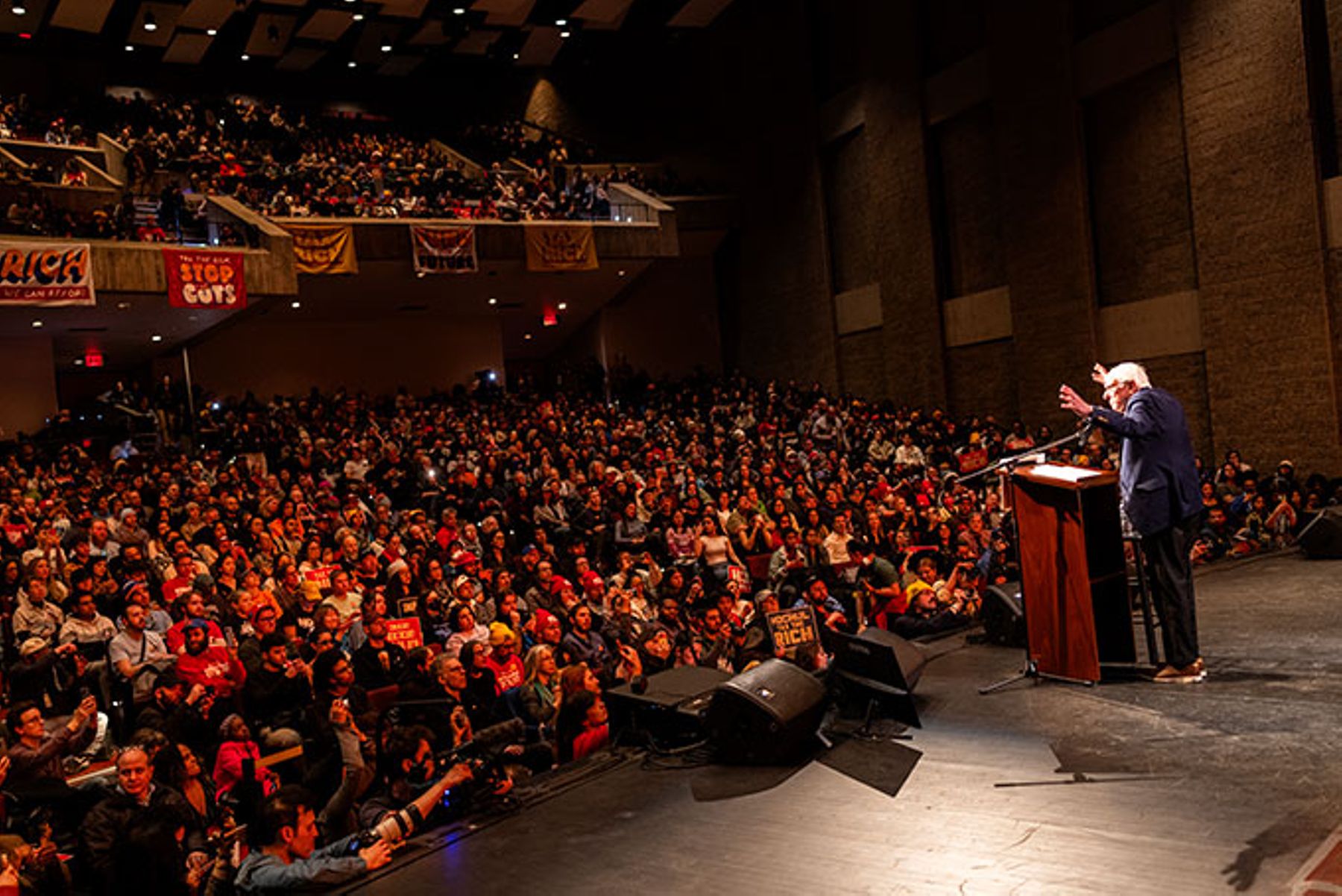
Ironically, these dusty ideas resonate far more today than they did in the 1980s. After this November’s elections, the Democratic Socialists of America will be able to claim 15 New York State legislators; the mayoralties of New York, Seattle, and Washington, D.C., and possibly Los Angeles; and at least five members of Congress. Zohran Mamdani won New York’s 2025 mayoral race partly on the strength of his personal charisma. But the socialist brand has grown strong enough to make even mediocre candidates winners in major-city elections. By threatening primary challenges against Democratic centrists, the DSA is shifting the party leftward, just as Harrington’s realignment strategy envisioned.
Why are the 2020s more conducive to socialism than the 1980s were? Partly because socialist identity can be simply an expression of Trump Derangement Syndrome. Modern socialists prefer to date the recent resurgence of their movement to Occupy Wall Street (fall 2011) and related anger over the 2008 financial crisis and bailouts. But between 2010 and 2016, DSA membership rose only modestly, to 8,500—not far off where it was at the organization’s founding. The trendline spiked with Trump’s ascendance, shooting up to 32,000 in 2017 and reaching 95,000 by 2021. Membership dipped during Joe Biden’s presidency before resuming growth during Trump II. The DSA now claims around 120,000 members. Twenty-first-century socialism’s dependence on Trump to play bogeyman raises the question of what will happen to the movement after 2028.
It also raises the question of how much the movement is rooted in economic anxiety. Socialists believe that they can win because Americans are naturally left-wing on economic policy. Harrington himself espoused this faith; in the 2020s, operative David Shor makes the case. But not everyone angry about the economy chooses to channel it by voting socialist. Many, especially among the working class, vote for Trump. Though socialism is now stronger than it has been in generations, its link to the working class, its putative constituency, is historically weak. As the working class has shifted rightward, the upper-middle class has shifted left. Democrats have become, in the phrase of Noah Smith, “the party of the somewhat-rich.”
This poses a problem for realignment. Socialists who desire to lead the Democratic Party cannot abandon working-class economic policy, but they must also cater to the economic wishes of upper-middle-class voters, promising student debt amnesty and tax relief for households making a few hundred thousand dollars a year. Identity politics is not the only reason why Democrats can’t revive FDR’s indomitable New Deal coalition.
Yet identify politics cannot be overlooked, either. On the one hand, conditions for socialism now seem more promising than in Harrington’s day because of economic pessimism and anti-Trump animus. On the other, they seem worse because of declining trust in government institutions—trust being necessary if government is to get massively bigger—and expanded diversity. Political scientists have always cited ethnic diversity as one reason why socialism never advanced as far in America as it did in more homogenous European nations. Rising diversity intensifies the risk of factionalism, socialism’s old nemesis. In October 2023, Maurice Isserman, Harrington’s biographer, resigned from the DSA, of which he had been a founding member, over the party’s response to the October 7 terrorist attacks on Israel.
Harrington’s obsession with mastering factionalism trained his focus on national politics. Though he lived his entire adult life in the New York area, he took no interest in municipal socialism. Truly American socialism, for Harrington, a native Midwesterner born when Terre Haute, Indiana’s Eugene Debs led the movement, meant national action. Which the basic math would seem to require. At its peak in the early twentieth century, the Socialist Party of America never gained more than 6 percent of the presidential vote. (Compare that, for example, with Ross Perot’s 19 percent in 1992 and George Wallace’s 14 percent in 1968.) Even to reattain that modest peak would mean a DSA membership of 500,000 (adjusting for population). Hitting that mark—five times the current membership—would require a broader geographic reach, beyond big cities like New York, the American socialist movement’s longtime capital.
The heart of early twenty-first-century socialism is urban college graduates energized by DSA messaging around ideas that cannot work nationally. The New York-based DSA is like the viral influencer who can’t make a living in the real world. Its record in America, past and present, shows that socialism can maintain either a broad appeal or a deep appeal—but not both.