Since the Hamas terror attacks on October 7, 2023, American political discourse has often fixated on Israel. A new class of activists, candidates, and elected officials has arrived on the scene, often seeming more invested in denouncing the Jewish state than in addressing the local concerns of the communities they claim to serve. For many, Israel has become a political litmus test—not primarily because of events in the Middle East but because the nation serves as the unifying enemy for a wider domestic project.
The philosophy that best explains this development is Third Worldism. Emerging in the decade after World War II, it casts imperialism as the defining injustice of the modern age and supplies the vocabulary through which newly independent states demand recognition, restitution, and material transfers from the developed West.
Finally, a reason to check your email.
Sign up for our free newsletter today.
As formal decolonization advanced, however, the original target—imperialism—largely disappeared. The Third-Worldist ideology then migrated into Western universities and domestic political movements. There it was repurposed, functioning today less as a foreign policy doctrine than as a moral lens through which all political legitimacy is assigned. In this framework, Israel occupies the role of an imperial oppressor, while Palestinians—and, by extension, other perceived victims of Western power—serve as privileged victims. The result is a politics of grievance that is now the operating language of a rising generation of American progressives.
The Islamist dimension of this phenomenon warrants special attention. The American political system offers no electoral pathway for candidates to campaign openly on the theological premises that undergird Islamism—the First Amendment bars the establishment of religion, and the secular conventions of American politics discourage explicitly religious appeals. The Islamist-friendly current within the American Left, embodied by activists like Linda Sarsour, has therefore found expression through anti-Israel polemics, which, in depicting Israel as a settler-colonial project requiring decolonization, translates religious commitments to the Ummah (wider Muslim community) into terms more readily accepted by a secular electorate.
What explains the appeal of Third Worldism among younger progressives? Revolutionary movements from Paris in 1789 to Petrograd in 1917 to Tehran in 1979 have often renewed themselves by identifying a new enemy to mobilize against. The new progressive coalition that came of age between 2014 and 2020 cycled through a succession of causes centered on race, gender, and the pandemic, but many adherents eventually grew weary of its contradictions. Gaza, however, offered a fresh focal point—with an adversary capable of unifying disparate grievances within a single moral framework. The symbolic importance of the Israel–Palestine conflict extends far beyond the Middle East. For Third Worldists, Israel serves as a proxy for the legitimacy of the Western order itself: if the Jewish state is a fundamentally illegitimate settler-colonial project, then the same logic can be applied to the United States, Canada, Australia, and other Western republics.
Activists, intellectuals, and elected officials steeped in the Third-Worldist tradition generally understand that its domestic implications are central to the project. Many other Americans, however, embrace the anti-Israel position simply as a foreign policy stance without recognizing those implications. Together, these constituencies form a powerful coalition.
Walter Laqueur identified the underlying trend as early as 1956. In Communism and Nationalism in the Middle East, he observed that the political categories inherited from the nineteenth century could no longer fully explain developments in the postcolonial world. Communists in Egypt, Syria, and Iraq had found their principal allies in what he called “the extreme right-wing and fanatical religious camp,” foremost among them the Muslim Brotherhood. Seven decades later, Laqueur’s diagnosis retains its force: labels such as Communist, socialist, Marxist, and progressive are inadequate to describe developments now embodied, for example, by the Mamdani administration in New York.
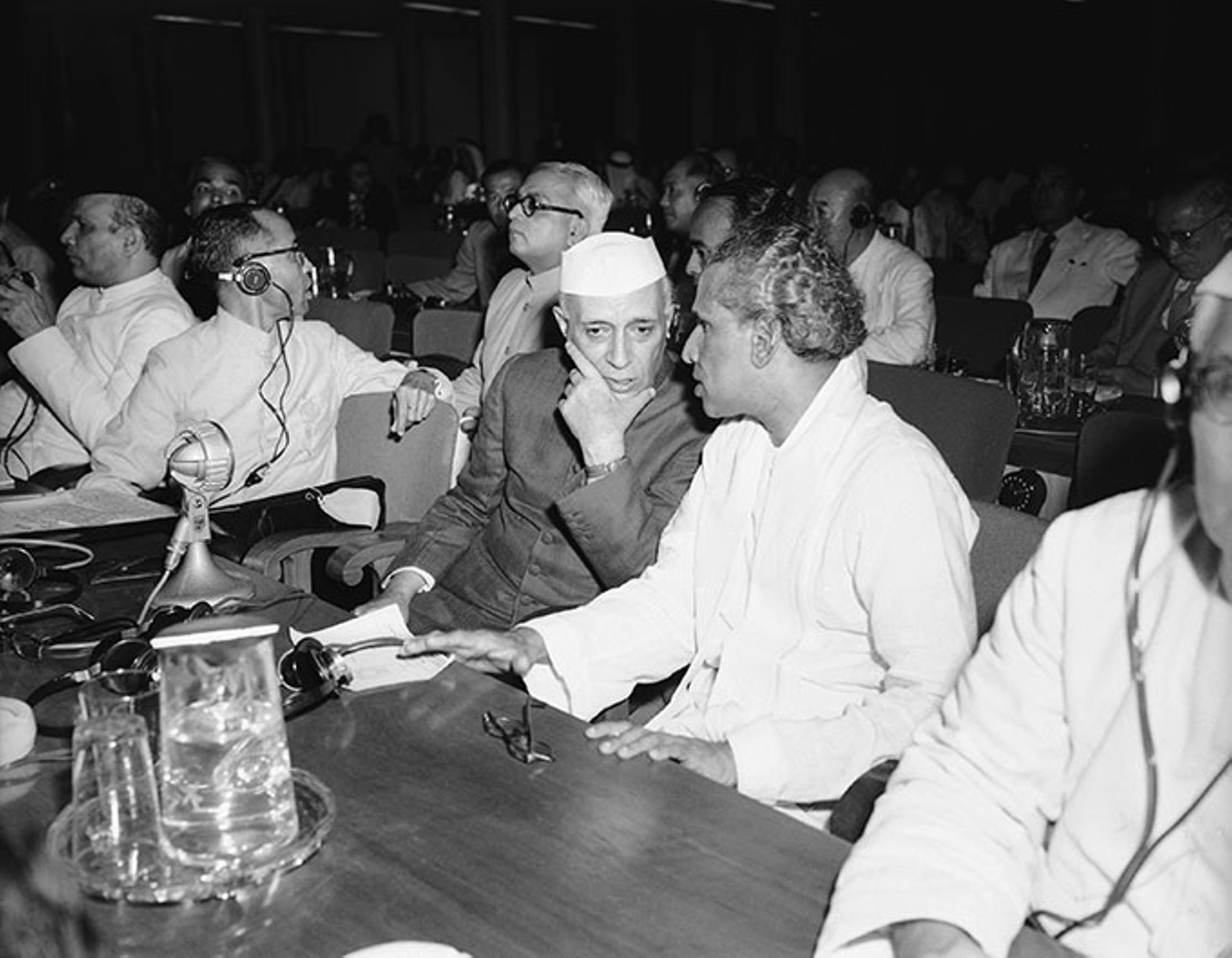
The coming together that Laqueur observed emerged from the Third-Worldist project. Its origins lie at Bandung in April 1955, when Sukarno of Indonesia, Nehru of India, Nasser of Egypt, and Zhou Enlai of China convened 29 postcolonial heads of state on the Indonesian island of Java. The conference established the terms through which the colonized world made its claims against the Western imperial order. Sukarno opened the proceedings by declaring that “this is the first intercontinental conference of colored peoples in the history of mankind,” announcing a political subject the international order had not previously recognized.
The movement’s leading theorists elaborated that vision over the following decade. Frantz Fanon’s The Wretched of the Earth (1961) supplied the analytical framework that would shape the tradition for generations, while Kwame Nkrumah’s Neo-Colonialism: The Last Stage of Imperialism (1965) extended the argument from direct colonial rule to the postindependence relationship between former colonies and the metropole. Maoism proved especially influential, departing from Soviet orthodoxy by identifying the peasantry, rather than the industrial proletariat, as the primary revolutionary subject in the developing world.
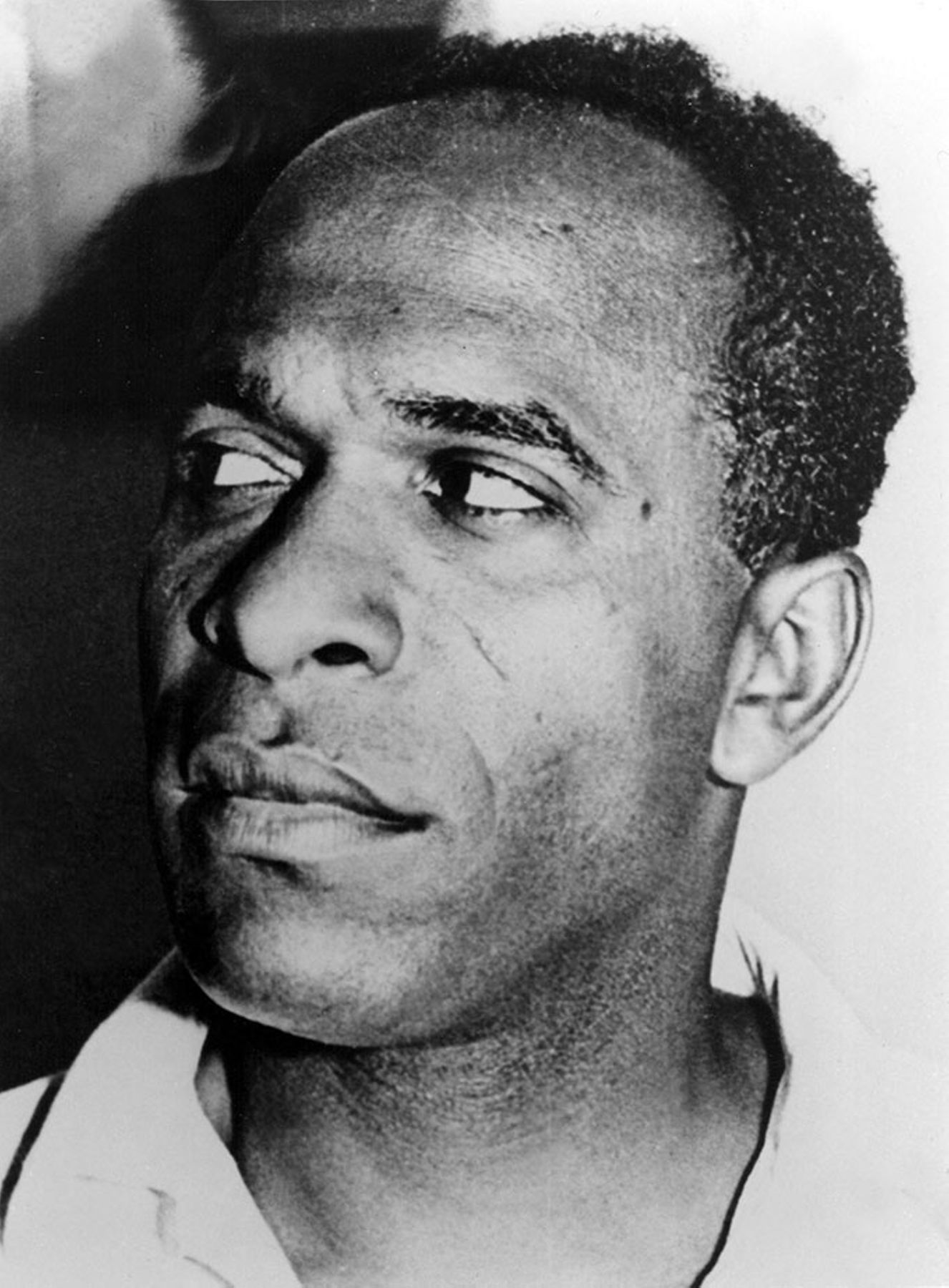
That conceptual shift migrated into the post-1968 Western academy, where, for many intellectuals, the industrial working class no longer seemed a plausible agent of revolutionary change. In its place arrived a politics centered on the dispossessed of the global South. The work of Edward Said and Mahmood Mamdani—Zohran’s father—preserved much of this inheritance in an academic setting.
Nasser’s management of pan-Arab nationalists, Muslim Brotherhood members, and Egyptian Communists from 1952 to 1967 provided an early political model, while the Iranian Revolution of 1979 refined it. Writing from Tehran in late 1978, Michel Foucault described the phenomenon as an “Islamic political spirituality” capable of attracting the secular European Left.
A version of that alignment has characterized developments in American politics over the last decade or so. The European Left traces its roots through the Second International, the Bolshevik Revolution, and the Eurocommunist parties of Italy, France, and Spain, producing a politics organized around the industrial proletariat, trade unions, and social-democratic parties. The American Left followed a different path—through abolitionism, Progressivism, the New Deal, the civil rights movement, and the New Left—but arrived at many of the same conclusions. The two traditions ultimately dovetailed in their affinity for the Third-Worldist project, one that has only lately acquired substantial institutional force.
The American Left absorbed Third-Worldist ideas gradually through a series of accommodations with the Communist, Maoist, and orthodox Marxist currents that dominated the radical Left in the late twentieth century. Initially, these ideas entered as a subordinate element within existing ideological traditions rather than as a distinct doctrine.
First, the Black Panther Party articulated an anti-Zionist position as early as the late 1960s, grounding it in a colonial analogy that linked American racial hierarchy to Western imperial power. Opposition to Israel and to American imperialism thus became expressions of the same political worldview. Eldridge Cleaver’s addresses to Palestinian fedayeen and Huey Newton’s declarations of solidarity with the PLO gave that synthesis an organizational form that outlasted the party itself.
Second, the New Communist movement of the 1970s extended this inheritance by incorporating Maoist Three Worlds theory into domestic organizing. Groups such as the League of Revolutionary Struggle and the Line of March carried these ideas into labor unions, community groups, and the developing infrastructure of identity-based coalition politics, giving Third-Worldist categories a durable foothold on the American Left.
Third, these ideas became institutionalized in the academy. Over the following decades, they acquired theoretical sophistication and pedagogical reach long before they gained significant electoral influence, producing generations of activists who came to view opposition to Israel not as a contingent political position but as a requirement of anticolonial solidarity.
The mobilization that followed the renewed conflict in Gaza drew on all three layers, combining the Panthers’ colonial analogy, the New Communist movement’s anti-imperialist vocabulary, and the academy’s postcolonial theories. What distinguishes the current moment is the addition of a fourth element that earlier versions of the tradition never fully incorporated: a politically activated Western Islamist constituency prepared to operate within a broader coalition.
Groups with documented ideological ties to the Muslim Brotherhood, including chapters of the Council on American–Islamic Relations and Students for Justice in Palestine, supplied organizational capacity and street-level mobilization that older secular-Left formations could not have generated on their own. Islamist energy and post-Marxist intellectual infrastructure reinforced each other through shared opposition to Israel, a common critical view of the West, and a mutual hostility toward key features of the liberal order.
The pattern is not uniquely American. Across Western Europe, Islamist electoral blocs in cities such as Birmingham, Rotterdam, and Marseille have become political forces aligned with the progressive Left on issues ranging from foreign policy to policing. Their growth suggests that this alliance reflects a broader political tendency rather than a local anomaly.
Mayor Mamdani embodies these currents in his political biography. A member of the Democratic Socialists of America, he identifies publicly as a Muslim of South Asian and East African descent, cofounded a chapter of Students for Justice in Palestine while an undergraduate at Bowdoin, and inherits the intellectual tradition his father has developed over four decades. His middle name honors Kwame Nkrumah, one of the principal theorists of Third Worldism. In Mamdani, the socialist, Muslim, and postcolonial academic traditions meet.
The first 100 days of the Mamdani administration illustrate what such an inheritance looks like in practice. Hours after his January 1 inauguration, the mayor revoked two executive orders issued by his predecessor, Eric Adams: a December 2025 directive barring city agencies from boycotting or divesting from Israel; and a June 2025 order adopting the International Holocaust Remembrance Alliance’s definition of anti-Semitism.
In February, the Brooklyn Navy Yard Development Corporation declined to renew the lease of Easy Aerial, a city-based manufacturer whose surveillance drones are used by the Israel Defense Forces, the U.S. Air Force, and Customs and Border Protection. The company’s chief executive, Shahar Abuhazira, told the New York Post that board members had privately indicated pressure from city hall.
“Mamdani has repeatedly described Israel as a state engaged in genocide, including at a White House press conference as mayor-elect. ”
The Mamdani administration also moved in state court to block the sale of a rent-controlled housing portfolio to Israeli-owned Summit Properties USA, arguing that the firm lacked the resources to maintain the properties. The presiding judge rejected the claim after the city declined to identify an alternative purchaser. In March, the Economic Development Corporation removed a webpage promoting the city’s ties to Israeli startups and the 30 Israeli-founded unicorns (privately held startup firms valued at $1 billion or more) operating in the five boroughs. The New York City–Israel Economic Council, established by Adams in 2025 to connect Israeli businesses with municipal officials, has not convened since Mamdani took office. Meanwhile, the mayor’s appointee to lead the Office to Combat Antisemitism, Phylisa Wisdom, testified at a city council hearing that she could not define the term “anti-Semitism.”
The mayor has repeatedly described Israel as a state engaged in genocide—at Gracie Mansion alongside former Irish president Mary Robinson, at a White House press conference as mayor-elect, and in numerous appearances since taking office. He has declined to recognize Israel as a Jewish state, maintaining that he would not recognize any state formed around “a system of hierarchy on the basis of race or religion.” His spokeswoman has suggested that synagogues violate international law when they host pro-Israel events, and he has pledged to direct the NYPD to detain Prime Minister Benjamin Netanyahu should he enter the five boroughs.
The consequences are not merely symbolic. New York hosts the largest concentration of Israeli capital, technology firms, and venture investment outside Tel Aviv. Those 30 Israeli-founded unicorns in the city employ more than 15,000 New Yorkers in finance, cybersecurity, biotechnology, and artificial intelligence. The New York City–Israel Economic Council supports an economic relationship worth tens of billions of dollars annually, while firms like Easy Aerial provide technologies used by U.S. government agencies. To treat Israel as the central antagonist of municipal policy is, therefore, to disregard substantial local American and New York interests.
The fixation also diverts attention from the city’s more immediate challenges. New York faces a homeless population exceeding 90,000, a subway system whose major felony offenses remain above pre-pandemic levels, an asylum-seeker crisis that has cost roughly $7 billion over the past three fiscal years, and a public school system whose post-pandemic recovery has stalled. Political energy devoted to the Israeli question is energy unavailable for addressing these issues.
The phenomenon extends beyond New York. Abdul El-Sayed, the Egyptian-American Muslim Democrat currently leading the Michigan Senate primary, told CNN on April 19 that he considers the Israeli government “just as evil” as Hamas and believes that Netanyahu has committed genocide. Michigan, home to the nation’s largest Arab-American population, has become a test of whether Democratic primary voters will reward the same antagonism that Mamdani has translated into municipal governance.
This pattern has historical precedent. Gamal Abdel Nasser, for example, centered Egyptian politics around confrontation with Israel from 1952 until his death in 1970. The antagonism provided a unifying political cause, even as Egypt’s underlying problems worsened. The lesson is not that New York or Michigan is Egypt but that governments rarely solve problems by organizing politics around a distant antagonist.
The ideological alignment described above crystallized around three principles: Reparations, Redistribution, and Recognition. Together, they provide a political vocabulary through which foreign policy positions can also serve as domestic political signals. Israel activates all three at once.
The Reparations principle holds that historically dispossessed groups possess a material claim against those who benefited from their dispossession. Its diplomatic expression appeared in the New International Economic Order Declaration of 1974, which called for transfers of wealth from the industrialized North to the postcolonial South; South Africa’s post-apartheid land-restitution program translated the principle into state policy.
The anti-Israel divestment movement applies the same logic to a different target. Palestinian claims are placed within the same conceptual structure as black reparations and postcolonial wealth transfers, rendering Israeli holdings not merely a political grievance but also a material debt. The divestment votes at Columbia, Brown, and the University of California in 2024 reflected this reasoning, as did New York City’s repeal of its anti-BDS order.
The Redistribution principle treats the transfer of wealth and resources from historically dominant groups to historically disadvantaged ones as a requirement of justice. Maoist land reform provided one influential model, later echoed in Zimbabwe and, in a different register, contemporary Western initiatives directing public resources toward disadvantaged communities. The BDS movement makes the redistributive demand explicit by treating Israel’s wealth accumulated since 1948 as the product of dispossession and therefore subject to transfer. Recent proposals requiring Israel to finance Gaza’s reconstruction similarly view redistribution as a duty rather than an act of voluntary assistance. The same logic reappears in urban policies that cast landlords, employers, and commercial actors as local analogues of the colonial metropole.
The Recognition principle holds that historically marginalized peoples are entitled to acknowledgment as full political subjects. Fanon supplied its classic formulation in The Wretched of the Earth, arguing that the colonized recover their humanity through political agency directed against the colonizer. Its inverse is the denial of recognition to those cast as oppressors—a dynamic visible in Maoist class politics and later transferred to the categories of “settler,” “colonizer,” and “Zionist.”
This principle appears today in efforts to isolate Israeli institutions from academic cooperation and, more broadly, in the treatment of anticolonial violence as political agency. Recognition is extended to the colonized actor and withdrawn from the colonizer.
These three principles share a key feature. Their function is often performative rather than corrective, emphasizing symbolic acts of redress as much as the practical resolution of underlying problems. Bolivia’s recognition of indigenous nationhood under its 2009 constitution coincided not with a dispersion of political authority but with its consolidation under Evo Morales. In China, the class categories of the Cultural Revolution helped destroy the productive intelligentsia that post-Mao reforms later had to rebuild. The pattern repeats in the United States: university divestment campaigns in 2024 succeeded in withdrawing institutional capital from Israeli holdings without any measurable effect on either the Israeli economy or the conditions of the Palestinians they were intended to help.
The three Rs function as generators of political identity. A position on Gaza thus becomes one not just on the Middle East but also on wealth, sovereignty, and political legitimacy. Israel and the United States occupy analogous places within the same moral narrative, as societies shaped by historical acts of dispossession. Support for Palestinian claims therefore carries implications for every domestic constituency the tradition identifies as similarly dispossessed. Foreign and domestic politics become expressions of the same dispute over who possesses wealth, power, and recognition legitimately.
This phenomenon will outlast the present electoral cycle. The United States faces its most sustained challenge to global power in half a century, from China in the Indo-Pacific, Iran across the Levant and the Gulf, and Russia along Europe’s eastern frontier. The economic and strategic ties linking the United States to each theater ensure that these contests are not temporary.
Challenges to American power abroad reliably generate political energy at home. That energy seeks an object through which competing constituencies can articulate their position on the contested order. Foreign policy becomes especially potent as a source of domestic mobilization when domestic politics alone provides insufficient material, and the present moment is such a period.
The fixation on Israel has obscured this dynamic. Within the Third-Worldist moral economy, Israel functions less as an object of geopolitical analysis than as what René Girard would have recognized as a scapegoat: a figure onto which a coalition projects its accumulated grievances in order to achieve cohesion. Third Worldism has become at once a political movement, an intellectual tradition, and an American governing philosophy. Israel’s political utility lies in its ability to unite disparate constituencies around a common antagonism.
The challenge, then, is not simply to adjudicate the merits of the Israel debate but to recognize the functional role Israel plays within this broader political project. Even if the present controversy fades, the underlying pattern is likely to persist. Future mobilizations will seek another object around which the same political energies can be organized.