
It’s rare these days for television audiences to know how a new series ends before it even begins. But that’s precisely what the American audience gets in the new FX series, Love Story. The nine-episode first season features the whirlwind romance of John F. Kennedy Jr., played by newcomer Paul Anthony Kelly, and Carolyn Bessette, played by Sarah Pidgeon (The Wilds, Tiny Beautiful Things).
Knowing the end evidently isn’t spoiling the ride. According to the Hollywood Reporter, the series has set streaming records, accumulating 25 million hours watched on Hulu and Disney+ over its first five episodes. The series also enjoys positive ratings among both critics and audiences at Rotten Tomatoes.
Finally, a reason to check your email.
Sign up for our free newsletter today.
The show’s popularity perhaps owes something to JFK Jr.’s legacy, tied to but ultimately distinct from that of his father. Instead of carrying on his family’s political dynasty in Washington, D.C., he became a living icon of culture, journalism, and New York City. And his revival in Love Story recalls a more glamorous moment in the city’s history.
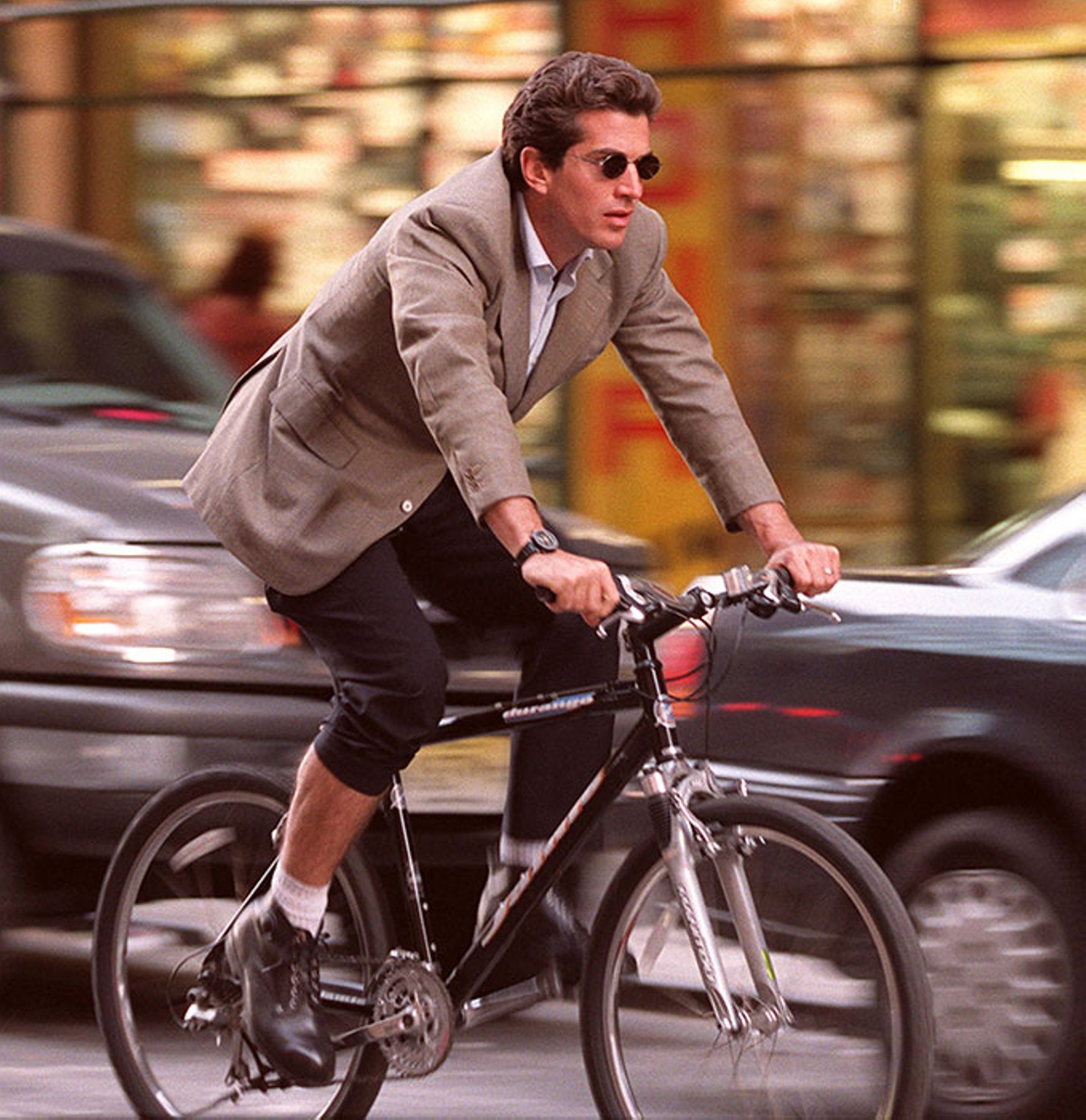
Other Kennedys made their homes in tony Manhattan, Hyannis Port, or Washington, D.C. But JFK Jr. acted more like a New York City local than the Prince of Camelot, opting to live in a loft in the then-rough Tribeca area (now one of the most expensive ZIP codes in America). He frequently rode his bike around downtown Manhattan, played touch football in Central Park, wore memorable outfits with his Kangol Kangaroo Cap, and walked his dog “Friday” (named because he would bring him into the George offices on Fridays)—always with paparazzi in tow, of course. You might also find him at Walker’s, a bar next to his apartment, or at Bubby’s, the diner just around the corner.
Many wanted Kennedy to run for president. Instead, he did what someone who prefers New York to D.C. would do: start a magazine.
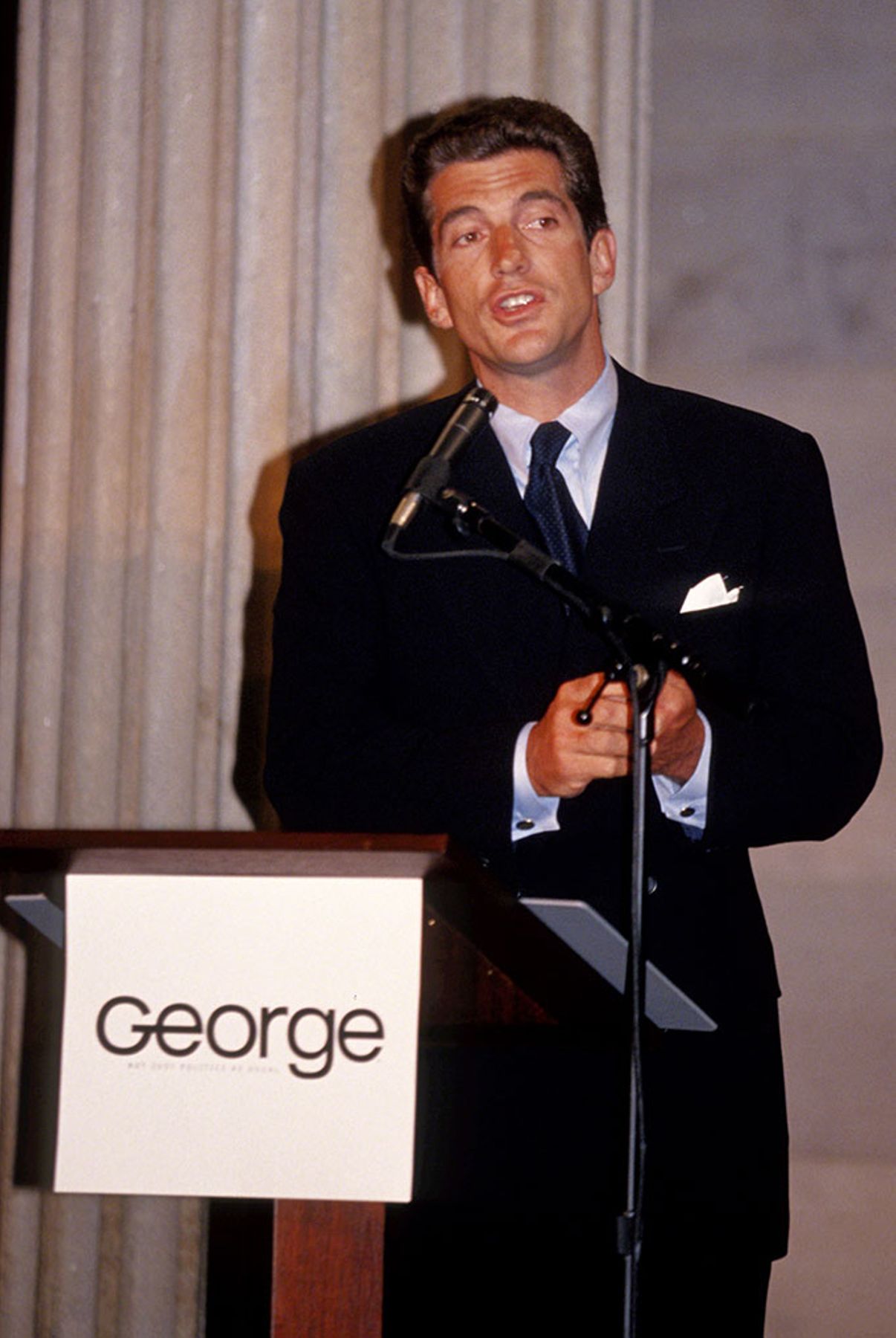
George, which launched in September 1995, was the first—and probably only—publication of its kind. The formula was simple: on its covers, America’s trendiest models, actors, and cultural figures would appear in patriotic-themed poses. Meantime, political commentators and insiders filled the magazine’s pages with conversations about the issues of the day: health-care reform, policing, wars, and scandal. It would be a marriage of “politics and popular culture,” as Kennedy described it.
The inaugural issue opened with the headline “Not just politics as usual,” with a cover featuring model Cindy Crawford in a yellow-and-navy George Washington uniform, an homage to the magazine’s namesake. It included a lead story, “Caleb Carr on the Next American Revolution,” and featured Madonna, Julia Roberts, and other big names along with political commentary. JFK Jr. even criticized his own family members, including Senator Ted Kennedy, in the inaugural issue. Everything was on the table.
The launch was a roaring success. George’s first issue sold 533,500 copies—97 percent of its inventory.
A former board member for Hachette, which published George, told me that the media group was bullish about the venture, thanks to the star power JFK Jr. brought to the table. Despite its initial lack of profitability, “in many respects, George was a huge success for us,” he said. He also warmly recalled his interactions with John: “He was engaging, very friendly, and very intelligent. He was highly likeable and we trusted him.”
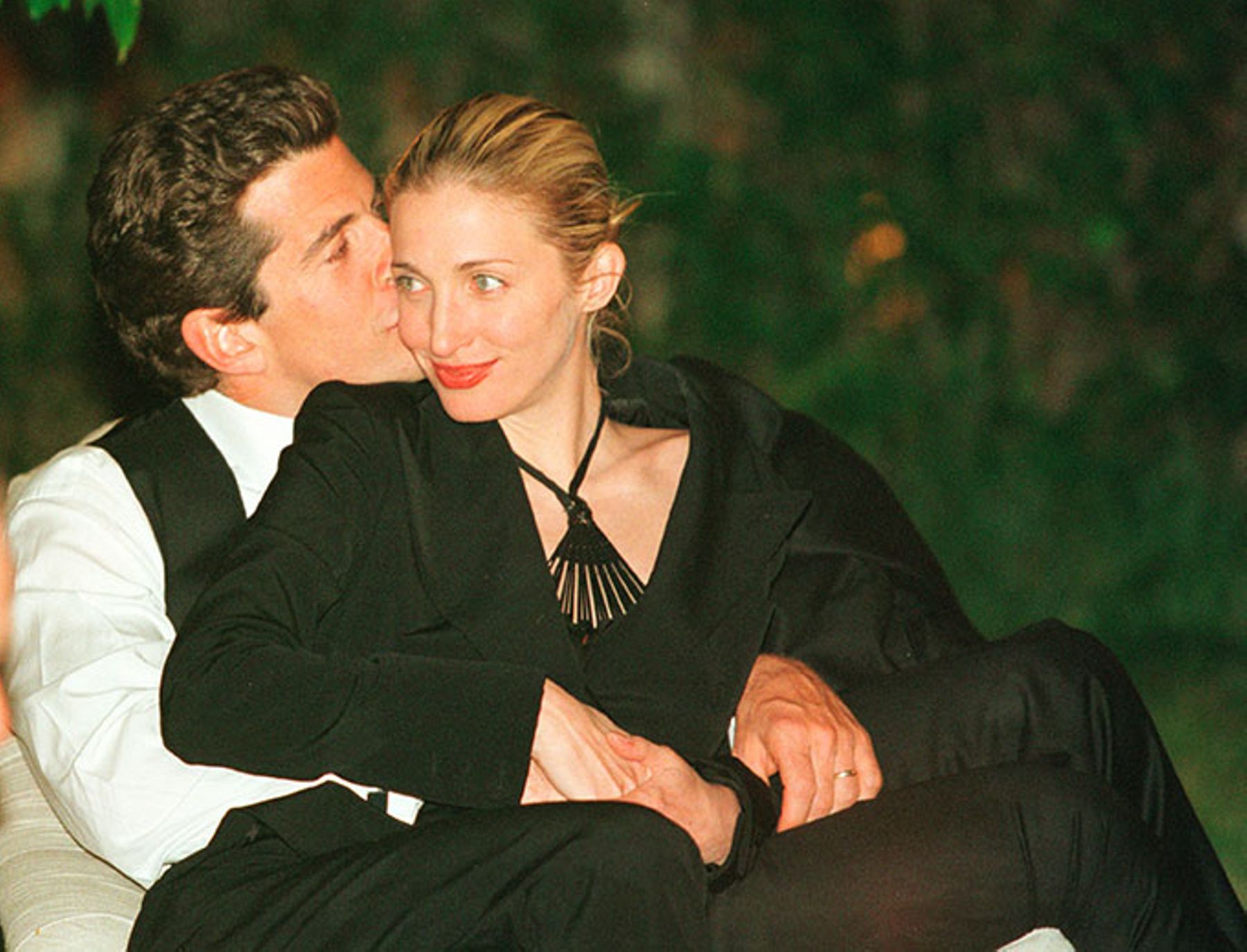
Bessette, whom Kennedy had been dating since 1994, also played a role in the success of George. Using her keen eye for fashion and editorials, she gave JFK Jr. feedback on the magazine’s aesthetics and introduced him to Matt Berman, who would become the magazine’s art director.
Other covers included “George Clooney’s Declaration of Independence,” Gisele Bündchen for “The Lethal Politics of Beauty,” Pamela Anderson wrapped in an American flag, a “Conspiracy Issue,” and even Donald Trump and Melania in a 2000 cover titled “The Secret Behind Donald’s Political Fling,” covering his first attempt at the presidency on the Reform Party line.
Klaudia Mernaci, a 30-year-old New Yorker who has collected several of these old George issues, tells me: “Having hard copies of these magazines is like having a time capsule to the nineties, where we see the ‘hot topics’ are still the same as they are today.” The only difference, she notes, is that “advertisers and celebrities didn’t live in fear of cancel culture.”
That raises the question: Could George exist today? Former George columnist Ann Coulter doesn’t think so.
“Only he could have done it,” she told me.
Coulter was moving into the George offices—1633 Broadway, 41st floor—when JFK Jr. went down in that fatal plane crash on July 16, 1999, near Martha’s Vineyard. She had been working as a columnist there for about a year, publishing stories like “Annie’s Got Her Gun,” in which she shared the story of her close-call encounter with being mugged in Washington, D.C. and pointed out the problems with gun control.
“I once mentioned to him a column about dating in D.C. and then immediately changed my mind and started pitching him on a million different ideas,” she said. But Kennedy pushed her to stick with the D.C. dating piece. The result was an indictment of men in Washington: men on Capitol Hill, Coulter wrote, don’t know how to set a day, time, and place for a proper date.
At a subsequent George party at the George Hotel in Washington, a Capitol Hill staffer approached Coulter about the article. “Look what Ann Coulter wrote about us!” he exclaimed. But other staffers, reading over his shoulder, confirmed, “Oh yeah, I do that.” Not much has changed in the intervening years. Congress is still warring, and D.C. men still won’t ask women out to dinner.
Coulter also floated a surprising fact: “People don’t realize he [JFK Jr.] was basically a Republican”—at least, by today’s standards. Despite the Kennedy family’s Democratic loyalties, Coulter was convinced that JFK Jr. leaned more right of center, given his pro-law-enforcement outlook.
After JFK Jr.’s death, the magazine tried to soldier on. But it was never the same. George published its last issue in January 2001.
JFK Jr. may never have returned to the White House to follow in his father’s footsteps. But as the recent FX dramatization shows, his story still resonates with Americans.
As one official working with Secretary Robert F. Kennedy Jr. at the Health and Human Services Department told me, “It’s been interesting to see how young people coming of age in today’s Washington, D.C. are drawn to the romanticism of the show. The nostalgia isn’t just for New York City’s Golden Age, or the wistful glamour of the Kennedy family, but for the kind of romance that feels unattainable in our present world.”
Indeed, JFK Jr.’s life and the stories he told through George now feel like something from a lost world. And though he may not have become the electoral darling that many expected, he left his own mark on our political landscape.
Top Photo: John F. Kennedy Jr. at the opening of Hudson News in Grand Central in 1999 (Lawrence Schwartzwald/Sygma via Getty Images)