Fresh out of law school, I spent a year clerking for a federal judge in Jackson, Mississippi, learning the difference between “strict scrutiny” and “you gotta be kidding me.” It was a good education in real-world law: actual litigants, actual consequences, and actual barbecue. Then, in August 2004, I moved to Washington, D.C., where “law” meant “that thing we’ll get our general counsel to work around later.”
In hindsight, it was the perfect moment to arrive. Republicans assumed it was their God-given right to run the world, Democrats believed Ohio just needed a few more union phone banks, and no one saw every disagreement as a referendum on the republic’s soul. The Washington “swamp” wasn’t yet a campaign slogan or the target of a man on a golden escalator. It was simply summer in the nation’s capital: 100 degrees, 99 percent humidity, and a smell suggesting the Founders had forgotten to include “basic municipal drainage” in the Constitution.
Finally, a reason to check your email.
Sign up for our free newsletter today.
The president was George W. Bush; the vibe was “Mission Accomplished—Eventually.” The city belonged to staffers who wore American-flag lapel pins and believed that history had ended. It turned out that history was merely on a coffee break—and would be back shortly with a nail gun.
I showed up with the standard Washington starter pack: three suits, two electronic devices, and a temporary job “in policy.” I carried a polished résumé and a spot on the Bush-Cheney reelection campaign, trading citations to the U.S. reports for talking points about the Global War on Terror and the virtues of cutting marginal tax rates. Like many twentysomethings, I was overeducated and certain that if I got close enough to the engines of government, I could nudge the machine toward liberty. What those engines actually offered were exhaust fumes—and a clearer understanding of a town that manufactures politics the way other places make cars: loudly, expensively, and with frequent recalls.
Bush won reelection, and D.C. Republicans celebrated as if they’d personally liberated Fallujah. The rest of the city was less certain. Between Abu Ghraib, missing WMDs, and Iraq’s stubborn refusal to become Switzerland with sand, even the hawkish dinner parties had stopped talking about “remaking the Middle East” and shifted to “getting through dessert without a shouting match.” Meantime, post-9/11 security theater—TSA lines, color-coded alerts, Patriot Act authorities—spread steadily, making clear that while the federal government might not be able to find Osama bin Laden, it could certainly search your grandmother’s shoes.
Then came Hurricane Katrina and the revelation that Washington could spend trillions on homeland security but still fail to get water and food to a major American city. Watching federal, state, and local officials try to coordinate relief was like observing the world’s most dysfunctional group project: everyone assumed someone else was responsible.
By 2008, we’d added a financial crisis to the war and the natural disaster. Wall Street—built on magical thinking and adjustable-rate mortgages—collapsed. The Bush administration responded with the Troubled Asset Relief Program, TARP, also known as “Too Astonishingly Rich to Perish.” Suddenly, the same town that had long delivered lectures about free markets was writing government checks so large you could practically see them from space.
If you were designing the origin story for a populist wave, you’d do exactly what both parties did in the 2000s: promise freedom, produce bureaucracy; preach responsibility, deliver bailouts; talk like Reagan, spend like LBJ.
I watched much of this from Big Law, where I’d fled after the campaign in search of a stable paycheck and better suits. There, I discovered that the modern federal government doesn’t really shrink or shift so much as mutate—and that every mutation requires hundreds of lawyers to interpret. Everyone I knew had either joined a task force, founded a coalition, or was drafting a white paper on “reimagining financial regulation.” This town has never met a crisis it couldn’t turn into a consulting contract.
I spent a few years in conference rooms with no windows and hourly rates that could’ve paid off a small country’s debt, learning how no document is finished until at least six people have added a comma and then deleted it. By 2007, I’d had enough and left the big-firm life for the Cato Institute, trading document review for debates about the Commerce Clause.
The 2008 election felt like a citywide religious revival, except the altar call consisted mostly of small-dollar online donations. Barack Obama floated into town on a cloud of charisma and merch, promising to heal divisions and slow the oceans’ rise. D.C. instantly rebranded. The guy you knew who’d spent the Bush years at the Freedom Institute for Democracy Promotion was suddenly a senior fellow at the Center for Progressive Whatever. There was a renewed belief that government could do anything—as long as “anything” involved spending a trillion dollars but somehow never repaving your street.
From my libertarian lookout, I had a front-row seat as the new president promised “hope,” “change,” and cool slide decks. Instead, we got the stimulus bill, Dodd-Frank, and the Affordable Care Act—a 2,000-page law built on the premise that, with enough subsidies and regulations, the government could turn health insurance into something between a social-justice initiative and a frequent-flyer program. It passed with optimism but no Republican votes, turning “bipartisanship” into a retro cultural reference.
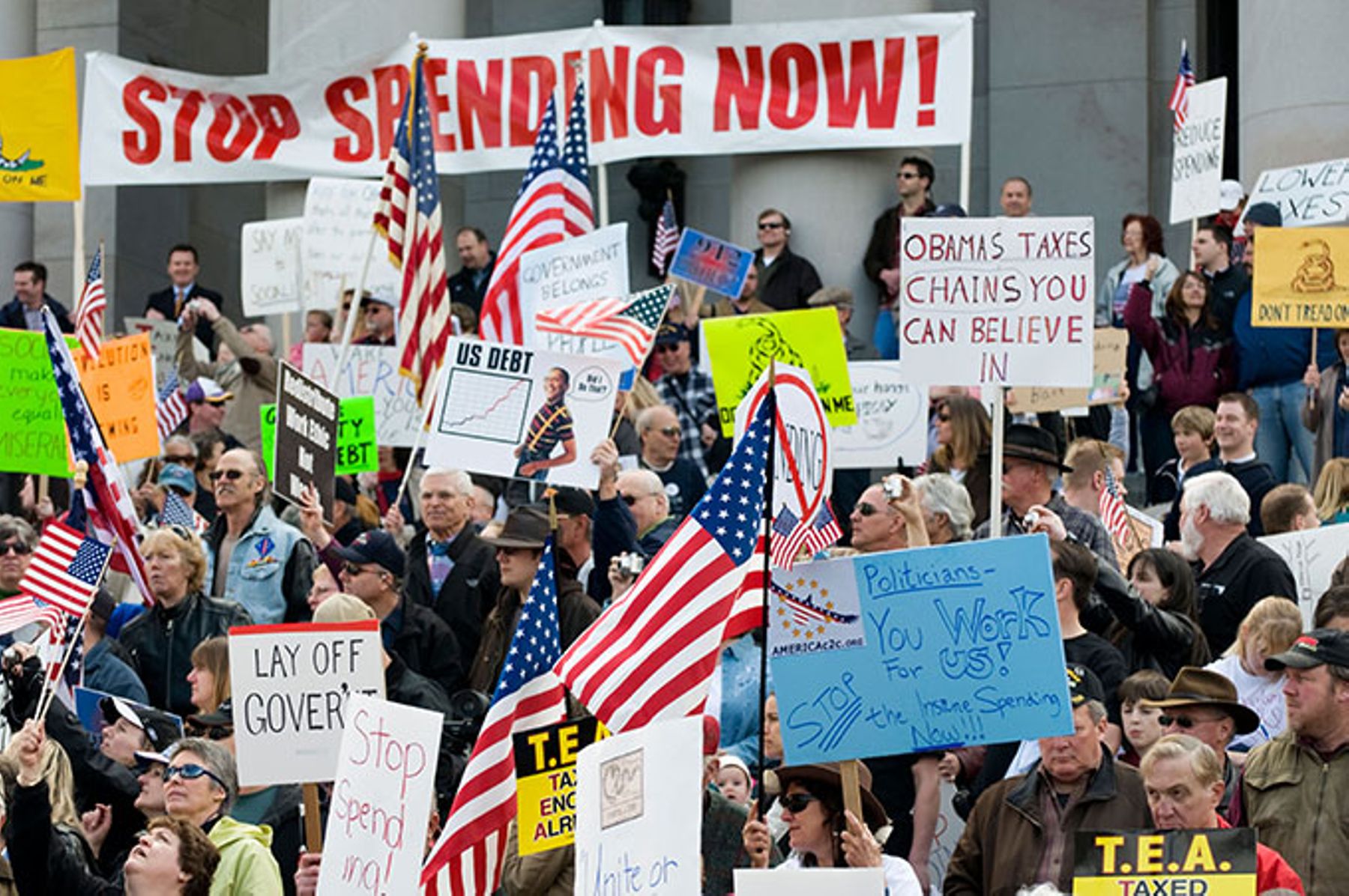
The backlash arrived bearing Gadsden flags, homemade signs, and tricornered hats: the Tea Party. Suddenly the National Mall was full of people yelling about debt and deficits—remember when we cared about those?—while Washington muttered that it was dangerous to let citizens near Excel spreadsheets. Taxpayers who sensed the governing class had merged into a “uniparty” were dismissed as racists and rubes, but they weren’t wrong about the core issue: the people in charge weren’t as competent as they believed.
Yet the city thrived. While the rest of the country struggled out of recession, D.C. added contractors, compliance officers, and people with titles like “Special Assistant Deputy Associate Under Director for Stakeholder Engagement,” all of whom filled restaurants and drove up housing prices. If the American economy was a Subaru laboring up an icy hill, Washington was a black SUV with government plates cruising in the HOV lane.
The Supreme Court chipped away at Obamacare but largely nodded along. Chief Justice John Roberts upheld the law by transforming the individual mandate into a kind of “unicorn” tax, something of no clear legal provenance, unlikely to be seen again. He acknowledged the constitutional problems, yet preserved the statute out of a misplaced devotion to judicial restraint, offered under the banner of deference to “the people.” The result of this oracular gaslighting was predictable: deeper cynicism toward play-by-the-rules conservatives and declining respect for institutions.
In June 2013, I did something more constructive than railing about Congress’s power to regulate interstate commerce: I got married, on Cato’s roof deck. The Capitol dome loomed behind us like an oversize wedding crasher, a fitting backdrop for two people pledging fidelity in a city that seems to change its principles every election cycle.
By December 2014, my wife, Kristin, and I had done the most countercultural thing available in Washington: we moved to the suburbs, in Falls Church, Virginia. It’s the last exit off I-66 before the Beltway, far enough out to feel calm but close enough in to matter. Falls Church is Washington’s idea of the countryside: still near power but with driveways long enough for arguments about whose turn it is to take out the trash. It’s also the textbook definition of “limousine liberal,” one of the richest county-level jurisdictions in the country while voting more than 80 percent Democratic.
From there, we watched the end of the Obama era. Libya unraveled—recall the “kinetic military action” that definitely wasn’t warmaking—and Washington lurched through debt-ceiling crises and a government shutdown or two. The Supreme Court’s Obergefell decision legalized same-sex marriage nationwide, which briefly seemed like it might cool the culture wars. (Try not to laugh.)
Beneath it all, resentment grew toward experts who were wrong without consequence, cultural arbiters who treated dissent as bigotry, and a Republican establishment that seemed keen to lose politely. By 2016, social media had turned politics into a full-time outrage cycle. Twitter became the place where nuance died and staffers ended their careers in 140 characters or fewer.
The 2016 election hit Washington like a drone strike on a Georgetown wine bar. The political class had assumed Hillary Clinton would return to the White House and finally replace that lamp. Instead, Donald Trump—real-estate mogul, reality-TV figure, and human comment section—won the Electoral College while losing the popular vote.
On Election Night, you could barely think over the sound of people rushing to update their résumés. Uber drivers found themselves doing more therapy than driving. George Washington University administrators scrambled to set up “support rooms” with puppies and crayons. Democrats resumed questioning the legitimacy of presidential elections.
Trump entered office promising to “drain the swamp,” which, in practice, meant hiring half of it, firing a quarter, and leaving the rest to leak confidential information to cable news. He governed like someone live-tweeting a traffic accident he was also causing. Every 3 am post was an experiment to see how much chaos the bond market could absorb before breakfast.
Then came the Russia investigation—America’s performance-art piece about alleged collusion with ex-Commies. Half the city believed that the Kremlin had written Trump’s speeches; the other half believed that the deep state had orchestrated the whole thing to relive Watergate and get book deals. The only clear winners were white-shoe law firms that now had “Special Counsel” on speed dial.
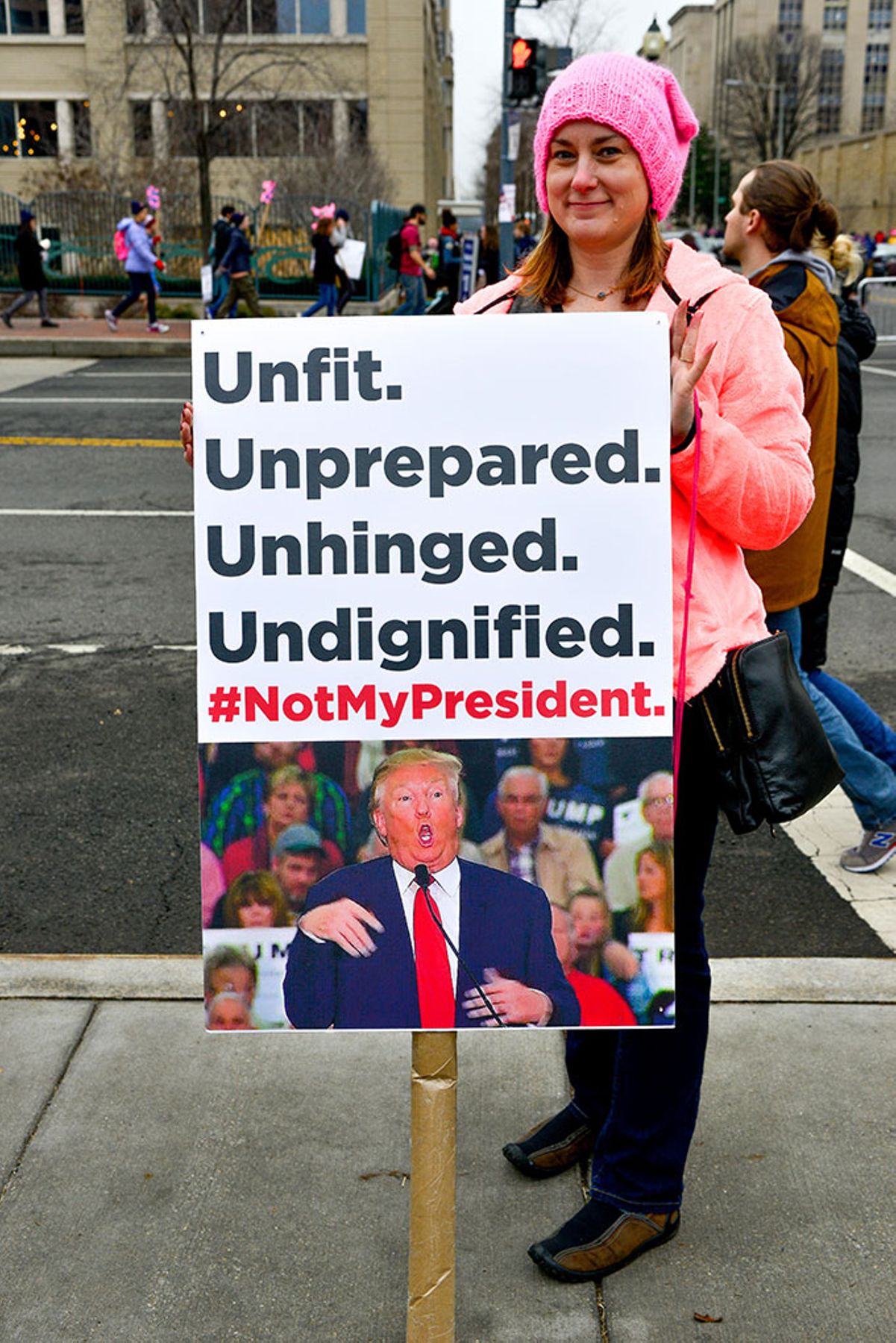
The opposition rebranded itself as the “Resistance,” though having the media, universities, Hollywood, Silicon Valley, and the federal bureaucracy on its side didn’t make much of a case for heroism. Women’s marches filled the city with pink hats, while cable news operated on the premise that every Trump tweet was a constitutional crisis—even as the Mueller Report landed like overcooked lasagna at Cafe Milano.
The Right discovered it liked having a brawler in the White House. Years of media bias, bureaucratic overreach, and cultural condescension had primed GOP voters for someone who would punch back. Trump supporters flocked to the Trump International Hotel, which served as a kind of embassy for Red America.
In 2018, Trump seated a Supreme Court justice, Brett Kavanaugh, after confirmation hearings that began like a poorly conceived political drama and ended with protesters in Handmaid’s Tale costumes. He would appoint two more justices who’d also read The Federalist Papers. Combined with tax reform, deregulation, and a deep bench of originalist judges, the Court picks were his most durable achievements. My book on the politics of judicial nominations, Supreme Disorder, came out four days after Justice Ruth Bader Ginsburg died. The timing was morbidly auspicious, but my publisher claims he has an alibi.
At home, our first child arrived just in time for that crazy 2016 election. Our second commemorated the 2018 midterms. Nothing sharpens your view of public policy like strapping toddlers into car seats as you listen to a podcast about the Administrative Procedure Act. And the boys’ earliest memories of civic life involve adults shouting about collusion, impeachment—something about a phone call to the Ukrainian president and a possible Netflix pitch—and whether the president had been too harsh to a CNN correspondent.
Then came 2020.
In 2020, reality decided to test every system we had at once. A virus emerged from Wuhan, so the government seemed to learn epidemiology on social media. Covid-19 swept the country, lockdowns closed schools and businesses, and Americans discovered that “two weeks to flatten the curve” was Washington-speak for “your kids may never learn fractions.” The same authorities who couldn’t keep the DMV open insisted that roping off playgrounds was a matter of life and death.
Cherry-blossom season saw “OFFICES CLOSED UNTIL FURTHER NOTICE” signs bloom as downtowns emptied out—except for the people still filing the forms that kept the rules moving. Public-health guidance shifted so often it needed its own RSS feed. Churches closed, but liquor stores stayed open. From my makeshift “grandma preschool,” I watched decades of education policy collapse into a single insight: the system mainly serves the adults who work within it.
By summer, the country had combined a pandemic with the largest wave of protests in decades—“fiery but mostly peaceful”—after the killing of George Floyd. Statues toppled, while “structural racism” moved from academic jargon to something you were expected to address in your next Zoom meeting. Lafayette Square alternated between protest camp and military staging ground. Institutions from Coca-Cola to the NFL rushed to denounce systemic racism and hire diversity consultants. Phantasmagoric ideas took concrete form: calls to “defund the police,” the redefinition of merit as discrimination, and claims that the American project was a white-supremacist plot dating to 1619.
The 2020 election happened with all this going on. Half the country voted by mail; the other half through gritted teeth and mask-fogged glasses. When the counting finally ended—California took months to finalize its “new math”—Joe Biden had beaten Trump.
But before we reached the Biden-autopen administration, January 6 intervened: a pro-Trump mob stormed the Capitol as Congress certified election results. For those of us nearby, it was surreal—helicopters overhead as friends texted photos of rioters in offices where we’d once sat through boring committee briefings. The building symbolizing constitutional order had become a live-action meme war.
I watched in horror, but I knew the moment didn’t appear from nowhere. Years of institutional malpractice—from Iraq to the housing bubble to Covid—had convinced millions that the system was rigged. When you spend a decade telling people their religion is hatred, their skepticism ignorance, and then change election rules on the fly in ways that make fraud easy to allege and hard to disprove, you shouldn’t be shocked when some lose their minds. “Is this why we don’t throw things in the house?” my oldest asked.
Trump was impeached again, left office, and decamped to Mar-a-Lago. D.C. rejoiced that the show was over, but—spoiler alert!—it was just the midseason break.
Biden promised a presidency of normalcy and competence, with no rage-posting from the residence in the middle of the night. One-for-three may get you into baseball’s Hall of Fame, but it doesn’t put you on Mount Rushmore. And though Biden fulfilled his whole mandate—“don’t be Trump”—the moment he was inaugurated, he governed as if he were FDR’s woke grandson. He staffed his administration with progressive technocrats who quickly made it feel as though Elizabeth Warren had won the Democratic primary.
In rapid succession, Biden and a Democratic Congress passed a massive Covid relief package and then the misnamed “Inflation Reduction Act,” largely a climate and industrial-policy bill aimed at managing everything from student loans to gas stoves. You could tell which legislation had cleared Congress by the grant-writing workshops suddenly flooding your inbox. Money poured into roads, broadband, charging stations, green energy, and anything that could, with enough imagination, be labeled “transformative.”
Abroad, the administration ended America’s longest war in August 2021 with a chaotic withdrawal from Afghanistan that surprised even the Taliban. Viewers at home watched aircraft-evacuation scenes reminiscent of Saigon, except with higher definition and better chyrons. Twenty years of nation-building dissolved into ten days of panic, blame-shifting, and hearings in which everyone agreed mistakes had been made—by someone else.
At home, inflation reminded Americans that money is not purely a theoretical construct. School closures, digital classrooms, and curriculum battles collided, fueling tense school board meetings and parents who, for the first time, knew the names of their state legislators. Virginia even elected a Republican governor.
Then, in June 2022, the Supreme Court overturned Roe v. Wade, returning abortion policy to the states and guaranteeing that every Thanksgiving dinner for the next decade would end with someone leaving the table early. Red states moved to ban abortion after conception; blue states removed restrictions until birth; and most Americans scratched their heads and wondered why France was more restrictive than the Mississippi law at the heart of the case. For D.C., the Dobbs ruling was also big business: every think tank needed a project on “federalism and reproductive rights.”
Meanwhile, Washington’s permanent class embraced a new organizing principle: diversity, equity, and inclusion—which required people who looked different but thought alike to affirm one another, while banishing anyone who dissented. Nobody got hired, promoted, or allowed within 50 feet of a government contract without pledging allegiance to Ibram Kendi.
In academia, the woke revolution moved from fringe to default. DEI offices multiplied. Speech codes were repackaged as “anti-harassment policies.” And law students demanded that speakers be disinvited for holding views President Obama himself had endorsed the previous week.
That brings me to Georgetown University, which in early 2022 hired me to run its Center for the Constitution—an important center because the rest of the law school seemed to function as a center against the Constitution. When Justice Stephen Breyer retired and President Biden promised to nominate a black woman as his successor, I voiced the view held by 76 percent of Americans (per that right-wing outlet ABC News) that the choice shouldn’t be restricted by race and sex. But tweeting as I doomscrolled late at night, I expressed the point inelegantly.
Georgetown didn’t appreciate my political incorrectness and suspended me, pending an investigation into whether I had violated university policies. Eventually, a junior associate at the expensive law firm hired for the inquiry noticed that I wasn’t employed by the school when I posted the comment—a “jurisdictional defect,” as lawyers say. The dean reinstated me, with the clear message that any further deviation from progressive orthodoxy would trigger another inquisition. So I quit and did what anyone in my position would do: published my resignation letter in the Wall Street Journal and announced my next move on Fox News.
Our family, however, got something good out of the mess: twins born later that year—our “cancellation babies.” While the commissars debated my fitness for campus life, I had more time to stock up on bottles and formula.
The 2024 presidential campaign opened as a dreary rematch: it pitted an aging incumbent with approval ratings in the “please don’t ask” range versus a former president facing more charges than a platinum AmEx. Then came the late-June debate, where President Biden stared into the camera as if it had stolen his car keys, and Democrats soon realized that “democracy itself” might require a new standard-bearer. A few weeks and several ice cream cones later, Biden exited the race and Vice President Kamala Harris became the Democratic nominee—through an online roll call that made American self-government look like a tense Zoom breakout session.
Florida governor Ron DeSantis was supposed to be the Republican nominee, but he couldn’t find anyone who wanted to have a beer with him. So he had to keep running Florida, the best-run alligator habitat in the world. A resurgent Trump cruised to the nomination instead and picked J. D. Vance as his running mate, giving America the unusual combination of outer-borough real estate and Appalachian memoir on a single ticket. Trump defeated Harris and returned to the White House as the Grover Cleveland of reality TV, with a clear mission: punish enemies, reward allies, and dismantle as much of the progressive apparatus as he could reach.
On his first day back in office, Trump issued an estimated 70 bazillion executive orders. He opened with one titled “Ending Radical and Wasteful Government DEI Programs and Preferencing,” instructing the federal bureaucracy to pack up its rainbow-colored binders and step away from HR. DEI offices closed, “equity action plans” were rescinded, and race-based preferences were labeled “illegal discrimination”—which is what the Civil Rights Act has said all along.
Then came the Department of Government Efficiency: DOGE, an acronym borrowed from a meme coin because Washington can’t resist trolling itself. In theory, it was Reagan’s “government is the problem” updated with dashboards and data portals; in practice, it became a running argument between cost-cutters and every agency that ever printed a brochure. DOGE quickly claimed tens of billions in savings, launched an online “look what we eliminated” portal, and even brought in Elon Musk as a special efficiency czar—until Musk departed in a cloud of X posts, having discovered that reforming the bureaucracy is harder than launching rockets. If Trump 1.0 mainly made the swamp noisier, Trump 2.0 tried something bolder: selectively draining the parts conservatives hated most.
After renaming Fox News personality Pete Hegseth as secretary of war, Trump has spent the term playing secretary of peace. The White House keeps a running scoreboard of conflicts where Trump has tried his hand at mediation: India–Pakistan, Armenia–Azerbaijan, Cambodia–Thailand, Rwanda–Congo, Israel–Iran, Klingons–Romulans. Name the grudge match, and he wants a photo of the leaders shaking hands in the East Room—followed, naturally, by a tariff bill as their parting gift.
Most spectacular is the Gaza ceasefire—hostage releases, promises of demilitarization, and a guarantee that Hamas has already broken. The Nobel grandees still won’t hand him their Peace Prize, so Trump had to settle for FIFA’s ersatz version. Ask not why an international soccer federation is giving out such honors; ask what its president, Gianni Infantino, will do to suck up to the host of the next World Cup.
At home, the civil rights apparatus has been pointed in a new direction: pursuing actual civil rights violations instead of inventing them through “disparate impact.” The Department of Education stripped DEI language from its own operations and then used Title VI to menace universities that treat “diversity” as a license for racial spoils. Dozens of schools are under investigation for admissions schemes, fellowships, and scholarships that sideline white and Asian applicants; others face probes and potential funding cuts for their inability—or unwillingness—to protect Jewish students from anti-Semitic harassment.
That’s Trump 2.0 in a nutshell: a fusion of old-school Republican goals—less bureaucracy, more merit, peace through strength—with new MAGA methods: drama, personalization, and a governing style that treats the federal code and Nielsen ratings as equally important. From my seat in the suburbs, the lesson is one I’ve long repeated: if you don’t like how Washington wields power today, imagine what your enemies will do with it tomorrow.
So what did two decades in the swamp teach me—besides how to navigate my commute without ever touching a Metro handrail?
First, American politics spent 20 years doing everything except actually draining the swamp. We tried compassionate conservatism, hope and change, populist disruption, technocratic progressivism. The jury is still out on MAGA 2.0, but each predecessor promised to fix the system and ended up feeding it, albeit in a different ideological direction. The parties change slogans; the agencies change letterheads; the swamp remains swampy.
Second, our political life has been nationalized to the point of absurdity. Twenty years ago, what your state legislature did was something only lobbyists noticed. Now, a zoning law can trigger a national X meltdown and a Supreme Court case. School board races have become proxies for presidential primaries.
Third, culture eats law for breakfast. You can write elegant opinions and issue executive orders, but if elites insist that speech is violence, biology is bigotry, or elections are illegitimate whenever their side loses, the rules will be ignored or rewritten.
Fourth, technology poured gasoline on all of this. Social media turned ordinary citizens into unpaid political operatives and operatives into paid performance artists. Politics is now binge-worthy content. We no longer ask, “What kind of country do we want?” so much as “Did you see what that senator posted?”
Finally, the swamp isn’t just a place. It’s a habit: the belief that if only our people ran the institutions with our rules, history would behave. After 20 years of watching this theory fail from every angle, I suspect the problem is less “who” and more “how much.” Give any group enough money, power, and executive-branch parking, and you’ll get some new form of organized mess.
I moved to D.C. imagining that I’d help steer the ship of state in a more constitutionalist direction. Instead, I’ve spent most of it documenting how the crew keeps poking holes in the hull, then congratulating itself for bailing faster than the other party would have. Still, the swamp has given me a family, a vocation, and enough material to keep writing until my kids are old enough to vote against everything I’ve ever advocated.
If there’s a bottom line, it’s this: the real work of the republic happens elsewhere, in places where people talk more about Little League than the latest executive order. When I got here, I thought Washington was where the real action was. Now I know the real action is in places that don’t call themselves “departments,” “centers,” or “institutes”: the family dinner table, the small church, the local business, the town that still holds a Fourth of July parade without a marketing consultant. The country is better than its politics.
But as long as the swamp exists, someone has to wade through it with a pocket Constitution, a sense of humor, and the stubborn belief that words on paper still matter—which, for my sins, appears to be my job.
Top Photo: The author arrived in Washington, D.C., in August 2004, when the president was George W. Bush (shown here with Vice President Dick Cheney) and the vibe was “Mission Accomplished—Eventually.” (Lawrence Lucier/FilmMagic/Getty Images)