
The Education of a Senator: From JFK to Trump, by Lamar Alexander (Post Hill Press, 568 pp., $37.50)
Our time is defined by plummeting trust in institutions. For more than two decades, Gallup has found declining confidence in the presidency, the Supreme Court, Congress, banks, public schools, and newspapers, among others. Our posture toward institutions has changed, too: we use them but no longer serve them, forgoing any sense of institutional stewardship.
Finally, a reason to check your email.
Sign up for our free newsletter today.
Lamar Alexander is an institution man. Alexander is best known for having represented Tennessee in the Senate, as a Republican, from 2003 to 2021. Before becoming senator, he served as governor of Tennessee (1979–1987), chair of the National Governor’s Association (1985–1986), president of the University of Tennessee (1988–1991), and U.S. Secretary of Education (1991–1993). His new memoir, The Education of a Senator, describes his nearly 60 years of public service. Many Americans today benefit from the results of that service, even if they know little about him.
Alexander’s title is a nod to the memoir of Everett Dirksen, the Illinois senator who shepherded the Civil Rights Acts of 1964 and 1968. He thus identifies himself as standing in the tradition of legislators who treated public office as something larger than themselves, defined by unique processes and procedures that they felt duty-bound to defend.
That attitude was once more common. Alexander learned it from “three wise mentors”: federal judge John Minor Wisdom, who helped end segregation; Senator Howard Baker Jr., “The Great Conciliator;” and Eisenhower and Nixon counselor Bryce Harlow. Their lessons, respectively, involved courage, the humility to recognize that “the other fellow might be right,” and a habit of starting with the question of what was right to do, not merely what was best to do for one’s own position. Operationalized, these lessons mean that public servants should see institutional norms and behaviors as instructions for how to do the job, not pointless bureaucratic obstacles.
A senator’s job is to pass laws. Alexander was closely associated with, conservatively, at least seven of the roughly 100 major federal enactments passed during his years in the Senate. And that total excludes most of the 91 bills that became law during his six-year chairmanship of the Committee on Health, Education, Labor, and Pensions.
The impact of his legislative effectiveness is profound. The Every Student Succeeds Act (ESSA) represented the “largest devolution of federal control [of education] to the states in a quarter-century,” according to the Wall Street Journal. The college freshmen financing their education through loans with predictable interest rates could do so because of the 2013 student-loan deal Alexander negotiated. Cancer researchers and Alzheimer’s scientists receive funding thanks to the 21st Century Cures Act. Medicare beneficiaries addicted to opioids can enter certified treatment programs because of legislation he guided. Fourth-graders enter the national parks for free thanks to his co-sponsored Every Kid Outdoors Act. Visitors to parks, trails, and battlefields use facilities maintained with federal funds made possible by the Great American Outdoors Act, the most important conservation law since Teddy Roosevelt’s time.
Even air travelers can thank Alexander, who co-sponsored the legislation that banned phone calls on flights. Political leaders called “era-defining” are often media-oriented figures whose fame has little to do with substantive accomplishments. Alexander went viral less frequently than others but got more done and touched more lives.
Alexander’s institutional stewardship predates his time in the Senate. In January 1979, Alexander, newly elected governor of Tennessee, got a call from a U.S. attorney: outgoing Democratic Governor Ray Blanton was selling pardons to convicts who had paid cash. Blanton had already signed 52 pardons—for murderers, rapists, and robbers. Would the incoming governor be willing to take office that day to stop him?
Being sworn in early presented political risks to both Alexander and the Democratic legislative leaders who would be deposing a governor of their own party. “Every bone in my body told me that I did not want to do what [the U.S. attorney] was asking,” Alexander writes, “but that I would have to do it.”
Democratic legislators administered the oath three days early, and Blanton was blocked from issuing further pardons. Alexander’s governorship began with a bipartisan defense of the office itself.
As governor, he reshaped Tennessee’s economy for a generation. He spent years building relationships with Japanese officials to persuade Nissan to build its first American assembly plant in his state—an achievement that subsequently drew in General Motors. The work required wasn’t really visible to voters until long after the deals were announced. Alexander cared more about what the economy needed than what looked good at the polls.
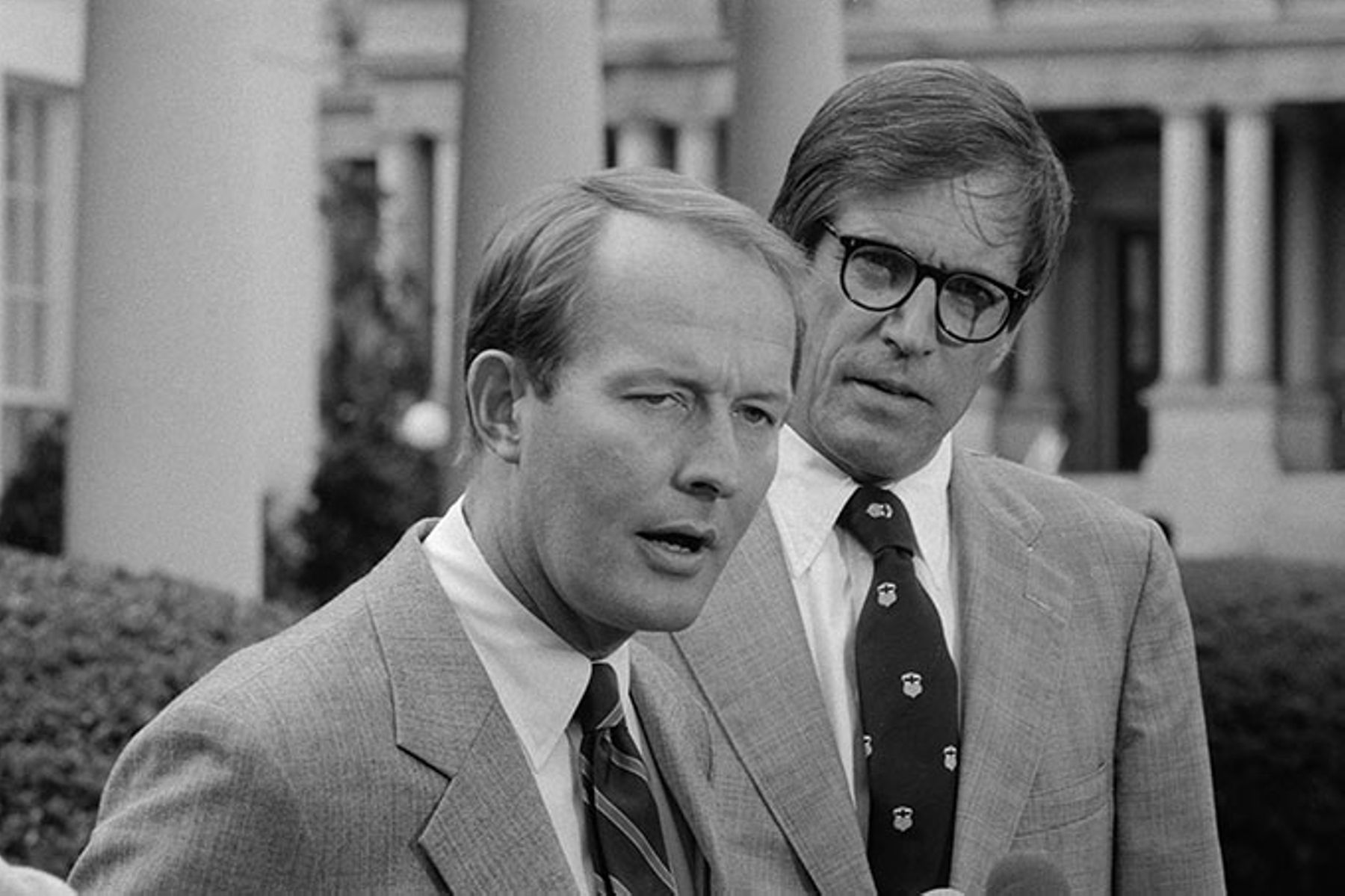
Decades later, in September 2011, Alexander gave up the chairmanship of the Senate Republican Conference—a post rarely surrendered. He announced on the Senate floor that he was stepping aside to spend more time on the issues he cared about and “to do more to make the Senate a more effective institution.”
Alexander goes in for very little score-settling in his memoir. What criticism he does offer is directed toward examples of bad stewardship. He writes that as senator for Illinois, Barack Obama never seemed to try to learn the Senate: he left meetings midway to hold press conferences and was the only freshman who declined the majority leader’s traditional lunch invitation to new members. A senator’s job is to pass laws, but Obama’s legislative output, Alexander writes, “boiled down to co-sponsoring bills.” To skip both the relational work and the legislating is not to do the job.
The Obama White House further shredded institutional norms, as others have noted. The Affordable Care Act, Alexander writes, was “a wholly partisan enterprise. Not one Republican voted for it. Democrats had overreached—jumping off the cliff all by themselves just because they could—thus initiating years of acrimony that poisoned the president’s efforts to work with Republicans” on many other issues.
Alexander views Hillary Clinton’s approach to the Senate very differently. “I often saw Clinton trudging through Senate corridors carrying a briefcase stuffed with papers,” he notes. Clinton is not typically regarded as a principled politician, but Alexander believes her commitment to the Senate as an institution far exceeded Obama’s.
In January 2020, Alexander cast the deciding vote against calling further witnesses in President Trump’s first impeachment trial, effectively ending the trial without conviction. Critics in the press called him a partisan.
But at the time, Alexander explained his decision in explicitly institutional terms: Trump was already on the ballot, and primaries were underway. To remove a sitting president whom voters were weeks away from judging themselves would take the most important act of democratic participation away from the people whom the Senate exists to represent.
How should leaders cultivate stewardship? Alexander’s memoir suggests that one should take an interest in institutions’ history—their rules, norms, and the people who built them. That exercise imparts a sense of gratitude. We have our institutions because of the sacrifices of those who came before us. While the institutions have always offered paths for advancement, they survive only when members maintain and strengthen them.
Media often described Alexander as a “moderate” simply because he was effective at his job. “I detested being described as a ‘moderate,’” he writes. “That’s a lazy brand applied to those who speak without shouting, work across the aisle to achieve results, and don’t always toe the party line. In truth, ‘moderate’ describes a style better than a philosophy.” He draws a more useful distinction: “The greatest division among Republicans is not one of moderates versus conservatives, but between conservatives who think their job is finished when they make a speech and conservatives who govern.”
To revive civic life in America, we may or may not need more moderates. We’ll definitely need more institution men.