In labor politics, 2026 continues to be a grueling year. Nationwide, numerous large private-sector union contracts expire later this summer, including those covering 20,000 Verizon workers in the Northeast and Mid-Atlantic and 25,000 steel-mill workers in the Midwest. Earlier this year, Stop & Shop narrowly avoided a strike after coming to terms with 28,000 food workers in New England.
In the public sector, New York City faces renegotiation of numerous contracts this year, including one covering 90,000 municipal employees—roughly a quarter of its unionized workforce—that expires in November. New York State is negotiating with 50,000 workers whose contracts expired in April, while California will have another 96,000 in the same position by the end of June. At the federal level, the contracts of 200,000 U.S. Postal Service letter carriers expired in May. Similar negotiations are unfolding across the country, with many certain to make headlines.
Finally, a reason to check your email.
Sign up for our free newsletter today.
Much of the recent attention paid to unions stems from a unique moment in American politics. Leaders as different as Zohran Mamdani and Donald Trump have sought to court organized labor, hoping to win working-class voters as the nation undergoes a political realignment. Unions have also enjoyed a string of political victories in states as varied as California and Utah. New sectors of the economy, including gig work, have seen rising union activity, while the European concept of sectoral bargaining has begun to gain a foothold in the United States.
These recent union gains seem to run counter to predictions of declining union power. For at least the last decade, commentators have been penning obituaries for organized labor, as the United States has continued to shift from a manufacturing-based to a service-based economy. From the 1950s to today, the share of workers in unions fell from one-third of all workers to about 10 percent. The 2010s saw six more states pass right-to-work laws, making the majority of American states right-to-work and further reducing union influence.
So are labor unions dying, or experiencing a resurgence? Are the politicians wooing organized labor harnessing a revived juggernaut, or just stoking the embers of a fading movement? However one answers, one thing is clear: the politics of unionism is changing rapidly, with 2026 marking a pivotal year.
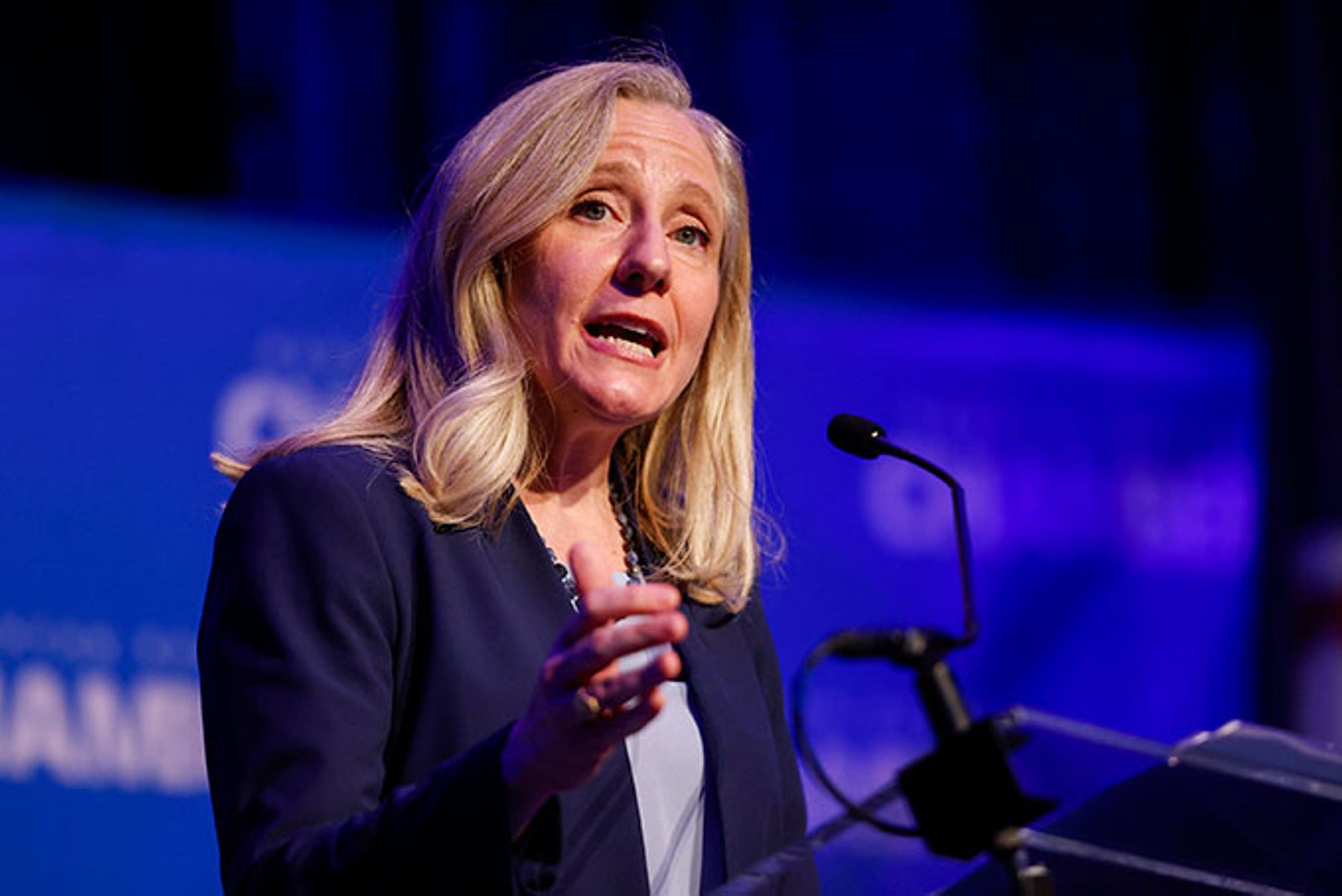
Unions have indeed scored significant recent legislative victories. Of the six states that joined the right-to-work ranks between 2012 and 2017, two—Missouri and Michigan—have since reversed course. And after the election of Democratic Governor Abigail Spanberger—and with a Democratic-controlled state legislature—Virginia’s right-to-work law could be endangered.
Colorado’s “hybrid” right-to-work law, which requires unions to win two separate elections before workers can be compelled to pay union dues, also faces mounting pressure. Democrats in the state legislature have twice sent bills repealing the law to Governor Jared Polis, only for him to buck his own party and veto them. But Polis leaves office at the end of the year, and liberal lawmakers are already laying the groundwork for his successor—likely a more progressive Democrat—to sign a repeal.
Unions have also made notable gains in new economic sectors. In 2024, Massachusetts became the first state to allow rideshare drivers to unionize. California followed suit in 2025, greenlighting gig-worker unions, with Illinois joining the wave this spring. These efforts are part of the larger progressive goal to convert gig workers, classified as independent contractors, into full-scale employees, subject to minimum-wage and workplace-benefit policies.
Unions achieved another longtime goal in 2022, when California Governor Gavin Newsom signed the FAST Act, creating a ten-member Fast Food Council with authority over wages, health and safety standards, and other workplace rules in the state’s fast-food industry. The law amounted to a form of sectoral bargaining, establishing labor standards across an entire industry rather than within individual bargaining units. Though California later scaled back the council’s powers, labor advocates continue to champion the law as a model for other states and industries. Similar proposals have sprouted up elsewhere, suggesting that the concept is spreading beyond California and the fast-food sector.
Unions have made headway in the public sector, too. In Virginia, Democratic legislators voted to mandate collective bargaining for state and local government employees, seeking to overturn the commonwealth’s long-standing ban on the practice. After Governor Spanberger proposed amendments to the legislation, lawmakers sent the original version back to her desk, effectively daring her to veto it. Somewhat surprisingly, she did. Despite this temporary setback for organized labor, the issue is likely to return next year, with Spanberger and her legislative allies expected to make another push for mandatory collective bargaining.
In Wisconsin, former Governor Scott Walker’s landmark collective bargaining reforms, which launched him to national fame during the Tea Party movement, are celebrating their 15th anniversary. The laws have been a clear policy success—but the Badger State’s liberal-leaning supreme court is poised to strike them down.
Many of these union gains can be explained by the leftward drift of states like Virginia and Colorado or chalked up to progressive policy experimentation in deep-blue states like Massachusetts and California. Wisconsin’s judicial elections have seen a notable shift leftward in recent years, explaining why Walker’s reforms are now in jeopardy, after surviving years of legal challenges.
More striking is the situation in deeply red Utah. In 2025, the Beehive State’s Republican government trifecta passed a comprehensive ban on collective bargaining. Yet less than a year later, the same GOP-controlled government repealed the law after unions mobilized a significant public backlash. The main controversy around the legislation stemmed from its failure to carve out public-safety unions from the law’s reach—a common political strategy in public-sector collective bargaining reform. The fallout continued when the main sponsor of the ban faced a primary challenge from a pro-union Republican who served as the Utah Fraternal Order of Police’s executive director. While the bill sponsor narrowly survived the challenge in June of this year, the experience shows that those who buck the public-sector collective bargaining status quo face stiff political headwinds in the current environment.
Elements of the Right are increasingly embracing organized labor at the national level, as well. In 2022, with a nationwide railway strike looming, a number of Republican senators—including Josh Hawley (Missouri), Ted Cruz (Texas), and Marco Rubio (Florida)—broke ranks with the party line and sided with organized labor in a push for more paid sick leave for workers.
This pro-union GOP trend continued in the runup to the 2024 presidential election, with then-candidate Donald Trump skipping a party presidential debate to show solidarity with striking autoworkers in Michigan. At the 2024 Republican convention, Teamsters President Sean O’Brien got a prime-time speaking slot, further cementing the GOP’s growing pro-union faction. Prominent Republicans like Vice President J. D. Vance and Senator Hawley have taken anti-right-to-work stances in recent years, causing a notable intraparty fissure. Vance and Rubio are widely considered the two early favorites for the GOP 2028 presidential nomination, suggesting that the party’s standard-bearer may identify, at least in some form, with organized labor.
Still, one shouldn’t overstate the Republican Party’s fault lines over unions. The Department of Labor in both the first and second Trump presidencies has largely governed as one would expect from a traditional GOP administration. For instance, the department recently issued a proposed rulemaking that protects independent contractors against progressive efforts to reclassify them as full-scale employees and another rule that would insulate franchisers from being declared “joint employers” responsible for the legal violations of franchisee outlets. Both rules reflect the political Right’s historical pro-business instincts.
In Congress, the only pro-union, GOP-backed bill to gain any traction has been the Faster Labor Contracts Act, and it has enjoyed only limited backing from a handful of GOP senators and representatives. This modest Republican support could be pivotal, however, in passing the legislation, making it a useful case study.
The FLCA is designed to address a long-standing organized-labor grievance: that employers drag out negotiations and use delay tactics after a union is first recognized. To speed the process, the law requires first-contract negotiations to begin within ten days of a union’s request to bargain. The parties then have 90 days to reach an agreement, followed by 30 days of mediation if negotiations stall.
If no deal is reached after those 120 days, the dispute proceeds to arbitration, where a three-member panel can impose contract terms on both sides. While labor and management each select one arbitrator and jointly choose a third, the federal government—through the Federal Mediation and Conciliation Service—can appoint arbitrators if the parties cannot agree. The resulting contract would govern for two years, effectively placing key business decisions and workplace rules in the hands of a government-mandated panel. The chief beneficiaries would be union leaders, who have a financial incentive to secure contracts quickly so that they can begin collecting dues.
The FLCA traces its lineage to the PRO (Protecting the Right to Organize) Act, a pro-union—and mostly Democratic-sponsored—bill that pushes a wish list of longtime organized-labor priorities. First introduced in Congress in 2019, the PRO Act has never come close to passing. But one of its key components, the FLCA, appears now to have legs as a stand-alone bill.
“The Department of Labor in both Trump presidencies has largely governed as one would expect from a traditional GOP administration. ”
While Speaker Mike Johnson (R-La.) refused to bring the FLCA to the floor in the House of Representatives, a bipartisan group found a way to circumvent him by way of a discharge petition. The petition successfully garnered 218 votes, forcing the bill onto the House floor for a vote. The bill then cleared the House with 20 Republicans voting in favor of the legislation, alongside unanimous Democratic support.
The Senate will be more of an uphill battle, but the upper chamber’s version of the bill already has three Republican cosponsors (including Hawley), which, depending on the 2026 midterm results, could put it within hailing distance of passage.
Here again, however, there may be less than meets the eye. Despite its surprising bipartisan support, the FLCA would raise significant constitutional questions if enacted. By relying on a government-mandated arbitration panel to resolve labor disputes, the law effectively empowers the state to impose contractual terms on private parties—a form of what constitutional lawyers call “state action.” As attorneys Alex MacDonald and Vinnie Vernuccio observe: “[S]tate action opens the door to a slew of constitutional requirements and restrictions, notably to protect rights of free speech and association.”
In the 2018 case Janus v. AFSCME, the Supreme Court held that requiring public employees to join a union and pay union fees violated those workers’ free speech and association rights. Government workers must be free to opt out of a union. Janus did not extend to the private sector, however, as no state action was involved.
The FLCA is a different matter. Its insertion of government-mandated arbitration creates the type of state action that could implicate the free-speech rights of workers, who would be put in the position of having a union contract dictated to them. Given the current Supreme Court composition—and recent rulings like Janus—it’s likely that FLCA passage would trigger immediate, and potentially fatal, constitutional challenges.
Unions face other substantial obstacles. As noted, union membership has seen a precipitous decline over the past half century; the Covid-19 pandemic accelerated this trend. As City Journal’s Steven Malanga has chronicled, unions lost half a million members in 2020 and 2021. While membership has finally recovered from those pandemic-era losses, it remains below 2008 levels, when the U.S. faced its last major recession.
“Perhaps the most concerning sign for unions is the significant net migration shift from non-right-to-work to right-to-work states. ”
Union membership rates—the share of workers belonging to a union—have also shown little movement. The rate ticked up only slightly, from 9.9 percent in 2024 to 10.0 percent in 2025. These numbers could rise if more states mandate public-sector collective bargaining or repeal right-to-work laws. Otherwise, there is little evidence that union membership is poised for a dramatic resurgence. And regardless of recent legislative developments, public-sector union growth continues to be constrained by the Janus decision, which allows government workers to opt out of unions and dues payments.
Perhaps the most concerning sign for unions is the significant net migration shift from non-right-to-work to right-to-work states. A majority of the top ten states for population growth in 2025 were right-to-work, while nearly all the states in the bottom ten lacked right-to-work laws. A Manhattan Institute analysis by Matthew Lilley found that right-to-work counties enjoyed 19.1 percentage points in extra population growth compared with non-right-to-work counties.
Right-to-work is also a key factor for businesses in location decisions. Economic development consultants have estimated that over half of businesses view a state’s right-to-work status as “a threshold or very important factor in making a decision on where to locate a factory and other operations.”
The general economic benefits from right-to-work are likewise compelling. Lilley’s research shows that right-to-work laws create stronger labor markets, expand a state’s manufacturing share of employment, and reduce unemployment and child poverty rates. And despite contrary claims, right-to-work does not necessarily diminish wages and, in fact, can boost wages for lower-income workers in many cases.
Meantime, public-sector collective bargaining is a demonstrably bad economic bet. Prior to Spanberger’s veto, Virginia localities estimated that the proposed mandatory collective bargaining law would cost them up to $403 million over two years; the state government predicted another $50 million in annual expenses. This money must come from somewhere, and that ultimately means higher taxes. A Heritage Foundation analysis concluded that mandatory collective bargaining for public workers increases yearly state spending by up to $750 per person. This translates to a tax hike of several thousand dollars for a family of three or four. (By contrast, Wisconsin’s collective bargaining reforms have saved an estimated $35 billion over the past 15 years.)
As major union contracts come up for renegotiation this year, labor policy will remain a fierce political battleground. Organized labor has scored notable recent legislative victories, made inroads within the Republican Party, and could gain further momentum if the GOP’s 2028 presidential nominee proves sympathetic to unions.
Yet the underlying economics has not changed. Unions dampen labor-market flexibility, discourage migration and business investment, and increase costs for taxpayers. Whatever direction the politics takes, those realities will continue to shape the debate.