
Facial recognition. Drones. Police have adopted a range of new technologies in recent years to help prevent and respond to crime.
Yet some of the most intense controversies still swirl around a product that’s been around for decades: gunshot-detection technology (GDT), most prominently ShotSpotter, which now operates in roughly 170 cities.
Finally, a reason to check your email.
Sign up for our free newsletter today.
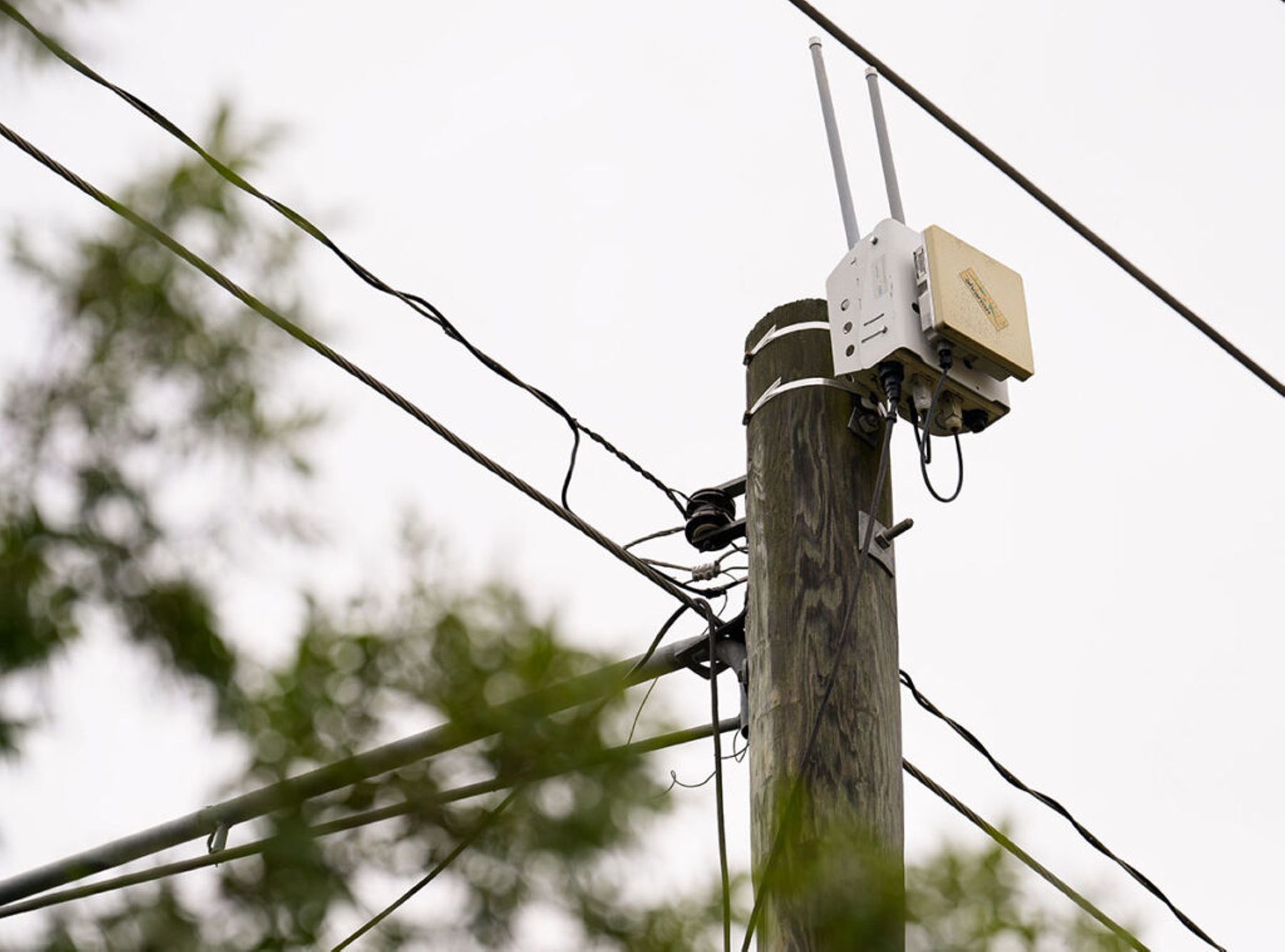
ShotSpotter uses an array of acoustic sensors to listen for loud noises, identify those likely to be gunfire, and alert law enforcement. Despite the system’s straightforward premise, several cities—most notably Chicago—have discontinued its use, citing concerns about effectiveness and racial disparities.
In a new report for the Manhattan Institute, I sift through the evidence regarding GDT’s use, effectiveness, and cost. It turns out that these systems are neither a racist ploy to surveil minority communities nor a panacea for gun violence. Rather, they improve gunshot investigations at the margins, while costing cities some money and officer time.
Cities should weigh these tradeoffs carefully and ask whether they have the capacity to respond to and investigate GDT alerts. But they shouldn’t dismiss the technology outright.
When ShotSpotter detects gunfire, it transmits the audio and estimated location to police. Officers—who can view the alert directly through a mobile app—and dispatchers then coordinate a response.
The premise is simple: with rapid notification and precise coordinates, police can reach the scene faster. This can help them locate witnesses or victims in need of aid, apprehend fleeing suspects, and collect evidence such as shell casings—even when no one calls 911 to report the incident.
So far, so good. “Cops tend to get out there quicker on ShotSpotter calls,” Eric Piza, a Northeastern University criminologist who has studied the technology’s implementation in Chicago and Kansas City, told me. “ShotSpotter calls come in sooner than 911 calls about gunfire. Police collect more evidence when they’re on ShotSpotter scenes.”
The big question is whether departments can translate these investigative benefits into case clearances and crime reductions. In both Chicago and Kansas City, Piza has found no measurable improvement in these longer-term goals. Other studies are mixed.
How the technology is used matters. In departments that are short-staffed or lack the infrastructure to process evidence quickly, it’s not surprising that the effects would be small and debatable. Chicago is experiencing a police staffing crisis, for instance. Data for 2024 published by the city’s police department showed quicker response time to ShotSpotter calls than to 911 shooting calls—but in both cases, responses took more than ten minutes on average.
Dennis Mares, a criminal-justice professor and director of the Center for Crime Science and Violence Prevention at Southern Illinois University Edwardsville, is another prominent GDT researcher. He’s found results both disappointing (in St. Louis) and more encouraging (in Winston-Salem). “I think a lot of the weaker results are seen in cities in which the response to ShotSpotter alert wasn’t as intense as it should be—where the response speed was low, where there’s not a lot of investigation or people picking up shell casings,” he said.
Jim Burch, president of the National Policing Institute, noted that departments vary widely in how they respond to alerts. “Obviously, everybody’s going to have officers respond when there’s gunfire detected,” Burch said. “But it branches out from there. It’s a question of whether officers are required to stop and get out and canvas the scene looking for evidence, victims, etc.—or whether they can simply go to an area and observe, and if they don’t see people, if they don’t see evidence, there’s no requirement for a canvassing of the scene. In some situations, we’ve learned that there are agencies where officers are simply too busy.”
At its best, ShotSpotter can be a part of a broader data-driven crime-fighting infrastructure. In recent years, many cities have implemented Real-Time Crime Centers, which provide intelligence to police based on cameras and other tech. Some have also launched Crime Gun Intelligence Centers (CGICs), which rapidly process ballistic evidence, such as shell casings, and can link rounds fired from the same gun across multiple crimes.
Research on Detroit’s CGIC from Alaina De Biasi, a Wayne State University criminologist, suggests that promptly analyzing shell casings can boost clearance rates. “Where gunshot detection comes into play here is that it increases the pool of evidence that we’re putting in,” De Biasi told me. She also stressed, however, that departments can’t see this benefit if they don’t have the staff to respond to new calls and the capacity to process ballistic evidence quickly.
That brings us to one of the biggest criticisms of ShotSpotter: it generates a large number of alerts for cops, many of which don’t lead to physical evidence. In a great many cases—typically more than half, across several cities with available data—officers fail to find physical evidence of gunfire when they arrive, especially if the incident involved few shots and didn’t generate a 911 call.
It’s hard to say how many such incidents are false positives—situations where something besides a gunshot triggered the system. In some cases, a perpetrator may have used a revolver or picked up his shell casings, or police may simply have failed to find the casings. Either way, departments should know that they won’t discover evidence at every ShotSpotter-alerted site.
The next major criticism of ShotSpotter involves race: the system is disproportionately deployed in minority neighborhoods. But no good evidence indicates that this reflects bias, as opposed to departments choosing their coverage areas based on concentrations of gun violence—which tend to overlap with minority, especially black, neighborhoods.
Piza has found that “Chicago’s GDT system did not create additional racial disparities in arrests and stops beyond those already present in standard police responses to gunfire.” And in the report, I provide maps of New York, Chicago, and Miami depicting the similarities across gun-violence concentrations, sensor placement, and black population share.
Of course, departments should have buy-in from the communities where they deploy GDT and respond to alerts in an appropriate manner. Ralph Clark—CEO of SoundThinking, the company behind ShotSpotter—told me departments should take a “guardian” rather than “warrior” approach. “We love to see a best practice implemented that after you get to a ShotSpotter alert, you might knock on a couple of doors and let people know that you’re there because of a ShotSpotter alert, because you’re prioritizing the care and support of that particular neighborhood or community,” he observed.
Finally, there is the price tag. ShotSpotter costs about $65,000 to $90,000 per square mile annually and consumes officer time and resources that could be spent on other tasks. These are serious tradeoffs, though bearable in the context of a big-city police department.
ShotSpotter contracts often cost less than 1 percent of a city’s police budget, or $1 to $3 per resident. Generally, a small percentage of officers’ overall time is spent responding to GDT alerts. These costs will be felt more acutely in departments facing budget or staffing problems that can’t handle even their existing workload.
When assessing GDT, Americans should be neither bowled over by fancy tech nor cowed by activist pressure. GDT can be a worthwhile investment for departments capable of using it well, and researchers should continue to study which aspects of implementation are most important. Departments that lack the staff to respond to calls or the infrastructure to process evidence, however, might want to address those problems first.
Top Photo Jane Tyska/Digital First Media/East Bay Times via Getty Images