
Few cities in the United States have experienced a faster rise and fall than Gary, Indiana. Founded in 1906, the city is part of the state’s “last frontier”—the final piece developed exactly 90 years after statehood. It took Gary half a century to reach its peak, and about another to hit rock bottom.
Today, naysayers focus on the worst of Gary’s past. But the population has finally stabilized after decades of decline, and those who live and work in the city are confident that brighter days lie ahead.
Finally, a reason to check your email.
Sign up for our free newsletter today.
In 1821, five years after Indiana had achieved statehood and a decade before he became one of the state’s first U.S. senators, John Tipton said that the Calumet Region (Northwest Indiana) could never be settled and would never be of value to the state. The region’s only residents were Miami and Potawatomi tribes and a few French fur traders.
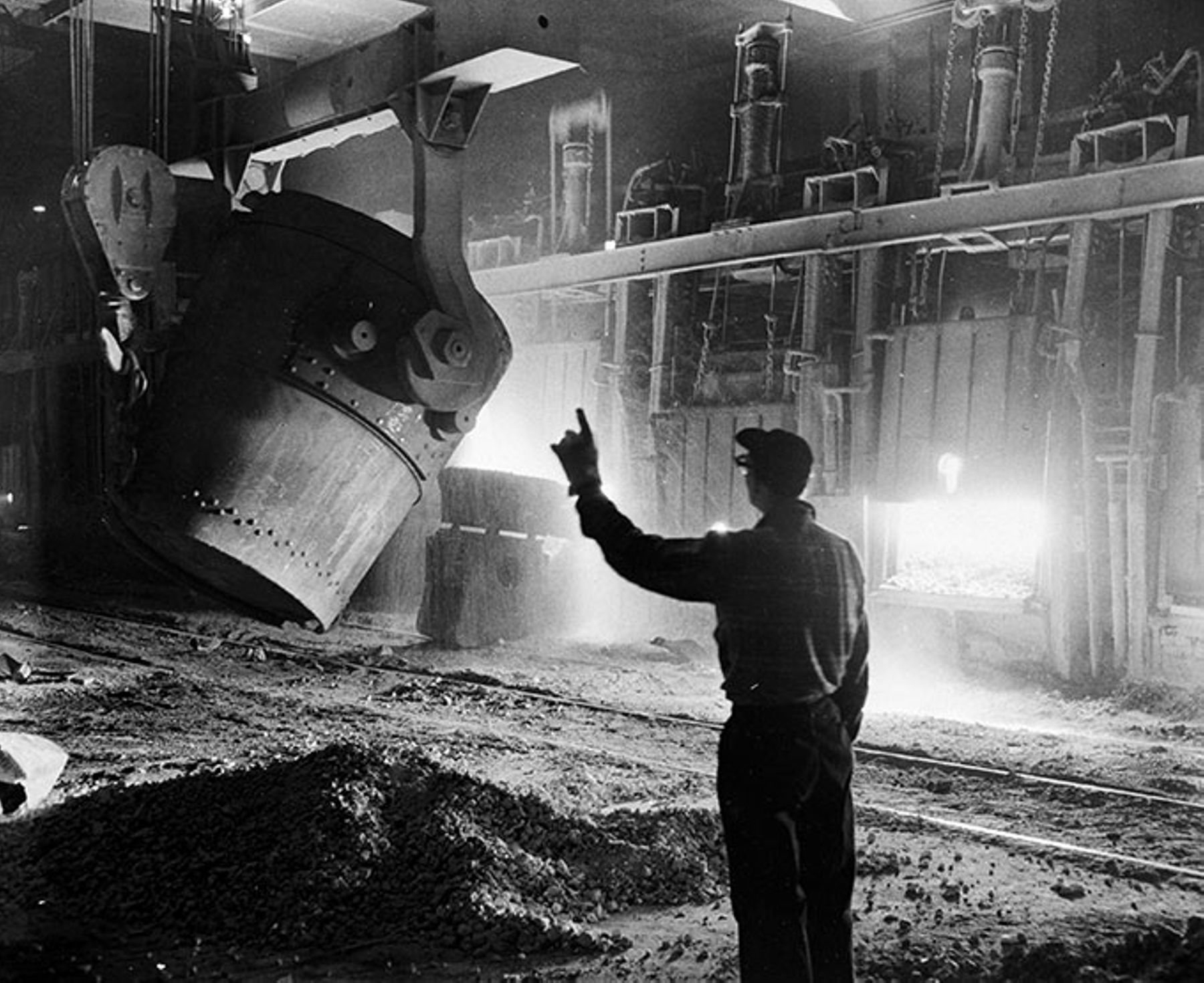
That changed with the Gilded Age industrialists. One was J. P. Morgan, who formed U.S. Steel in 1901, the world’s first billion-dollar corporation. His then-newest plant, Gary Works, was the largest in the world for a time and remains the largest integrated mill in North America. The city was named after the company’s first Chairman, Judge Elbert Gary.
Gary acquired its first nickname, the Magic City, as it grew from sparsely inhabited sand dunes and swamps to a population of 100,000 by 1930. The nation’s youngest major city, Gary’s population peaked at 178,000 in 1960, making it the state’s second-largest metropolis and earning it a new nickname, the City of the Century.
Then decline set in. Some commentators blame it on white flight after the 1967 election of Richard G. Hatcher, who, along with Cleveland’s Carl Stokes, became one of the first black mayors of a major American city. But the problems had been years in the making.
Though the steel industry as a whole didn’t hit its production peak until the late 1960s, large, integrated local mills like Gary Works reached their height a decade earlier. Automation led to massive permanent layoffs within the industry, and steel faced numerous other challenges, including higher labor costs, a lack of reinvestment in new technology, economic stagnation, and new environmental regulations that gave rising imports even more of an advantage. For a time, Mayor Hatcher bolstered the city’s finances through federal grants, but those funds dried up in the 1980s, as imports continued to hold an advantage and white flight persisted.
Meantime, public safety deteriorated to a point where Gary became infamous. In 1994, the city earned the infamous title of “murder capital of the nation.” Its homicide rate was nearly ten times the national average.
In recent decades, Gary has mostly drawn negative media attention. The perception of a dying, dangerous city has been hard to shake, though changes have been quietly under way for years.
In the past, city leaders touted symbolic, well-hyped projects—such as a Jackson 5 museum or a baseball stadium—as silver bullets to fix Gary's woes. Today, the city’s strategy is more realistic.
The current mayor, Eddie Melton, said it best in his 2025 State of the City Address: “These aren’t projects that may happen, these are projects that are happening.” The city is working to develop several economic anchors.
Gary’s greatest asset is its proximity to Chicago, one of the world’s largest urban economies. Chicago has long been the national king of rail hubs; three of those Class III lines pass through Gary. Along that path is the Gary/Chicago International Airport, which expanded its runway and has since landed sizable deals with UPS and FedEx.
The city’s highway access offers opportunities as well. Interstates 65, 80, 90, and 94 crisscross the city, with multiple exits ripe for economic investment. Hard Rock Northwest Indiana developed one parcel just off I-94 for gaming a few years ago. Gary went from having the state’s worst-performing casino to having the best, which includes a performance venue that draws a diverse group of people from Chicagoland.
Near the same location, Gary recently won the opportunity to build the county’s $100 million convention center, bringing with it two new hotels and restaurants. The city’s Buffington Harbor was recently purchased by 100-year-old Indiana Sugars, which plans to build its headquarters and new facilities there. The harbor’s deep-water port is a major asset, given that Indiana recently ranked first in the nation for inland port volume of cargo shipments.
Economic development, however, begins and ends with public safety. City leaders have increasingly focused on crime prevention and community engagement. That’s yielded a homicide clearance rate of 74 percent, well above the national average of 58 percent. As a result of this work, Gary’s murder count declined to 24 last year—a 37 percent decline from 2024 and significant reduction from a recent high of 64 homicides in 2022. The city has also seen a 23 percent reduction in shootings thanks to the seizure of over 300 illegal firearms in partnership with the Bureau of Alcohol, Tobacco, and Firearms.
Housing and transportation are also headed in the right direction. Most recently, the Gary Public Transportation Corp. inked a deal with Greyhound to expand routes, solidifying its position as a regional transportation hub. Historically, a large portion of Gary was zoned for single-family homes, with thousands of units now abandoned or in disrepair. The city has combined its own funds with state and federal dollars and private contributions to tackle blight elimination. Investors and homeowners are returning to a city where property values have increased sevenfold in just ten years. Compared with Illinois, lower property, income, and sales taxes make the cost of living manageable.
Northwest Indiana was never intended to be the home of U.S. Steel’s largest mill. But timing and politics are everything. Gary forged the steel that powered the nation and the world during the twentieth century. It was cast by hands of all colors, with people from more than 50 ethnicities living in the city in its first 15 years.
Gary is well-positioned to build a resilient community in a globalized world. Nippon Steel Corporation’s unique partnership and acquisition of U.S. Steel has resulted in a pledged $3.1 billion investment in Gary Works, the largest since the city’s inception. It’s a significant move: U.S. Steel spent $3.6 billion to build an entirely new integrated mill in Arkansas only a few years ago.
Gary won’t regain its former status overnight. But the wind is finally at the city’s back, and many citizens, businesses, and backers are doing what it takes to revive the Magic City.
Top Photo by MIRA OBERMAN/AFP via Getty Images