
Elon Musk recently became the world’s first trillionaire, and the prevalent hostility to great wealth found its largest object yet. The claims: he is too rich and too powerful for our democracy, and his wealth should be redistributed to others. But Musk’s personal wealth is not the most socially salient fact about him. He demonstrates how private wealth not only improves markets and consumer welfare but also democratic civilization.
However large his net worth, Tesla, SpaceX, Starlink, and related ventures have produced far more value for consumers, employees, shareholders, and the public than Musk himself possesses. The Nobel Laureate William Nordhaus has estimated that company founders retain only about 2.2 percent of the total surplus they generate, with the rest going to consumers and employees in the form of lower prices and better products. Contrary to what critics suggest, Musk’s wealth is not a measure of what he has taken from society but a small shadow cast by the value he has created.
Finally, a reason to check your email.
Sign up for our free newsletter today.
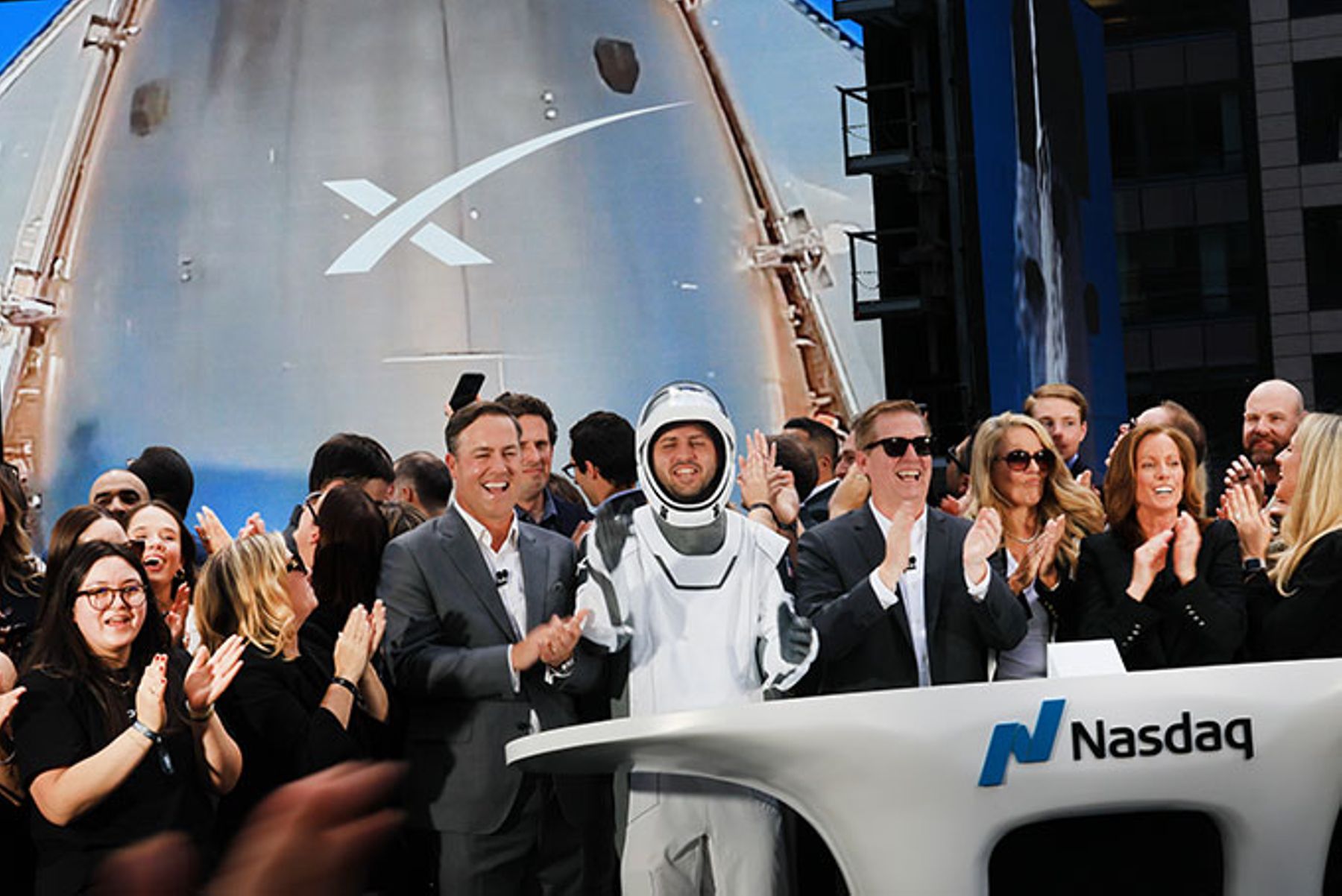
SpaceX’s market debut reportedly created more than 4,400 employee millionaires, including hundreds with stakes worth more than $100 million. Musk’s companies do not simply enrich Musk. They create engineers, operators, technicians, and workers with independent resources to fund new social ideals and charitable projects. The commercial republic in our technological age does not preserve a closed caste but instead mints new classes of wealthy people.
Musk’s whole life contrasts with the image of the oligarchic aristocrat. Little of his wealth is spent on luxury. He continues to work as hard as any man in America on critical issues, from space and cars to the interface between the computer and the brain. The capital at his disposal multiplies the progress he can make in all these areas. Thus, a wealth tax aimed at Musk and other billionaires will not mostly tax yachts and mansions but instead be levied on our platforms for progress.
Musk’s enterprises not only provide welfare for consumers but also public goods for society. Tesla made electric cars objects of desire rather than sacrifice. To the extent that decarbonizing transportation is central to climate policy, Musk has made the transition voluntary and consumer driven, avoiding the danger of public backlash.
Space exploration has long been treated as a public good. That is why the United States created NASA. SpaceX has radically reduced the cost of reaching low Earth orbit, with one NASA technical paper describing commercial launch costs being cut by about a factor of twenty. Starlink turns that achievement into a communications network, extending high-speed internet to places that terrestrial infrastructure has long neglected.
Neuralink, another of Musk’s ventures, creates new opportunities for curing disease. Its first product, Telepathy, aims to enable people with paralysis to control computers and robotic limbs with their thoughts. More speculatively, it suggests a way to control AI by creating an interface with our brains. Entrepreneurs are creating technological wonders while also developing new ways to mitigate potential risks.
The cumulative effect is not just economic. Musk reopens the frontier for America, as its geographic frontiers have closed. SpaceX looks outward to the stars. Neuralink looks inward to the mind. AI looks forward to intelligence less biologically bound. A society without frontiers becomes once again a society of aspiration.
One complaint about Musk is that his wealth gives him too much influence. But this claim rests on the mistaken assumption that wealth is the dominant source of influence in society. The most pervasive influencers are professional influencers—the media, academics, entertainers, and bureaucrats. Influence is their job. And unlike the rich, these groups are ideologically homogeneous, leaning sharply left. Musk’s takeover of Twitter, now X, is best understood as an intervention in the rules of speech. It is not necessary to defend every decision he has made to recognize that he shifted the platform away from top-down ideological exclusion and toward a more open, decentralized model of contestation. The result is not oligarchy but a greater democratization of speech.
Musk is an exemplar of classical liberalism at work: freedom of enterprise, freedom of speech, freedom from bureaucratic control, freedom to challenge nature’s constraints. To be sure, Musk can be erratic, excessive, and needlessly alienating, but progress has never depended on great creators being mild men. America’s commercial republic made Musk possible. He could immigrate here, raise capital here, and found company after company supported by the deepest venture capital system in the world. Musk is what the genius of humanity unleashed can do for the rest of us when ambition is not first required to ask permission.
Envy sees only his fortune. Classical liberalism sees the freedom that made the fortune possible and the new freedoms that fortune may create, including mobility beyond gasoline, speech beyond gatekeepers, discovery beyond earth, perhaps even intelligence beyond inherited limits. Musk’s wealth is not the negation of liberal democracy. Instead, it provides an astonishing vindication: private freedom transformed into public possibility, the commercial republic renewing not just prosperity but the human imagination itself.