In early 1964, Andy Warhol moved his art studio to a former industrial space in Midtown Manhattan. The space was unlit and not well suited for a typical studio, but Warhol and his team worked to rehabilitate it. The move was a self-conscious attempt to champion a new mass production of art, which is why Warhol called the studio, and subsequent ones, “The Factory.” Many people began crashing at The Factory, as well as working there; Billy Name, a photographer, slept in the darkroom.
Though little noticed at the time, Warhol stood at the forefront of a wave of artists and bohemians moving into abandoned industrial spaces, or lofts, where they often lived and worked side by side. The movement began and peaked in New York City, but loft conversions would eventually transform downtowns across America and attract young professionals as well as artists. Former manufacturing districts once written off as obsolete became home to condominiums selling for millions of dollars.
Finally, a reason to check your email.
Sign up for our free newsletter today.
In one sense, loft living emerged naturally, as people found empty spaces suited to their needs. In another, it was the product of a long political struggle to change laws that barred people from living in areas zoned exclusively for industry. In the end, the laws changed, and the people prevailed, but only after years of uncertainty and hardship.
Today, America faces a new wave of conversions as downtown offices emptied by the work-from-home revolution are repurposed for housing. As in the loft era, cities are debating whether to facilitate the shift or stand in its way. The lesson is clear: the law must evolve to accommodate people’s preferences.
Few today think of New York as an industrial town, but it once hosted the biggest manufacturing hub in America. The so-called needle trades—garment and cloth manufacturing—employed more than 300,000 workers at their peak. Many factories clustered in Manhattan, drawn by a large pool of low-paid immigrant labor and proximity to the fashion houses of Seventh Avenue. The needlework was completed or stored in “lofts,” which Merriam-Webster’s 1963 dictionary defined as “one of the upper floors of a warehouse or business building,” typically unpartitioned.
After World War II, garment manufacturing, along with other New York City industries such as printing, began moving to the South or the suburbs. Warehouse and commercial buildings with vast lofts gradually emptied out. Impecunious young artists moved into them. The association of artists and lofts became so tight that one memoir of New York’s midcentury artistic milieu, when the city was the center of the global art world, was titled The Loft Generation.
But living in a space zoned for industry was illegal, and the city technically could remove the artists at any moment. In 1961, the loft occupants organized an Artists Tenants Association to fight for legal recognition. Three years later, just as Warhol was moving into The Factory, the association voted for a series of protests. As the New York Times reported, one association meeting featured “two hundred representatives of New York’s Bohemia, including bearded sculptors and women portrait painters, dressed casually in slacks and leotards.” During one protest at City Hall, 80 art galleries closed in solidarity.
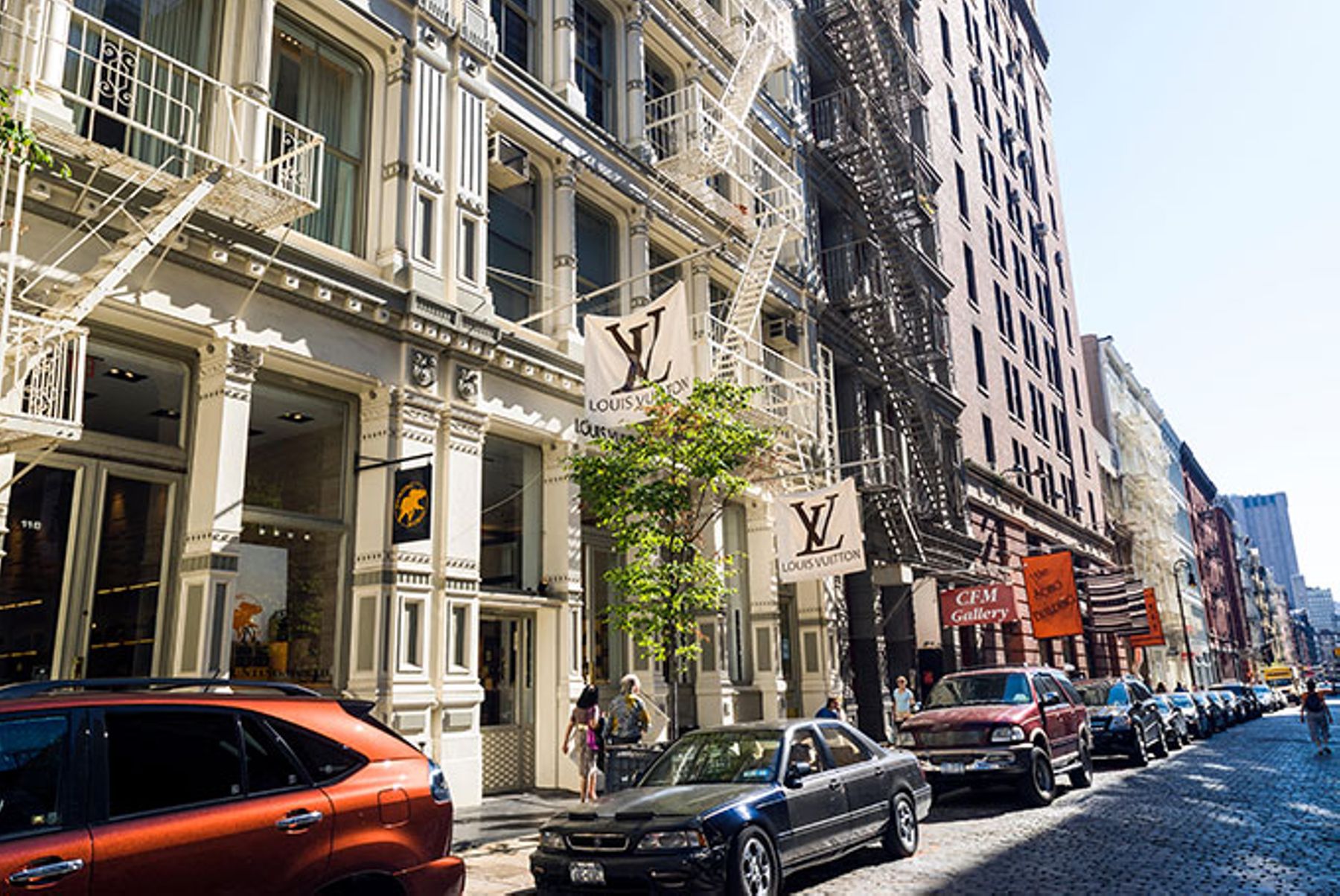
That year, New York State amended its Multiple Dwelling Law, which governs residential housing, to allow artists to live and work in commercially zoned areas, provided they met certain fire, safety, and building code requirements. The theory was that art was a form of light manufacturing (much as Warhol himself argued) and could coexist with grimier pursuits. New York City later amended its zoning code to permit such live-work units in SoHo, the neighborhood south of Houston Street in Lower Manhattan. The city eventually extended the zoning designation to nearby neighborhoods and granted one-off variances for artists’ buildings elsewhere.
But despite the hopes of artists and policymakers to bring lofts under the law, most remained illegal. Whatever the zoning code allowed, the building-code requirements for modern residences were often too stringent, and the changes needed to comply too costly, for most hardscrabble tenants. Instead, artists relied on sweat equity, often installing their own wiring and plumbing without licensed tradesmen. Landlords and their tenants, meantime, signed commercial leases and pretended that the spaces were studios rather than residences, thereby avoiding many regulations.
Though the city had made periodic efforts to legalize the lofts, it also launched recurring campaigns against conversions that failed to meet code requirements. Remaining manufacturers often supported these crackdowns, since they thought that artists’ lofts displaced industrial space and jobs. The legal no-man’s land became known as “Loftonia” by its residents, the “Loftonians.” Mayor Ed Koch in the late 1970s created the Mayor’s Office of Loft Enforcement to operate as a new type of sheriff for the area.
In 1982, the state created a specialized Loft Board to help bring the city’s more than 7,000 illegal loft units into legal compliance. The board was intended to balance the interests of tenants, landlords, and manufacturers, but it satisfied no one and added yet another layer of bureaucracy to the conversion process. “It’s like going into a war zone, said Carl Weisbrod, the chair. “The only thing tenants and owners can agree upon is how much they hate the Loft Board.” After decades of efforts, most loft space remained in legal limbo.
The real shift in the loft zones came with the influx of money. Artists had turned some lofts into impromptu galleries, but the patrons touring them often proved as enamored of the spaces as of the art. As one tenant association member put it, “suddenly more romantic than buying the art is living in the artist’s studio.” After a zoning change in Tribeca legally opened loft conversions to nonartists, the emerging class of yuppies—young urban professionals—began buying them up. The New York Times noted that the “ramshackle loft of exposed light bulbs, rippling slats, peeling walls, rickety stairs, tin ceilings and flimsy legal status is being superseded by formal and rather pristine apartments.”
In the 1980s and 1990s, Hollywood depicted loft living as a way for the well-off to engage in a playful downtown existence. Tom Hanks’s character in the movie Big (1988), who had magically been transformed from a kid into an adult, used his corporate job to afford a spacious loft that doubled as a sort of child’s play place. Ghost (1990) opens with a couple renovating their loft building—actually, 102 Prince Street in SoHo—with crowbars and sledgehammers. The pair embodied the two waves of the loft movement: a financier (Patrick Swayze), who supplied the money; and his girlfriend (Demi Moore), who used the space as a sculpture and pottery studio. Their more mercenary friend notes, “You guys lucked out. Hell, I bet you could sell it tomorrow and double your investment.” The loft had become a place to make art and make love, as the film’s famous pottery scene suggests.
The loft-conversion process itself often brought high drama. “I’d like to write a musical” about the loft battles, the state Loft Board’s landlord representative once said. “There’s a lot of material here.” In the end, it was a tenant who wrote the most famous loft musical. The wildly successful Rent, first performed in 1996, opens with the main character, Mark, talking about living in “an industrial loft” on “the top floor of what was once a music publishing factory.” The conniving arch-villain Benny, himself a former loft resident, marries an heiress who owns the building and then proceeds to try to collect back rent and convert the space to more upscale uses now that the “block is rezoned.” Playwright Jonathan Larson had himself lived in a converted loft apartment.
Despite the pro-tenant framing, the battle in Rent demonstrates how both tenants and landlords took advantage of legal ambiguity. The musical’s tenants had not paid rent for a year. Due to a 1979 state court ruling, Lipkis v. Pikus, landlords had little recourse for collecting back rent for lofts if everything wasn’t up to code. Yet Mark himself mentions the space’s “illegal wood-burning stove.” Tenants wanted cheap, noncompliant housing and often played a role in causing code violations.
The most obvious solution to the loft problem was to revise the building codes so that conversions could occur more cheaply. The city gradually loosened code requirements for lofts, though never enough to legalize every artist conversion. In the interim, its willingness occasionally to overlook violations allowed artists to move into otherwise deserted areas and help stabilize them, as the contemporary label “urban pioneer” suggested. A 1977 how-to book on loft conversion was titled Pioneering in the Urban Wilderness.
Market forces ultimately provided the long-term solution. As loft values soared, developers could, so long as zoning permitted the conversions, spend millions bringing them up to modern, code-compliant standards. Today, some of the most expensive real estate on a per-square-foot basis occupies former manufacturing spaces that were successively home to industry, artists, yuppies, and, finally, multimillionaires.
The loft struggles are sometimes seen as the halting effort of New York State and City to adjust laws to new uses in a new environment. But that narrative has a significant wrinkle: it wasn’t until just before the loft era began that living in industrial areas became illegal.
Early zoning in New York City, as in much of the nation, was “cumulative,” meaning that a more desirable use, such as a residence, could always locate in a less desirable zone, such as a commercial or an industrial area. By contrast, commercial uses like offices could not locate in residential zones, though they could move into industrial ones. Each step down the zoning hierarchy permitted all uses above it.
New York City’s 1961 zoning revamp was among the first in the nation to adopt “noncumulative” zoning, under which each district was limited to a single type of use. The explicit goal of the new industrial zones was to protect manufacturing from encroaching residential uses, including artists’ lofts. From one perspective, much of the ensuing loft battle stemmed from a relatively minor zoning change that attracted little attention at the time.
Throughout the loft era, manufacturers made a futile effort to protect their cheap space from competing uses. As one developer working in the area north of Houston Street, or NoHo, noted, “The zoning is archaic. I’ve tried a good-faith effort to find a manufacturing tenant for more than a year. And I’ve had no success.” Only after many areas had been almost entirely abandoned by industry did city officials change zoning rules to permit new uses or reintroduce cumulative zoning.
The loft movement eventually spread across the United States, leading many cities to adopt noncumulative zoning in an effort to contain it. In 1981, Portland, Oregon, created the first of its “industrial sanctuary” districts to prevent a flood of artsy newcomers into the city’s Central Eastside industrial zone. In Chicago, the conversion of a former Baldwin piano factory into a loft space in 1985 triggered a local panic about the decline of the once-proud manufacturing city. The city began creating Planned Manufacturing Districts that banned residential development. While Hollywood studios were making movies featuring impressive loft apartments, Los Angeles established new industrial districts that excluded residents. The city allowed few significant conversions until the twenty-first century, when the Adaptive Reuse Ordinance authorized transformation of warehouses and other downtown facilities into live-work spaces.
The stated goal of these new industrial districts was to protect manufacturers from residents who might object, through political or other means, to the noise, smoke, and other by-products of industry. The more tangible benefit, however, was to lower land values, which effectively subsidized firms seeking inexpensive space. Lower land values also helped keep property taxes down by limiting pressure for residential conversions.
Even as cities sought to exclude loft residents, they often carved out exceptions, like New York’s, to accommodate them. Boston, for example, created, and still maintains, an Artist Certification Program that requires applicants to submit résumés, work samples, and reference letters to show that they’re sufficiently artistic. Those who qualify become eligible for live-work housing, mainly in former industrial areas.
Most cities had few or no formal rules for loft conversions but used one-off votes on zoning changes to let in residents when necessary. Philadelphia regularly approved variances for loft conversions, but it only recently set up an “Industrial Residential Mixed-Use” zone to authorize live-work lofts. The city now has a Loft District just north of downtown, described as where “New Yorkers choose to live in Philly when they want to feel like they are back in NYC.”
San Francisco faced a similar push-and-pull fight between residents and industry. Artists had been moving into the Mission District and the area south of Market Street, or SoMa, as early as the 1960s. A former American Can Company factory in the Mission became the famous Project Artaud, home to painters, jewelers, photographers, and circus performers. But such spaces were of questionable legality. Not until 1988 did the city pass a Live-Work Ordinance legalizing artist communities in industrial neighborhoods.
Yet San Francisco’s bohemia was horrified that the live-work language was expansive enough to allow early teleworkers to use lofts as home offices. Rather than acknowledging changing market demand, artists and the manufacturers teamed up to squelch it. The city shut down the conversion program barely a decade after it had started and formed “Industrial Protection Zones” to prevent further conversions.
Today, many areas continue to suffer from cities’ efforts to hang on to their last manufacturers. San Francisco, a city with arguably the worst housing crisis in the continental United States, devotes nearly two square miles to protected industrial districts. Most are located near SoMa and the Mission, neighborhoods that embraced conversions and have since become expensive residential zones. Boston, meanwhile, maintains dozens of “local industrial districts” that make residential conversions difficult. In these and other cities, the result is often empty buildings or businesses that only loosely fit the popular image of industry, such as auto-repair shops, truck-rental depots, or surface parking lots.
Large sections of New York City itself remain industrial zones, especially along the Brooklyn waterfront. Such manufacturers deserve a place in American cities (see “Can American Cities Manufacture Again?” Winter 2021), but they should not receive special protection against other uses. In a sense, the loft-era struggle for access to underused industrial spaces continues.
Beyond zoning and building-code changes, property-tax reform provided the most important legal impetus for loft conversions. A handful of targeted tax credits facilitated the movement, though their long-term impact remains uncertain.
New York had long offered the J-51 residential property-tax incentive to encourage the rehabilitation of older apartment buildings. In 1975, the city expanded the program to include conversions of nonresidential properties to residential use. The measure’s key feature was an exemption from tax increases resulting from the conversion expenses. Further, it was available by right, meaning that developers could use it without additional bureaucratic approvals, so long as they met the program’s requirements. Within a few years of the amendment, J-51 helped convert nearly 3,000 residential loft units, almost all in Manhattan.
Many low-income New Yorkers grew concerned, however, that the expanded credit was also being used to clear out Single Room Occupancy (SRO) hotels, which provided housing for the destitute. Many today attribute the decline of SROs primarily to urban renewal, but the number of such units collapsed by over 70 percent in the eight years after J-51 was extended to cover conversions. In the early 1980s, responding to worries about the loss of SROs, the state limited the use of J-51 for loft and other conversions, just as lofts began attracting better-off residents. Whatever role J-51 played in jump-starting conversions, it was neither necessary nor sufficient to sustain their growth.
The federal Historic Rehabilitation Tax Credit, first enacted in 1976 and substantially amended over the following decade, is also frequently cited as a driver of the national loft revival. Under the program, certified historic buildings receive a 20 percent tax credit for qualified rehabilitation expenses, while other older buildings, at least until the 2017 Trump tax cuts, got a partial credit. Thirty-four states have adopted their own historic rehab tax credits, and both the federal and state programs have been widely used to support conversions.
But historic tax credits have had ambiguous effects, too. In the decades since the federal credit’s passage, it has accumulated an ever-greater array of bureaucratic requirements. Today, the section of the IRS code governing the credit runs 14,000 words. Separate from that are nearly 150 pages of National Park Service guidance on rehabilitation practices. The credits have also encouraged the creation of more historic districts, which can freeze neighborhoods in amber, even when substantial change is needed. In Manhattan, the preservationist urge has led to the creation of 82 different historic districts, including in much of the former manufacturing district downtown. Minor rehabilitations and conversions can now entail substantial negotiations with city preservation officials.
We’re entering a new era of residential conversions: downtown office buildings have seen their value drop by nearly half since the pandemic. Those looking to convert the often-empty spaces should heed lessons from the loft era.
Though office conversions are often treated as something new, they have been underway for decades in some places. In the early 1990s, downtown New York faced a major exodus of “back-office” jobs to the suburbs. In response, the city council passed zoning changes in 1995 to facilitate office conversions, including a reduction in the minimum size of converted units. That year, New York State enacted the 421-g tax credit to encourage such projects. Over the next decade, about 13 percent of all Lower Manhattan office space was converted to residential use. The credit cost taxpayers about $100,000 per unit. While it helped spur conversions, it came at a significant cost and, in one sense, arrived too early: downtown would experience a revival of financial-sector office jobs in the twenty-first century.
Post-pandemic, however, the office market changed again. Over one-fourth of all workdays in the United States—unimaginable just a few years ago—are spent at home, while nearly 40 percent of people work from home at least part of the time. For many American workers, residences now often serve as offices, too, so actual office spaces have suffered by comparison.
Downtown offices confront particular headwinds, just as downtown manufacturers once did. Though suburban office parks once had higher vacancy rates, the central business district vacancy rate, at about 20 percent, now exceeds the suburban one. In places like Denver, downtown vacancy can be double the national average.
Historically, conversion was rarely viable because multifamily housing secured rents far below those of most offices. At the turn of the millennium, the average multifamily rent in the U.S. was 40 percent lower than average office rent per square foot. Post-pandemic, that dropped to around 20 percent. In some areas, the ratio is now reversing, with multifamily rents high enough to make conversions financially worthwhile. More than 70,000 office conversions are in the pipeline nationally, led by New York City and Washington, D.C., at a rate triple that of a few years ago.
A near-total conversion of downtown office spaces, such as happened with loft space, is unlikely for now. New multifamily construction costs are only slightly higher than the average conversion cost. But cities can work to bring the price tag down and open new areas for office-to-apartment conversions.
The biggest lesson of the loft era is not to fight the market. Today, many downtown neighborhoods have residential floor area ratios—the amount of built space allowed, relative to lot size—far lower than those permitted for offices. These and other zoning restrictions should be revised to open more areas to housing.
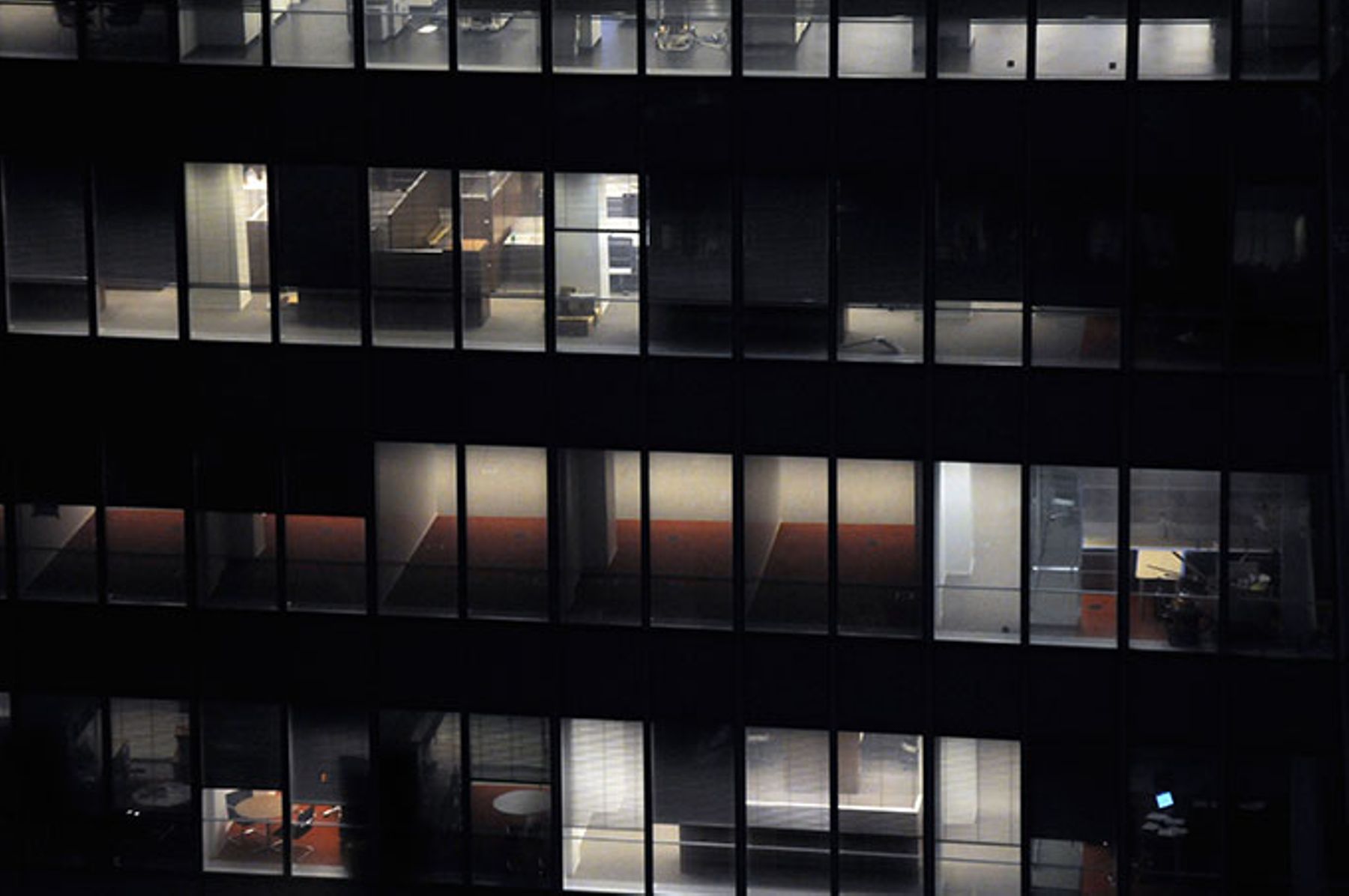
As in the loft era, building-code reform may prove at least as important as zoning reform. The large, deep floor plates of postwar office buildings make it difficult to provide the legally required bedroom windows. New energy and environmental code mandates that far exceed the standards applied to older offices can add tens of millions of dollars to a single conversion project. Allowing conversions without fundamentally altering a building’s layout, and without requiring a complete upgrade to current codes, would go a long way toward making them feasible.
Cities should remember that tax credits can help, but they’re no silver bullet. Policymakers are right that an abandoned building generates little tax revenue; thus even a partial abatement can be fiscally beneficial. Narrowly targeted property-tax reductions that limit assessment increases resulting from rehabilitation are therefore a useful tool. But cities would do well to follow a “do no harm” principle and remove their own barriers to conversion before turning to subsidies. Instead, some places, such as Denver, are using tax credits and loans to offset the costly energy code mandates they imposed in the first place.
Just as they did during the loft era, cities in the work-from-home age must rethink their purpose. A city centered on white-collar office work was once unimaginable; cities were thought to exist primarily for making tangible goods and trading them. Today, a city composed largely of residences may seem equally hard to imagine, but it’s likely to become more common. If cities do not want to be left behind, they will need to let that future unfold.