A young man climbs onto a roof with a rifle. Another waits outside a Manhattan hotel for a stranger he has decided deserves to be murdered. A third is accused of igniting a fire that would leave 12 people dead and thousands without homes. A fourth explains a killing by saying that he has had enough of the victim’s hatred. Over the past two years, Americans have become increasingly familiar with political violence. Again and again, the person at the center is a young man.
In July 2024, Thomas Matthew Crooks, 20, opened fire at Donald Trump’s rally in Butler, Pennsylvania. He wounded Trump, killed a spectator, and seriously injured two others before a Secret Service sniper killed him. Crooks worked at a nursing home and had a reputation as a bright, quiet student.
Finally, a reason to check your email.
Sign up for our free newsletter today.
Five months later, Luigi Mangione, then 26, shot UnitedHealthcare chief executive Brian Thompson from behind on a Manhattan sidewalk. Mangione had grown up in a wealthy Maryland family, graduated first in his class at a private school, and earned two degrees from an Ivy League university. This August, he admitted in federal court that he had killed Thompson.
Jonathan Rinderknecht, 29 at the time of his arrest, was accused of starting the January 2025 blaze that later became the Palisades Fire, killing 12 people. According to federal prosecutors, Rinderknecht searched the terms “free LuigiMangione,” “lets take down all the billionaires,” and “reddit lets kill all the billionaires.” His trial ended in June with a deadlocked jury; ten of the 12 jurors favored acquittal.
In September 2025, Charlie Kirk was shot dead while speaking at Utah Valley University. The alleged gunman, Tyler Robinson, was 22. He had been a high-achieving student and was training to become an electrician.
Then, this April, Cole Allen, 31, arrived armed at the White House Correspondents’ Association dinner, where Trump was present. Allen, a Caltech graduate and tutor, had been named “Teacher of the Month.” He now faces a charge of attempting to assassinate the president.
Economist Tyler Cowen recently observed, with some justification: “The older wokeism reflected stronger female influences, with its use of collective social pressures and its obsessions over in-groups and out-groups. The new approaches of pessimism, confrontation, and violence have more masculine overtones.”
These recent cases differ, and some motives remain unclear. They do not establish a common ideology or a single explanation for political violence. But they raise a broader question: How does a young man’s desire to change society become a desire to destroy it?
More than 150 years ago, Fyodor Dostoevsky made precisely that question the subject of a novel.
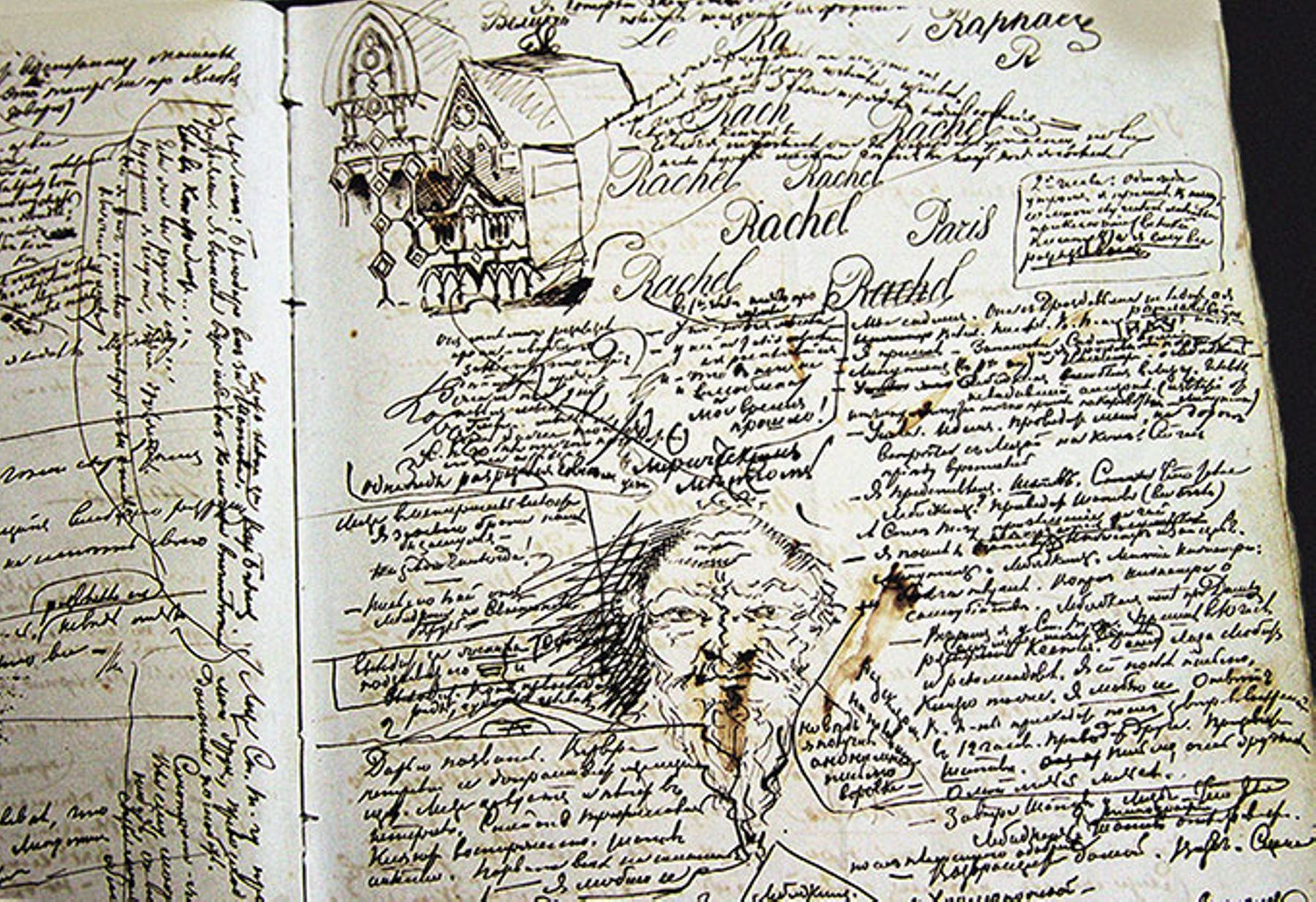
In his 1872 masterpiece The Possessed, Dostoevsky explored the social conditions that produce young radicals. Literary critic Gary Saul Morson has described The Possessed as “a book usually considered the greatest political novel ever written.”
The novel feels shockingly modern. Set in a small provincial Russian town, it chronicles the devastation that results when a group of young intellectuals and revolutionaries put their radical ideas into practice. Dostoevsky shows how well-meaning, middle-aged liberals lend respectability to a younger generation’s destructive ambitions. Two important characters—the aging intellectual Stepan Trofimovich and his wealthy patron, Varvara—embrace progressive ideas partly from conviction and partly from a desire to appear enlightened. This older generation of liberals espouses a mild form of progressivism. They are well-read, shaped by Western European ideas, and fond of gathering in pleasant surroundings to discuss injustice, inequality, and the seductive allure of revolution over a glass of wine.
When the children of these affluent liberals come of age, however, they do not follow their parents into moderation and abstraction. They take their elders’ words more seriously than their elders intended. By the time of the novel’s events, these men and women, now in their twenties and early thirties, have become enamored of socialism, atheism, and nihilism. They seek to destroy their society.
A character named Shatov belongs to this younger generation but has abandoned his radical ways and is now skeptical of the movement he once belonged to. At one point, he criticizes the radicals in harsh terms and suggests that their ideology conceals a deeper hatred: “They’d be the first to be terribly unhappy if Russia could be suddenly reformed, even to suit their own ideas, and became extraordinarily prosperous and happy. They’d have no one to hate then, no one to curse, nothing to find fault with. There is nothing in it but an immense animal hatred for Russia.” This brings to mind George Orwell’s less severe observation, made at the end of World War II: “Within the intelligentsia, a derisive and mildly hostile attitude towards Britain is more or less compulsory. . . . English left-wing intellectuals did not, of course, actually want the Germans or Japanese to win the war, but many of them could not help getting a certain kick out of seeing their own country humiliated.”
In The Possessed, we are also introduced to the provincial governor, Lembke, and his wife, Yulia, who regularly hosts literary gatherings and social events. Intellectuals and radicals fill her home, and her salon becomes a setting where socialist and anarchist thinking circulates and gains respectability. Fascinated by the younger radicals, Yulia is eager to be seen as sympathetic to them and their ideas. “What I think is that one mustn’t despise our younger generation either,” she says. “They cry out that they’re communists, but what I say is that we must appreciate them and mustn’t be hard on them.”
Hers is a recognizable form of patronizing liberal optimism. Yulia believes that polite society can tame radicalism through kindness and invitations to stylish social events. Her answer to the younger generation’s rage is to host gatherings and literary readings where everyone feels welcome and heard. Of course, she has completely misread the situation.
Contemporary readers will recognize the dynamic. Older members of the elite often seek the approval of younger radicals today, too. They embrace, or pretend to embrace, the latest ideas and display contempt for anyone who seems insufficiently progressive. Dostoevsky places much of the blame for the town’s impending catastrophe on this attitude.
In his book End Times, complexity scientist Peter Turchin observes that in most cases of societal collapse and state breakdown, “the overwhelming majority of precrisis elites . . . were clueless about the catastrophe that was about to engulf them. They shook the foundations of the state and then were surprised when the state crumbled.”
The radical cell in The Possessed is made up almost entirely of the children of intellectuals and aristocrats. When peasants and workers do appear, they are simply living their lives, and the gap between them and the radicals is wide and obvious. Revolutionary fervor is not rising from “the people.” It is conceived and imposed by a small group of educated people, obsessed with abstract ideas about how society should work. In Revolutions: A Very Short Introduction, sociologist Jack A. Goldstone points out: “Poverty is generally not associated with revolution. . . . When the American Revolution occurred, American colonists were far better off than European peasants. Even in Europe, the French Revolution of 1789 arose in a country where those peasants were generally better off than the peasants of Russia, where revolution did not occur until more than a hundred years later.”
A revealing moment in The Possessed comes when the aristocratic Nikolay Stavrogin asks Pyotr Stepanovich, the organizer of a local revolutionary cell, how the group’s activities are progressing. Stepanovich responds by explaining the forces that hold such radicals together. “Couldn’t be better,” he says. “It will amuse you: the first thing which has a tremendous effect is giving them titles. Nothing has more influence than a title. I invent ranks and duties on purpose.” He goes on, “the next force is sentimentalism, of course. You know, amongst us socialism spreads principally through sentimentalism.” And finally, “the most important force of all—the cement that holds everything together—is their being ashamed of having an opinion of their own.”
Stepanovich’s point is that many people drawn to radical politics do not actually want to think. What they want is an opinion handed to them—preferably one that makes them appear compassionate and morally serious without requiring real effort or independent thought. They also crave status, as their enjoyment of titles indicates.
When a society abandons its traditional moral foundations, the novel suggests, it does not necessarily produce people who reason their way to better ethics. It can instead yield people like Stavrogin and Stepanovich, young men intelligent enough to reject the old rules but lacking any stable foundation to replace them. The resulting moral vacuum is filled with ideology, manipulation, nihilism, and violence.
Indeed, Stepanovich catalogs Russia’s mounting decay with relish: crime is now “common sense, almost a duty.” Justifying his promotion of chaos, vice, and squalor, he says, “Listen. I’ve seen a child of six years of age leading home his drunken mother, whilst she swore at him with foul words. Do you suppose I am glad of that?” He goes on: “But one or two generations of vice are essential now; monstrous abject vice by which a man is transformed into a loathsome, cruel, egotistical reptile. That’s what we need!”
In other words, a society with self-respect, religion, family bonds, and moral principles cannot easily be seized. People have something to defend and the will to defend it. Degradation is therefore a necessary step on the path to revolution. Dostoevsky lays out the radical playbook: deepen disorder and squalor until society loses both the confidence and the moral resources to defend itself.
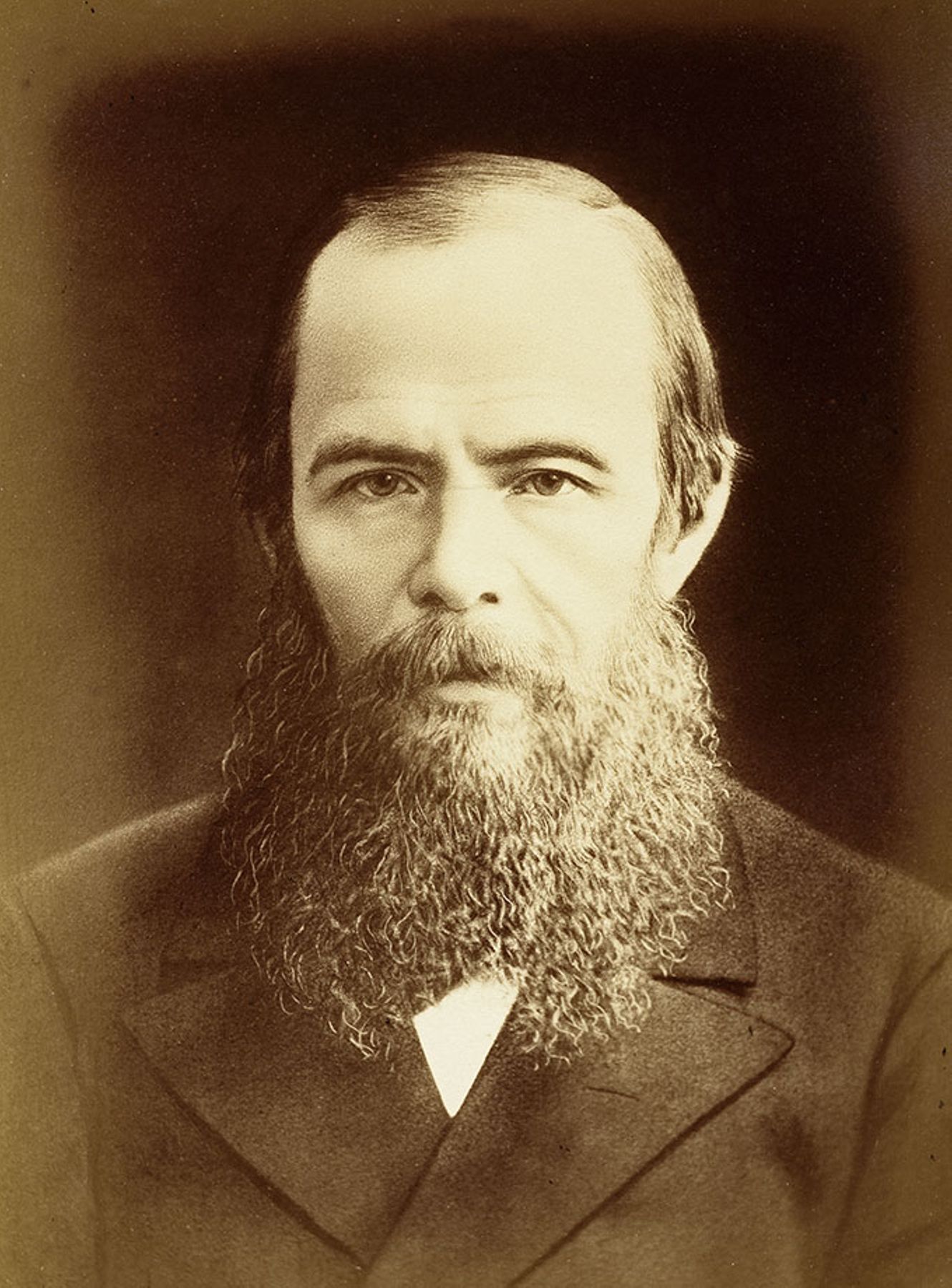
Dostoevsky had a particularly sharp eye for the contradictions of wealthy radicals. They denounce privilege while enjoying its comforts. They praise equality while remaining exquisitely sensitive to their own social status. And they embrace ideas whose consequences they expect others to bear.
But what draws a privileged young person to radical politics in the first place? Compassion is one possibility, but guilt, boredom, vanity, and lack of purpose can play a role, too. A comfortable life does not necessarily feel like a meaningful one. For someone who has inherited security, a revolutionary cause can offer a sense of struggle. The older liberals of The Possessed help to make such radicalism respectable, only to discover that the young radicals have little use for their restraint. Dostoevsky depicts with painful accuracy how badly people can misjudge the forces they help set loose.
We see echoes of this today. Psychologist Jean Twenge in her 2023 book Generations has reported that the share of incoming college students who describe their political beliefs as “far left” has tripled since the early 1980s and doubled since 2013. The proportion of Gen Z college students who identify as far left exceeds that among baby boomers in the early 1970s. The Skeptic Research Center’s 2025 survey found that Americans with a graduate or professional degree were about twice as likely to support political violence as those with only a high school education. These are not populations typically associated with economic desperation.
Yet we often try to explain political extremism in material terms—to ask whether political rage stems from poverty, inequality, rising housing costs, or some other form of economic frustration. Dostoevsky suggests that ideas themselves can be enough. In his seminal 1958 essay “Two Concepts of Liberty,” the Russian-British philosopher Isaiah Berlin made a similar point, recalling how German poet Heinrich Heine had “warned the French not to underestimate the power of ideas: philosophical concepts nurtured in the stillness of a professor’s study could destroy a civilization.”
This is hard for many people to accept. Material causes feel concrete; ideas are less tangible, but they shape how people interpret the world. They define what seems right and what seems worth doing. In The Possessed, socialism, anarchism, and nihilism spread with tremendous force. Imported to Russia from Europe and reworked by intellectuals, these beliefs move quickly through a small but zealous group and bring ruin. Dostoevsky shows that seductive ideas can become a driving force of their own.
Though the novel is set in nineteenth-century Russia, little about these interactions requires translation for a modern reader. The characters, the self-deceptions, the manipulation of ideas for social advantage—all of it is immediately recognizable.
Dostoevsky was writing about radical movements and the destructive logic of ideology. Nearly half a century after The Possessed, something remarkably close to what he feared took place in Russia with the rise of Lenin and the Bolsheviks. It’s not clear that any German novelist depicted the trajectory toward Nazism half a century in advance, as Dostoevsky did with Russian radicalism. He understood something about his society that most of his contemporaries could not or would not see.
Dostoevsky’s characters help explain the young men in our headlines today—the Luigi Mangiones and Jonathan Rinderknechts. The radicals in The Possessed find in revolutionary politics a purpose, a status, and permission to act on their anger. Their respectable elders believe that they can encourage contempt for their society while preserving the parts of it they enjoy. They discover—too late—that they cannot set limits on a young man’s rage.