The Trump administration has declared the “Green New Scam”—as President Trump terms it—finished. The United States will no longer hobble its industrial base with unrealistic renewable-energy mandates while China and India burn coal without restraint, the White House has announced.
Yet while the federal regulatory war on traditional energy has paused, a litigation war has quietly gathered force. Cities and states are now suing American fossil-fuel companies for the alleged climate harms those jurisdictions claim to suffer.
Finally, a reason to check your email.
Sign up for our free newsletter today.
The pace of these suits is quickening. The first multibillion-dollar judgment against the industry could unleash a cascade of similar rulings. Leading climate litigator Benjamin Franta estimates that the potential liability runs into the trillions of dollars.
The effect on the American economy would be dire. But equally catastrophic, from a philosophical standpoint, would be the damage to rationality itself. The causal claims behind the climate-change lawsuits insult reason, repudiating the hard-won gains of the Western empirical tradition. In this respect, the suits embody several signal traits of the contemporary West.
The plaintiffs in the more than three dozen climate suits filed in the United States read like an honor roll of progressive localities: San Francisco, Marin County, Oakland, Washington, D.C., Chicago, Maine, Minnesota, and Massachusetts, among others. Their targets include some of the great industrial concerns of the modern age—ExxonMobil, Chevron, BP, and Shell.
So far, the cases have turned on questions of jurisdiction. After years of strategizing by climate activists, their foundation funders, and state attorneys general, the first major climate-change action was filed in 2004 in the Southern District of New York. New York City, New York State, and seven other states alleged that CO₂ emissions from five electric-power producers, including Cinergy and the Tennessee Valley Authority, constituted a federal public nuisance by contributing to global warming. (“Public nuisance” is defined as an unreasonable interference with a public right, such as the use of a waterway free from obstruction or pollution.)
Following seven years of procedural wrangling, the U.S. Supreme Court in 2011 dismissed the suit, American Electric Power Company v. Connecticut. The Court held that the federal Clean Air Act displaced any right to sue for climate-related harms under what is known as federal common law. (“Common law,” which can be state or federal, refers to that body of law created incrementally by judges on a case-by-case basis, in contrast to statutory law, enacted in one stroke by legislatures.) The Clean Air Act, the Court ruled, had vested exclusive federal authority to regulate greenhouse-gas emissions in the Environmental Protection Agency—and regulating such emissions was precisely what the plaintiffs, despite their protestations to the contrary, were trying to do.
“No problem!” responded the burgeoning climate bar. “If we can’t sue in federal court under federal common law, we’ll bring our cases in state court under state law.” A decade and a half of further jurisdictional skirmishing followed. Climate crusaders filed dozens of state public-nuisance suits in state courts, seeking billions in damages. The energy companies sought to remove those cases to federal court, widely viewed as less inclined than state courts to engage in sweeping economic redistribution.
The defendants argued that the state-law trappings of the climate suits were a fiction. In substance, the cases were an attempt by cities and states to dictate national climate policy, reaching conduct and parties far beyond their borders. The Constitution forbids such extraterritorial ambition, contended the energy providers; it permits states to regulate activities only within their own jurisdiction. Moreover, regulating greenhouse gases entails complex economic and environmental trade-offs. Weighing those trade-offs lies beyond the institutional competence of any judge or jury, the companies maintained. Only Congress and the executive branch have the authority to determine how the nation should meet its energy needs.
For a time, this argument worked. State and federal judges in Delaware, Pennsylvania, South Carolina, and elsewhere threw climate-change suits out of court on the ground of federal preemption. But then the defensive wall was breached. Several federal appeals courts and the state supreme courts of Colorado and Hawaii ruled that global-warming suits could continue under state law. To the energy firms’ dismay, the Supreme Court repeatedly denied their requests to review adverse rulings against them.
In late February 2026, however, the Court agreed to hear Suncor Energy and ExxonMobil’s appeal of a Colorado Supreme Court decision allowing a suit brought by Boulder, Colorado, to proceed to trial. The appeal will be argued in the Supreme Court term that begins this fall, with a decision likely in 2027.
For now, the country’s biggest energy providers are looking down the barrel of a bazooka. The possibility looms that state judges and juries will try to reclaim what they view as the ill-gotten profits of corporate malfeasors who are destroying the possibility of life on earth. Once the trials begin, the lawsuits’ central fallacy will come to the fore.
Every suit blames a particular set of companies for a particular set of climate harms in a particular locality. (The roster of energy defendants varies from case to case, though ExxonMobil is almost always included; the plaintiff governments never explain how they chose their preferred subset of evildoers while ignoring other, similarly situated, firms.)
One can accept the broad outlines of climate-change theory and still reject the plaintiffs’ core causal claims. Indeed, that very theory makes the claims implausible. Under the prevailing scientific account, global warming results from a century and a half of cumulative CO₂ emissions from industrial activity. According to that theory, when trillions of CO₂ molecules accumulate in the upper atmosphere, they affect how heat escapes into space. Importantly, the planet’s atmospheric energy balance is global; it is not set by any one city or state’s emissions. Carbon dioxide disperses horizontally and vertically across Earth; it does not hover over its source. One CO₂ molecule is indistinguishable from another and cannot be traced to its point of origin.
Yet the climate suits are startlingly precise in pinning responsibility for a locality’s purported climate disasters. An international case provides an almost parodic version of the logic in climate litigation. In 2015, a farmer in the Peruvian Andes sued Germany’s largest electric utility provider, RWE AG, for allegedly causing the glacier outside the farmer’s village to melt. We were to believe that CO₂ emitted from RWE’s plants in Germany could be identified and its effects isolated from what RWE AG called an “incomprehensible number” of sources over the planet, all engaged in a cycle of gas exchange between the atmosphere, the oceans, and land ecosystems, interacting with volcanoes, clouds, and agriculture. According to plaintiff Saúl Luciano Lliuya, a linear chain of causation tied RWE AG to the alleged flood risk at Lake Palcacocha, next to his village.
A German court took Lliuya’s claim seriously enough to travel to Peru to inspect the melting glacier firsthand. The court concluded in 2025, however, that the flood risk was not imminent enough to give Lliuya standing to sue.
The causal specificity of Lliuya’s claim appears in the U.S. cases as well. In 2020, 16 Montana youths, aged five to 22, sued the state, claiming that it had destroyed their prospects for a normal adult life and had inflicted climate-related trauma on them. (The youthful plaintiffs sued under Montana’s constitution rather than under tort law, but the causal sleights of hand were the same.) A psychiatrist who developed a “youth climate anxiety assessment tool” testified to their psychological injuries.
According to the plaintiffs, Montana’s dereliction lay in licensing fossil-fuel operations without formally considering their global-warming impacts. Because the state failed to require climate assessments, the suit argued, additional CO₂ was emitted in Montana. That incremental CO₂, in turn, caused global warming in the state and the resulting harms claimed by the children and young adults, whose youth allegedly made them particularly susceptible to injuries from heat. In 2023, the trial judge in Held v. Montana found the state liable for the plaintiffs’ injuries, which included, the judge declared, the increased risk of dying, chronic despair, damage to liver and kidneys, impaired physical and cognitive development, obesity, diabetes, heart disease, chronic obstructive pulmonary disease, and broken bones. The state supreme court affirmed.
The activists made no effort to quantify the increase in emissions from the state’s alleged regulatory failures—or how much that increase had worsened Montana’s climate problems.
The causal claim in Held v. Montana is absurd. Global warming is not a local phenomenon. Moreover, even if the extra CO₂ purportedly generated by Montana’s regulatory negligence could be geotagged and traced to the state, it would be trivial compared with the cumulative emissions of every other global source over decades. Nevertheless, in 2023, the plaintiffs in Held v. Montana prevailed.
The climate-litigation group behind Held v. Montana, Our Children’s Trust, has filed similar youth-driven suits across the country, banking on the appeal of telegenic plaintiffs, often including members of indigenous groups, testifying to their blighted, globally warmed futures. In 2022, Native Hawaiian youth sued Hawaii’s Department of Transportation, claiming that it had jeopardized their tribal identities by allowing the state’s transportation sector to rely on fossil fuels. That reliance, they said, caused their insecurity about their indigenous heritage. The department settled in 2024 and agreed, among other concessions, to pursue the decarbonization of air travel, though commercial jets cannot run on solar or wind power.
Two attorneys leading the children’s crusade, Nate Bellinger of Our Children’s Trust, and Melissa Hornbein, with the Western Environmental Law Center, did not respond to emails requesting comment on their suits’ causal claims.
The youth suits target governments for allegedly inflicting climate-related trauma. In the more typical case, however, a local government sues corporate defendants. Those government-initiated actions rely heavily on what activists call “attribution science,” a term that covers two related efforts: determining whether a particular hurricane or wildfire can be linked to climate change; and assigning specific emitters a defined share of global warming. The climate bar concentrates on this second enterprise. It largely assumes, without further proof, that any undesirable weather event in a plaintiff jurisdiction stems from global warming and then seeks to apportion responsibility among selected energy producers.
In 2013, a self-employed (though not self-funded) climate activist published data on carbon emissions from 180 of the world’s largest oil, gas, coal, and cement producers. Richard Heede’s Carbon Majors project claims that 90 energy companies accounted for two-thirds of global greenhouse-gas emissions between 1751 and 2016. According to the climate lobby, the Carbon Majors database makes it possible to assign precise responsibility to individual emitters for specific harms. If company X contributed Y share of total CO₂ emissions over time, the argument runs, then it should bear Y share of climate-related damages in any given locality.
But attribution science is scientific in name only. Its lesser flaws include the absence of a consistent scientific method and its origin as a litigation tool. The emissions data underlying the Carbon Majors project are patchy, at times unverified, and inconsistent, spanning wildly different time frames. Nor does reliance on historical market share make the task of assigning causation for alleged anthropogenic global warming any more coherent.
But even if the Carbon Majors inputs were standardized and reliable, the decision about what to include remains political. In one attribution model, Heede assigns exclusive responsibility for climate change to energy producers. In another, he divides an estimated $70 trillion in damages among fossil-fuel companies, First World governments, and consumers of carbon-based fuels. In yet another version, he attributes emissions to a company based on the volume of petroleum products that it supposedly sold, regardless of whether it extracted or refined the underlying materials.
Plaintiffs choose their models depending on which yields the greatest amount of liability for the targeted defendants. Invariably, they select as defendants tame American and European firms that will show up in court and play by American litigation rules, while ignoring the biggest emitters of CO₂ in the Third World. Admittedly, hauling authoritarian governments and their nationalized companies into American courts presents a procedural challenge. But if the climate lobby could spend years brainstorming over theories of liability for American companies, it could do the same regarding foreign countries and their state enterprises.
The state lawsuits, despite their new veneer of empirical rigor, remain on uncertain jurisdictional footing. So long as they attribute local climate harms to corporate emissions, they invite preemption challenges. Defendants can argue that states and cities are trying to regulate out-of-state commerce in violation of the Constitution’s Supremacy Clause.
So the climate bar devised the most breathtaking fiction of all. The litigant states and cities started protesting: “We would never dream of penalizing out-of-state emissions or economic activity. We are not even claiming that corporate emissions caused our climate harms. Oil and gas companies concealed what they knew about climate change, and that concealment—amounting to corporate fraud and deception—caused our hurricanes and forest fires.”
Plaintiffs modeled this new argument on the litigation against tobacco companies. For decades, courts dismissed anti-tobacco suits on the ground that plaintiffs had contributed to their own health problems by smoking. Only when the plaintiffs’ bar abandoned traditional tort theories and argued that tobacco firms had concealed their knowledge of cancer risks, thereby committing consumer fraud, did the plaintiffs begin winning large settlements.
The climate-change case closest to trial, Honolulu v. Sunoco, illustrates the reasoning behind this consumer-fraud gambit. In 2020, the city and county of Honolulu sued Sunoco, ExxonMobil, Royal Dutch Shell, Chevron, BP America, and ten other fossil-fuel producers and marketers for flooding and erosion in the city. According to the complaint, the companies caused Honolulu’s damages by failing to disclose what they allegedly knew about climate change. “But for Defendants’ conduct” in withholding that knowledge, claim the plaintiffs, “the City would have suffered no or far fewer serious injuries and harms than it has endured.”
We will leave aside, for the moment, the truth of the claim that the defendants possessed secret knowledge about global warming. We will also set aside the suspension of disbelief required to accept the argument that a failure to communicate something was the “but-for cause”—a central concept in tort law—of rising sea levels, while the physical processes associated with CO₂ emissions played no role. Instead, the plaintiffs propose a different causal chain: because the defendants failed to warn that their products were allegedly dangerous to the planet, Honolulu consumers presumably drove more and engaged in other climatically hazardous activities than they otherwise would have. On this view, Honolulu’s eroding coastline stems not from emissions themselves but from the defendants’ failure to warn about them.
Even on its own terms, Honolulu’s argument is fantastical. Here one must reintroduce the concealed causal link—CO₂—whose absence in the complaint is merely a verbal trick. Data on Honolulu’s energy-related greenhouse-gas emissions are not readily available, but Hawaii’s were about 18 million metric tons in 2021; Honolulu’s share would be smaller. By comparison, U.S. energy-related greenhouse-gas emissions in 2021 totaled about 4.9 billion metric tons. Hawaii accounted for roughly 0.4 percent of that figure; Honolulu perhaps 0.2 percent. Globally, the International Energy Agency estimates that fossil-fuel combustion produced about 36.3 billion metric tons of CO₂ in 2021. Hawaii’s emissions thus represented about 0.05 percent of the global total, and Honolulu’s share would be smaller still.
To be generous to the plaintiffs’ argument, assume that if Honolulu’s residents had been warned about global warming by the defendants, they would have stopped driving gas-powered vehicles entirely. All of the city’s other energy-related emissions would have ceased as well. Because Honolulu disclaims any interest in conduct outside its borders, we will also assume that auto use and industrial production in the rest of the United States would have continued as before, while China, India, and the rest of the developing world pressed ahead with fossil-fuel combustion. The disappearance of Honolulu’s emissions—about 0.2 to 0.4 percent of U.S. emissions, or roughly 0.03 to 0.05 percent of global emissions—would supposedly mean that “the City would have suffered no or far fewer serious injuries and harms than it has endured,” as the complaint alleges.
If the causal claims strain credulity, the factual premises are scarcely stronger. The several dozen consumer-fraud suits now underway all assert that oil and gas companies possessed early, unique knowledge about climate change, which they concealed from an ignorant public and policymaking class for decades. Instead of warning the world about the dangers of fossil fuels, the firms stressed uncertainties in climate models, opposed binding emissions targets, and funded research that critically examined what the New York Times calls the “settled science of climate change.”
The activist lobby has assembled a dossier, recycled from one lawsuit to the next, of purportedly incriminating statements that allegedly show that energy companies “knew” about climate change before anyone else. In 1968, a report prepared for the American Petroleum Institute observed: “We are unsure as to what our long-lived pollutants are doing to our environment; however, there seems to be no doubt that the potential damage to our environment could be severe.” In 1977, Marathon Oil’s house magazine noted that, though “climatologists disagree on the underlying reasons, many see a future climate of greater variability, bringing with it areas of extreme drought.” An internal Exxon memo from 1978 called for assessing the “possible impact of the greenhouse effect on Exxon business,” adding that the firm should develop a scientific team able “to critically evaluate the information generated on the subject and be able to carry bad news, if any, to the corporation.”
The rest of the dossier is similarly couched in the language of possibility and probability, not certainty. Even if the statements had been more definitive, they hardly represented a monopoly on climate speculation. In 1965, President Lyndon Johnson told Congress that the present generation had “altered the composition of the atmosphere on a global scale” through “a steady increase in carbon dioxide from the burning of fossil fuels.” A White House report that year included a section titled “Atmospheric Carbon Dioxide.” Since then, discussion of climate change has grown only more widespread. Nothing in the litigation dossier was unavailable in academia, the press, or government reports; no one needed Chevron or Duke Energy to learn about climate change. Citizens were already awash in warnings.
The consumer-fraud theory of liability presumes that, had oil and gas companies disclosed their supposed gnostic knowledge of global warming, the recipients of that hidden lore would have changed their behavior enough to reduce or eliminate local climate harms. In fact, we have no evidence that they would have changed their behavior at all.
Seventy thousand activists attended the 30th annual United Nations climate-change conference (Conference of the Parties, or COP30) last November. They did not paddle to Belém, Brazil, in dinghies. Brazil’s president, Luiz Inácio Lula da Silva, cleared carbon-capturing rainforest to build a four-lane highway to the heavily air-conditioned conference site. Once there, the clear-cutting Lula demanded that attendees contribute to his $125 billion fund to protect global rainforests—translation: send more First World cash down a Third World sinkhole.
Anti–oil and gas academics consume energy freely even as they attack energy producers. Marshall Burke, a professor at Stanford’s School of Sustainability, admitted at a Columbia Law School conference on climate litigation in 2025 that he was a “huge user of models.” Those models should run on renewable energy, he said, but until that happens, he is not holding back. Christopher Callahan, a contributor to attribution science, runs his simulations of global-warming pathways 1,001 times on supercomputers. He then runs another 10,000 variations, adjusting each step in the chain, Callahan explained at the same conference.
The use of smartphones and AI, jet travel to conferences and vacations, routine reliance on Amazon Prime and food-delivery apps, heat in winter and air conditioning in summer, the consumption of bottled water (an affectation almost everywhere, unless one’s municipality draws its water supply from a Superfund site)—all these accoutrements of modern life show no sign of abating in the communities now suing the sources of their lavish consumer lifestyle.
But to satisfy whatever traces of a specific-causation requirement survive in tort law, the plaintiffs will need to be more precise. They must determine when the duty to disclose attached to the defendants: When did knowledge of climate change become so “settled,” in the New York Times’s term, that publicly acknowledging remaining uncertainties in the models became an illegal fraud on the public? The plaintiffs must then show how emissions in that counterfactual world of full disclosure would have differed from the historical record, and how much that difference affected local climate harms. They have not even gestured toward such a showing.
The climate plaintiffs assert the right to control speech and association, and to determine what lies beyond questioning. In their view, the defendants broke the law by stating publicly that not everything about climate change was fully understood. They broke the law by forming associations to argue that solar and wind power were not yet capable of powering the American economy. And they broke the law by counseling against shutting down their businesses when the effect of doing so would be dwarfed by ongoing emissions from China and other non-Western countries. The climate industry’s will to ideological hegemony—to declare what is true and to silence dissent from that truth—characterizes contemporary elites, as the campaign earlier this decade to suppress criticism of Covid lockdowns demonstrated.
The consumer-deception theory has shielded numerous lawsuits from removal to federal court or outright dismissal, despite its patent fictions. The Hawaii Supreme Court parroted those fictions when it cleared Honolulu v. Sunoco for trial in 2023. The plaintiffs were seeking only to regulate defendants’ in-state marketing, the court held. Federal common law would apply if Honolulu claimed to have been injured by “pollution traveling from one state to another,” the court admitted, but in this case, the alleged harm comes only from the companies’ “tortious marketing conduct.”
The defendants asked the U.S. Supreme Court to review the ruling, but the Court declined in early 2025. Honolulu’s plaintiffs are now inundating the oil companies with discovery requests, seeking further evidence of their alleged secret knowledge about climate change. Discovery is expected to last through 2027. The attorneys bringing the case, Victor Sher and Matthew Edling, are responsible for most climate litigation in the United States. They did not respond to a request for comment.
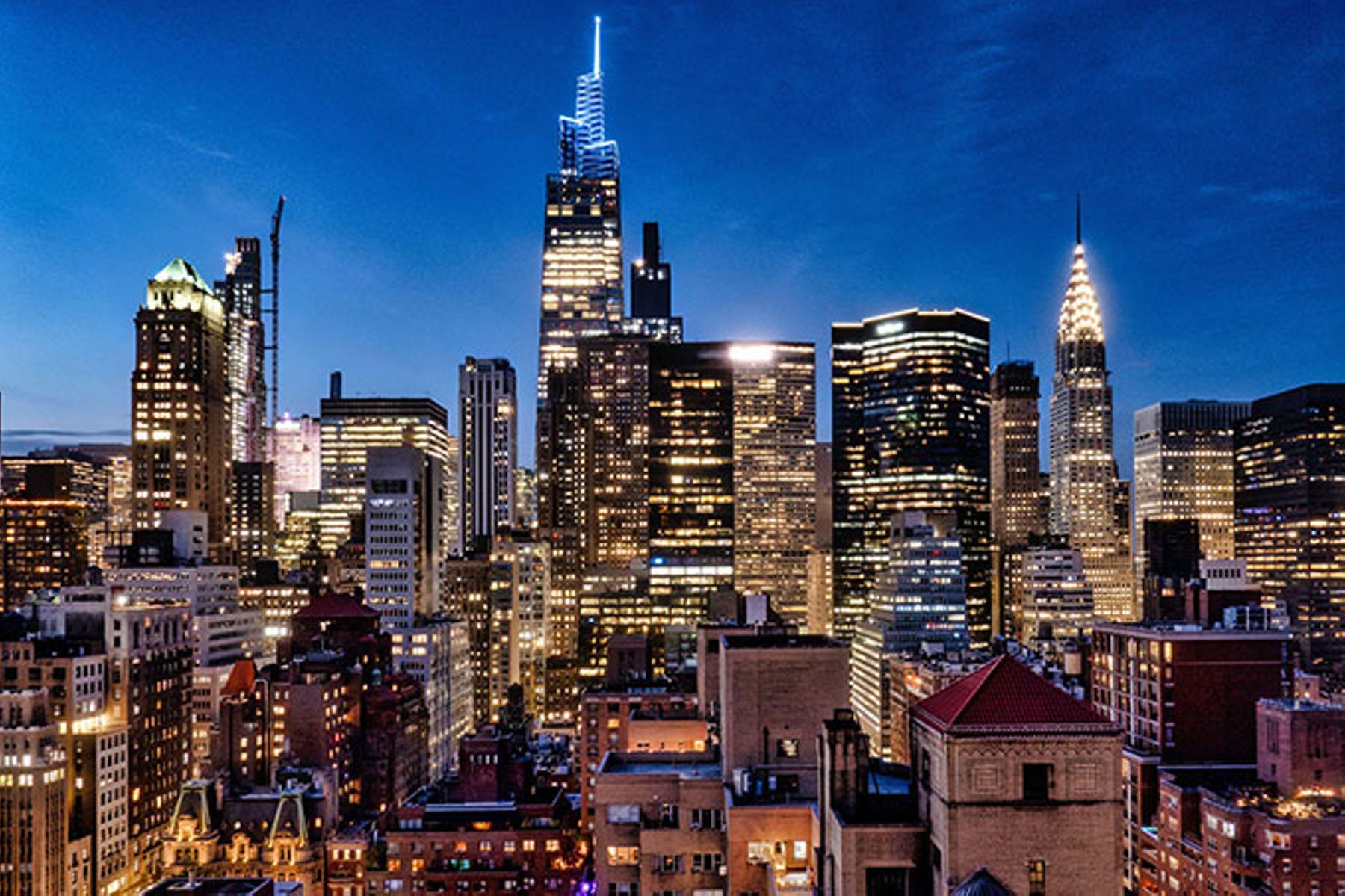
One other case now in the pretrial phase is worth noting, since it makes the most aggressive causal claim yet. Multnomah County, Oregon (county seat: Portland), is seeking nearly $52 billion from an arbitrarily assembled roster of energy companies, trade associations, and consulting firms, blaming them for a Pacific Northwest heat wave in 2021. While mainstream media now routinely attribute specific weather events to global warming, more cautious climatologists speak in terms of probabilities, not certainties. Multnomah County, however, claims to know that the 25 defendants’ alleged deception campaign caused not just global warming in general but the Pacific Northwest “heat dome” of 2021 in particular.
The premise of the consumer-fraud theory—that the public had no alternative source of information about climate change other than what Shell or Chevron should have told them—is especially strained here. In its complaint, Multnomah County lauds its “environmentally conscious community and leadership structure” but would have us believe that no one in Portland was aware of NPR or the New York Times, and so had no way to learn about climate change absent disclosure from Big Oil.
The arithmetic behind Multnomah’s causal claims is even more startling than Honolulu’s. The county’s total greenhouse-gas emissions in 2023 were approximately 6.9 million metric tons (the county does not segregate out energy- or transport-related emissions). That output is about 0.11 percent of all U.S. emissions and about 0.018 percent of global energy-related CO₂ emissions—less than two-hundredths of 1 percent of the world total. Yet Multnomah County’s failure to curb its local emissions, it argues, caused the 2021 heat wave.
In 2024, a federal district court denied the defendants’ motion to remove the case, accepting the county’s argument that the lawsuit was only about state consumer fraud, not about interstate emissions. Multnomah County v. Exxon is now in pretrial motions and discovery practice, heading, seemingly inexorably, to trial.
The explosion of climate litigation is about expropriation and hatred. These lawsuits do nothing to advance the cause of arresting anthropogenic climate change. Western fossil-fuel companies are being sued over past emissions, all of which were legal at the time. Extracting trillions of dollars from them today will not remove yesterday’s emissions; it is simply a grab for power and money. The only thing that can be changed now is current and future emissions.
U.S. climate litigation is largely irrelevant to that goal. Sixteen of the top 20 CO₂ emitters in 2023 were foreign and state-owned, with China dominating, according to the Carbon Majors database. Seven of the top 20 were coal companies—six of them Chinese, with the seventh in India. Private U.S. oil and gas companies account for only a small share of global emissions. The top five private carbon emitters produced just 5 percent of global emissions in 2023, while the top five state-owned emitters accounted for 17 percent. Those five were Saudi Aramco, Coal India, China Energy Investment Corporation (CHN Energy), National Iranian Oil Co., and Jinneng Group, a major Chinese coal producer.
Yet the climate lobby sees American and European investor-owned companies as the problem, and government as the solution. Activist Tzeporah Berman, founder of the Fossil Fuel Non-Proliferation Treaty Initiative, expresses the sentiment of the anti-Western climate bar:
It is clearer than ever that dirty private companies, driven by profits and business as usual, will never choose to self-regulate. Governments around the world must use their power to end fossil fuel expansion and transition their economies before fossil fuel companies destroy the planet.
“Dirty” and “private” are a tautology here.
American activists specialize in such distortions. Stanford professor Rob Jackson, chair of the Global Carbon Project, told the New York Times in January 2026 that China, along with Europe, leads the world in addressing global warming, but warned that they “won’t continue to act on their own forever if countries like the U.S. ignore the threat of climate change.”
Jackson displays the familiar Blame-America-First tic. In 2024, China remained the world’s largest coal consumer, accounting for a record 58 percent of global coal use, according to the International Energy Agency. It burns roughly 20 times as much coal as the 27-member European Union and has tripled its coal consumption since 2000. China and India together accounted for most of the global increase in coal use in 2024, and China alone made up more than half the rise in global electricity demand that year.
Nevertheless, the Western climate lobby insists that Donald Trump is endangering the planet. “Trump’s greenhouse gas emissions will cause Trump’s heat waves, Trump’s droughts, Trump’s floods, and Trump’s wildfires,” Dartmouth “climate attribution” modeler Justin Mankin told the Times. The causal claim is as implausible as any now appearing in court. If CO₂ emissions are to be meaningfully reduced, the focus must be on China, India, and other non-Western energy producers.
The litigation war on the oil and gas industry reflects the parasitism, entitlement, and ingratitude that characterize the modern West. The Rockefeller Brothers Fund is emblematic. Its billion-dollar philanthropic portfolio exists because of John D. Rockefeller and Standard Oil. Rockefeller’s advances in refining, pipelines, transport engineering, and petroleum chemistry transformed the world. Yet today, the Rockefeller Brothers Fund bankrolls efforts to sue Standard Oil’s corporate descendants—including ExxonMobil, Chevron, and Amoco—into submission, if not bankruptcy.
The climate complaints are similarly blind to the organizational and scientific prowess that built these companies. Multnomah County’s description of the defendants is meant to provoke outrage. Instead, it should inspire admiration in anyone who appreciates what it took to bring humanity to its present level of comfort and Promethean control.
ExxonMobil, the complaint notes ominously, is “vertically integrated” and “active in every area of the oil and gas industry, including exploration and production, refining, transport, distribution and marketing, petrochemicals, plastics, power generation and trading.” Who in the climate lobby could manage a functioning enterprise of such scale? ExxonMobil’s petrochemical division, the complaint adds in evident distaste, produces olefins and aromatics, ethylene glycol, polyethylene, polypropylene, elastomers, plasticizers, solvents, and adhesive resins—along with such further arcana as viscosity modifiers and crankcase lubricant additives.
After cataloging these industrial feats, the complaint arrives at its indictment: “Exxon is a major carbon emitter, and its concealment and misrepresentations about the dangers of its emissions” have caused “enormous harm to Plaintiff.” For the climate lobby’s civilizational freeloaders, Exxon’s achievements are eclipsed by a single fact: it emits carbon.
One can’t help noticing that Multnomah County has not sued itself. The county government and its employees continue to rely on global shipping and supply networks, aviation, sanitary packaging, trains, and elevators. The county has not sued its residents for driving or its service stations for selling gasoline. It has not sued the pickup- and commercial-truck dealerships from which it collects taxes. Nor has it sued the federal government, which encouraged fossil-fuel extraction through the leasing of public lands.
The alternatives to fossil fuels championed by climate litigators are not viable replacements today and will not be for the foreseeable future. Solar and wind power were largely irrelevant during the deadly snow and ice storm that struck a 2,000-mile swath of the United States in January 2026. Without coal, natural gas, and nuclear power, millions more Americans would have lost heat and running water. Electric vehicles remain luxury goods for the affluent, sustained by government subsidies and levies on traditional fuels. Like wind and solar power, EVs carry substantial environmental costs.
Yet the climate lobby continues to devise ways to bankrupt the traditional energy sector. Michigan’s attorney general won plaudits in January 2026 for advancing a new legal theory with the same old causal flaws: suing oil and gas companies for allegedly causing Michigan’s climate harms by forming an illegal trust to suppress the development of solar and wind energy. Pending legislation in California would allow homeowners to sue fossil-fuel companies for their climate-related costs—a causal chain even more attenuated than Multnomah County’s claim about the 2021 heat dome. Meanwhile, attribution scientists are traveling the country advising states on how to extract billions from fossil-fuel companies through legislation instead of litigation. Vermont and New York have already enacted so-called climate Superfund laws; Maine, Maryland, and Colorado may soon follow.
New York’s statute, signed by Governor Kathy Hochul in December 2024, seeks $75 billion in damages from out-of-state energy producers, while exempting the New York consumers who use their products. Never mind that the state powers its economy with imported natural gas and large quantities of out-of-state coal. The law imposes retroactive liability for conduct that remains legal today. In response, attorneys general from 22 energy-producing states sued New York officials in 2025; a similar challenge has been filed against Vermont’s climate Superfund law.
Meantime, a Seattle woman has brought a wrongful-death suit against a familiar roster of oil companies, contending that they caused her mother’s death during the 2021 Pacific Northwest heat wave. A federal judge refused to move the case to federal court, and it is proceeding before a King County jury, where a massive verdict is easy to imagine. More radical steps are already being discussed. Climate activists and lawyers are exploring arguments for prosecuting energy CEOs for homicide. Those prosecutions will come.
The Western concept of impersonal causation once undergirded both experimental science and Anglo-American tort law. The belief that causation was regular and measurable enabled the rational control of nature. The legal requirement that a defendant’s unreasonable act actually caused a plaintiff’s injury restrained the human impulse toward vengeance. In the twentieth century, however, tort law increasingly shifted from assigning liability for fault to extracting wealth for redistribution, by loosening traditional causation standards and weakening the idea of personal responsibility.
Climate litigation takes that earlier erosion of causation to a new level. If judgments against Big Oil are allowed to stand, they will set precedents for wider assaults on economic activity and the rule of law. Congress could halt the litigation juggernaut by declaring, under its constitutional power over interstate commerce, that no fossil-fuel producer or distributor may be held liable under state or local law for harms purportedly arising from CO₂ emissions—and by barring such suits from state courts. Sixteen attorneys general have also urged the Trump administration to restrict federal funding to states and localities seeking to make energy companies pay for alleged climate damages.
In a deeply divided political system, however, such measures are unlikely to pass. For now, the Supreme Court’s review of Suncor Energy v. County Commissioners of Boulder County may be the only hope of halting the raid on Big Oil’s social and economic capital. The Court’s arguments next term will again focus on jurisdictional issues. But at the heart of Suncor v. Boulder, and of every climate case, lies a philosophical travesty that reflects a deeper decline in rational thought.