|
Forwarded this email? Sign up for free to have it sent directly to your inbox. |
|
|
|
Good morning,
Today, we’re looking at how New York City rebuilt after the September 11 attacks, the geopolitical consequences of 9/11, high energy prices in New York, and the growing popularity of alternative schooling.
Write to us at editors@city-journal.org with questions or comments. |
| |
|
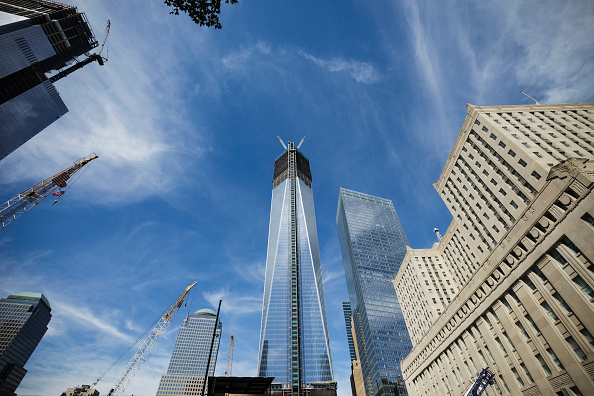
Photo credit: James Leynse / Contributor / Corbis News via Getty Images |
How much did New York City change after September 11? Strikingly, not much, Nicole Gelinas writes. The city replaced most of the 12 million square feet of space it lost after the attacks on the World Trade Center, opening the first tower in 2006 and the most recent in 2018. Downtown tenants include top-tier law and marketing firms, along with companies like Condé Nast, Spotify, and Moody’s. The Oculus, which connects the towers, boasts a high-end indoor mall and a food court. A new office tower broke ground in July and will be home to American Express.
“If you were waiting for Manhattan to rein in its ‘excesses’ after its people were attacked, you would still be waiting,” Gelinas writes. “The greatest success of Lower Manhattan’s rebuilding is how normal it all turned out.” Read more about the city’s comeback. |
|
|
The geopolitical fight that followed 9/11 has lasted decades, with years of costly wars that seemingly went nowhere. But everything changed on October 7, 2023, when Hamas killed about 1,200 innocent Israeli civilians and took 251 more hostage. Israel and the U.S. finally realized that Islamist violence would never burn itself out; indifference was not an option.
Israel has since crushed Hamas and Hezbollah, the prime minister of Iraq has traveled to Washington to meet with President Trump, and Iran’s leadership has been destroyed. “The long arc of violence that began with the shock and loss of 9/11 may, at last, be bending toward a satisfactory close,” Martin Gurri writes. “[Iran’s] Islamist regime may survive, but it will require a long period of recovery, and it is unlikely ever to possess nuclear weapons. That leaves the United States as the region’s dominant power, with an opportunity to mold what comes next.”
Read more. |
|
|
When New York Governor Kathy Hochul spoke in May about the state’s new legislation aimed at addressing energy affordability, she claimed that “[d]angerous policies coming out of Washington have sent the costs of power skyrocketing.”
Not quite, Jonathan Lesser argues. New Yorkers can thank the state’s own climate policies for that. Take the 2014 fracking ban. Between that and New York’s refusal to allow new pipelines in the state, power-plant operators, residents, and businesses have been forced to pay more for natural gas. And in 2021, then-Governor Andrew Cuomo shut down the Indian Point nuclear plant, which had provided low-cost electricity to the city for decades. The natural-gas plants that replaced it are more expensive and contribute to greenhouse gas emissions. And then there are the state’s costly offshore-wind contracts, one of which is already charging ratepayers $160 per megawatt-hour. The list goes on.
“Rather than blaming Washington, D.C. for New York’s high energy costs, and passing legally dubious legislation,” Lesser writes, “four simple steps can make energy more affordable and reliable for New Yorkers.” You can read them here. |
|
|
In School’s Out: Why Families Are Choosing Unconventional Education, Mickey Revenaugh examines why more parents are choosing alternative methods of schooling. The short answer: they’ve lost faith in the traditional educational model, where students are placed in grades by age to learn a common curriculum. With homeschooling, by contrast, parents can customize education to their children’s needs and abilities.
Ray Domanico calls the book “essential reading for anyone looking to understand the alternative schooling revolution.” Read his review. |
|
|
“‘Instead, it mostly lines the coffers of the city’s unions.’ Exactly. It’s another raid on the taxpayer.”
|
|
|
|
A quarterly magazine of urban affairs, published by the Manhattan Institute, edited by Brian C. Anderson. |
|
|
|
Copyright © 2026 Manhattan Institute, All rights reserved. |
|
|
|
|