|
Forwarded this email? Sign up for free to have it sent directly to your inbox. |
|
|
|
Good morning,
Today, we’re looking at New York’s psych bed shortage, applying lessons from Friedrich Hayek to AI, and a promising immigration reform bill.
Write to us at editors@city-journal.org with questions or comments. |
|
|
|
Photo credit: Noam Galai / Contributor / Getty Images Entertainment via Getty Images |
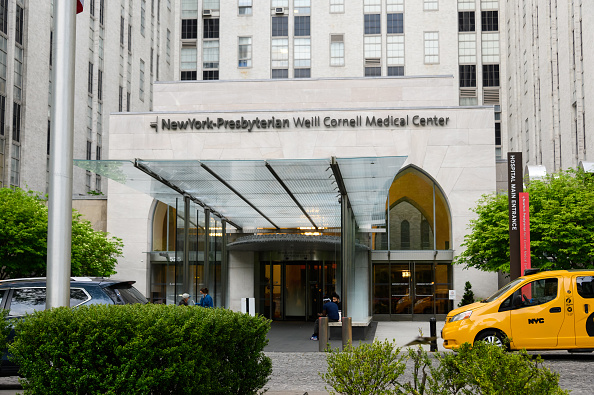
In 1965, Congress implemented the Medicaid IMD exclusion, which barred federal funds from going to psychiatric hospitals. Washington expected states to pick up the tab, but instead they shut down facilities and discharged patients, sending them to general hospitals. That has led to today’s national shortage of psychiatric beds.
The situation is especially dire in New York, where patients are often boarded in emergency departments for days or even weeks. And general hospitals rarely have the expertise to treat the most severe mental-health cases.
“Reimbursement rules have produced a race to the bottom for psychiatric beds, effectively abandoning the most severely impaired mentally ill Americans,” Carolyn D. Gorman and David Goldhill write. “New York should direct more funding to psychiatric hospitals while pursuing every available federal exception and waiver to receive reimbursement.”
Read more about the problem. |
|
|
In 1974, economist Friedrich Hayek warned against the idea that experts understand people well enough to direct everyone’s choices according to their own plans. Society isn’t a formula to be solved, he argued, and top-down interventions crush individual freedoms. So how would he feel about artificial intelligence and efforts to ensure that it stays aligned with human interests? “Hayek would tell us that AI alignment is not a computable math equation, and that efforts to treat it as such will lead to the sort of authoritarian thinking and proposals we witnessed with previous efforts to remake economies and humanity according to some grand design,” Adam Thierer writes. “Empowering global elites to guide humanity’s acceptable risks and technological future raises other risks in the process.”
Read more about the economist’s lessons and how we can apply them today. |
|
|
Earlier this month, Rep. David Schweikert introduced the SMARTER Act, which would make important changes to America’s immigration system. It would end the “diversity” visa, cut parts of the family-based system, and, importantly, create a points-based category for high-skilled immigrants, among other reforms. Points would be awarded based on salaries, not education, which would make the system less prone to abuse since it wouldn’t encourage applicants to get dubious degrees. “It also maximizes the fiscal benefits of skilled immigration for Americans, as the highest-earning workers will contribute more tax revenue,” Connor O’Brien writes. “The reforms proposed by the SMARTER Act can move the U.S. toward a legal immigration system that prioritizes workers, researchers, and entrepreneurs offering in-demand skills.”
Read more. |
|
|
“Seattle voters will never figure it out. They might move away from the mess they created, but they’ll just bring to their new locale the same incurable stupidity that prompted them to move.”
|
|
| |
A quarterly magazine of urban affairs, published by the Manhattan Institute, edited by Brian C. Anderson. |
|
|
|
Copyright © 2026 Manhattan Institute, All rights reserved. |
|
|
|
|