|
Forwarded this email? Sign up for free to have it sent directly to your inbox. |
|
|
|
Good morning,
Today, we’re looking at progressive prosecutors’ recent legal troubles, some good news for U.S. renters, organized labor’s political comeback, and a problematic report about millionaires and taxes.
Write to us at editors@city-journal.org with questions or comments. |
| |
|
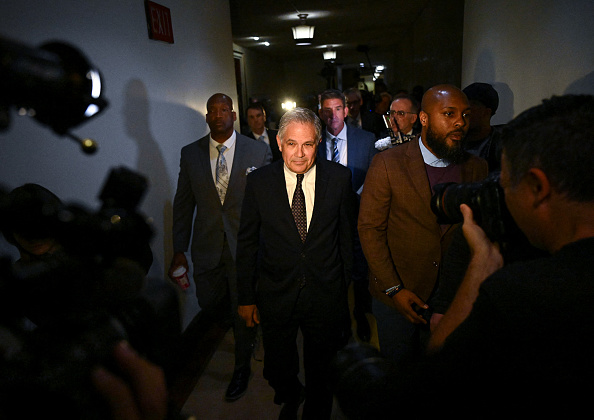
Photo credit: KRISTON JAE BETHEL / Contributor / AFP via Getty Images |
Larry Krasner has served as Philadelphia’s district attorney for nearly ten years. He is one of the nation’s most high-profile progressive prosecutors. Earlier this week, federal judge Paul Diamond said Krasner may be guilty of “perjury, conspiracy, or obstruction of justice.” The scandal concerns the murder conviction of Dennis Johnson. Johnson had brought a petition to Krasner’s office seeking to overturn the conviction, and in 2022, Krasner filed a motion agreeing with Johnson.
Just one problem: the DA’s office tried to withdraw the filing after supposedly finding “material misstatements.” The assistant district attorney who wrote the original motion claimed that she was pressured into doing so.
Krasner joins a surprisingly long list of progressive prosecutors who have had legal troubles, Charles Fain Lehman observes. “Perhaps it’s worth asking,” he writes, “Why do these purported reformers seem to have so little respect for the system they’re trying to run?” Read more. |
|
|
This summer, Congress passed the 21st Century ROAD to Housing Act in an effort to ease a housing crunch that has pushed home prices and rents to all-time highs. The law aims to boost housing supply with an all-of-the-above approach: using federal funding to encourage counties to build more housing, promoting zoning and permitting reforms, and expanding favorable construction financing.
“Most important for the family rental market is the law’s treatment of ‘build-to-rent’ (BTR) communities,” writes Jordan McGillis. BTRs are single-family-home developments that are explicitly intended to be rental properties.
While homeownership is often seen as a cornerstone of the American Dream, as McGillis explains, “families often have good reasons to prefer renting,” such as the freedom to pull up stakes and move to a better job market.
“By broadening the definition of the American Dream, the ROAD Act makes the path to it smoother for families,” he writes. |
|
|
Commentators have been writing obituaries for organized labor, pointing to declining union membership rolls and the ongoing shift from a manufacturing to a services economy. But some trends seemingly point to a comeback: a string of legislative victories, rising union activity in new sectors like the gig economy, and efforts to court the labor vote on both the Left and the Right. Are unions really experiencing a revival? Not exactly, writes Jarrett Dieterle. Though its recent gains are real and notable, labor still faces strong economic headwinds. “Unions dampen labor-market flexibility, discourage migration and business investment, and increase costs for taxpayers. Whatever direction the politics takes, those realities will continue to shape the debate,” he maintains.
Read Dieterle’s essay from our Autumn 2026 issue. |
|
|
Last month, the Fiscal Policy Institute launched a review of federal tax data. It found that “states with progressive tax systems are the most millionaire friendly.” In other words, New York can hike tax rates without causing the wealthy to flee.
Not quite, Ken Girardin argues. For one thing, the state’s share of millionaires fell from 12.7 percent in 2010 to 9 percent in the period between 2020 and 2023. “Put another way, for every New Yorker making a million dollars in 2010, there were seven people in other states making as much,” Girardin points out. Today, it’s more than ten, a fact that “should have Albany on high alert because it’s an objective measurement of the state’s overall economic competitiveness,” he writes.
Read more about the report. |
|
|
“Democrats now agree with every point in bin Laden’s manifesto, and our progressive universities march in solidarity with Hamas’s attempt to commit a genocide on the Jews, while accusing the Jews of a genocide for having the nerve to defend themselves.”
|
|
|
|
A quarterly magazine of urban affairs, published by the Manhattan Institute, edited by Brian C. Anderson. |
|
|
|
Copyright © 2026 Manhattan Institute, All rights reserved. |
|
|
|
|