|
Forwarded this email? Sign up for free to have it sent directly to your inbox. |
|
|
|
Good morning,
Today, we’re looking at the Manhattan Institute’s lawsuit against the Mamdani administration, a recent symposium about the War on Terror, the dangers of hemp-derived THC products, and mounting concerns over AI development.
Write to us at editors@city-journal.org with questions or comments. |
| |
|
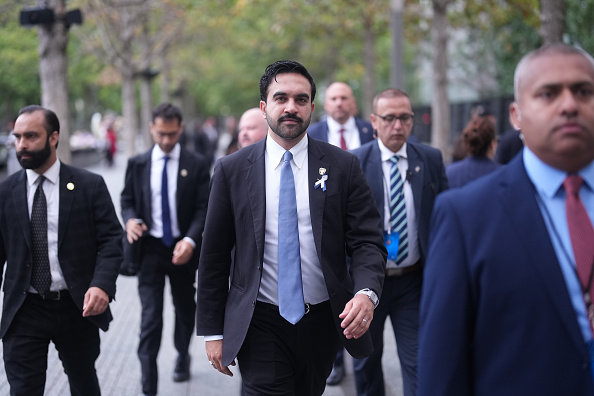
Photo credit: Pool / Pool / Getty Images News via Getty Images |
Earlier this summer, City Journal reported that Ana Maria Archila, commissioner of the Mayor’s Office for International Affairs, was scheduled to meet with Iran’s ambassador to the United Nations. The meeting was canceled after New York City Mayor Zohran Mamdani and his administration found out about it.
When City Journal asked the Mayor’s Office for a list of Archila’s appointments with people outside of city government since January, we were told that we could expect a list around January 11, 2027. We appealed the response as a refusal (due to the six-month delay), and the Mayor’s Office denied the appeal. “It cited the time and effort sometimes needed to review voluminous amounts of documents,” Santiago Vidal Calvo and Cameron Macdonald write. “The office did not specify how many records there were and why they were so difficult to go through.”
Under New York State’s Freedom of Information Law (FOIL), an agency has five business days to deny a request, acknowledge receipt and provide a reasonable response date, or disclose records.
Reviewing the city’s OpenRecords portal, Vidal Calvo and Macdonald found that nearly 89 percent of requests this year were given the same six-month treatment. “A statutory right of access cannot depend on whether an administration finds a request convenient,” they write. “Nor should Mayor Mamdani be allowed to establish a playbook that future mayors can use to run out the clock on public scrutiny.”
That’s why the Manhattan Institute is suing. Read more here. |
|
|
At a Columbia University symposium last week about the War on Terror, panelists discussed America’s response to the September 11 attacks, examining the rise of surveillance and national-security infrastructure in the U.S. They focused on the targeting of New York’s Muslim communities and argued that constitutional norms were violated.
The panelists, meantime, paid little attention to the escalating terrorist threat prior to the 9/11 attacks, Daniel Edward Rosen observes. Instead, they focused on what they regarded as the vital questions: “How could the nation’s post-9/11 surveillance and national-security infrastructure be dismantled? Is now the time to do so?”
Read more about the event. |
|
|
In the 2018 farm bill, Congress legalized the cannabis sativa plant for non-intoxicating purposes. But because the federal rules were poorly drafted, a largely unregulated market for intoxicating hemp products emerged, including in Texas, which authorized hemp agriculture and CBD in 2019.
A revised farm bill is set to take effect later this year, but Texas shouldn’t wait, Carolyn D. Gorman argues. “It should ban intoxicating hemp-derived THC outright, regardless of whether Congress acts,” she writes. “A legal, ten-milligram hemp-derived gummy is about as intoxicating as a ten-milligram gummy made from traditional marijuana, but the legality of the former sends a message that it’s safe, mild, or medicinal.”
And that is far from the truth. Frequent use is associated with a higher likelihood of developing mental illness and committing acts of violence. Read more about the dangers of hemp-derived THC products and the ongoing legal fight. |
|
|
Recent events have sounded alarms about artificial intelligence and its future development. There was the incident in July where OpenAI-powered agents, supposedly confined to “sandboxes,” gained access to Hugging Face servers. Last week, Anthropic researcher Jacob Coxon resigned, claiming the company was acting irresponsibly and “gambling with our lives.” Shortly afterward, Anthropic CEO Dario Amodei published an essay calling for AI companies to slow down development of the technology. But slowing down presents a two-part problem, Nicholas Wade argues. “For Amodei to get his U.S. competitors to cooperate seems now within reach. It’s another matter to get China to agree,” he writes. “Likewise, Amodei believes an AI slowdown in the U.S. must not be large enough to let China take the lead.”
Read more. |
|
|
“Murky indeed! I’ll entertain anyone’s opinions or lend an ear, but I insist on knowing whether it’s paid propaganda.” |
|
|
|
A quarterly magazine of urban affairs, published by the Manhattan Institute, edited by Brian C. Anderson. |
|
|
|
Copyright © 2026 Manhattan Institute, All rights reserved. |
|
|
|
|