|
Forwarded this email? Sign up for free to have it sent directly to your inbox. |
|
|
|
Good morning,
Today, we’re looking at a firsthand remembrance of 9/11, what schools are teaching students about the attacks, and a new book about New York’s fiscal crisis.
Write to us at editors@city-journal.org with questions or comments. |
| |
|
Photo credit: David Surowiecki / Contributor / Getty Images News via Getty Images |
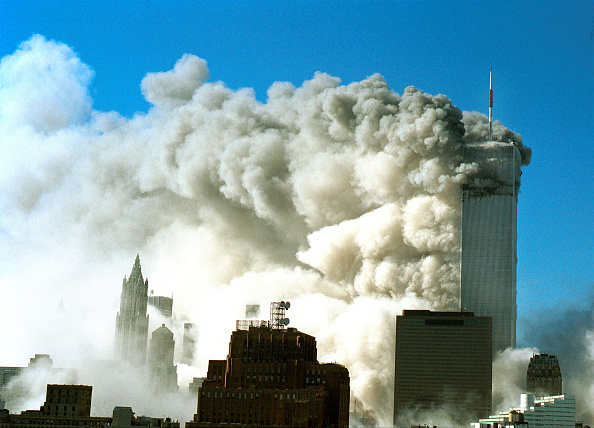
“Outside, it was mayhem. Everyone was sprinting, and soon we were, too. Cops yelled at us to keep moving. Someone behind us called out, ‘package bomb!’ and we ran faster. We made it to the Canal Street checkpoint, where I squeezed past a tall man on a bike holding a professional-grade camcorder high up toward the sky, blocking the flow of human traffic.”
That’s Daniel Edward Rosen, remembering the moments just after the planes struck the Twin Towers the morning of September 11. He and his roommates had been in their apartment, just eight blocks from the World Trade Center.
“Nearly an hour into our pilgrimage north, we reached Times Square, where the sidewalks were choked with onlookers, their heads craned up at the jumbo screens and the news tickers,” he recalls. “We learned that the North Tower had collapsed now, too. Both were gone, in a matter of hours. We kept moving north with everyone else.”
Read more. |
|
|
Students today have no memory of the September 11 terrorist attacks. What we teach them, then, matters immensely to how they understand that horrific day. And “judging by some of the materials available,” Dana Stangel-Plowe writes, “Americans should be concerned.”
Take the University of Pennsylvania Graduate School of Education’s “Teaching Beyond 9/11” curriculum. Made for high school and college educators, its lessons include just one paragraph about the actual attacks, while stating that the U.S. “accused” Osama bin Laden of orchestrating them. There’s nothing about al-Qaeda’s responsibility. There is, however, lots of information about racism, Islamophobia, and “right-wing extremism”—and nothing about Islamist extremism, which, of course, was the ideology that motivated the attack.
“We’re more aware today than we were back then about perils from abroad,” Stangel-Plowe writes. “But we need to be clear-eyed about the threats at home, too, especially when our educational institutions are willing to distort history for ideological purposes.” Read more. |
|
|
In City of Fortune: Inequality and the Making of Contemporary New York, Mason B. Williams argues that New York’s recovery from the 1970s fiscal crisis “exacerbated the challenges of everyday life” for lower-income New Yorkers. He laments the effect that policies surrounding housing, crime, and education had on “communities of color.”
New York’s embrace of the private sector to generate more tax revenue, along with some fiscal discipline, is what drove its comeback. “The fact that multiple mayors with different ideologies, governing during different eras, eventually settled on similar broad strategies—private housing investment, school choice, and effective policing—doesn’t indicate a catastrophic groupthink error that ignored a credible alternative,” Nicole Gelinas writes. “It suggests that these solutions were the only viable ones.”
Read her review. |
|
|
“You have zero expectation of privacy in public, and driving is a privilege, not a right. All arguments against Flock cameras fall apart upon examination. It’s a moral panic.”
|
|
|
|
A quarterly magazine of urban affairs, published by the Manhattan Institute, edited by Brian C. Anderson. |
|
|
|
Copyright © 2026 Manhattan Institute, All rights reserved. |
|
|
|
|