|
Forwarded this email? Sign up for free to have it sent directly to your inbox. |
|
|
|
Good morning,
Today, we’re looking at a remembrance from the morning of September 11, 2001, the future of Rikers Island, the cost of the 9/11 attacks, the importance of data centers, and a double standard on political violence.
Write to us at editors@city-journal.org with questions or comments. |
| |
|
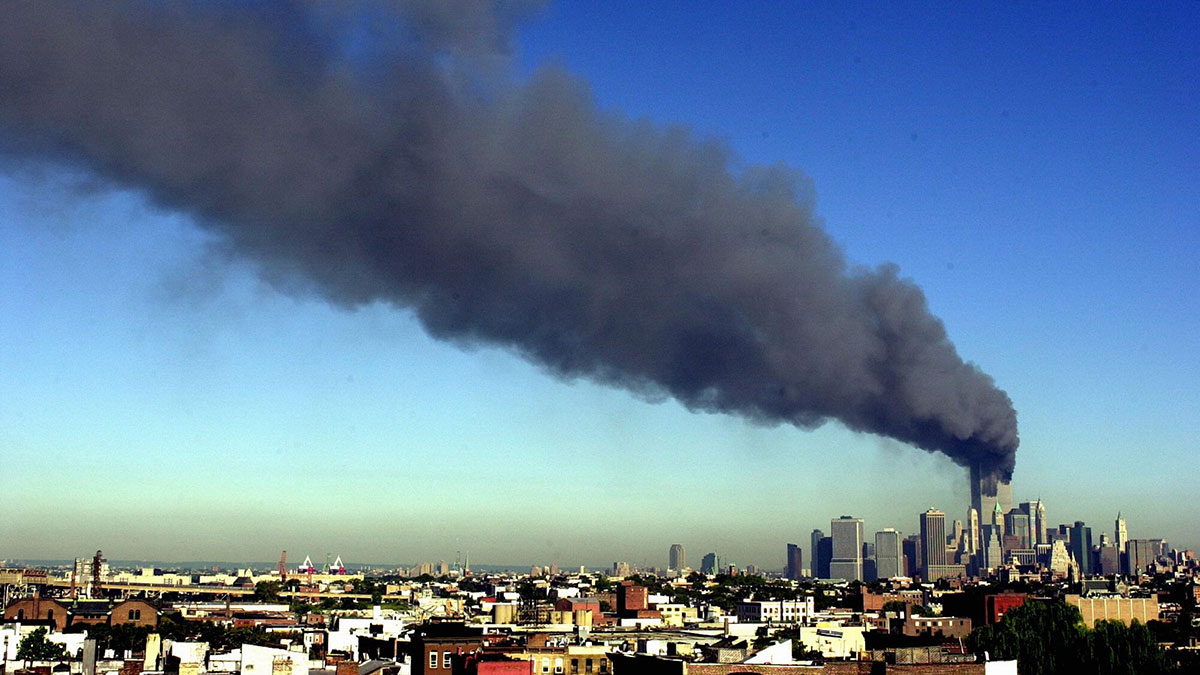
Photo credit: Jiro Ose/Newsday RM via Getty Images |
“After the immediate shock of the day subsided, anger took hold of me, as it did so many others, over the murder of thousands of innocent people and over the blow struck against America.”
City Journal Editor Brian C. Anderson remembers well the morning of September 11, 2001. He and the magazine’s editorial team were almost finished with the new issue. “I had just completed an essay on the urban blight of car alarms, which now seemed absurdly trivial,” he writes. They realized in the aftermath of the attacks that they would need to start over. “The issue that resulted—featuring Victor Davis Hanson in his City Journal debut, on the brave firefighters and cops who entered the burning buildings, Steven Malanga on a plan to rebuild the city, Heather Mac Donald on fighting terrorism, and much more—was cathartic to work on and still stands up as one of our best.”
Read more. |
|
|
New York City’s plan to close Rikers Island by August 2027 is already effectively dead. Replacement jails are years behind schedule, billions over budget, and too small to house the city’s current jail population. Yet Mayor Zohran Mamdani remains committed to closing the complex. Charles Fain Lehman argues that the original plan rested on unrealistic assumptions about construction timelines and the number of people the city would need to detain. With more than 6,500 people currently held at Rikers, the city faces a basic question as the deadline approaches: What’s the plan?
“Rikers’s closure was first and foremost a moral crusade aimed at achieving racial and social justice,” Lehman writes. “The practicalities of providing jails that are safe for both their residents and the public were always an inconvenience to be wished away.” Read more here.
|
|
|
Conservatively, the September 11 attacks cost more than $100 billion in lives, property, health, and economic damage. And then there was the longer-term policy response, with about $2 trillion going to homeland security and the war in Afghanistan, and another $1 trillion for the war in Iraq. A 2021 study put the total cost of 9/11 at $8 trillion.
“To put these figures in context, America’s annual GDP is about $30 trillion, federal spending about $7 trillion, and federal debt held by the public a little over $30 trillion,” Robert VerBruggen writes. He breaks down the cost of the attacks in a comprehensive new analysis, which you can read here. |
|
|
Artificial intelligence is already making it easier to design medicines, fight disease, accelerate scientific discovery, and improve manufacturing. But Americans increasingly oppose the construction of data centers—which power the technology—in their own communities, leading to moratoriums and canceled projects.
“Halting or slowing down data-center construction would mean deliberately constraining the infrastructure behind one of the most important innovations of the twenty-first century,” Shawn Regan writes. “If the growing panic succeeds in blocking that buildout, it will mean less economy-wide investment, slower scientific and technological progress, more expensive computing power, and fewer productivity gains and breakthroughs—to the detriment of Americans and of humanity more broadly.”
Read more. |
|
|
Whenever a leftist commits a violent act, Democrats point to right-wing political violence, claiming that the Right presents the greater threat. They rely on statistics from advocacy groups that exclude examples of left-wing violence, like attacks on Tesla dealerships, synagogues, and ICE facilities, and even murders committed by pro-Palestinian activists.
Meantime, they regularly hold conservatives responsible for violent individuals who act alone and conspiracy theorists with no clear political ties. Anti-Semites, incels, and racists get classified as right-wing, too, even when they target both sides of the aisle.
“Mentally disturbed lone wolves appear on the fringes of both sides, but organized violence in pursuit of political goals is not a right-wing specialty; it is a left-wing one,” John Tierney writes. “Yet the Left’s influence over legacy media and cultural institutions continues to sustain the myth that right-wing violence poses the greater public danger.”
Read more. |
|
|
“Sorry, but the ‘experts’ don’t get to claim ‘I am the science’ on Monday and pivot to ‘well, people are free to disagree’ on Tuesday. Especially not when the lawsuits started to flow. Not once did the ‘experts’ ever suggest caution or alternatives to so-called ‘affirmative care.’ They consistently pushed it as the only option. Now that they’re on the verge of being sued out of existence, they’re trying to feign innocence. Very transparent. We can see right through them.” |
|
|
| A quarterly magazine of urban affairs, published by the Manhattan Institute, edited by Brian C. Anderson. |
|
|
|
Copyright © 2026 Manhattan Institute, All rights reserved. |
|
|
|
|