|
Forwarded this email? Sign up for free to have it sent directly to your inbox. |
|
|
|
Good morning,
Today, we’re looking at a political memoir about the far Left’s ascendance, how Ken Griffin’s Carnegie Mellon gift could pay off, and what history can teach us about AI safety.
Write to us at editors@city-journal.org with questions or comments. |
|
|
|
Photo credit: Alex Wroblewski / Stringer / Getty Images News via Getty Images |
Evan Barker spent more than 15 years fundraising for mainstream Democratic candidates before becoming a director at Left Rising, a firm that supports left-wing politicians. Her new memoir, Nothing Left: Confessions of a Democratic Operative, illustrates how intertwined the Democratic Party’s insurgent Left and the rest of the Democratic ecosystem have become.
“The arc of her career, from volunteering on Barack Obama’s 2008 presidential campaign to her eventual consulting for progressive district attorney candidates, complicates the notion of an outside insurgency infiltrating the Democratic establishment,” Jesse Arm and Alicia Nieves write. “In Barker’s telling, one grew out of the other.”
Read their review. |
|
|
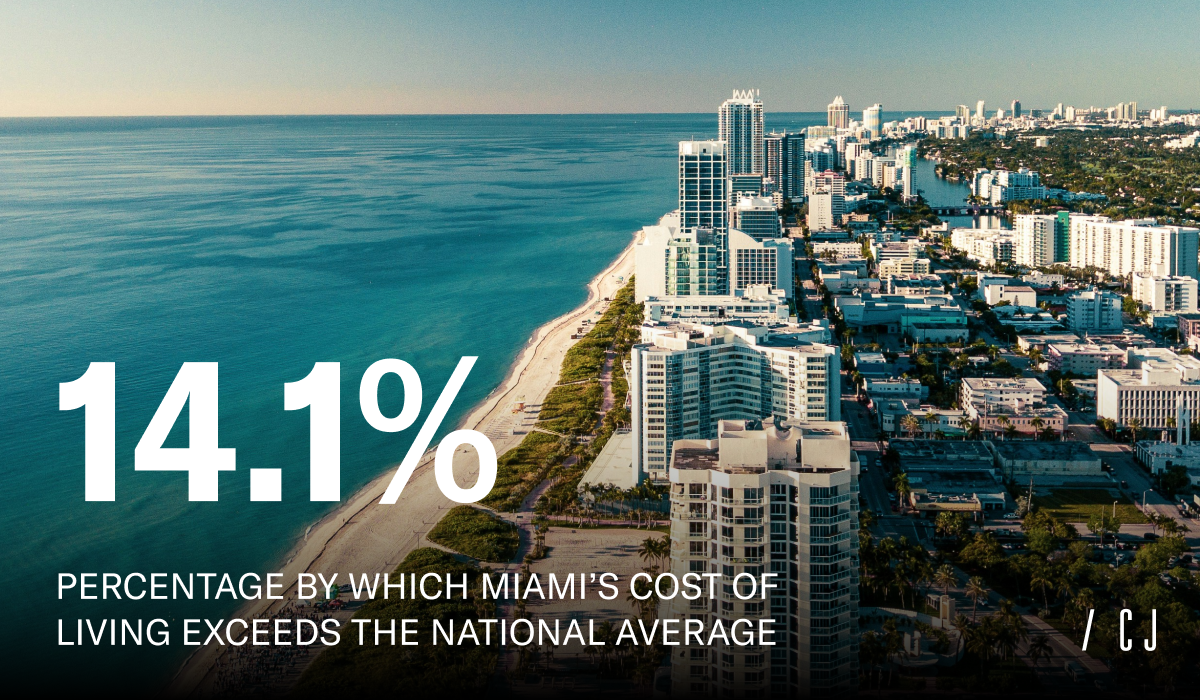
Last week, Citadel CEO Ken Griffin announced that he was donating $3 billion to Carnegie Mellon University—$1 billion for the main campus and $2 billion for a new Miami campus. Construction for CMU Miami is slated to begin next year, and the university hopes to begin enrolling students in 2028.
A top-tier university in Miami makes a lot of sense, John D. Sailer argues. Central Miami’s economy has boomed from 15 years ago, partly thanks to companies like Citadel moving their headquarters there. And the new campus investment comes at a crucial time. Public confidence in higher education is low on both the Left and the Right, and parents and students are increasingly skeptical of universities’ value.
“CMU Miami could end up being the biggest test of the reformer’s hypothesis: that an institution with real credibility that does something different—in this case, that bucks academia’s dead-end fads—can become a new standard bearer,” Sailer writes. “In ordinary times, the markers of prestige move slowly, but these are not ordinary times.”
Read more. |
|
|
In 1858, the New York Times reported that the telegraph could spread lies “too fast for truth.” In the 1860s, experts warned that railroads could compromise visual processing or cause passengers to suffocate. In 1881, neurologist George M. Beard argued that anxiety in America stemmed from societal changes, like the emergence of the press and the increasing “mental activity of women.”
It’s easy to laugh at these warnings now. But today’s debate surrounding artificial intelligence offers a new version of such concerns. What are the consequences of advanced AI? Will it become more powerful than humans? Could it kill us all?
“The modern world has had extensive experience with the rapid introduction of revolutionary technologies and thus the creation of expansive legal and regulatory frameworks to manage or induce good behavior and, when necessary, punish bad actors,” Mark P. Mills writes. “The proper question to ask about AI safety is whether existing laws and rules sufficiently encompass risks from the new technology and, collaterally, where a tune-up or clarification may be needed.” Read more. |
|
|
“This bunch receiving a ‘Peacemaker’ Award is reminiscent of the Soviets hosting ‘Peace’ Conferences back in the 1970s and 1980s. Most of the peace movement is and has been an anti-Western movement built on lies, half-truths, and moral inversion.”
|
|
|
|
A quarterly magazine of urban affairs, published by the Manhattan Institute, edited by Brian C. Anderson. |
|
|
|
Copyright © 2026 Manhattan Institute, All rights reserved. |
|
|
|
|