|
Forwarded this email? Sign up for free to have it sent directly to your inbox. |
|
|
|
Good morning,
Today, we’re looking at the network helping families evade gender-transition bans, Congresswoman Elise Stefanik’s leadership in fighting anti-Semitism, New York’s minimum-wage law, and how college students feel about free speech.
Write to us at editors@city-journal.org with questions or comments. |
|
|
|
Photo credit: UCG / Contributor / Universal Images Group via Getty Images |
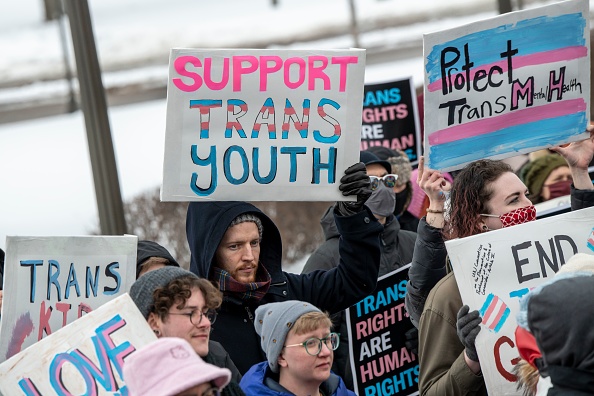
A nationwide network of activists and health-care providers has emerged to help families evade state restrictions on gender-transition treatments for minors, according to City Journal investigative reporter Christina Buttons.
“The most prominent organization in this network is the Campaign for Southern Equality (CSE), a North Carolina-based LGBT advocacy nonprofit,” Buttons writes. “An undercover City Journal investigation found that many of CSE’s recommended medical providers—with the organization’s knowledge—described ways to circumvent state restrictions and allow minors to continue receiving medical interventions in their home states.”
Speaking with providers while posing as the parent of an 11-year-old daughter who had recently begun identifying as “nonbinary,” Buttons listened as staff described various ways of evading state restrictions, including using alternative diagnostic codes for prescriptions, mailing medications directly to patients’ homes, and offering virtual appointments for remote patients.
“It is up to state and federal authorities to investigate these practices to determine whether existing laws have been violated and, if not, devise new necessary safeguards,” Buttons writes. Read here for the full investigation. |
|
|
Earlier this week, Congresswoman Elise Stefanik received the Evelyn Sommer Next Generation Award for her work in holding universities accountable for anti-Semitism. During her acceptance speech, she recalled the congressional hearings where she asked university presidents if calling for the genocide of Jews violated their schools’ code of conduct. Their response? “It depends on the context.”
“Let me tell you,” Stefanik said during her speech, “it does not depend on the context.”
In response to the hearings, several universities made commitments to upholding civil discourse on campus. “Schools also took more severe action against protests and disruption,” Adam Lehodey writes, “and a federal investigation resulted in Columbia’s agreeing to a $21 million settlement to resolve alleged civil rights violations against Jewish students.”
Read more about the event and Stefanik’s work. |
|
|
New York’s minimum-wage law includes a provision freezing increases when the state loses jobs. However, after 31,000 jobs were lost through July 2026, Governor Kathy Hochul wants to waive the freeze, effectively guaranteeing minimum-wage hikes even during severe economic downturns. Simone Barron explains how Washington State provides a cautionary example against this approach, which some are proposing at the federal level.
“The proposal will likely guarantee a minimum wage hike every year,” she writes. “If we apply Hochul’s rule change to the current job loss numbers, New York would have to lose about 150,000 jobs in a six-month period before freezing the wage. To put that in perspective, it would take an event on the order of the Great Recession to reach that threshold. When it created the off-ramp, the state implicitly conceded that minimum wage hikes can cause job loss. Now that the provision has been triggered, it’s looking to keep increasing the wage anyway.”
Read more here. |
|
|
According to the Buckley Institute’s latest National Undergraduate Student Survey, 73 percent of college students say they believe the Constitution is a “very important document,” up from just 49 percent in 2022. And 87 percent say the First Amendment “still needs to be followed and respected in today’s society,” while a record 66 percent say that “hate speech” is “technically protected” by the First Amendment.
However, when it comes to free expression in their everyday lives, students’ opinions change drastically, with 49 percent saying they support speech codes to regulate student and faculty speech on campus. Four in ten say that “offensive speech” should be “criminally prosecuted,” and 46 percent say that it is at least “sometimes appropriate” to “shout down or disrupt” a campus speaker. Alarmingly, 45 percent believe “physical violence can be justified” against someone “using hate speech or making racially charged comments.”
Higher-education leaders have a role to play here, Paul du Quenoy argues. “They could start by informing their students that, if they truly believe in free speech and open debate, they cannot criminalize speech of which they disapprove, shout down or beat up those who engage in it, or subject it to restrictive codes,” he writes.
Read more. |
|
|
“I’m always intrigued by the framing of the question around taxing the rich.
If you say: the state needs income, and it is reasonable to make the rich pay a higher % than the poor, then fair enough, but you also need to bear in mind the Laffer Curve, wherein raising tax rates too much actually leads to lower tax revenue, because people leave, evade tax, or stop generating income. So the goal of increasing tax revenue may be accomplished by lowering tax rates!
But it is more often framed as a moral problem: being rich is bad, and the rich must be punished for it—or put another way, the state should disincentivize people from becoming rich through taxing the heck out of them.” |
|
|
|
A quarterly magazine of urban affairs, published by the Manhattan Institute, edited by Brian C. Anderson. |
|
|
|
Copyright © 2026 Manhattan Institute, All rights reserved. |
|
|
|
|