|
Forwarded this email? Sign up for free to have it sent directly to your inbox. |
|
|
|
Good morning,
Today, we’re looking at why states should ban kratom, remedies for disorder in schools, and Justice Samuel Alito’s new book.
Write to us at editors@city-journal.org with questions or comments. |
|
|
|
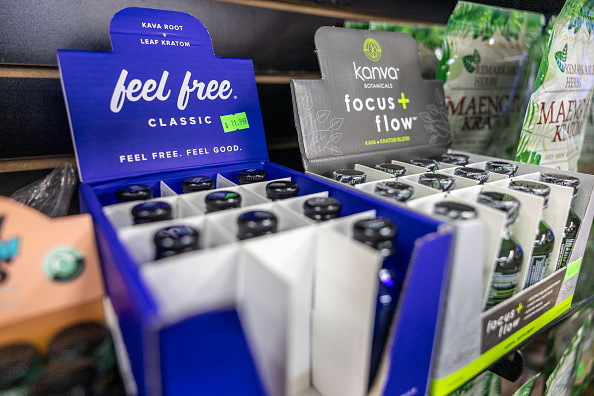
Photo credit: Newsday LLC / Contributor / Newsday via Getty Images |
Widely available at convenience stores and gas stations around the country, kratom comes from a tropical evergreen tree native to Asia. In low doses, it acts as a stimulant; in higher doses, it mimics the effects of opioids, its active chemicals affecting the same brain receptors.
Those active chemicals—mitragynine and 7-OH (7-hydroxymitragynine)—can cause heart arrhythmias and can be toxic to human neuronal cells. And 7-OH, in particular, can be 13 times stronger than morphine. It’s no wonder, then, that kratom has been linked to more than 5,200 overdose deaths between 2020 and 2024. One study found dependency in more than half of regular users, and ending use of the drug can cause pain, fever, and worse.
So why is kratom legal in the first place? “The answer owes partly to its relative obscurity and partly to the lobbying campaign waged by the industry to keep the drug unregulated at the federal level,” Kevin Sabet explains. “The good news is that states don’t have to wait on Washington. They can act on their own to ban kratom now—as several have already done.”
Read more. |
|
|
Students are misbehaving in class. They threaten violence to get a grade changed, start brawls, and scream in teachers’ faces. And, amazingly, most of them never face consequences. Why? Incentives often run against administrative action.
Federal law, for instance, offers no right to a safe and orderly learning environment, but punished students have a number of legal protections and access to procedures for challenging the penalties. Parents of disciplined students can file formal complaints, speak before a school board, and threaten litigation. “These incentives shape administrators’ decision to suspend, expel, or look the other way,” Daniel Buck and Cory Brewer explain.
States have three main options through which they can respond, Buck and Brewer write. Read about them here. |
|
|
Some reviewers have interpreted Supreme Court Justice Samuel Alito’s new book, So Ordered: An Originalist’s View of the Constitution, the Court, and Our Country, as an abandonment of originalism and a stalking horse for natural law theories. Not so, argues Judge Steven J. Menashi of the U.S. Court of Appeals for the Second Circuit. Alito’s central warning, rather, is that originalists can become so preoccupied with theoretical purity that they neglect the judgment, humility, and attention to real-world circumstances that judging requires.
“In this way, Alito lays out an approach to judging that reflects humility about one’s own conclusions but also independence from popular sentiment,” Menashi writes. Read here for more on Alito’s defense of an originalism grounded in practical judgment rather than abstract theory. |
|
|
“I grew up in CA in the ‘70s and realized the environmental movement was all about thwarting growth.” |
|
| |
A quarterly magazine of urban affairs, published by the Manhattan Institute, edited by Brian C. Anderson. |
|
|
|
Copyright © 2026 Manhattan Institute, All rights reserved. |
|
|
|
|