|
Forwarded this email? Sign up for free to have it sent directly to your inbox. |
|
|
|
Good morning,
Today, we’re looking at state judicial contests, the ramifications of California’s Proposition 47, why the DSA wants Jessica Tisch ousted, and the Smithsonian’s dwindling attendance.
Write to us at editors@city-journal.org with questions or comments. |
|
|
|
Photo credit: iStock/Getty Images |
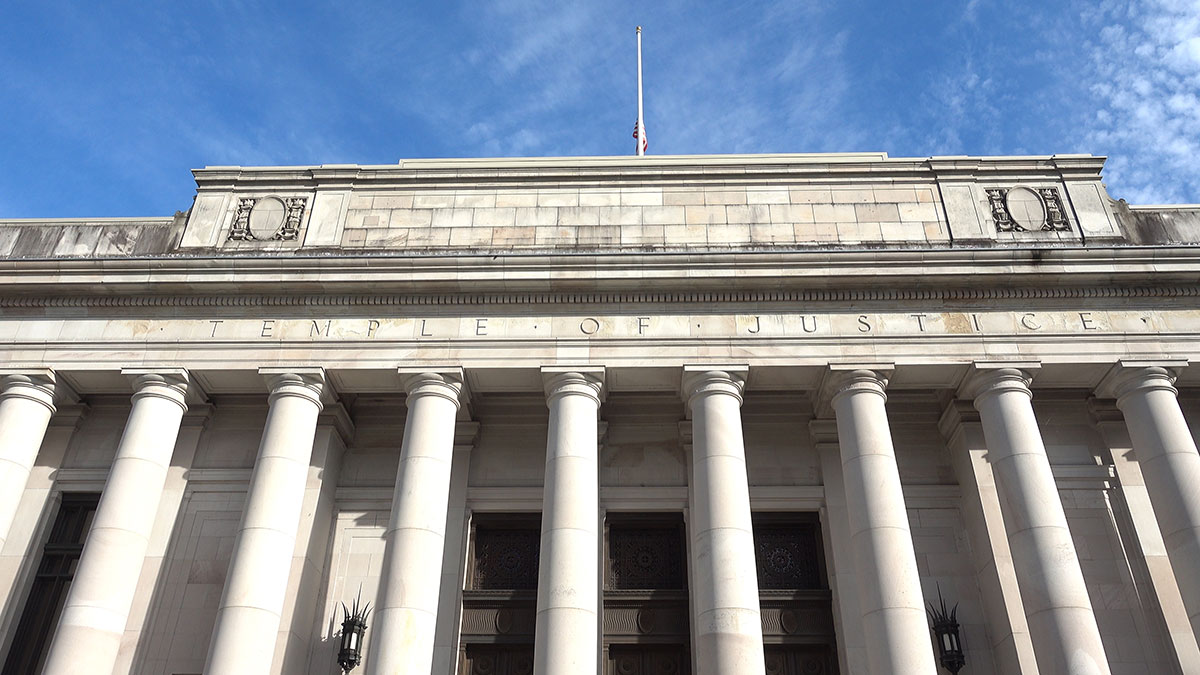
The battle for control of Congress is driving most media coverage of this November’s midterm elections, but state supreme court races have also become “more closely watched, fiercely contested, and expensive,” notes Steven Malanga in the Autumn 2026 issue of City Journal.
“Increasingly, voters understand that state supreme courts don’t just rule on flashpoint cultural issues. They also arbitrate redistricting, election disputes, and fundamental questions of state governance,” he writes. As a result, voters are taking more interest in these elections, and debates are intensifying over how judges should be elected.
Read here to learn why these once-obscure, low-turnout contests are becoming high-turnout partisan battlegrounds—and how the races are likely to change in coming years. |
|
|
Since California voters passed Proposition 47 in 2014, the unsheltered homelessness rate has risen by 10 percent, while serious drug use rose by 8 percent. Meantime, admissions for drug treatment have dropped by about 20 percent. Intended to downgrade drug and property felonies to misdemeanors, the law is clearly having some unintended consequences on homelessness and drug use. “The message can’t be missed: when law enforcement waned, it severed the single most reliable connection between addicted Californians and a treatment bed—and drug use and homelessness grew because of it,” Paul Webster writes. “California offers a warning about what happens when you stop connecting people with serious addictions to treatment: more drug use, more lives lost, and 7,000 more people living on the streets.”
Read more. |
|
|
Up-and-comers in the Democratic Socialists of America (DSA), like Darializa Avila Chevalier—recently nominated to represent New York’s 13th congressional district—want to oust New York City Police Commissioner Jessica Tisch.
Tisch is Jewish, centrist, technocratic, and a holdover from Mayor Eric Adams’s administration. Under Adams, she helped achieve historically low violent-crime rates, which have continued under Mayor Zohran Mamdani—largely thanks to his decision to keep her. Without Tisch, the police force would likely be less effective.
“Tisch’s personal background and professional record make her an understandably tantalizing target for the DSA,” David Christopher Kaufman writes. “Chevalier and her political allies despise few things more than Israel and law enforcement.” Read more. |
|
|
In 2018, the Smithsonian logged 28.5 million visits. Last year, that number fell to 14.9 million. The institution’s flagship National Museum of American History has seen a particularly large drop. In 2018, it had 4.1 million visits. Last year, it had just 1.8 million. What’s going on?
The timeline is striking in light of criticism the Smithsonian has received in recent years for exhibits that focus heavily on racial discrimination and social activism and deemphasize the national story. The National Museum of American History “now devotes more square footage to displays about lowrider cars and salsa music than to displays about the American Founding,” Jeffrey H. Anderson observes. Most Americans don’t seem to share the Smithsonian’s recent “fondness for reflexively criticizing, rather than appropriately celebrating, our nation ‘conceived in liberty.’”
Read more. |
|
|
“I was explaining this to my teenager. The beauty of a market economy (‘capitalism’) and democracy is that each harnesses our natural desire to act in our own best interest individually; whereas centralized/managed economies/governments depend on someone else acting in our best interest, collectively, which not only is unnatural human behavior, but is also nearly impossible to define.”
|
|
|
|
A quarterly magazine of urban affairs, published by the Manhattan Institute, edited by Brian C. Anderson. |
|
|
|
Copyright © 2026 Manhattan Institute, All rights reserved. |
|
|
|
|