|
Forwarded this email? Sign up for free to have it sent directly to your inbox. |
|
|
Good morning, Today, we’re looking at the mindset that comes with living in poverty, why the FCC should stop censoring speech, recent murders of police officers, and New York City’s trash bin plan. Write to us at editors@city-journal.org with questions or comments. |
|
|
“I spent the first 18 years of my life living in public-housing projects. My childhood was as poor as it gets in America.”
Ed Latimore, a professional heavyweight boxer and Army veteran, grew up on food stamps and relied on free breakfast at school. When he was older, he overdrew his account to buy food and became trapped in a vicious circle of taking out payday loans. It’s safe to say that he is intimately familiar with what it’s like to be poor.
He points out that advocates are quick to identify simple solutions for eradicating poverty: give people more money and educate them on finance. But it’s more complicated than that. “A scarcity mindset doesn’t instantly change if you become flush with cash,” Latimore explains. “Decades of stress don’t disappear overnight, any more than one apple erases years of poor dieting. The longer you’re poor, the worse you’ll be with money when you get it.” Read his poignant essay. |
|
|
Both Republicans and Democrats have a long history of attempting to use the Federal Communications Commission to censor political opponents’ speech. But they are right to push back against the FCC chairman’s recent suggestion that Jimmy Kimmel should be suspended over comments he made about Charlie Kirk’s assassination.
In fact, lawmakers should take it even further, Joe Kane argues. “Rather than encourage tit-for-tat censorship, Congress should pass a Free Speech Restoration Act,” he writes, “which would prevent the FCC from pulling broadcasters’ licenses based on the speech content in their programming.”
Read more about what the legislation would do. |
|
|
Last month’s shooting at an ICE office in Dallas is just the latest in a string of attacks against law enforcement. Fueled by anti-police sentiment, the ambush-style shooting of officers is on the rise.
“Murdering police officers, the visible symbol of law and order in America, is obviously reprehensible,” Tom Hogan writes. But Americans have to consider the broader implications, too. “For one, these attacks might tempt police to pull back from their duties. Such de-policing—as we saw after the Ferguson riots, the Covid pandemic, and the killing of George Floyd—can devastate neighborhoods, particularly poorer and more dangerous ones,” he explains.
Read about some of the other dangerous consequences. |
|
|
To help tackle its persistent rat problem, New York City created a plan that requires residential buildings with 30 or more units to place trash bags in bins instead of on the curb. The full rollout could extend through June 2032. Why the long timeline?
As Josh Appel explains, “implementing these bins requires major adjustments to street space and collection routes.” And the timeline “reflects how city government depends on mayoral oversight to coordinate among competing agency interests.” Read his analysis. |
|
|
“This is a good development. Citizenship has to mean something. And immigrants should have to pay much higher fees for visas and green cards.”
|
|
|
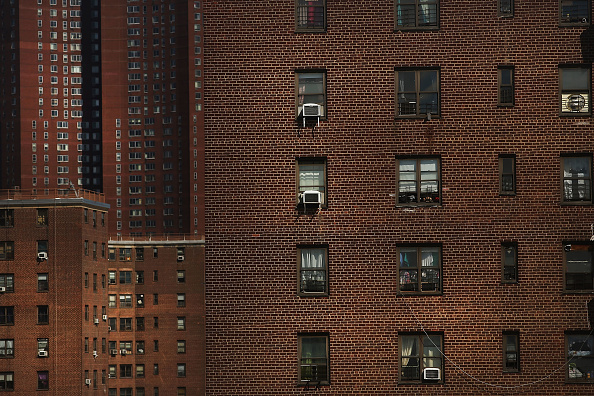
Photo credit: Spencer Platt / Staff / Getty Images News via Getty Images |
|
|
A quarterly magazine of urban affairs, published by the Manhattan Institute, edited by Brian C. Anderson. |
|
|
Copyright © 2025 Manhattan Institute, All rights reserved. |
|
|
|