|
Forwarded this email? Sign up for free to have it sent directly to your inbox. |
|
|
|
Good morning,
Today, we’re looking at the Hindu temple shooting plot, Allison Schrager’s new book on risk-taking, and the problems with a “common good” economy.
Write to us at editors@city-journal.org with questions or comments. |
|
|
|
Photo credit: Anadolu / Contributor / Anadolu via Getty Images |
Nineteen-year-old Alexandros Paporakis of Illinois was allegedly plotting a mass shooting at a Hindu temple in Aurora. He had driven there with 300 rounds of ammo, gasoline cans, “an assortment of swastikas,” and an AR-style rifle, which jammed, preventing him from carrying out the attack. Police officers found a manifesto that expressed hatred against Indians, Jews, African Americans, and “‘non-white’ people.” Paporakis allegedly had “fantasies of mass murder.” “The attempted attack is part of a broader pattern: internet-radicalized, lone-wolf shooters, often young men, plotting or carrying out bias-motivated attacks,” Charles Fain Lehman writes. “The archetype is increasingly the face of twenty-first-century domestic terror. But the effective check against it remains the same as ever: zero tolerance, whether the behavior is based on hate or otherwise.”
Read more. |
|
|
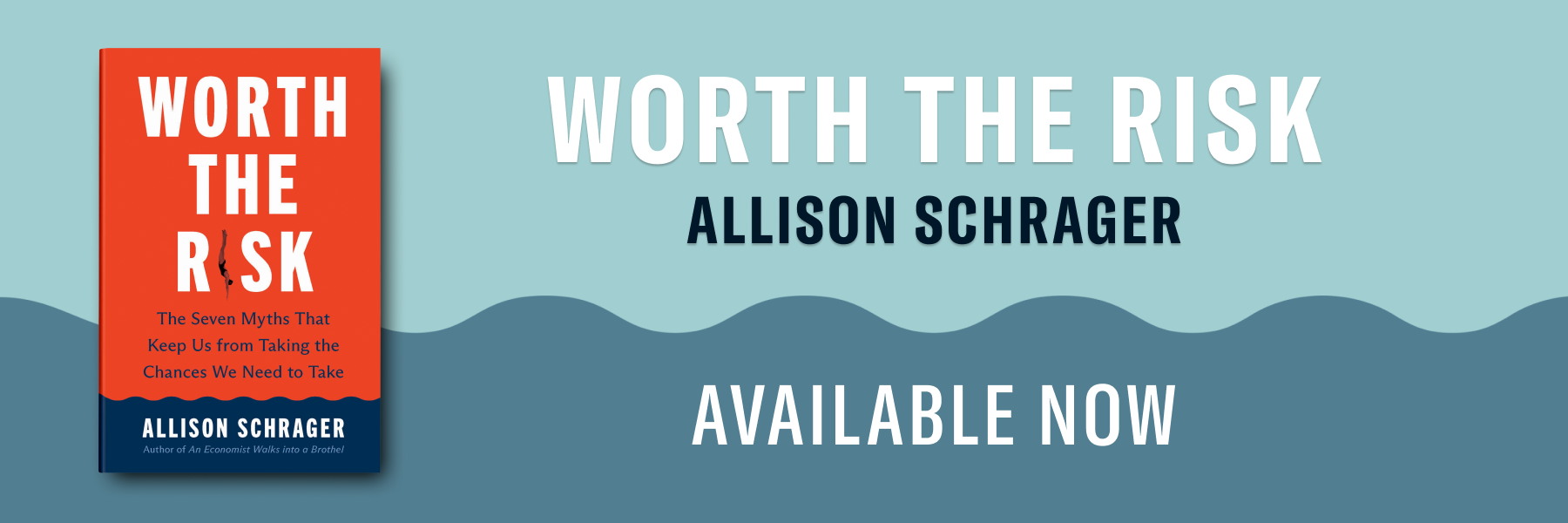
Manhattan Institute Senior Fellow Allison Schrager recently discussed her new book, Worth the Risk: The Seven Myths That Keep Us from Taking the Chances We Need to Take, with Cliff Asness, founder and chief investment officer at AQR Capital Management.
Schrager mentioned that she recently spoke with Nik Wallenda, the high-wire artist who has walked over Niagara Falls and the Grand Canyon. The famed risk-taker told her he was terrified to invest in the stock market.
“And it occurred to me that, I think other people like to argue there are categories of people who are risk-averse or risk-takers, and I don’t think that’s true,” Schrager said. “Like me, I won’t ride a Citi bike, but we all have a domain of risk we’re comfortable with, and we understand how to manage that and feel good about it.”
Read more from their conversation here. |
|
|
University College London economist Mariana Mazzucato believes economics should be reoriented around the goal of achieving the common good, as she makes clear in her new book, The Common Good Economy: How to Make Capitalism Work for Us All. In her eyes, the state doesn’t exist merely to fill in the gaps that markets can’t provide. Instead, the state should become the main actor.
Bad idea, Samuel Gregg argues. “Such economies are visibly imploding across the world in the form of out-of-control entitlement spending, low growth, net-zero mania, the bureaucratization of everyday life, the growing number of public-sector workers, and, in Europe’s case, weak levels of innovation that recent investments in industrial policy have not overcome,” he writes. “None of these conditions is suggestive of a flourishing society.”
Read more from his review. |
|
|
“Passing, not learning, is the priority in NYC public schools. As the piece indicates, the goals for NYC schools are non-academic nonsense metrics like ‘representation’ or ‘restorative justice.’ New York Appleseed is a bureaucratic political machine, funneling money from politically charged organizations into litigation and ‘research’ that confirms preconceived ideological beliefs. As long as these political organizations and the UFT shape education policy, claim phony financial crises, and avoid accountability by propagating racialist dog whistles, students will remain the victims of their adult masters.”
|
|
|
|
A quarterly magazine of urban affairs, published by the Manhattan Institute, edited by Brian C. Anderson. |
|
|
|
Copyright © 2026 Manhattan Institute, All rights reserved. |
|
|
|
|